
Stated Operational Limits Shift Structural Accountability Before Executive Floor Depletion
Stating concrete operational limits shifts decision accountability to middle management layers before executive cognitive reserves deplete.

Weight
Four operational channels request executive sign-off simultaneously while two escalation threads remain open past midnight. The founder reviews each request, approving budget variations and resolving schedule conflicts between direct reports. This continuous intervention creates a dynamic where team members route difficult decisions upward by default.
Without an explicit threshold restricting access to executive leadership, the organization treats founder capacity as an infinite buffer.
Available operating headroom collapses rapidly under this load.
When operational parameters remain implicit, accountability shifts toward whoever shows the highest tolerance for cognitive strain. Organizations without formal operational ceilings push every unresolved issue upward until hitting personal exhaustion limits. Operating without clear boundaries creates an unstated expectation that executive authority will absorb every remaining variance.
- Unstated Operational Capacities encourage team leads to defer difficult decisions, shifting daily trade-offs away from front-line managers.
- Absorption Loops form when leadership continually resolves tactical impasses, masking structural gaps in middle management authority.
- Structural Accountability Deficit occurs as functional owners relinquish ownership, relying on executive intervention to validate ordinary outcomes.
A system that routes operational decisions past an unstated threshold expands its demands until external friction forces a redistribution of responsibility.
A constant stream of incoming decision requests eventually forces executive attention away from strategic positioning toward routine arbitration. Accountability shifts upward prematurely, leaving functional managers without the need to resolve local operational tension. Over time, this reliance on executive intervention creates organizational vulnerabilities long before formal reports flag operational failure.

Wall
Setting an operational restriction creates a clear structural boundary within an organization. When an executive defines explicit rules (such as declining sign-offs on expenditures below a fixed dollar amount or refusing unscheduled status reviews), incoming pressure hits an established rule rather than personal tolerance. That distinction converts perceived individual availability into a hard operational line.
That boundary remains clear and visible across teams.

Constructing Limits as Operational Facts
Systemic accountability relies on concrete operational terms rather than executive endurance. Setting firm restrictions forces functional units to process decisions locally, defining clear boundaries for operational authority.
| Evaluation Dimension | Unstated Endurance Architecture | Stated Limit Architecture |
|---|---|---|
| Responsibility Routing | Escalates tactical trade-offs upward by default | Absorbs trade-offs within local functional units |
| Deflection Point | Pushed until executive cognitive depletion occurs | Deflected immediately upon meeting stated parameters |
| Capacity Margin | Depletes reserve headroom continuously | Preserves baseline reserves for non-routine events |
| Operational Signal | Interprets silence as implicit approval | Interprets silence as defined local authority |
Establishing an explicit turnaround window of seventy-two hours for operational reviews changes team behavior. Requests that previously required immediate executive arbitration get settled internally within twenty-four hours once submitters realize immediate intervention is off the table.

Relay
Consider a software firm with eighty employees where product release approvals used to go directly through the founder. Under that original setup, release engineering leads submitted release candidates to executive oversight whenever minor build discrepancies arose. The founder spent twelve hours weekly reviewing low-level test logs, treating the task as necessary oversight.
Executive capacity inevitably reaches its ceiling.
The founder introduced a mandatory operational policy: executive sign-off is required only for releases modifying core security architecture or exceeding a specific financial exposure threshold. Standard operational releases became the sole responsibility of the engineering lead and product director.

Why Does Stated Friction Preempt Systemic Exhaustion?
Initial resistance emerged during the first three weeks following the policy change. Team leads repeatedly flagged edge cases, trying to get informal validation through direct messages.
- The founder stuck to the published criteria, directing leads back to their designated parameters.
- Engineering managers established internal protocols to evaluate operational risk without needing top-level sign-off.
- Release delays dropped by forty percent as teams resolved deployment questions locally instead of waiting for executive review.
- Executive time allocated to tactical deployment oversight dropped to zero hours per week.
Operational limits stated as concrete terms convert personal availability into measurable structural parameters.
Accountability shifts as soon as clear limits are set.
Having no path to executive arbitration forces local product teams to own deployment decisions completely.
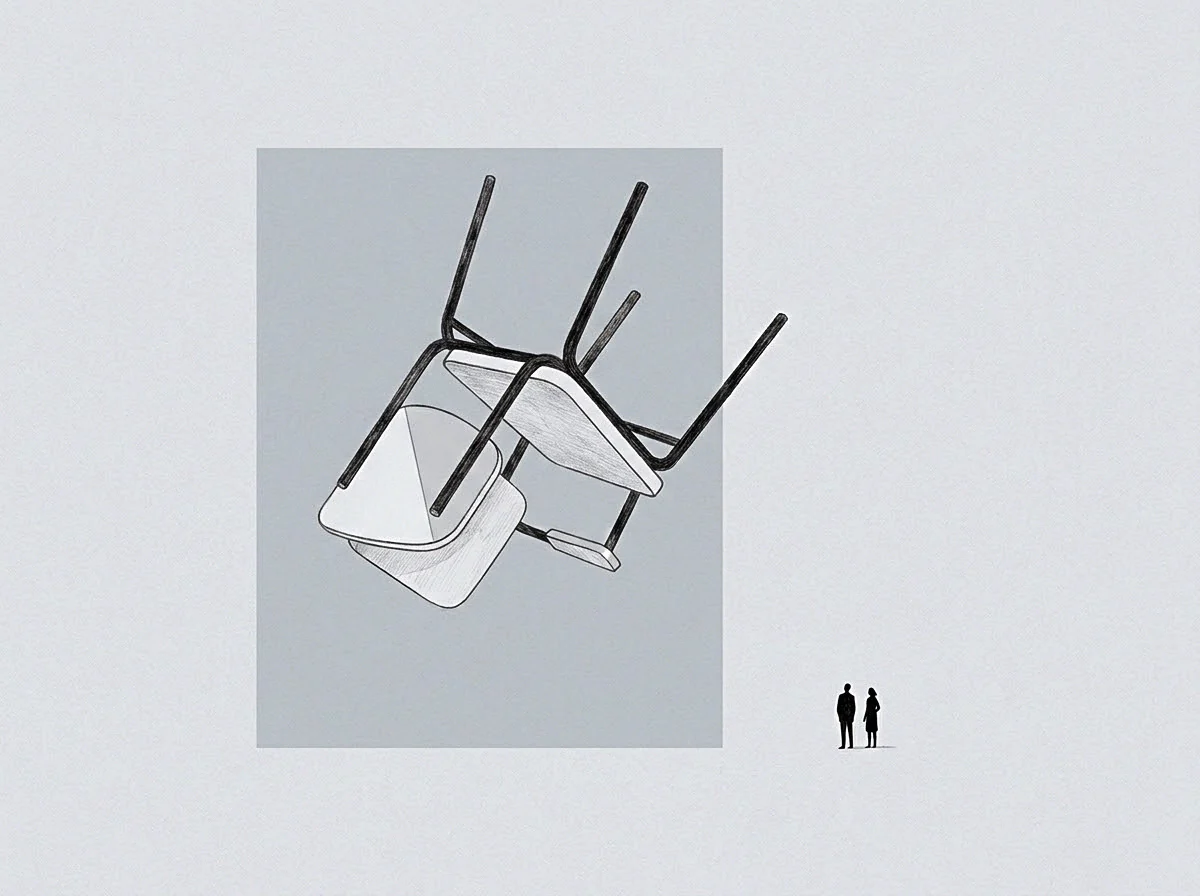
Pace
Human capacity operates under physiological limits that govern long-term effectiveness. When leaders try to sustain high-output decision-making without structural throttling, cognitive strain accumulates across systems over time. Executive depletion shows up in degraded decision quality, lower pattern-recognition accuracy, and detachment long before total operational shutdown occurs.
Cognitive state ultimately dictates response quality.

Throttling Mechanisms and Resource Preservation
Capacity-dependent actions rely on physiological baselines, while choice-driven decisions depend on intentional focus. Trying to override physical depletion through sheer willpower quickly leads to systemic breakdown.
Structural friction absorbs operational pressure.
Setting operational limits preserves executive capacity long before physical exhaustion forces a halt. By establishing clear bounds on daily decision volume, leadership protects the cognitive energy required for complex strategic evaluation.
Declared operating parameters preserve executive floor capacity long before physical exhaustion forces an emergency halt.
Operational stability increases when accountability rests on defined structural mechanisms rather than personal endurance.

Bound
Maintaining structural accountability as an organization grows requires ongoing commitment to declared limits. When expansion tests existing operational boundaries, leadership must decide whether to expand local team authority or slip back into centralized decision-making.
Preserving reserve capacity remains essential for long-term health.

Sustained Governance Through Fixed Parameters
Organizational accountability stays anchored to stated operational limits. As new functional units emerge, maintaining clear parameters keeps operational decisions at the execution level.
Deliberate friction defines where local authority ends.
What structural modifications become necessary when an organization expands beyond the operational reach of its initial parameter set?