
Designing Procedural Governance Walls to Protect Founder Decision Bandwidth
Procedural governance walls defend executive cognitive headroom by converting direct relational pressure into rigid, rule-bound administrative friction.

Intake
Four unread operational inquiries sat open on a laptop display at eleven at night, each demanding immediate executive adjudication on vendor invoices, employee equity grants, and product scope reductions. A person holding the final signature on every corporate action discovers that organizational complexity expands until it consumes all unallocated attention. In control theory, an unconstrained input channel transfers all external disturbance directly to the stabilizing component.
An organization acts as a load-transferring system, continuously routing ambiguity toward the perceived seat of ultimate authority until that seat sets a rigid barrier.
A load-transferring system directs ambiguity toward whichever node accepts incoming strain without friction.
Executive exhaustion rarely stems from high-level strategic selection. Allostatic load accumulates through hundreds of micro-arbitrations forced into working memory without structural damping. When organizational participants learn that the executive answers direct communications at any hour, they treat that direct message as an open path.
The executive becomes the default routing engine for unresolved variance. The perimeter held.

Ticket Routing And The Escalation Trap
Direct communication software creates an expectation of continuous presence. An employee facing a vendor dispute selects the path of least personal cognitive effort, which consists of pinging the principal directly. Research in cognitive ergonomics shows that task resumption after an interruption demands substantial physiological reorientation.
The uninterrupted duration required to resolve complex strategic puzzles disappears under the steady rain of two-minute emergencies.
Procedural walls begin with an enforced routing policy. Under this policy, operational dilemmas pass through an asynchronous documentation repository before reaching human eyes. The author of an escalation states the background, lists three vetted choices, and names the operational consequences of each option.
Inquiries arriving without this formal preparation return to the sender automatically. Nothing moved.

Fixed Triage Cadence
Real-time availability converts an executive into an operational shock absorber. When inquiries collect in an asynchronous hopper reviewed only between nine and ten on Tuesday mornings, the organization adjusts its internal clock. Operating units learn to resolve internal deadlocks rather than tolerate deliberate administrative latency.
Unscheduled access degrades strategic foresight into reactive firefighting. When operational interruptions cross the threshold unchecked, the enterprise bleeds capital while the person at the center manages stationery disputes and vendor spats.

Brake
Administrative pacing imposes deliberate friction between an operational friction point and an executive determination. Immediate responses signal zero extraction expense to the organization, inviting further escalations. Setting a forty-eight-hour pause on non-critical determinations allows secondary operators to solve problems within their own functional layers.
The limit was concrete.
A stated delay transfers problem resolution back to the perimeter where the data originated.
Studies examining social baseline theory suggest that individuals regulate physiological stress by offloading cognitive burdens onto nearby social structures. When a leader acts as an immediate structural buffer, subordinates conserve their own energy by offloading uncertainty upward. An artificial delay breaks this reflexive dependency.
Subordinates confront the discomfort of local decision-making when the center remains silent.

Latency Imposed Upon Inquiries
Imposing a mechanical delay changes how inquiries arrive. An inquiry submitted with a mandatory waiting period undergoes internal revision by the sender. Over forty percent of operational escalations resolve themselves during the mandatory holding period as team members locate alternative files, negotiate compromises, or abandon trivial complaints.
The channel fell silent.
The operational cadence separates urgent solvency hazards from routine commercial coordination. Routine matters enter a weekly batch processing queue. The queue receives attention during designated evaluation blocks, preserving peripheral hours for commercial execution and structural planning.

Concurrency Caps On Active Disputes
Working memory admits a strictly bounded number of concurrent structural evaluations. When an individual attempts to oversee ten corporate disagreements simultaneously, cognitive throughput collapses. Setting a concurrency ceiling of three open operational reviews limits distraction.
- Active dispute ceiling maintains cognitive headroom by capping concurrent structural arbitrations at three items across the executive layer.
- Evidence completeness threshold halts executive review until counterparty positions appear in writing with signed exhibits attached.
- Resolution deadline interval establishes a seventy-two-hour window after which unresolved lower-tier disputes revert to departmental leads for unilateral settlement.
A wall that yields under personal pleading ceases to function as a barrier and becomes a bargaining point.

Charter
Codified corporate authorizations replace interpersonal appeals with mechanical permissions. When spend limits, hiring authority, and commercial commitments exist only as spoken agreements, subordinates seek validation for routine expenditures. Drafting an explicit governance document relieves the executive from acting as a personal permission dispensary.
The paper remained blank.
| Authority Tier | Spend Threshold | Sign-off Mechanism | Executive Exposure |
|---|---|---|---|
| Tier One | Below ten thousand dollars | Department Lead signature | Zero review required |
| Tier Two | Ten to fifty thousand dollars | Two Officer concurrence | Weekly summary memo |
| Tier Three | Fifty to two hundred thousand dollars | Finance Lead plus Officer | Asynchronous forty-eight-hour veto window |
| Tier Four | Above two hundred thousand dollars | Formal Board Resolution | Scheduled strategic evaluation session |
The distribution of corporate authority clarifies who carries operational outcomes. When a department lead holds signature power up to ten thousand dollars, fiscal accounting rests with that division head. The executive reviews aggregate cash flow ledgers once a month instead of adjudicating single software subscriptions.
The push met steel.

Whose Assent Operates The Emergency Exception?
Operational realities occasionally demand rapid capital deployment or immediate contract execution outside normal bureaucratic bands. A governance charter identifies the exact officer permitted to declare an operational crisis. The charter specifies that an exception invokes an immediate freeze on uncommitted discretionary spending across the relevant unit until the next board cycle.
An emergency procedure without an operational cost functions as an escape hatch that empties the governance container. By tying the emergency override to a tangible administrative penalty, frivolous bypasses cease. The room waited.

Authority Thresholds By Dollar Amounts
Fiscal limits define operational boundaries with mathematical exactness. A junior manager possessing five thousand dollars of unilateral clearance resolves tooling shortages without executive involvement. Clear boundaries protect executive attention while providing mid-tier leadership the autonomy required to execute operational assignments.
The governance document dictates that any contract committing company cash flow beyond eighteen months belongs to a formal board subcommittee review, relieving the operational principal of ad-hoc bilateral negotiations with vendor representatives.

Filter
Relational expectations frequently erode formal governance lines in early-stage commercial enterprises. Early employees remember direct access to the principal and interpret administrative processes as personal coldness. A corporate leader manages this transition by remaining neutral while pointing to institutional policies.
The policy stood firm.
A written policy absorbs the relational friction that would otherwise damage bilateral working trust.
Sociological studies in organizational behavior indicate that procedural barriers preserve interpersonal cohesion when individuals attribute delays to external rules rather than personal disinterest. The founder points to the charter rather than defending personal boundaries. The rules define the interactions.

Procedural Distance And Relational Friction
Direct relational management consumes massive emotional energy. An executive attempting to maintain informal, highly responsive dynamics with thirty individuals experiences acute regulatory strain. The brain treats social negotiations as high-priority signals, displacing deep technical contemplation.
A formal intake interface interposes structural distance between the petitioner and the decision-maker.
The clerk logged the transaction. Subordinates adapt rapidly to predictable bureaucratic routines. When a policy requires all compensation revisions to follow a twice-yearly compensation committee review, informal corridor negotiations about salary disappear.

Derived Availability Against Announced Rejection
Verbally declaring personal unavailability often invites debate and counter-proposals. In contrast, derived availability arises silently from predictable calendar architecture and structured submission cadences. Counterparties observe response latencies, observe which proposals advance through governance channels, and derive true priorities from institutional outcomes.
The counterparty backed away. Silence across an informal chat platform coupled with meticulous reviews inside formal governance repositories directs organizational energy toward the proper channels. The organization aligns around verified operational paths.
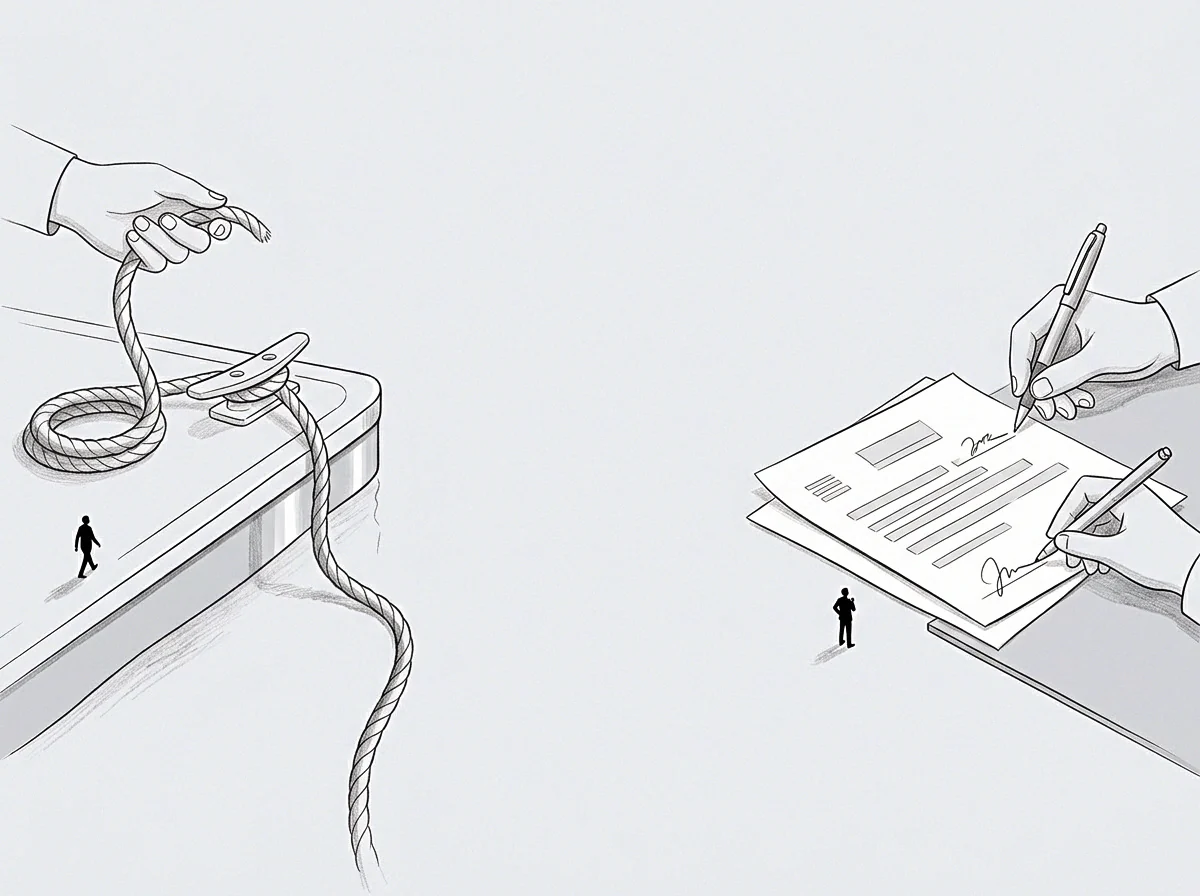
The company rules prevent immediate unilateral approvals, so the proposal must wait for the regular governance cycle.
Anchor
Physiological state establishes the biological boundary condition for cognitive analysis. An individual operating under sustained endocrine stress loses access to wide-angle risk calculation, reverting to primitive threat-avoidance postures. State acts as the biological transfer function that dictates whether an executive can evaluate long-term enterprise value or simply capitulate to reduce immediate friction.
State governs throughput.
Biological headroom dictates the quality of corporate choices long before strategy documents receive review.
Experimental psychology identifies a clear boundary between state-gated executions and decision-gated actions. A state-gated act depends upon physiological stability, neural recovery, and hormonal balance. No volume of intellectual discipline produces superior capital allocation decisions when sleep deficits elevate systemic cortisol and impair prefrontal cortex function.

State Gated Execution In Governance
Complex strategic determinations demand high parasympathetic tone. When a leader spends hours absorbing organizational noise, sympathetic arousal dominates, narrowing attention onto near-term relief. Preserving strategic capability requires ring-fencing biological capacity through non-negotiable structural locks.
The enterprise schedules all significant capital allocation evaluations, major structural reorganizations, and executive hires during the first three hours of the operational day. No exceptions occur. The hours expired quietly.
The Unscheduled Sixty Minutes
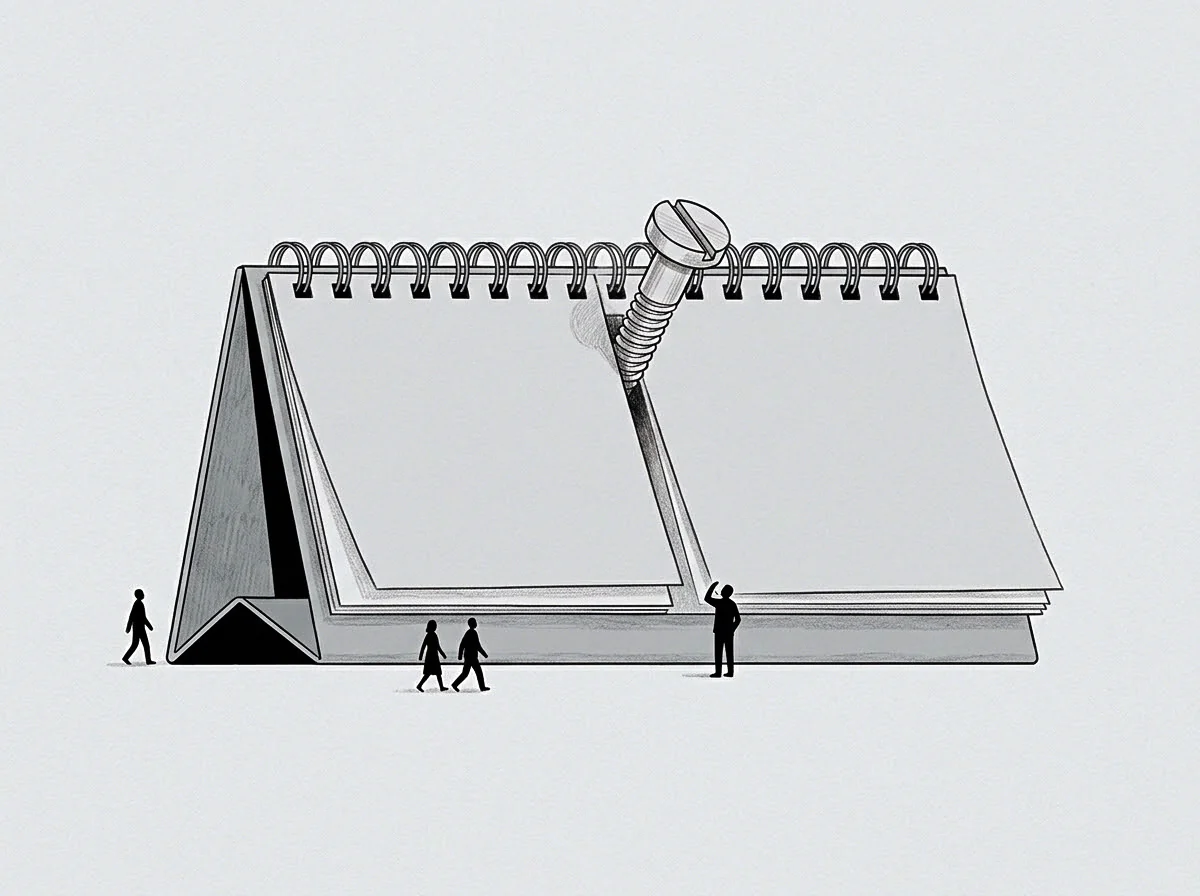
An executive calendar packed with back-to-back thirty-minute appointments guarantees strategic drift. Without open intervals, reflection vanishes and administrative backlog colonizes all mental real estate. Structuring an unscheduled block into the core workday anchors executive capacity against ambient operational pull.
Protecting this cognitive reserve requires treating calendar blocks as hard administrative assets. Tactical emergencies yield to structural protection. The organization learns that the primary executive resource consists of acute discernment rather than rapid clerical throughput.
Whether an organization can maintain rigid procedural protections when external capital pressures mount and market turbulence demands continuous executive presence remains an open question for mature corporate governance.