
Neurobiological Limits Of Co Regulatory Integration In High Scale Enterprise Decision Systems
Human autonomic systems conserve energy through physical proximity, setting an absolute biological limit on how many decisions one body can stabilize.
Signal
Four operational streams report critical state changes within twenty minutes, while six vice presidents wait in a video conference room for an executive to enter. The executive sits before three monitors, heart rate elevated and vagal tone dropping as autonomic resources mobilize around a fracturing production timeline. Every department head arrives with altered physiology: rapid speech, shallow breathing, and a cognitive focus narrowed strictly to immediate threat mitigation.
The transmission brings raw panic along with operational data. Inside the room, the executive absorbs that shared volatility, maintaining a steady cadence that gradually slows the operational leads’ breathing over forty minutes of review. When the calls end, the leads return to their teams with clear focus, while the executive stays still in the quiet office, hands cold and prefrontal reserves exhausted.
The founder pays the physiological invoice.
Enterprise architecture treats decision capacity as if it behaves like computational throughput, scaling smoothly as software interfaces multiply. Human nervous systems rely on an older biology described by social baseline theory, which details how mammalian brains calculate metabolic budgets from the immediate availability of reliable conspecifics. Operating alone, the brain budgets for maximum vigilance, handling threat response as a costly individual expense.
The physical presence of a familiar, competent counterpart lowers hypothalamic-pituitary-adrenal activity, reduces perceived threat load, and cuts glucose utilization across the ventral anterior cingulate cortex. Large organizational structures reverse this design. Rather than distributing strain across an interdependent group, they funnel unmitigated operational anxiety upward into a single, isolated node.
A central node absorbing uncontained distress across distributed units depletes its metabolic reserve before midday.
This structural shift turns decision roles into ungrounded shock absorbers. Subordinates draw on an executive’s calm to stabilize their own thinking, relying on what literature terms borrowed regulation. The central operator functions as an external prefrontal cortex for ten separate divisions, translating panic into ordered priorities.
Because digital tools separate information transfer from biological feedback, the person providing stability receives none of the reciprocal somatic dampening that physical presence supplies. When an organization mistakes this neurological subsidization for administrative stamina, the executive risks autonomic collapse, degraded risk appraisal, and sudden operational paralysis across critical nodes.
Floor
Metabolic conservation forms the evolutionary baseline of mammalian survival. Brain tissue makes up two percent of human body mass while consuming twenty percent of resting energy. In isolation, self-regulation requires a high burn rate of glucose and oxygen.
Standing shoulder to shoulder with a reliable partner changes the math: threat perception shifts from a private crisis to shared work, lowering autonomic reactivity. In small groups, mutual presence keeps neural energy expenditure near the baseline floor. Enterprise structures disrupt this arrangement by extending responsibility far beyond the biological limits of human social grooming mechanisms.
Does Physical Proximity Scale Across Distributed Tiers?
Sensory micro-signals govern how autonomic stability moves between bodies. Pupil dilation, minor postural adjustments, voice frequency, and breathing rhythms signal safety when people share a room. Screens and compressed audio strip those relational cues from the channel.
When teams connect through digital interfaces, the receiving brain spends additional metabolic effort attempting to infer emotional safety and executive calm. The central node projects a steady tone and clear instruction over fiber optic cables without receiving the subcortical relief that comes from a present, regulated peer. The interaction becomes a one-sided drain on central autonomic reserves.
The metabolic divergence between direct presence and digitized queuing becomes stark when measured across operational tiers.
| Tier Delivery Mode | Neural Expenditure | Autonomic Dampening Latency | Concurrency Ceiling | Signal Coherence Degradation |
|---|---|---|---|---|
| Co-located Physical Room | Low autonomic baseline | Immediate somatic synchronization | Four to six individuals | Minimal relational drift |
| Synchronous Digital Video | Moderate prefrontal strain | Delayed parasympathetic recovery | Eight to twelve streams | Subtle latency distortion |
| Asynchronous Textual Queue | Extreme cognitive overhead | Absent physiological containment | Indefinite incoming threads | Severe threat amplification |
The data confirms that co-regulation remains bound to physical proximity. Once an organization grows past sixty individuals, direct physiological synchronization stops working. Systems replace mammalian trust mechanisms with written procedures, metrics, and ticketing queues.
Yet in a crisis, people bypass formal governance to find a calm voice that can settle their autonomic alarms. The executive ends up absorbing the unresolved anxiety of hundreds of workers through a screen, carrying a load that outstrips biological tissue.
A nervous system taxed beyond its evolutionary capacity treats every unread notification as physical threat.
True operational resilience requires distributing decision authority so small, co-located teams contain their own operational anxiety rather than sending it to a single center.
Friction
Longitudinal strain builds up when regulation flows in only one direction. Someone who stays steady during crises quickly becomes the default shock absorber for the enterprise. Team members seek out that presence because contact reduces their own operational agitation.
The stabilizing figure often operates on an internal working model built around self-sufficiency, typically formed in environments where keeping others safe mattered more than being supported. As a result, the individual lacks an open receptor slot for external help, offering stability continuously while struggling to accept it in return.
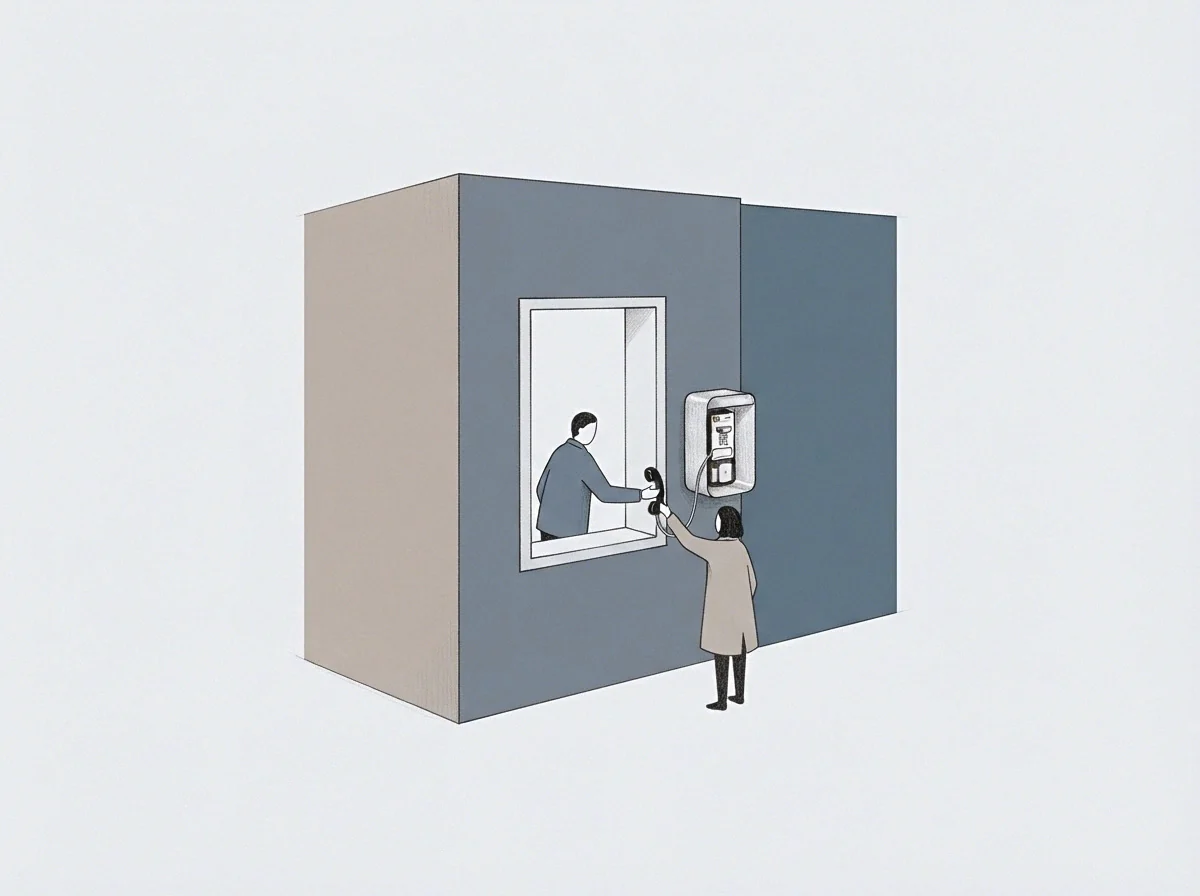
Structural Asymmetry in Organizational Anchoring
Dependence deepens through repeated crisis intervention. An executive sits with an engineering lead whose system is failing, steadily calming the room until the lead can review log files rationally. The engineer leaves feeling clear and grounded, mistaking that steady state for personal clarity without recognizing that the stability was borrowed.
Ten minutes later, a commercial lead enters over client cancellations, repeating the same pattern. The executive acts as the single anchor for both encounters.
The person providing the anchor takes on unreciprocated autonomic strain.
This dynamic creates severe operational brittleness across the executive suite. The field documents several specific systemic dysfunctions when enterprise reliance runs unchecked across an organization:
- Autonomic exhaustion emerges when an executive spends physiological reserves calming team panic without restoring parasympathetic capacity through reciprocal contact.
- Decoupled competence signaling occurs because a leader who masks physical strain invites more demands from colleagues who read composure as unlimited capacity.
- Decision narrowing sets in as sustained allostatic load degrades working memory, forcing leaders into binary choices during major crises.
- Relational starvation develops when an individual spends ten hours regulating others without a way to process their own cognitive depletion.
No one questions the stamina of an executive who appears unshakeable until that person suddenly disappears behind a wall of unread messages.

Beam
Structural support requires a deliberate biological design. In engineering, a load-bearing beam transfers weight down into foundations so the roof does not collapse on occupants. If that beam holds moisture without releasing it, the timber dry-rots from the inside out, losing structural strength while looking sound on the surface.
An executive acting as an unbuffered regulatory beam degrades in the same way, maintaining a calm exterior while internal neurochemical reserves run dry.

Constructing the Second Template
Changing an operational baseline takes more than intellectual understanding; it requires biological repatterning. Simply knowing that someone carries too much weight changes nothing in the nervous system. The body resets its defensive habits through earned security, a physical recalibration built on repeated experiences of shared support.
A leader accustomed to one-sided stabilization must establish a second template for professional partnership. That framework creates real parity, training the nervous system to let another competent colleague handle genuine weight without stepping in to take it back.
A boundary drawn only in thought dissolves the moment operational urgency enters the room.
True partnership requires sitting with the discomfort of operational uncertainty while a colleague resolves a problem. When an executive steps back and lets an operational partner struggle, adapt, and hold position, the pattern of one-sided containment breaks. The nervous system learns through experience that delegation does not lead to disaster.
The transition between unilateral containment and reciprocal responsibility exposes deep structural fault lines across enterprise systems:
- Recognizing unilateral subsidization reveals where a leader drains personal reserves to hide dysfunction in underlying teams.
- Establishing a stated limit defines how much crisis absorption one person will handle during a given operational period.
- Withstanding counterpart turbulence means holding firm when dependent managers push back after the steadying subsidy stops.
- Experiencing reciprocal relief proves that mutual reliance protects cognitive stamina over long periods of organizational volatility.
Whether enterprise systems can tolerate leaders who refuse to act as biological fuses remains an open question that executive teams rarely test.

Decay
Biological systems prioritize survival over organizational metrics. When high-pressure environments subject a central operator to endless, one-sided emotional demands, the nervous system triggers shutdown responses to protect core function. Cortisol receptors desensitize, hippocampal volume contracts, and capacity for social engagement drops.
The person in the role turns flat, detached, and unresponsive to ongoing issues. Organizations label this breakdown as burnout, treating it as a personal flaw in stamina or character. In reality, the breakdown comes from designing complex systems that ignore basic mammalian co-regulation.
The unstated expectation that an executive can provide infinite containment without receiving reciprocal grounding is what ultimately breaks the enterprise.