
Structural Latency Protocols Protect Focused Engineering Output
Structural latency protocols enforce mandatory time delays on communication channels, shielding engineering concentration and lowering cognitive context switches.

Floor

The Immediate Response Trap
An engineer opens an integrated development environment at eight in the morning, holding forty files in working memory. By nine fifteen, six notifications from two product managers and an operations lead break that focus. Each ping takes thirty seconds of analysis, but each diversion carries a context recovery penalty exceeding twenty minutes.
Demanding zero response latency treats technical reasoning like an instant lookup table, ignoring that engineering production depends on long stretches in an uninterrupted execution state.
Inbound inquiries often arrive faster than code commits settle. When response speed becomes the proxy for engineering competence, work slips across the entire codebase. An engineer attempts to absorb incoming request velocity by cutting implementation reviews short, which lets structural flaws into the system logic.
Attention fragmentation corrupts system correctness well before project tracking boards reflect missing deliverables.
A communication channel without structural delay converts high-order system design into continuous peripheral coordination.
When an operating environment enforces zero delay, technical staff remain in constant reactivity. The organization buys rapid surface clarity by giving up deep structural execution, and that operational debt forces emergency refactoring cycles three quarters later.

Queue
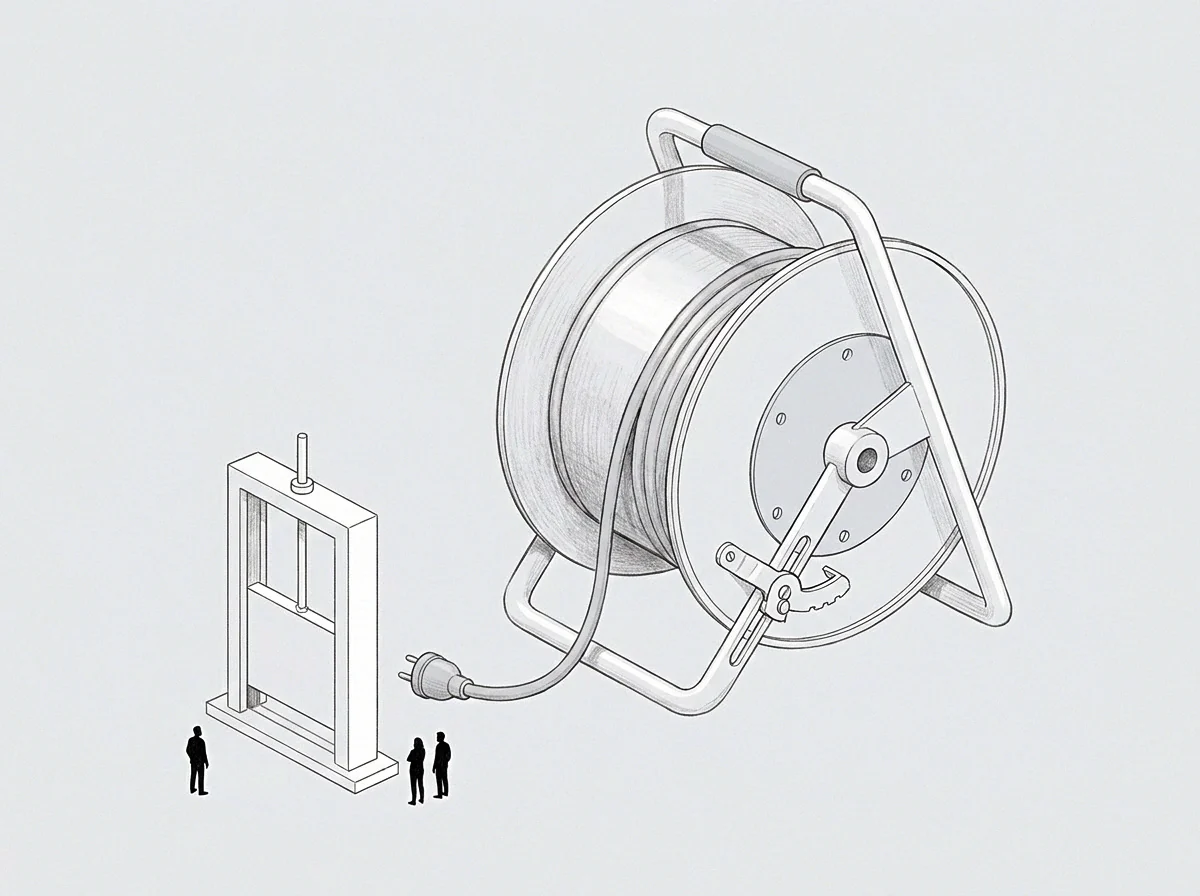
Structural Latency Mechanics and Inbound Sorting
Structural latency establishes deliberate, non-negotiable temporal buffers between an inquiry and its technical answer. It removes the engineer from direct contact with synchronous inquiry streams. Inquiries drop into a managed backlog rather than an active terminal screen, decoupling question arrival from cognitive evaluation.
The technical implementation of structural latency protocols rests upon three discrete mechanical properties:
- Inquiry Batching collects incoming questions into fixed review windows separated by four hours of unmonitored execution time.
- Asynchronous Triage assigns incoming inquiries to systematic categorical tiers based on production impact rather than requester seniority.
- Context Envelopes require every submitted inquiry to contain reproduction steps, attempted resolutions, and system logs before entering technical review.
These protocols create a firm barrier against casual interruptions. Requiring structured inputs slows the push from adjacent teams, and a requester facing a ninety-minute delay alongside a required documentation template often resolves simple ambiguities independently. The barrier sorts incoming inquiries before an engineer ever evaluates them, preventing the system from absorbing unnecessary external load.
Engineers state response delays as systemic operational parameters rather than personal social refusals.
Mechanical delay does not destroy operational coordination; it confines collaboration to explicit working windows. Teams operating under defined latency protocols report higher accuracy in bug isolation and complex subsystem implementations.

Does Forced Latency Degrade Critical Incident Resolution?
Live operational outages require distinct treatment from routine architectural inquiries. A functional latency design defines strict, objective tripwires for emergencies: when production telemetry detects automated error thresholds exceeding five percent, the system routes notifications through a dedicated paging apparatus.
Non-urgent issues remain strictly inside delayed queues. Misclassifying an architectural preference inquiry as an urgent interruption incurs immediate organizational pushback, and engineers protect their execution windows by declining unscheduled requests outside designated operational triage hours.
A clause specifying a four-hour minimum response latency on non-critical tickets prevents real-time scope expansion and preserves uninterrupted blocks for core infrastructure delivery.

Latch

Execution State Retention and Boundary Control
The engineering mind operates like a stateful processor. When working through a complex distributed consensus algorithm, local registers, call stacks, and architectural edge cases reside in transient mental memory. A single synchronous interjection dumps that transient state completely.
The latch mechanism locks external access channels during active execution blocks. The technical boundary operates through three observable operational postures:
| Communication Posture | Average Interruption Frequency | Context Reconstitution Cost | Net Weekly Deep Output |
|---|---|---|---|
| Synchronous Open Channel | Eighteen interruptions per day | High mental recovery load exceeding three hours daily | Twelve hours total commit time |
| Ad Hoc Individual Delay | Seven interruptions per day | Moderate fragmentation across irregular intervals | Twenty-one hours total commit time |
| Protocol-Driven Structural Latency | Two scheduled triage passes per day | Low context fragmentation with clean state preservation | Thirty-four hours total commit time |
The table confirms that individual ad hoc delays fail to provide sufficient cognitive insulation. When engineers attempt to manage incoming interruptions through personal willpower, colleagues push harder on alternate channels. A structural policy supported by automated toolchains removes personal discretion from the interaction, letting the protocol carry the friction.
Consider two engineering units operating in parallel over twelve weeks. The first unit answers messages within twelve minutes. The second unit processes non-incident communications twice daily, at eleven in the morning and four in the afternoon.
The second unit commits forty percent more core feature code with sixty percent fewer regression defects, without working longer hours, simply by cutting out the destructive context-switching loop.
A stakeholder submits the specification three hours prior and receives no confirmation that technical staff read the notes.

Slate
The Economics of Uninterrupted Output
Clear communication boundaries reset the baseline expectations of stakeholders across the firm. When product teams learn that engineering responses operate on scheduled latencies, they adjust their workflow planning cycles, replacing spontaneous demands with thorough written proposals.
An operator evaluates output via shipped features and system reliability. Continuous pinging produces superficial speed while crippling long-term velocity. When technical leaders install latency walls, internal business units often protest the immediate loss of access, perceiving the delayed response as bureaucratic resistance rather than a defense of execution capacity.
A team that answers every inquiry within ten minutes cannot build systems that last ten years.
Holding the boundary requires consistency, but once stakeholders realize that scheduled latency yields predictable, defect-free releases on planned delivery dates, resistance subsides. The latency protocol earns credibility through the physical excellence of the resulting technical artifact.
Execution holds when incoming communication moves through structured queues and technical teams speak only through scheduled triage blocks.

Circuit
Systemic Isolation and Operational Limits
Structural latency establishes a clean decoupling between the incoming demand for information and the internal production of code. By denying immediate answers, the system forces upstream teams to clarify their own logic before passing questions across the boundary, filtering out organizational noise.
Yet this mechanical boundary introduces distinct structural vulnerabilities. If the latency window expands beyond the operational iteration speed of the company, product managers begin making unilateral architectural assumptions to avoid the queue, leaving engineering focused at the expense of strategic alignment.
The arrangement remains unstable under shifting market conditions. When an early-stage product requires daily market validation pivots, rigid four-hour latency gates can insulate developers from necessary shifts in customer direction. The protocol must match the actual cadence of organizational survival.
At what exact threshold of business volatility does a structural latency protocol transition from a practical shield for deep execution into an obstacle against urgent commercial realities?