
Structural Mechanics of Stated Capacity Boundaries in Leadership
Stated capacity boundaries function as immovable organizational fixtures that redirect incoming cognitive load to lower operational tiers.

Wall
A capacity boundary exists as a physical limit inside an operating environment. The person in the executive seat encounters demands from investors, direct reports, and peers at an intensity determined by organizational velocity. When an executive attempts to hold capacity through personal endurance, incoming pressure compresses discretionary attention to zero.
The operating environment continues to deposit obligations until a counter-force stops the progression. A boundary functions as a rigid surface against which operational momentum arrests. The load-transferring properties of the organization require an immovable fixture rather than an elastic personal preference.
The distinction between a personal request and a structural boundary turns on predictability. A request invites bilateral negotiation during moments of friction. A structural boundary states the conditions under which throughput ceases entirely.
In human physiology, an allostatic threshold defines the boundary beyond which physiological adaptation produces systemic wear. The organizational counterpart is the stated ceiling on executive processing. When this ceiling remains private, the executive absorbs variance internally.
Once stated as a fixture of the operating agreement, variance diverts elsewhere in the hierarchy.
A stated condition of non-availability shifts the duty of resolution back to the originating node.
The push against an unstated limit continues indefinitely. Teams test the capacity of leadership by routing unclassified anomalies upward. The upward routing persists because executive intervention carries no explicit price for the sender.
A clear statement of capacity introduces friction at the transmission interface. The sender recalculates the transaction cost before transmitting the anomaly. Operational throughput stabilizes when the perimeter resists unilateral expansion.
A concrete schedule stipulation specifies processing intervals of forty-eight hours for non-critical routing. The rule alters workflow cadence across all operational departments.

Load
Operational volume distributes across available processing units in proportion to perceived compliance. An executive who absorbs incoming tasks without deflection functions as an infinite sink. The engineering literature on queueing systems identifies that a processing node operating above eighty-five percent utilization displays exponential increases in latency.
The organization experiences this latency as executive indecision. The underlying cause remains simple queue saturation. Cognitive capacity degrades in direct alignment with switch rate between disparate problems.
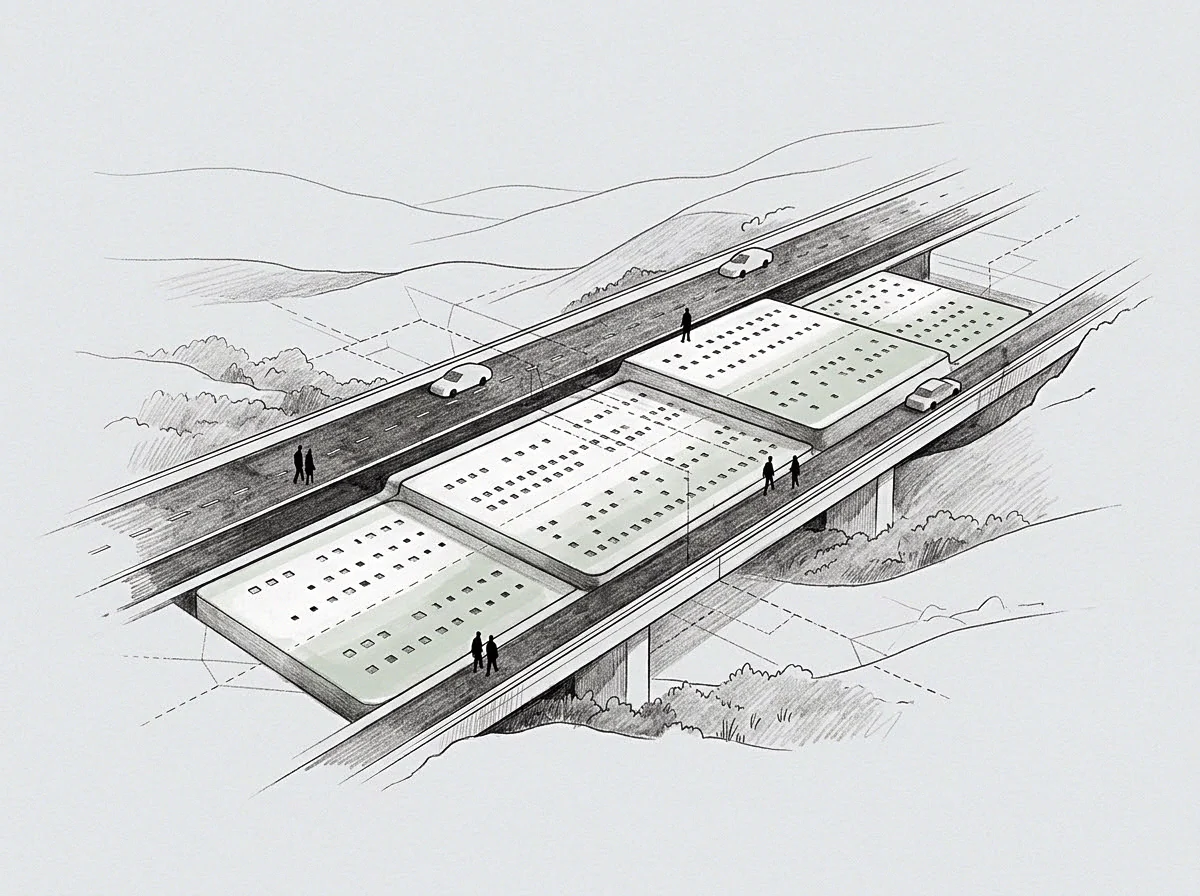
Distribution Mechanisms Across Executive Tiers
The transmission of tasks follows the path of least resistance through the enterprise. When senior operators refuse to establish rigid intake parameters, middle management routes half-formed deliberations to the top seat. The top seat acts as a dampener for organizational conflict, consuming finite cognitive bandwidth on coordination friction.
- Intake throttling restricts incoming strategic reviews to designated weekly processing intervals. Senders refine initial proposals before formal review occurs.
- Decoupled resolution forces operational issues below a stated capital value to settle without executive presence. Accountability settles on the direct manager.
- Asynchronous routing eliminates immediate synchronous interruptions during core creative windows. Information travels through documented records instead of verbal calls.
The table below summarizes the operational performance characteristics between elastic executive accommodation and formal capacity limits under steady-state operating pressure.
| Operating Dimension | Elastic Executive Accommodation | Stated Structural Boundaries |
|---|---|---|
| Queue Latency for Core Directives | High and unpredictable across quarters | Bounded within predictable temporal bands |
| Mid-Level Decision Autonomy | Atrophied through continual escalation | Enforced through structural non-intervention |
| Executive Energy Expenditure | Sustained above baseline physiological tolerance | Stabilized below critical overload points |
| Systemic Error Propagation | Concentrated at congested central node | Isolated within departmental origins |
Unchecked escalation starves autonomous tiers of decision-making competence, causing widespread operational paralysis across peripheral business units.

Silence
Non-response serves as an operational instrument when defined in advance. The conventional instinct in corporate communication prioritizes perpetual accessibility. An always-on interface invites low-value pings, which displace analytical depth.
Executive presence gains leverage through deliberate scarcity. By maintaining predictable zones of communication blackout, the leader compels the organization to resolve ambiguities locally.
Operational silence functions as an immovable obstacle that forces lateral coordination among subordinate teams.
The mechanics of non-engagement depend on unambiguous declaration. Silence without a prior boundary appears erratic to external observers. Silence grounded in a published schedule establishes an objective operating rule.
The organization ceases to interpret non-response as personal friction. The behavior registers as normal mechanical functioning. In the laboratory study of socio-affective dynamics, social baseline theory demonstrates that predictability in proximity governs metabolic energy expenditure during joint tasks.
Clarity regarding when an individual will not engage conserves baseline regulatory energy for both parties.
The ping volume declines once the channel ceases to yield instantaneous return. Senders classify their own issues before transmission. The trivial queries evaporate without intervention.
The executive is simply unavailable until the scheduled distribution window tomorrow morning.

Transfer
A boundary does not destroy incoming workload. The energy transfers into surrounding operational conduits. Leadership capacity design is an exercise in structural mechanics: load deflected from the center must find support within surrounding structures.
If adjacent structures lack reinforcement, deflecting load causes localized structural failure. The creation of a capacity limit mandates concurrent investment in delegated authority.

Consequences for Subordinate Tiers
The immediate consequence of an executive boundary is lateral friction among direct reports. Deprived of an ultimate arbiter for daily disputes, department heads confront cross-functional misalignments directly. This friction constitutes the necessary training ground for enterprise judgment.
Operating maturity develops under the weight of unassisted resolutions.
A parallel situation unfolds in deep-sea saturation diving installations. The dive supervisor monitors internal gas mixtures from a dry control console. The supervisor refuses to intervene in routine underwater physical tasks, leaving divers to resolve snagged lifelines through established pair protocols.
Intervention from the surface remains reserved for catastrophic umbilical severance. The console operator protects regulatory capacity for enterprise survival. The underwater personnel execute proximate tasks.
The capacity to govern expands in proportion to the volume of operational reality an executive leaves unmanipulated.

Term
A boundary functions over long operating horizons only when converted into legal or structural terms. Informal personal agreements erode during commercial crises. A term sheet, an operating agreement, or an executive charter formalizes the exact boundary conditions.
The text specifies absolute limits on governance seats, investor update cadence, and internal escalation pathways. The term removes human volition from the maintenance of the perimeter.
A boundary written into an operating governance document survives leadership fatigue during acute enterprise crises.
Consider two co-founders operating an enterprise software company over four calendar quarters. Founder A assumes the commercial executive chair, while Founder B directs core technical architecture. Without an explicit term governing inbound product requests from early enterprise clients, Founder A routes fifty ad-hoc feature specifications to engineering per quarter.
Founder B absorbs the incoming requests, attempting to fulfill delivery while preserving core system stability. Latency expands, sprint delivery drops thirty percent, and interpersonal friction reaches an inflection point.
The introduction of a rigid term changes the mechanical interaction. Founder B enacts a contractual clause limiting sprint alterations to one executive review per calendar month. Feature requests outside this interval incur an automatic deferral to subsequent development quarters.
Founder A now confronts client pressure directly, utilizing price and contract timing to manage expectations. The structural term shields the technical team from unmetered volatility. Engineering throughput recovers its baseline trajectory within sixty days.
Whether an organization can sustain rigorous capacity ceilings when capital markets demand continuous operational acceleration remains an open question for future structural governance.