
Structural Load Transfer Mechanics across Scaling Co-Founder Execution Interfaces
Scaling co-founders transfer operational load when execution limits are stated as explicit structural terms rather than absorbed through individual endurance.

Joint
When four critical operational alerts arrive simultaneously at midnight, an executive partner may already be at maximum capacity. Absorbing that volume without stating a boundary treats emotional composure as available bandwidth. This unstated capacity creates an implicit contract: one partner assumes open headroom while the other accumulates strain, silently shifting operational load until performance breaks down.
In early-stage companies, co-founders rely on continuous informal alignment, where working side-by-side masks individual limits. As headcount grows, decision volume scales non-linearly. Without explicit terms for operational handoffs, the partner with higher distress tolerance becomes the default repository for unresolved friction.

Structural Interface Friction in Early Partnership
Building an early venture relies heavily on constant, informal alignment, where shared presence keeps coordination costs low. Operational limits stay implicit because real-time adjustments absorb sudden workload surges, blending individual limits into a shared baseline that functions well enough while concurrency remains low.
Growth introduces distinct functional domains. As teams expand, operational demands bypass shared context and hit individual leaders directly. When one partner faces a surge in execution demands, informal load-sharing breaks down.
The overwhelmed partner often tries to maintain the appearance of open headroom, delaying formal limits.
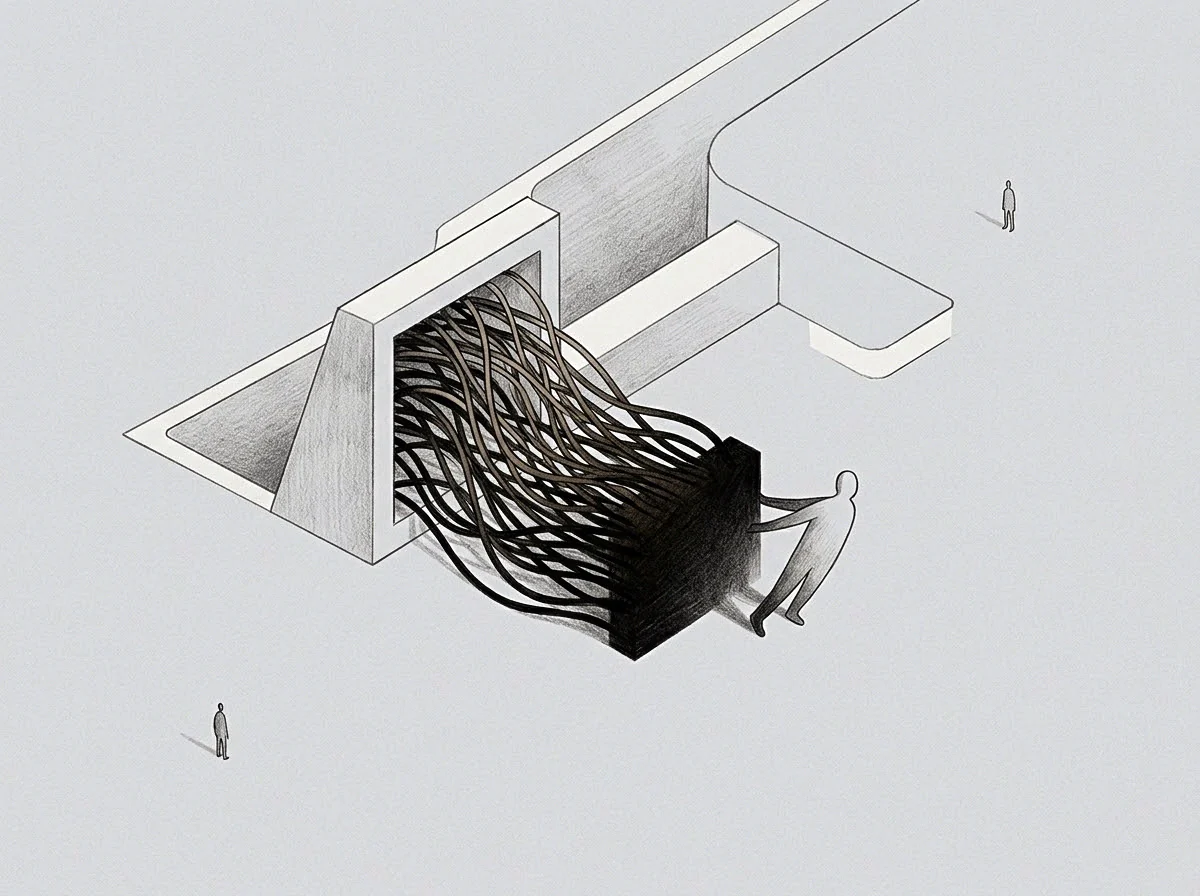
Load Concentration at Unstated Boundaries
Without clear functional boundaries, incoming requests drift toward whoever absorbs them without complaint. The partner transferring the work interprets that silence as available capacity, effectively treating every unstated limit as an invitation to offload tasks. Over time, one executive seat becomes severely overloaded while the other runs below capacity.
Consider two co-founders operating for three years without formal boundaries. Executive A manages product engineering, while Executive B handles revenue generation and investor relations. As market demand expands, customer success escalations bypass support teams and flow directly to Executive B, who absorbs them in the evening without noting that customer operations sit outside their bandwidth.
Executive A assumes the function is fully resourced, leaving the systemic gap hidden until Executive B hits severe operational burnout.
The partner taking on offloaded tasks eventually sees how unstated boundaries turn individual endurance into organizational debt, forcing the underlying business model to absorb hidden costs.

Friction
Operational volume expands rapidly as direct reports double across functions. An individual leader can generally manage no more than four parallel complex work streams before context switching degrades decision quality. Without protocolized boundaries between co-founders, constant task switching creates internal system drag.
Clearing context and re-establishing working memory consumes substantial cognitive energy. When incoming requests cross an unstated threshold, executive throughput drops sharply, turning the co-founder interface into a source of systemic delay rather than momentum.

Control Loops and Execution Error Signals
Scaling an organization requires clear feedback between initial decisions and observed outcomes. In a small executive pair, operational misalignments register immediately through daily contact, but growth weakens these feedback loops. When load moves across an informal boundary, the sending co-founder loses visibility into the true operational cost of the request.
Without clear feedback, the sender takes completed tasks as proof of available capacity. The receiving partner absorbs the operational strain internally, masking symptoms of overload to keep the team moving forward. This suppression prevents the company from reallocating resources, allowing structural imbalances to persist until execution stalls completely.
Holding an unstated limit while absorbing operational task spikes inevitably converts executive capacity into a structural bottleneck for the enterprise.

Interface Failure Modes Under Scale
Growth exposes hidden bottlenecks between leadership roles. When load transfer mechanics remain informal, the operational interface between co-founders tends to fail in predictable ways.
- Passive Load Absorption occurs when an executive accepts incoming tasks without assessing current bandwidth, causing silent backlog growth and delayed delivery.
- Covert Escalation Deflection emerges when a partner reroutes unresolved disputes back to the originating executive without clear criteria, creating redundant communication loops.
- Asymmetric Availability Expectation develops when one leader maintains continuous real-time presence while expecting identical responsiveness from a partner focused on deep work.
- Contextual Drift Shear happens when functional separation prevents co-founders from sharing baseline facts, forcing high-friction alignment meetings for routine decisions.
When these interface failure modes operate unchecked, executive capacity degrades, decision delays escalate across departments, and key strategic initiatives stall due to leadership distraction.
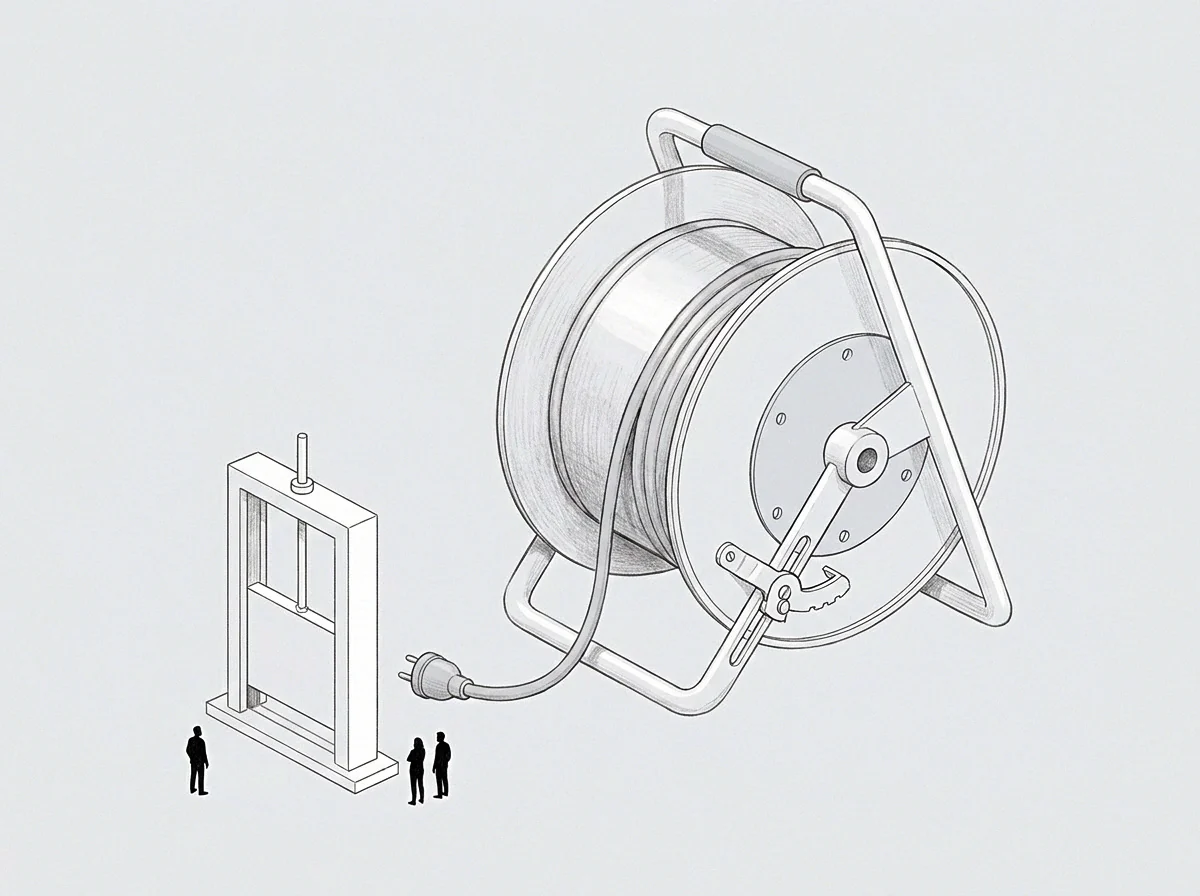
Shear
Capacity declines when incoming demands exceed available cognitive resources. Operational state reflects actual real-time output capacity based on physiological and workload factors. Mood, by contrast, reflects subjective emotional variation and carries no structural information about bandwidth.
Confusing emotional composure with structural capacity undermines operational planning.
State-gated tasks cannot execute when cognitive resources fall below critical thresholds, regardless of motivation or intent. Decision-gated tasks require only directional clarity and can move forward as soon as priorities align. Mistaking a state-driven limit for a lack of commitment creates serious friction between executives.

State Against Mood in Execution Transfer
Exhaustion changes throughput regardless of motivation. Once an executive reaches cognitive capacity, pushing for additional output leads to escalating error rates, hitting a firm physical limit.
A co-founder experiencing severe overload cannot restore operational headroom through effort or positive attitude alone; the situation requires an immediate reduction in load. If the other co-founder views this exhaustion as a passing mood, they will keep sending tasks, creating persistent friction.
An operational limit stated clearly as an external wall protects structural capacity where individual regulatory endurance inevitably fails.

When Does an Unstated Threshold Force Operational Decoupling?
System overload occurs when individual capacity thresholds are repeatedly breached without formal adjustments. Operational decoupling becomes necessary when task transfer friction costs more than isolating functional ownership, forcing the leadership pair to shift from informal coordination to protocolized boundaries.
| Execution Mode | Capacity Setpoint | Switching Overhead | Error Signal Latency | Load Transfer Location |
|---|---|---|---|---|
| Direct Operational Absorption | Unbounded informal capacity | High context switching drag | Delayed until total exhaustion | Individual emotional baseline |
| State-Gated Throttling | Explicit cognitive setpoint | Moderate structured buffer | Real-time bandwidth feedback | Defined communication protocol |
| Protocolized Delegation | Fixed functional domain limit | Low isolated scope drag | Immediate functional metrics | Organizational role architecture |
Transitioning from direct operational absorption to protocolized delegation requires setting clear terms for task entry criteria.
Establishing explicit operational terms with clear capacity triggers and mandatory handoff documentation changes how tasks are routed, shifting responsibility from individual stamina to systematic organizational rules.

Channel
Information flows between leaders reflect underlying operational commitments. A communication channel that stays quiet during operational surges often indicates clear boundary management rather than a lack of alignment. Pings act as real-time priority probes, where frequency and response latency reveal how co-founders gauge mutual availability without formal check-ins.
A co-founder gauges a partner’s availability by observing response patterns across asynchronous channels. Continuous, instant replies suggest open bandwidth and invite more tasks, whereas delayed, batch-processed responses signal limited headroom, creating a practical barrier against low-priority interruptions.
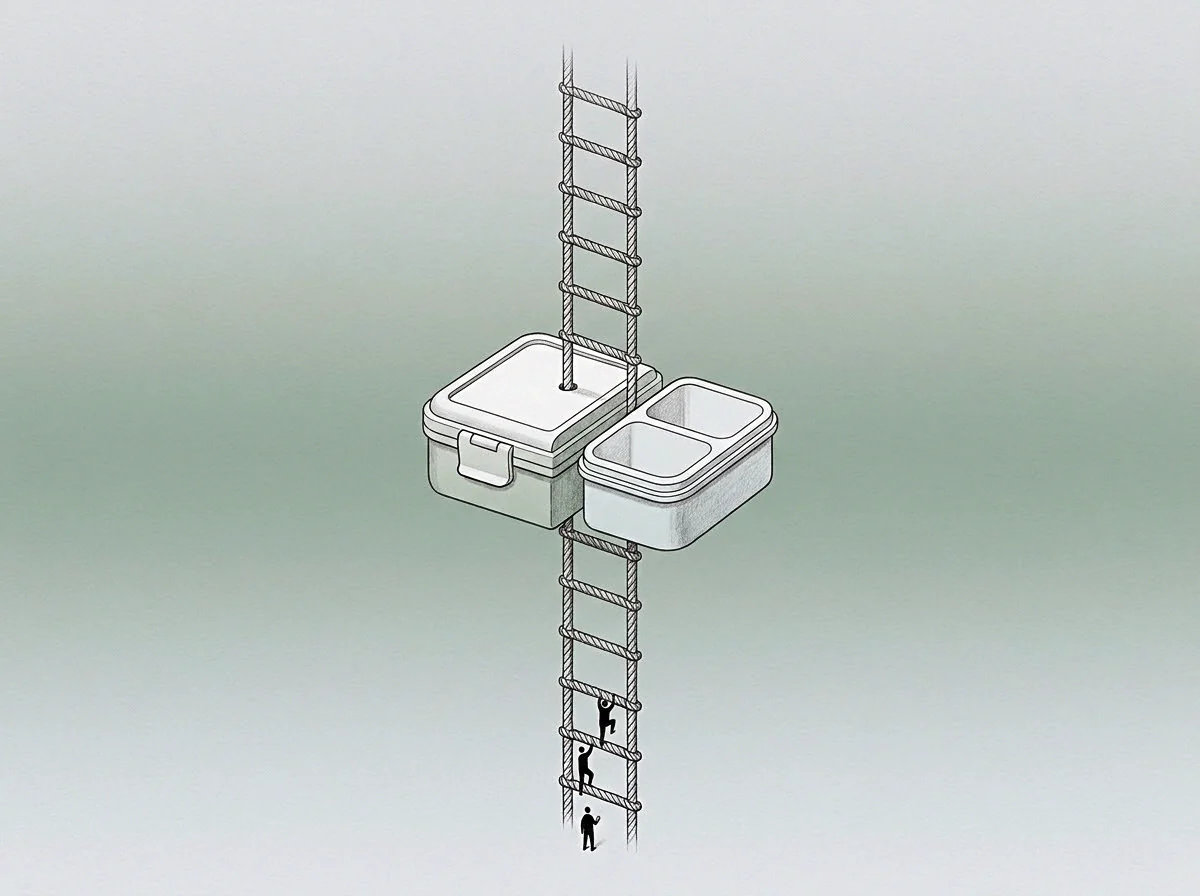
Availability Derivation Through Communication Pings
Partners gauge working capacity through response intervals on shared tools. When an executive replies to messages within minutes, adjacent leaders infer low operational load and route more decisions to that channel. Without explicit terms, incoming requests scale until the receiving channel breaks down.
Conversely, deliberate response latency forces the sender to evaluate task urgency before escalating. This structured delay acts as a filter, allowing lower-priority tasks to be resolved further down the organization rather than consuming executive bandwidth.
Asynchronous communication channels without instant response protocols automatically filter low-priority operational noise from executive bandwidth.

Priority Signals Across Asynchronous Channels
Message frequency directly reflects operational urgency. To maintain focus while scaling, co-founders need clear protocols for their communication channels.
- Channel Isolation assigns distinct platforms or threads to specific operational domains, preventing high-urgency alerts from diluting deep-work environments.
- Ping Escalation Thresholds define precise criteria under which an asynchronous message may be upgraded to a direct interruption call.
- Batch Processing Windows establish fixed daily schedules for reviewing non-urgent operational handoffs, preserving continuous focus blocks.
- Explicit Latency Norms remove expectations of immediate acknowledgment, allowing executives to prioritize deep cognitive execution over immediate messaging compliance.
Implementing structured channel protocols reduces context switching while encouraging surrounding teams to resolve operational issues independently before escalating them to leadership.
An executive channel remaining silent for six consecutive hours typically indicates deep, state-gated focus rather than operational disengagement.

Gate
Hard limits establish clear operational boundaries between executive seats, acting as explicit barriers within the organization. When an incoming task encounters a stated limit, it cannot breach that boundary and must either be redirected or resolved at the source.
Personal effort and emotional suppression are poor substitutes for structural rules. While workloads continually press against individual endurance until failure occurs, requests automatically reroute when they encounter defined operational terms.

State-Gated Interfaces and Hard Terms
Available capacity determines whether complex operational tasks can be completed successfully. When an executive seat reaches its cognitive limit, trying to push through additional decisions fails. Hard terms establish clear, non-negotiable conditions for when task transfers are accepted.
When an executive interface transitions from personal regulation to hard structural terms, operational load transfers shift from individual endurance to organizational process.
Establishing hard terms requires explicitly defining maximum concurrent projects, mandatory delegation paths, and clear functional boundaries. This shifts the co-founder interface from an open landing pad for tasks to a managed entry point.

The Stated Limit as a Structural Wall
Expressing capacity constraints creates an objective boundary that cannot simply be bypassed. When Executive A sets a firm limit on incoming requests, Executive B must adapt by building team capabilities or adjusting project timelines, forcing systemic adaptation across the organization.
Setting firm limits shifts the problem of capacity allocation away from individual endurance and back to organizational design. A company builds operational muscle only when leadership limits remain firm, preventing reliance on constant over-extension.
What systemic operational failures occur when a scaling enterprise continuously bypasses stated executive terms by exploiting individual loyalty?