
Gated Governance Mechanisms For Reducing Founder Allostatic Load Under Scale
Gated governance replaces discretionary founder escalations with explicit thresholds, reducing chronic regulatory wear by bounding operational concurrency.

Intake
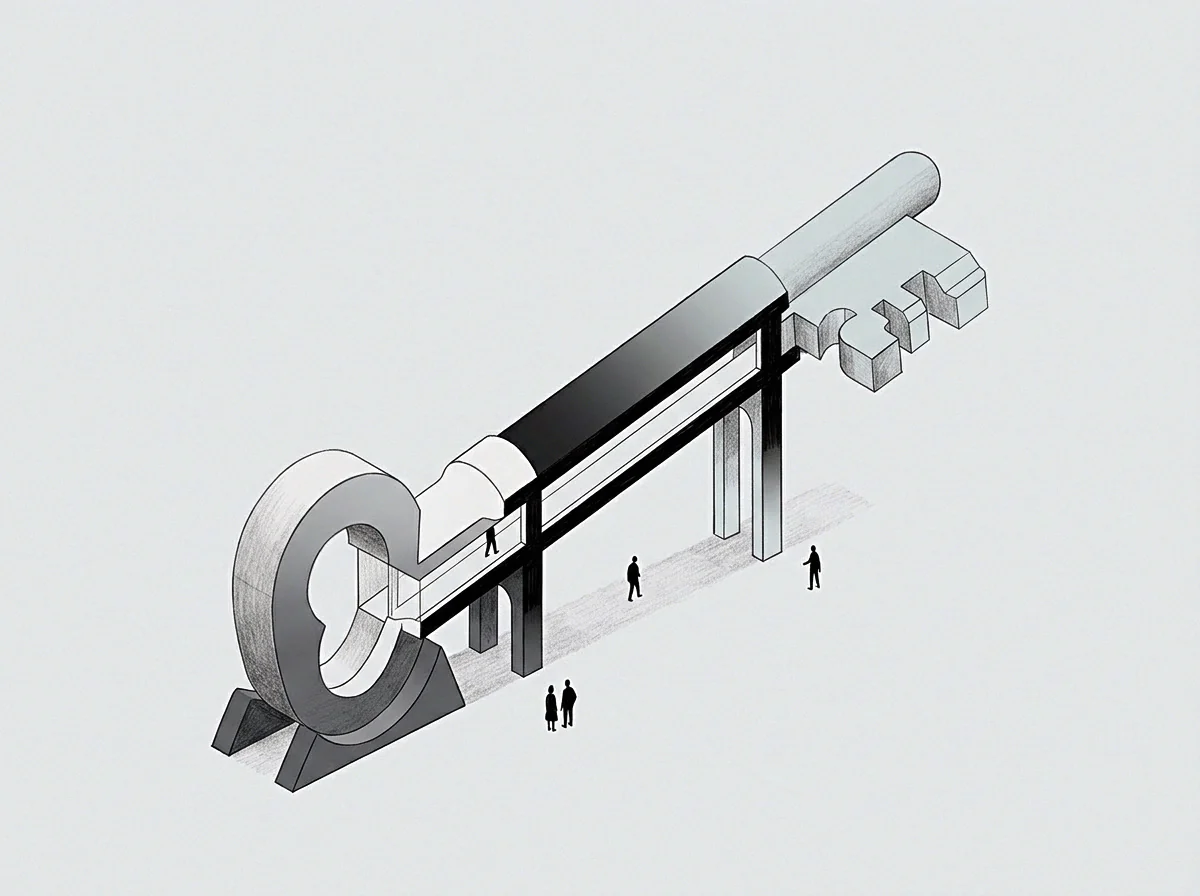
Unconstrained Demand Vectors
Four separate messaging channels ping after midnight while three operating decisions stall waiting for signoff. When a founder handles incoming commercial requests straight out of chat apps and unformatted inboxes, external counterparties end up setting the company’s internal priorities. Without mechanical filters on intake, every drop of operational coordination variance lands on whoever holds the executive seat.
That person absorbs every contract edge case, missing detail, and interdepartmental disagreement as an open cognitive loop. Over time, this produces elevated allostatic load, the cumulative physiological cost in energy and endocrine wear that comes from chronic regulatory strain.
Physical markers reflect that constant state of readiness: basal cortisol stays high, nocturnal heart rate never quite drops to baseline, and working memory narrows under the weight of uninterrupted supervisory exposure. As an enterprise grows, communication links multiply and escalations compound fast. Each new engineer, account manager, or investor brings another channel for raw, unstructured exceptions.
Left unthrottled, that arrival rate quickly outruns the biological stamina of any single human nervous system.
A governance boundary without an intake filter treats human biological capacity as an infinite reserve.
Unfiltered inbound streams generate persistent supervisory drag across a calendar. The executive spends the week split between long-term capital allocation and small administrative disputes. Every open message acts as an unresolved transaction competing for neurological attention.
In laboratory settings, human working memory tracks roughly four distinct transactional models at once; pushing past that ceiling degrades prospective memory, impulse control, and strategic synthesis. The broken intake process itself becomes the main driver of chronic physical fatigue.
Once a company grows past twenty people without explicit intake routing, operational variance flows to the founder simply because informal habit points there. Staff and clients bypass middle tiers because past precedent turned executive availability into the default clearinghouse for problems. This misdirects attention toward whichever internal stakeholder escalates with the sharpest urgency, and system stability suffers as soon as organizational performance depends on personal endurance.
The consequences show up quickly: peripheral operational decisions stall, while the founder suffers enough cognitive fragmentation to compromise capital allocation accuracy.

Concurrency

Open Loops and Cognitive Slots
Executive bandwidth depends on active thread count rather than raw company headcount. Any operational issue that lacks a bounded scope, a fixed completion date, and clear acceptance criteria occupies an active slot in executive consciousness. Ten unresolved problems running at once demand heavy metabolic attention, whereas fifty well-scoped projects running under clear delegation barely touch the founder’s desk.
When the nervous system becomes overwhelmed, it throttles throughput to protect against total collapse.
Outside observers unfamiliar with high-output work often mistake this operational throttling for depressive withdrawal. When an executive runs at maximum capacity, basic physical maintenance and acute crisis handling still function normally, but spontaneous strategic thinking and non-urgent social responsiveness shut off completely. The body protects its remaining reserves by trimming non-essential cognitive tasks, acting as an involuntary circuit breaker against sudden breakdown.
This slot limit governs functional memory while a business scales. Unsettled vendor negotiations, pending staff departures, and unresolved equity discussions linger in active neural workspaces, consuming blood flow and glucose. Even away from the desk, the central nervous system burns physical energy tracking these unfinished loops, preventing restorative rest.
A parked operational line with clear criteria consumes no working slots inside executive attention.
Setting an effective concurrency limit requires strict numerical caps on unresolved initiatives. A company that limits internal strategic projects to three concurrent tracks preserves executive cognitive reserves. If a fourth initiative appears, the system requires an explicit trade, parking an ongoing project in a formal backlog until room opens.
Process enforcement replaces raw emotional stamina with structural control.
Without these limits, runaway concurrency leads to executive detachment, leaving teams stranded for weeks awaiting decisions while commercial momentum bleeds away.

Threshold

Quantitative Discretionary Allocations
Threshold governance relies on quantitative limits to keep discretionary escalations from reaching the executive desk. Operational autonomy requires explicit dollar figures, risk parameters, and contractual boundaries to prevent decision fatigue. Without objective thresholds, managers escalate minor edge cases to shield themselves from blame, pushing procedural anxiety up the chain.
Clean governance design keeps routine operating risk from pooling at the top of the firm.
Take a three-tiered spend structure as an example: a project lead holds independent discretionary authority up to twenty-five thousand dollars, an operating vice president approves expenditures up to one hundred thousand dollars, and only sums above that ceiling go to executive review. In practice, establishing these hard boundaries cuts executive escalation volume by eighty-five percent over standard quarters, buffering leadership from routine transactional noise.
| Authority Tier | Discretionary Spend Bound | Resolution Protocol | Executive Cognitive Slot Impact |
|---|---|---|---|
| Tier 1 Operational | Under $25,000 | Autonomous local approval via verified audit checklist | Zero active slots consumed |
| Tier 2 Operational | $25,000 to $100,000 | Dual peer signoff with forty-eight-hour clock trigger | Zero active slots consumed |
| Tier 3 Governance | Exceeding $100,000 | Structured executive committee memorandum | One active slot allocated for three days |
Commercial contracts need similar guardrails. Account and operations managers should negotiate everyday agreements against pre-approved fallback terms without pulling in executive counsel. When an issue does breach those thresholds, it must arrive framed as a clear binary trade-off rather than an open-ended strategic headache.
Requiring teams to package exceptions into clear decision matrices protects executive working memory.
Clear thresholds fundamentally change how operational leaders run their teams. Managers move away from seeking constant executive signoff and rely instead on established guidelines. Demands for personal reassurance drop across every tier once staff trust documented parameters over verbal check-ins.
The governance structure absorbs procedural volatility, allowing the organization to scale transaction volume without exhausting the founder.
If leadership fails to hold hard authorization ceilings, vendor friction and routine budget adjustments will continuously interrupt executive attention, crowding out long-range strategic planning.

Cadence

Temporal Isolation and Batching
Ad hoc interruptions wreck concentration through context-switching penalties. Settling back into deep work after an unscheduled tactical diversion takes upwards of twenty minutes. An operator fielding eight unexpected escalations across an eight-hour day ends up with completely fragmented attention.
Gated governance fixes this with temporal boundaries, moving operational check-ins into fixed, asynchronous batch windows.
Fixed review rhythms bundle tactical problem-solving into predictable calendar blocks. Routine hiring signoffs, department updates, and mid-tier spending requests route into one three-hour governance block each week. Outside that window, managers resolve variances autonomously or hold them over for the next scheduled meeting.
Moving to asynchronous updates removes the constant, low-grade anticipation of incoming operational friction.
Batching on the calendar resets recovery cycles by ending the habit of constantly monitoring communication feeds. Continuous vigilance keeps the autonomic nervous system elevated even when nothing urgent is happening. Restricting executive exposure to predictable intervals gives physiological systems room to settle back to baseline.
The body requires uninterrupted quiet to recover from the physical wear of continuous responsibility.
Without firm calendar firewalls, minor emergencies will eat up every open hour, leaving leadership without the energy or clarity needed for serious strategic analysis.

Shield

Delegated Dispute Settlement
Internal disputes between department heads take a steep toll on energy and attention when routed directly to executive mediation. Fights over shared budgets, headcount, or territory bring defensiveness, political maneuvering, and emotional strain. Sorting through them forces the founder to absorb interpersonal tension rather than run the business.
An operational council provides a neutral buffer that resolves team friction before it ever reaches executive leadership.
The designated administrative committee handles routine organizational friction via objective, documented operating charters:
- Charter bounds set jurisdictional limits between engineering, sales, and product teams to stop territorial disputes over resources.
- Objective metrics determine headcount allocations through verified revenue generation models rather than personal appeals to the founder.
- Arbitration panels clear operational deadlocks across departments without demanding founder mediation or personal reassurance.
- Documented protocols require teams to produce a standardized economic impact analysis before any escalation review can proceed.
Resolving disputes through structured operating committees breaks the expectation that the founder will step in personally. Department heads often resist this at first, since losing direct executive access feels like a loss of internal clout. Even so, the organization preserves founder cognitive bandwidth by declining unformatted mediation and routing disagreements back into formal channels.
An executive cannot serve as an institutional referee while simultaneously carrying full fiduciary responsibility for the company’s survival.
Failing to build these procedural buffers lets internal politics eat away at executive stamina, turning the office into an environment where internal lobbying matters more than execution.

Vesting

What Halts Autonomous Authority At Scale?
As a business scales, it eventually hits edge cases that fall outside written policies and require executive intervention. Unusual legal liabilities, sudden counterparty insolvencies, or sharp market turns cannot be managed through ordinary delegation limits. A solid governance setup clearly defines when local autonomy suspends and sovereign authority steps back in.
Setting these conditions in advance prevents reactive, disruptive interventions into operations that are otherwise running smoothly.
Explicit escalation gates define precise material triggers that immediately suspend delegated local autonomy:
- The operational reserve drops below ninety days of forward operating runway.
- A counterparty initiates formal litigation threatening enterprise intellectual property rights.
- A regulatory entity begins formal inquiry into operational compliance standards.
- Critical infrastructure uptime metrics breach tier-one service parameters for twelve consecutive hours.
These clear tripwires create explicit boundaries for department heads and executive leadership alike. Managers direct their teams with genuine autonomy until an escalation threshold is crossed, removing the friction of second-guessing. Meanwhile, the founder stays clear of routine decisions, confident that established safety valves will flag true threats to the business.
Mental fatigue stabilizes because uncertainty is contained by objective operational limits.
When serious edge conditions do trigger an escalation, executive attention mobilizes cleanly to address the threat. Clear criteria remove the guesswork of whether an emerging problem warrants direct intervention. Filtering out routine noise preserves the founder’s stamina and focus for real existential risks.
The operating rule remains simple: unless an issue crosses a predefined survival threshold, executive intervention stays dormant and local operational authority is final.