
Structured Concurrency Limits For Cognitive Load Regulation In Executive Roles
Structured concurrency limits cognitive load in executives by capping simultaneous open loops, preventing prefrontal depletion and chronic allostatic wear.
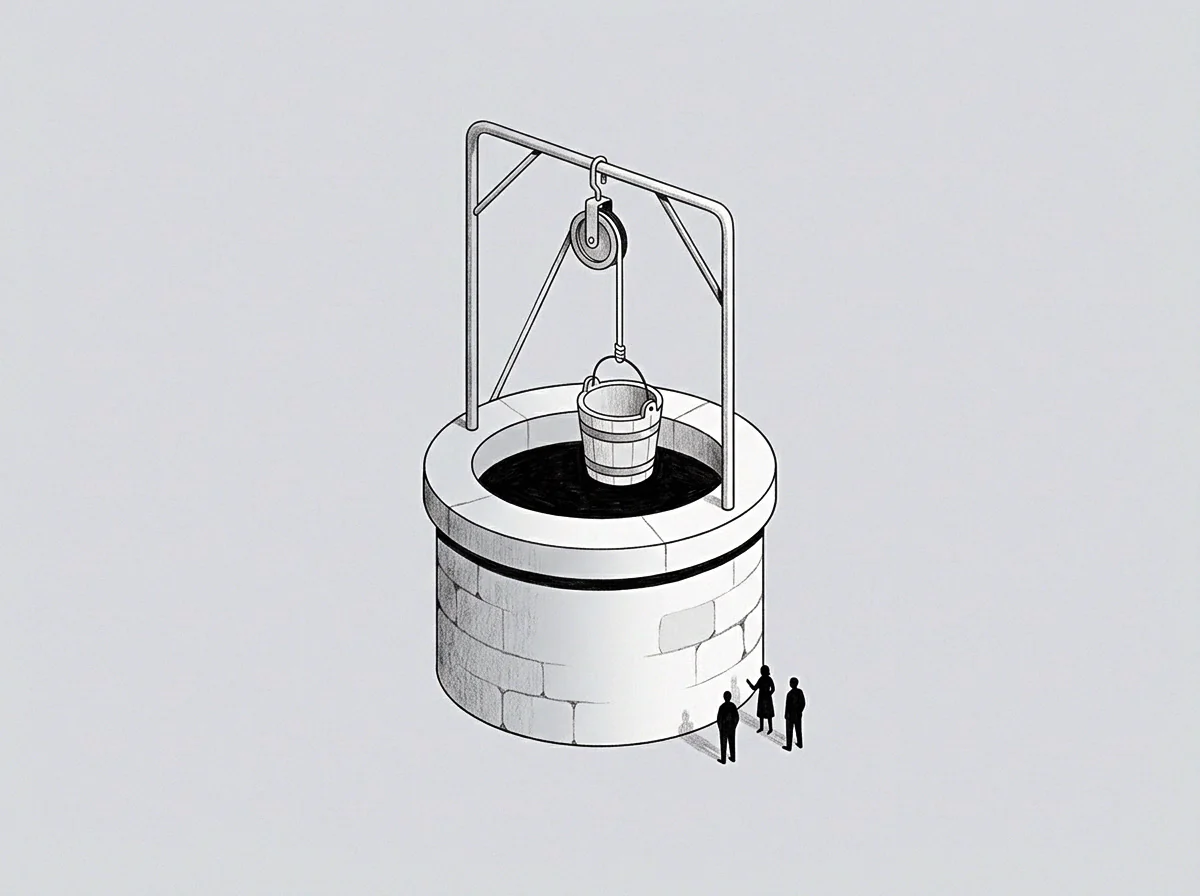
Port
Four open browser windows sit beside an unread acquisition memorandum at midnight, alongside seven urgent direct messages on a silenced phone. Queries arrive faster than decisions go out. Each incoming issue claims working memory whether it gets resolved immediately or sits untouched.
The drain comes from keeping unresolved threads active in the mind rather than from finishing bounded work, and leadership performance falls off once the number of live operational channels exceeds neurobiological limits.
Structured concurrency in programming establishes a strict boundary: child execution paths stem from a parent task, and that parent cannot finish until every child operation completes or halts under a coordinated cancellation call. That perimeter prevents runaway routines from lingering in memory. Mental capacity runs into the same limit.
An executive juggling five strategic negotiations, three hiring searches, and four internal resource disputes without set stopping criteria holds a neural reservation for each unresolved issue. Working memory depends on transient patterns in the prefrontal cortex that draw on finite metabolic energy.
A concurrent process consumes prefrontal capacity until an explicit termination rule releases the reservation.
Keeping all these parallel tasks live drives continuous allostatic wear. The human stress response developed around short bursts of energy demand run through the sympathetic-adrenomedullary and hypothalamic-pituitary-adrenal axes. When an individual manages ten open oversight loops at once, elevated baseline cortisol runs straight into the evening, cutting into slow-wave sleep and hippocampal memory consolidation.
The resulting exhaustion is physiological, marking a system pushed toward capacity while shedding operational efficiency.
Isolation compounds this physical toll. When a founder runs operational channels without buffers, incoming traffic lands unchecked. Messages from investors and product teams hit attention directly, each one treated by the nervous system as an immediate claim on metabolic reserves.
Without a hard ceiling on concurrent tasks, prefrontal resources burn through quickly, eroding the operator’s ability to separate minor friction from major organizational risk.
Ignoring concurrency limits leads straight to cognitive exhaustion in leadership, degraded judgment, and gridlock across dependent teams.

Headroom
Organisms keep a margin between everyday energy expenditure and structural failure. Physiology defines functional reserve as the spread between basal output and maximum sustainable effort. An executive working with zero cognitive headroom has no spare attention left to handle unexpected shocks; if every mental slot already holds an active dispute, a small secondary crisis forces a breakdown.
The operator may look composed on the surface while internal response times slow down sharply.
Internal saturation is distinct from clinical depression. Clinical depression brings widespread anhedonia, self-reproach, and psychomotor slowdown regardless of how many tasks are on the schedule. Throttling, by contrast, is a homeostatic response from an overloaded neural system trying to protect metabolic stability.
The throttled executive can still carry out narrow, highly structured routine tasks, but broad strategic thinking stops because synthesis requires uncommitted working memory. Treating this protective physical down-regulation as a mood condition leads to mismatched interventions while the underlying load remains untouched.
Saturated operational channels freeze synthetic reasoning while preserved routine execution masks underlying nervous exhaustion.
The visible signs of exhausted cognitive headroom emerge in a consistent sequence in high-demand environments:
- Attentional Tunneling narrows peripheral observation to protect focal processing under continuous operational strain, causing peripheral opportunities to drop out of view.
- Decisional Latency widens the interval between receiving operational information and committing to an action, sending delays through reporting lines.
- Affective Blunting suppresses emotional responsiveness to conserve neuroendocrine resources under heavy message volume, dulling awareness of tension inside leadership teams.
- Compulsive Loop Checking prompts constant re-checking of open communication threads without moving work forward, as neural circuits look for closure cues that the workflow fails to provide.
Studies of air traffic controllers in dense airspace show that decision accuracy falls sharply once tracked aircraft exceed seven at a time, regardless of how experienced the controller is. Those findings come from physiological monitoring and radar telemetry in civilian aviation sectors, and modern automation interfaces shift the exact threshold, but the biological ceiling is real. An executive managing twelve concurrent strategic initiatives runs headlong into the same constraint.
This dynamic consumes baseline capacity; refusing to set concurrency boundaries leaves senior leadership observing an executive who appears chronically disengaged from company strategy.

Rack
A server rack distributes power, cooling, and cabling across a fixed number of bays. Forcing sixteen blades into an eight-bay chassis breaks hardware and overloads power supplies. Managing executive work requires the same discipline.
Leadership needs clear capacity ceilings for active strategic commitments, sending overflow into an external queue instead of letting it fill cognitive space.

Where Do Concurrent Loops Exceed Baseline Capacity?
The drop from manageable workload into cognitive decline happens the moment unvetted tasks slip into the prefrontal processing window without assigned resources. Standard operational practice tends to treat an executive as an elastic buffer capable of handling endless context switches. Yet every switch carries a measurable penalty, burning glucose and driving up prefrontal lactate.
A structured concurrency approach replaces that assumed elasticity with fixed capacity slots.
| Management Model | Active Task Ceiling | Context Switching Cost | Decision Latency | Allostatic Load Profile |
|---|---|---|---|---|
| Unbounded Ingestion | Infinite nominal limit | Severe metabolic depletion | Exponentially increasing | Sustained neuroendocrine elevation |
| FIFO Queuing | Ten concurrent slots | Moderate switching overhead | Linear delay curve | Intermittent physiological recovery |
| Structured Concurrency Cap | Three concurrent slots | Minimal working memory drain | Predictable throughput pace | Baseline biological equilibrium |
With a strict cap in place, an executive carries exactly three major initiatives at a time. Incoming proposals stay parked as written records, receiving neither casual check-ins nor regular status reports. The executive ignores parked work until an active slot opens up through completion, handover, or outright cancellation, insulating working memory from parallel drag.
A parked strategic line incurs zero cognitive maintenance cost when status updates remain strictly forbidden.
Take two executives leading comparable industrial logistics firms over thirty-six months, each firm producing fifty million dollars in annual recurring revenue across four operating subsidiaries. The first executive keeps twenty strategic channels open at once, fielding chat messages, investor texts, and direct product disagreements throughout the day. The second sets an explicit ceiling of three operational slots, routing peripheral proposals into an asynchronous quarterly docket.
The first operator shows elevated ambulatory blood pressure, broken sleep patterns, and elevated turnover on the executive team. The second maintains steady resting heart rates and finishes transactions at twice the speed.
Adopting a formal charter that caps active corporate initiatives at three frees up two cognitive slots from continuous neuroendocrine strain.

Decay
Unresolved commitments bleed attentional energy over time. When a project stays open without defined scope, deliverables, or a hard deadline, the nervous system treats it as an unsettled matter that demands monitoring. Cognitive research identifies this as sustained mental tension tied to incomplete tasks.
Over time, that continuous vigilance elevates sympathetic tone, dragging on immune performance and accelerating vascular wear.
System designers address this by requiring definitive states for active initiatives: running, suspended, or terminated. A running initiative has dedicated resources and explicit completion metrics. A suspended initiative goes into cold storage with no notifications, no agenda time, and no executive check-ins.
A terminated initiative yields a brief written debrief and closes completely. Nebulous states like informal tracking or casual monitoring are unmetered leaks on attentional capacity.
- Defining Scope Boundaries ties execution to concrete deliverables, preventing open-ended exploration from draining working memory.
- Establishing Hard Deadlines sets an unbending cutoff date, stopping incomplete projects from running as background drains on attention.
- Stating Cancellation Criteria spells out the exact conditions that call for shutting a project down early, freeing resources without debate.
- Enforcing Complete Information Blackouts halts all status updates on suspended work, insulating prefrontal circuits from unnecessary context shifts.
Data from European occupational health registries links high-strain work with low decision latitude to a forty percent increase in cardiovascular events. While that figure stems from longitudinal surveys of public-sector workers and venture environments may differ in scale, the underlying physical wear is real. Neural tissue cannot adapt indefinitely to unconstrained load without exacting a physiological cost.
This dynamic raises the question of whether corporate boards can accommodate explicit concurrency caps for founders without mistaking structural operational boundaries for lack of ambition.

Hold
Restoring cognitive headroom requires firm boundaries around executive attention. Executive roles naturally collect loose operational problems and team anxieties from across the organization. When an operator absorbs that pressure directly, the entire leadership tier ends up in prolonged sympathetic arousal.
Putting hard caps on concurrency shifts problem-solving and emotional regulation back to the perimeter where it belongs.
A structured hold protects leadership attention from peripheral volatility. Inbound requests meet procedural barriers that push resolution down to local teams. The operating routine becomes strict: no verbal project pitches, no impromptu strategy sessions, and silent messaging channels outside set processing blocks.
Proposals move to thorough asynchronous memos that spell out context, resource demands, and clear stopping points before review.
Protecting executive nervous system bandwidth requires externalizing emotional regulation back to operating unit heads.
This discipline requires allowing secondary matters to stall. A team conditioned to immediate executive input will feel friction when requests hit deliberate delays, and some minor efforts will fall apart. That selective drop-off serves as operational pruning, separating essential priorities from administrative noise.
An operator trying to catch every small piece inevitably loses grip on the foundation.
An initiative either receives a dedicated operational slot or stays entirely off executive radar.