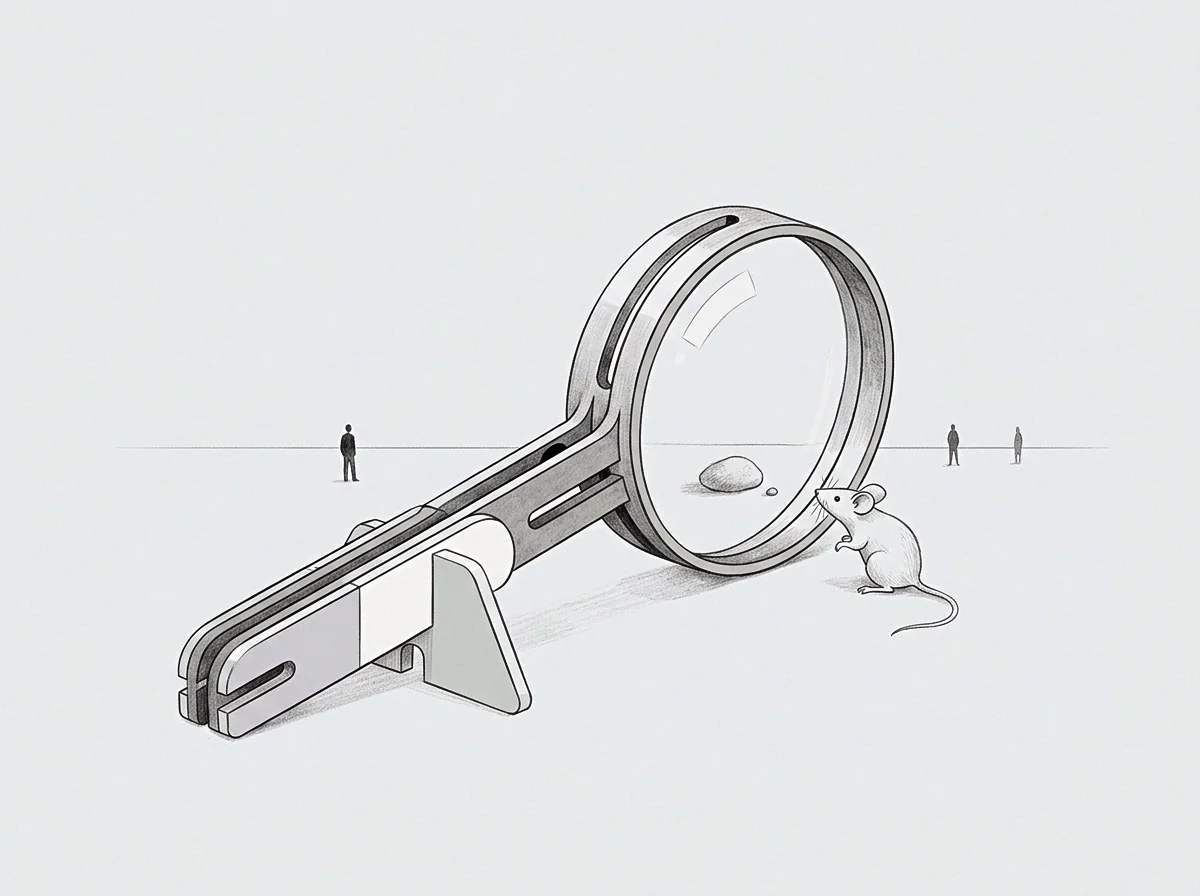
Meaning
Attentional loss during context transfer represents an unrecoverable expenditure of regulatory capacity across disparate operational domains. When an operator moves attention between strategic planning and acute troubleshooting, cognitive switching waste consumes working memory through residue left by the preceding problem. The metric measures the hours and neural energy required to re-establish contextual depth after an interruption.
That expenditure ends where task boundaries become fully insulated by asynchronous buffers.
Latent Overhead
Internal recalibration forces an executive to reconstruct situational models from raw logs and scattered notes. Each displacement imposes cognitive switching waste because human neural architecture preserves associative activations from the prior topic for many minutes. Activation residue delays accurate pattern recognition.
A founder shuttling between investor reporting and product debugging experiences degraded judgment in both settings.
Capacity Drain
Executive stamina declines rapidly under high transition velocity across incompatible operational scopes. When an organization routes routine exceptions directly to a former chief executive, cognitive switching waste compounds because each unexpected inquiry demands immediate reorientation. Physiological arousal climbs to compensate for fragmented comprehension.
Fatigue from continual reorientation exhausts baseline attention hours before technical execution even begins. Rapid task switching burns finite reserves of glucose and inhibitory control without generating operational progress.
Restoration Ceiling
Recovery of baseline processing speed demands prolonged intervals of uninterrupted continuity. The volume of cognitive switching waste shrinks only when communication systems enforce strict latency expectations. Scheduled batch windows protect deep thematic work against fragmented queries.
Operational endurance recovers once conversational pings cease dictating immediate context shifts.