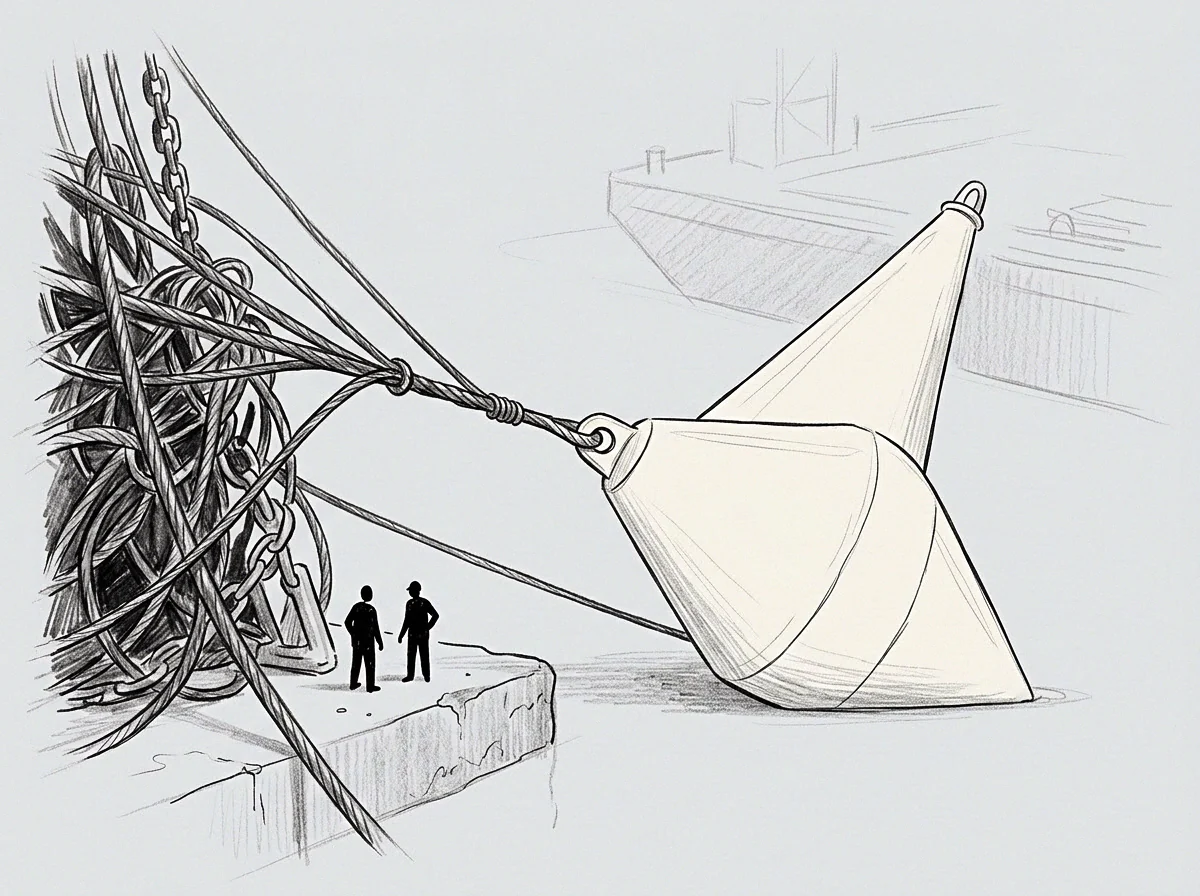
Meaning
Total incoming flow capacity defines a system state where demand enters without intervention or queueing. An ungated load occurs when a process allows unrestricted volume to hit an endpoint, skipping the standard verification or throttling mechanisms intended to preserve stability. This condition shifts the burden of regulation to the downstream resource, forcing the final node to absorb the full intensity of the input.
Such unfiltered volume typically exhausts available capacity in moments, creating a hard stop rather than a controlled slowdown.
Operational Penalty
System performance degrades once the arrival rate exceeds the processing threshold, as the hardware or logical construct lacks the buffers required to hold the overflow. The architecture relies on the robustness of the recipient to manage the arrival without crashing. When this buffer capacity hits exhaustion, the unit enters a state of failure or hard rejection.
Engineers label this effect as resource starvation, where the component ceases to function because the queue space remains occupied by the excessive influx.
Regulation Necessity
Management of flow requires an intermediary layer to monitor the velocity and volume of incoming requests. A gate or regulator prevents the system from experiencing the sudden pressure of an ungated load by smoothing the arrival rate into a predictable frequency. This mediation preserves the attention and energy of the internal logic, allowing for consistent output despite spikes in external demand.
Constant, steady flow ensures the longevity of the infrastructure while maintaining the operational bounds established at the time of construction.
Capacity Limit
Maximum throughput dictates the upper bound of performance before the system triggers an automatic shutdown to prevent total breakdown. An ungated load ignores this upper bound, pushing the apparatus toward an immediate crash or a state of permanent error. Reliability in this model depends entirely on the accuracy of the predefined limit, as the lack of an active gate leaves the mechanism defenseless against bursts.
Effective design demands that the capacity constraint remains strictly enforceable to protect the integrity of the total operation.