
Autonomic Cost Accounting in Solitary High Pressure Work
Solitary accountability forces the nervous system to fund threat detection without social buffering, compounding autonomic wear and draining somatic reserves.

Load
Midnight brings quiet to the industrial park, while terminal monitors illuminate an operator running live cutovers across eight enterprise instances. Ambient sound drops below thirty decibels. The musculature of the cervical spine locks into place, arterial vessels constrict across the peripheries, and the cardiac pacemaker accelerates despite the physical stillness of the chair.
When high operational liability coincides with physical isolation, the human central nervous system switches its metabolic baseline. Social baseline theory establishes that the mammalian brain conserves energy by distributing vigilance across a group of conspecifics. Remove those conspecifics from physical and communicative proximity, and the autonomic nervous system musters full survival resources to manage threats in solitary isolation.
Solitary accountability forces the autonomic system to treat every operational uncertainty as a biological hazard. An unhandled exception or an errant log entry demands immediate neuroendocrine mobilization. Corticotropin-releasing hormone stimulates pituitary release of adrenocorticotropic hormone, prompting adrenal secretion of cortisol and epinephrine.
The brain pays for solitary vigilance through heavy glucose utilization and rapid depletion of peripheral tissues. The solitary operator bears the whole energetic expenditure alone.
Baseline physiological equilibrium deteriorates when high accountability lacks external relational dampening.
Working in solitude alters how neural networks compute risk. The ventral vagal complex, responsible for social engagement and autonomic deceleration, disengages when no soothing vocal cadence or facial orientation enters the sensory field. The sympathetic nervous system assumes control of cardiac output and peripheral resistance.
Threat detection thresholds drop sharply. Ambiguous system logs register as existential breaches, triggering prolonged autonomic surges without muscular release.
- Vigilance hyper-fixation narrows the perceptual field to immediate alerts while suppressing peripheral systemic awareness.
- Sympathetic lock sustains elevated basal heart rates across unbroken six-hour processing blocks.
- Glucocorticoid saturation impairs hippocampal retrieval circuits during multi-stage incident triage.
Prolonged solitary activation degrades executive function across compounding operational cycles. Neural tissue consumes energetic reserves to maintain alertness, driving chronic physical exhaustion and system-level misdiagnoses that cascade across months.

Valve
Metabolic Gating and Physiological Tradeoffs
Biological systems rely on metabolic gating to prevent total somatic depletion under prolonged operational duress. The brain consumes approximately twenty percent of resting metabolic energy despite representing two percent of adult body mass. Under intense solitary problem-solving, local cerebral blood flow concentrates within the prefrontal cortex and amygdaloid complex.
Without an external nervous system to absorb operational variance, internal regulatory valves shut down non-essential somatic processes.
Gastrointestinal motility drops, renal perfusion diminishes, and immune surveillance down-regulates to supply glucose to executive circuits. Operators interpret these biological adjustments as simple fatigue. The body treats sustained solitary liability as an acute famine or predator siege.
| Physiological Metric | Solitary Operating Mode | Co-Regulated Operating Mode |
|---|---|---|
| Ventral Vagal Tone | Suppressed; minimal parasympathetic brake on heart rate | Sustained; periodic down-regulation through vocal and visual cues |
| Threat Detection Threshold | Depressed; neutral anomalies trigger full defensive activation | Calibrated; ambiguous data evaluated with shared cognitive verification |
| Recovery Latency | Protracted; hormonal clearance requires four to eight hours | Truncated; autonomic equilibrium returns within forty minutes |
| Metabolic Burn Rate | Elevated; severe cellular energy expenditure per hour | Conserved; distributed vigilance preserves systemic reserves |
| Perceptual Aperture | Tunnelled; sharp focus on immediate tactical signals | Broad; open situational integration across concurrent workflows |
Shared vigilance lowers physiological taxation. Proximity to a capable partner distributes the computational burden of environmental scanning across two nervous systems. In isolated enterprise management, no secondary system absorbs tension.
The solitary operator pays the full energy invoice without rebate. Systems fail when sustained metabolic burn outpaces biological replenishment.
A reliable peer presence cuts autonomic taxation in half.
The regulatory valve operates as an involuntary circuit breaker. When energy reserves deplete past a critical somatic baseline, the dorsal vagal motor nucleus activates, inducing sudden lethargy and emotional detachment. This somatic shutdown safeguards remaining cardiac tissue.
Physical collapse preserves basic cellular viability.
Circuit
Autonomic Loops in Remote Infrastructure Management
Operational architecture forms an unyielding feedback circuit with the human nervous system. In distributed systems management, the terminal window serves as an artificial afferent nerve ending. Alerts, latencies, and error codes feed sensory pathways without tactile or auditory dampening.
The solitary builder develops heightened sensitivity to synthetic telemetry, reacting to algorithmic fluctuations as bodily attacks.
Sensory inputs arrive stripped of human context. An automated alert chime triggers identical sympathetic escalation to a predatory sound. The adrenal cascade floods the bloodstream, yet the body remains stationary in a chair.
Muscular tension accumulates in the trapezius and masseter tissues without mechanical resolution.
Solitary responsibility forces artificial telemetry to register as physical threat.
This closed loop perpetuates neurochemical strain. Epinephrine increases cardiac contractions while vascular beds in skeletal muscle dilate without physical movement. Cellular metabolism generates metabolic byproducts that sit unresolved in stagnant tissues.
The operator experiences deep physical restlessness alongside acute cognitive paralysis.
Physical isolation prevents autonomic grounding. In team environments, common physiological rhythms emerge through shared respiration, brief conversational pauses, and spontaneous gestures. In remote isolation, the loop never resets.
Sympathetic tone remains artificially high until the system halts operations through external disruption or somatic refusal.
The operational agreement mandates continuous unassisted response across all incident escalations, fixing biological cost as an unbudgeted liability.
Tether
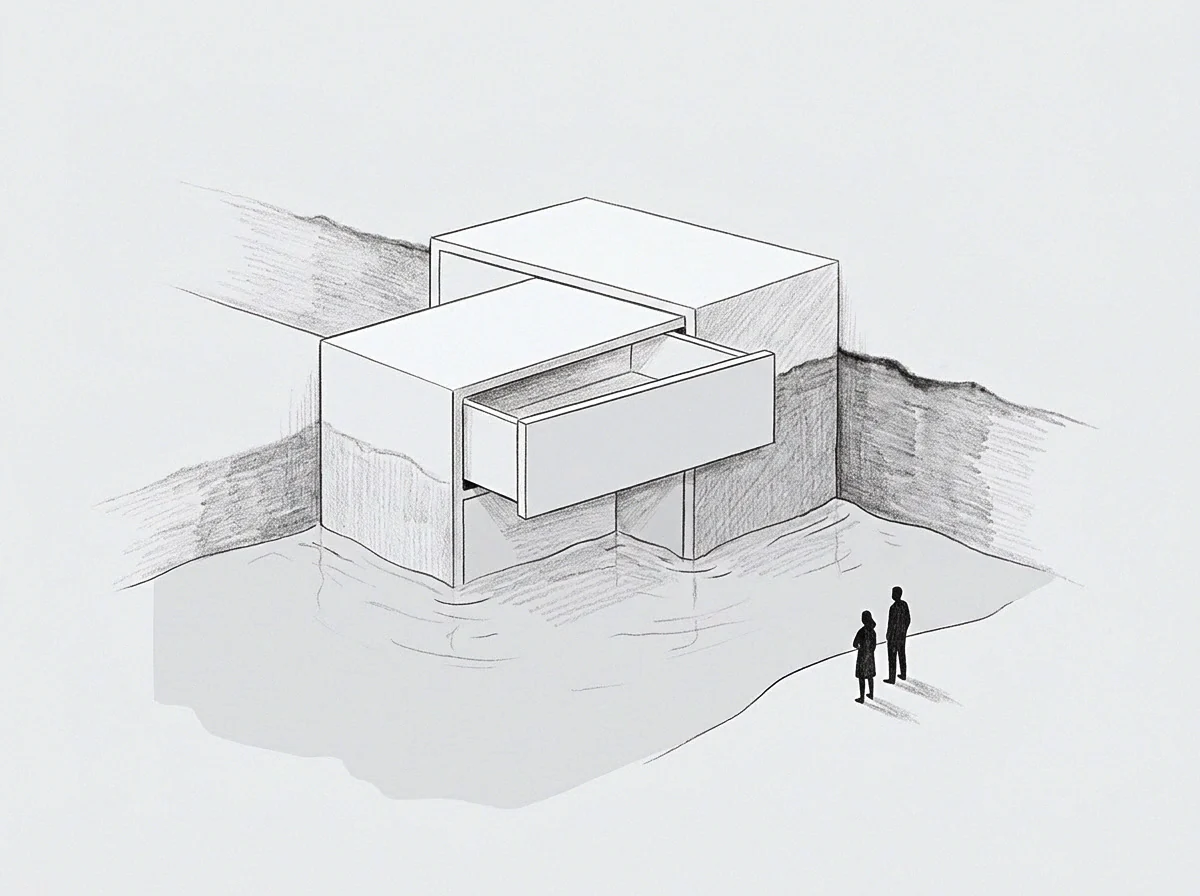
Structural Reconnection and Nervous System Offloading
Survival in solitary high-pressure environments requires systematic tethering to external physiological anchors. These tethers supply mechanical boundaries where internal autonomic regulation fails. Without reliable social dampening, operational discipline must enforce artificial intervals that sever sympathetic loops.
Operators frequently attempt cognitive reframing to mitigate stress. Cognitive interventions run upstream against ancient neurochemical torrents. Cortisol and catecholamines flood target organs long before conscious appraisal can alter perception.
Mitigation requires somatic interruption.
- Fixed acoustic dampening eliminates sudden synthetic notifications, replacing alarm rings with predictable visual cues.
- Rotational handoffs transfer decision-making authority every four hours, preventing dorsal vagal immobilization.
- Auditory anchor calls introduce asynchronous human vocal tones into solitary operational environments.
A human voice resets dysregulated autonomic states. Auditory pathways process low-frequency human tones through the middle ear, stimulating the stapedius muscle and signaling brainstem safety circuits. A two-minute voice exchange restores parasympathetic tone faster than solitary cognitive exercises.
Physical boundaries stabilize baseline neural activity. When operations occur within the living space, domestic zones inherit threat associations. The nervous system maintains vigilance even during sleep cycles.
Separating the operational console from domestic quarters protects basic regenerative capacity.
The operational team assumed the solitary lead handled high-severity alerts without personal strain because status reports maintained steady procedural syntax.

Switch

Is True Solo High Pressure Work Biologically Sustainable?
Human physiology evolved inside small, cohesive groups facing intermittent, physical challenges. The modern paradigm of unbroken solitary vigilance across distributed financial, technical, or logistics networks directly contradicts mammalian design. The solitary operator acts as a lonely sentinel, absorbing collective operational volatility without the evolutionary dampening of the tribe.
Solitary execution carries an invisible metabolic tariff. While operational dashboards display green health metrics, the biological hardware powering the console deteriorates. Heart rate variability narrows, vascular rigidity increases, and cellular repair pathways stall.
These internal costs compound over quarters, emerging as sudden systemic breakdowns or sudden departures from core seats.
Individual resilience cannot bridge this evolutionary chasm. Training, meditation, and chemical stimulants merely defer physiological accounting. The human autonomic system demands relational reciprocity to clear stress hormones and sustain long-range executive capacity.
Organizations often celebrate the stoic solo operator who stabilizes broken systems through long nights of silent toil. This admiration conceals an extractive operational model that consumes human somatic capital to offset architectural instability. True operational resilience treats human autonomic regulation as a bounded, quantifiable operational asset.
Whether future autonomous systems can introduce genuine physiological down-regulation for solitary operators remains unknown.