
Managing Founder Allostatic Load in High Stakes Teams
Allostatic load escalates when executive teams rely on a single leader for regulation, which alters metabolic budgeting until explicit operational limits distribute threat processing.

Toll
Four messages sit unread on a desktop screen at midnight while the operator reviews financial runway projections. The heart rate stays elevated at ninety beats per minute despite sitting motionless in an empty room. Strategic decisions made in this state carry an unacknowledged metabolic tax.
Allostatic load describes the cumulative biological wear and tear on neural and physiological systems under sustained stress. In high stakes executive teams, this load accumulates through two distinct pathways: primary task complexity and continuous emotional regulation for surrounding team members. Autonomic headroom drops quickly under uncertainty.
Operating under prolonged threat keeps cardiovascular and neuroendocrine systems in elevated activation, altering decision thresholds, risk evaluation, and relational capacity.

Autonomic Costs in High Stakes Execution
The human autonomic nervous system regulates biological resources through predictive threat modeling. Under standard conditions, baseline parasympathetic activity maintains flexibility, permitting rapid shifts between intense concentration and recovery. High stakes environments disrupt this balance by introducing persistent, high-consequence ambiguity.
The metabolic expenditure of maintaining operational focus while managing biological arousal is substantial. Steady state is expensive to hold. Brain tissue consumes roughly twenty percent of bodily energy, and active neural suppression of threat responses increases glucose utilization within prefrontal circuits.
When operational demands outpace physical recovery, neurochemical signaling shifts toward continuous sympathetic activation, reducing cognitive flexibility and increasing systemic exhaustion.

Social Baseline Theory and Neural Economy
Social baseline theory establishes that the human brain evolved to assume proximity to reliable social partners as its primary physiological baseline. When supportive partners are physically or relationally present, the brain offloads threat detection and emotional regulation to the group, conserving cellular resources.
When social baseline expectations fail, autonomic arousal increases to maintain task performance under uncertainty.
In isolation, self-regulation becomes a biologically expensive operational mode. A leader who operates without a reliable co-regulating peer must generate continuous internal regulation to absorb personal stress alongside team anxiety. This dynamic converts executive management into an isolated exertion, accelerating systemic fatigue across quarters.
When high stakes teams rely entirely on a single leader to maintain team equilibrium without supplying co-regulation in return, that leader experiences accelerated physiological depletion, eventual executive dysfunction, and compromised operational decision-making.

Conduit
A steady presence in a crisis attracts external burden. Team members intuitively gravitate toward a calm person in the room to stabilize their own stress physiology. Borrowed regulation leaves no paper trail.
This dynamic creates an unmonitored transfer of operational load from the organisation directly onto the steady leader.

Why Do Executive Teams Transfer Regulation Burden to Steady Leaders?
Human nervous systems continuously monitor surrounding environments for safety signals through neuroception. In high stakes execution, an unshakeable executive functions as a primary safety signal for the rest of the leadership team. Colleagues offload their internal distress by interacting with the regulated leader, leaving meetings with lowered biological arousal while the leader absorbs the residual neural cost.
This transfer occurs because biological baseline alignment prioritizes immediate relief for the dysregulated party. The missing slot creates an asymmetry. When an executive possesses high capacity for stress tolerance, team members sub-consciously treat that leader as an inexhaustible regulatory resource rather than a finite operational asset.

The Regulator Template and Missing Receptor Slots
Many leaders develop an internal working model that links personal value directly to structural absorption. Formed through early responsibility or early operational isolation, this regulator template conditions the individual to manage others’ states while disallowing external support for themselves.
Unstated absorption converts relational stability into an invisible expenditure of metabolic headroom.
The operational features of this template shape executive behavior across several distinct vectors:
- State asymmetry occurs when a leader maintains emotional equilibrium for an entire team while receiving zero reciprocal regulation from peers.
- Borrowed calm defines the phenomenon where team members lower their stress physiology by anchoring to the leader’s composure without building personal capacity.
- Structural absorption describes the systematic collection of ambiguous company risks inside the founder’s personal daily workflow.
The leader maintains no internal receptor slot for receiving support, treating offers of assistance as administrative tasks to supervise. Consequently, strength under pressure functions as an operational magnet for systemic distress, continuously expanding the leader’s baseline load.
The leader keeps everything completely under control, so there is no reason to alter project timelines or reallocate operational responsibilities.
Brake
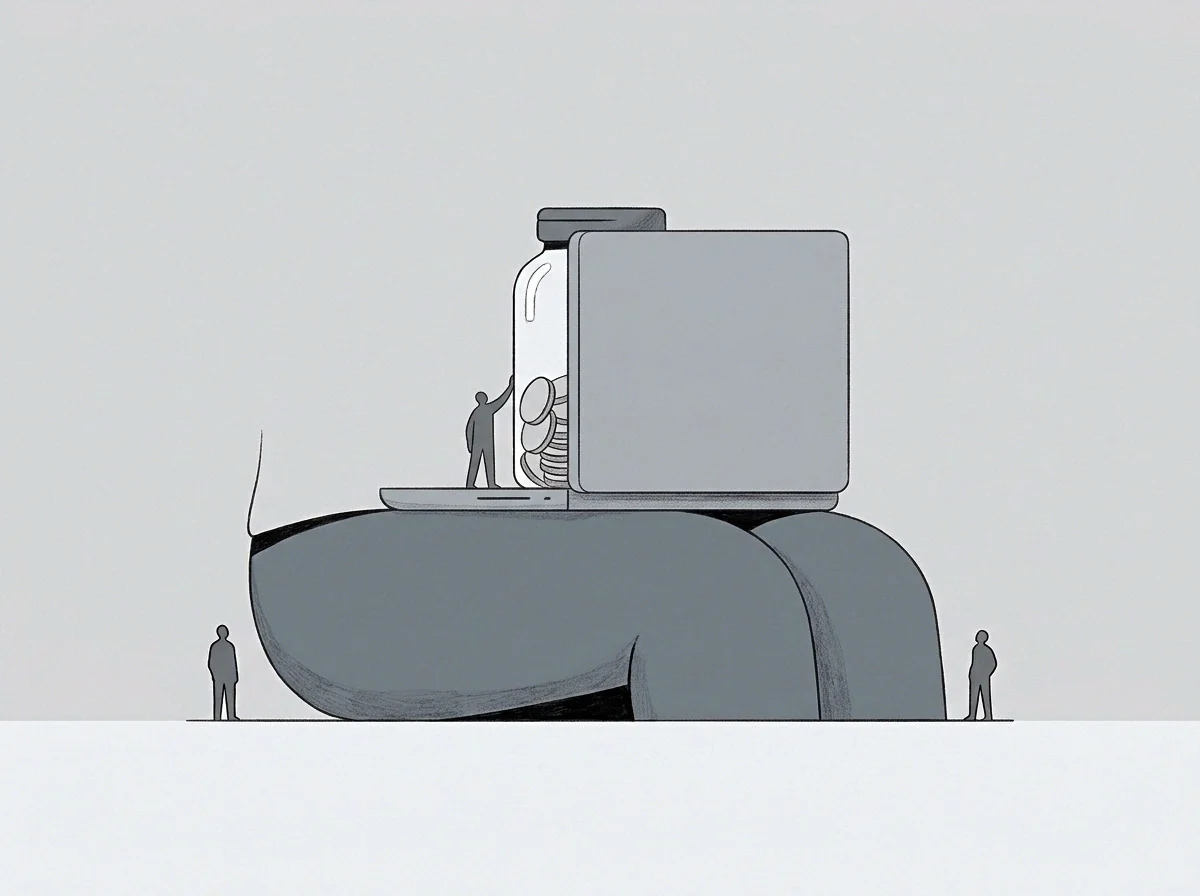
Unchecked availability encourages infinite load transfer. Operational headroom degrades before execution stops. High stakes teams require explicit structural mechanisms to throttle incoming demands and preserve executive capacity before biological breakdown occurs.
Stated Limits Against Implicit Absorption
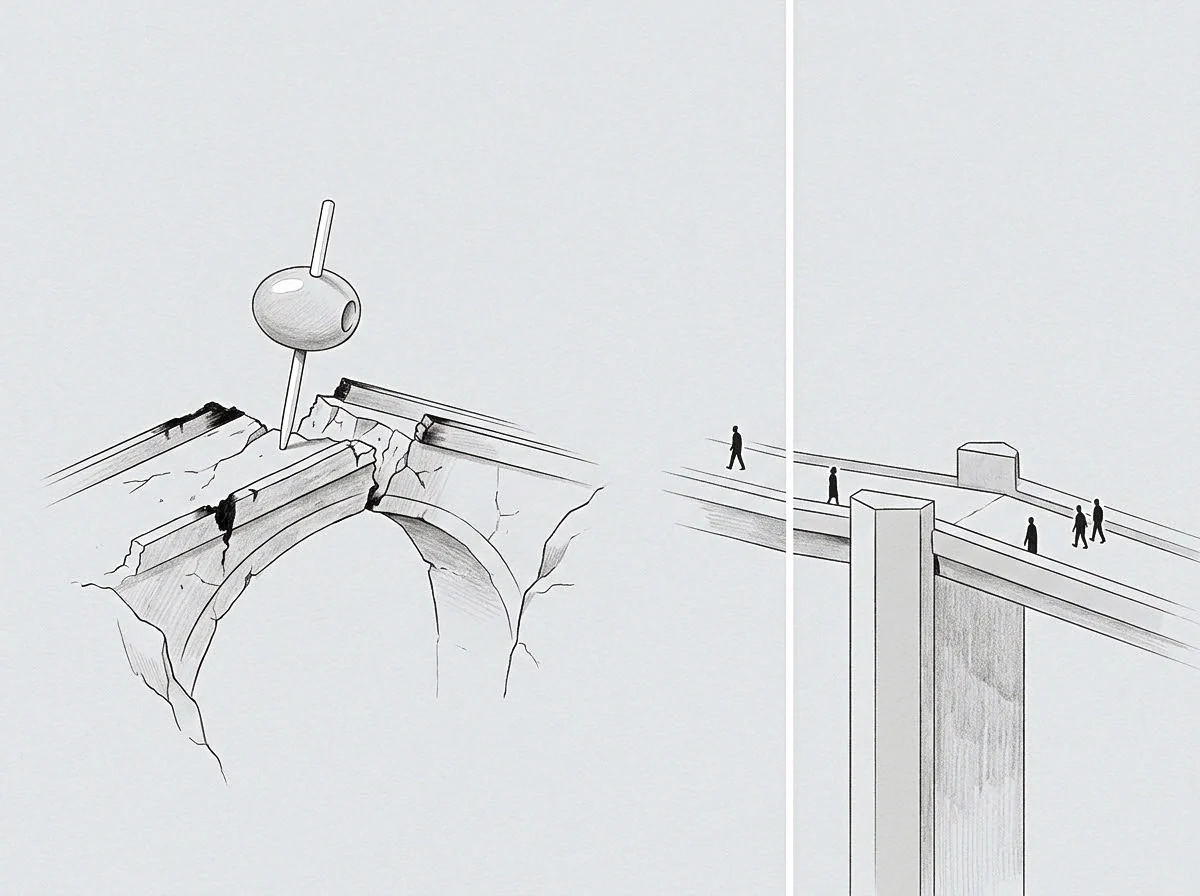
Implicit expectations lead to continuous boundary erosion. When limits remain unstated, team members assume complete availability, routing complex decisions and relational tensions toward the founder. Silence is read as willingness.
Transitioning from implicit endurance to explicit operational parameters alters team dynamics. Stating specific operational availability limits forces team members to resolve secondary problems independently. This shift replaces individual biological absorption with team problem solving, reducing central nervous system overload.

Throttling Concurrency to Protect Executive Headroom
Human cognitive processing suffers measurable switching costs when managing multiple high-stakes priorities simultaneously. Concurrency limits restrict the number of active, unresolved strategic issues assigned to an individual executive at a single time.
Clear operational limits preserve executive capacity far better than undisclosed endurance under load.
Implementing concrete operational throttles reduces continuous autonomic activation, restoring cognitive control and strategic foresight.
An explicit term defining maximum weekly hours spent in crisis mitigation resets team allocation expectations and restores baseline recovery periods.

Grid
Organisational structures determine how stress physiology is distributed across leadership teams. High stakes execution demands deliberate design choices regarding regulatory responsibility and communication channels.

Structuring Regulation Capacity Across High Stakes Teams
Centralized regulation structures rely on a single founder or chief executive to maintain team stability. Distributed structures allocate relational and operational regulation across the entire executive tier through explicit peer systems and structural boundaries.
| Operational Variable | Implicit Centralized Absorption | Explicit Distributed Regulation |
|---|---|---|
| Primary Regulation Source | Single founder or executive | Peer executive network |
| Metabolic Cost Distribution | Concentrated on one individual | Spread across leadership team |
| Systemic Risk Under Crisis | High single-point failure risk | High operational resilience |
| Communication Dynamics | Continuous unfiltered escalations | Structured asynchronous updates |
| Long-Term Capacity Trajectory | Progressive physiological exhaustion | Sustained strategic performance |
Centralized models create severe vulnerabilities during periods of intense market pressure or operational crisis. Explicit terms protect cognitive capacity. Distributing regulatory tasks ensures no single nervous system bears the full weight of company ambiguity.
When team stability rests on shared structural protocols rather than individual heroics, systemic resilience increases naturally over time.

Ground
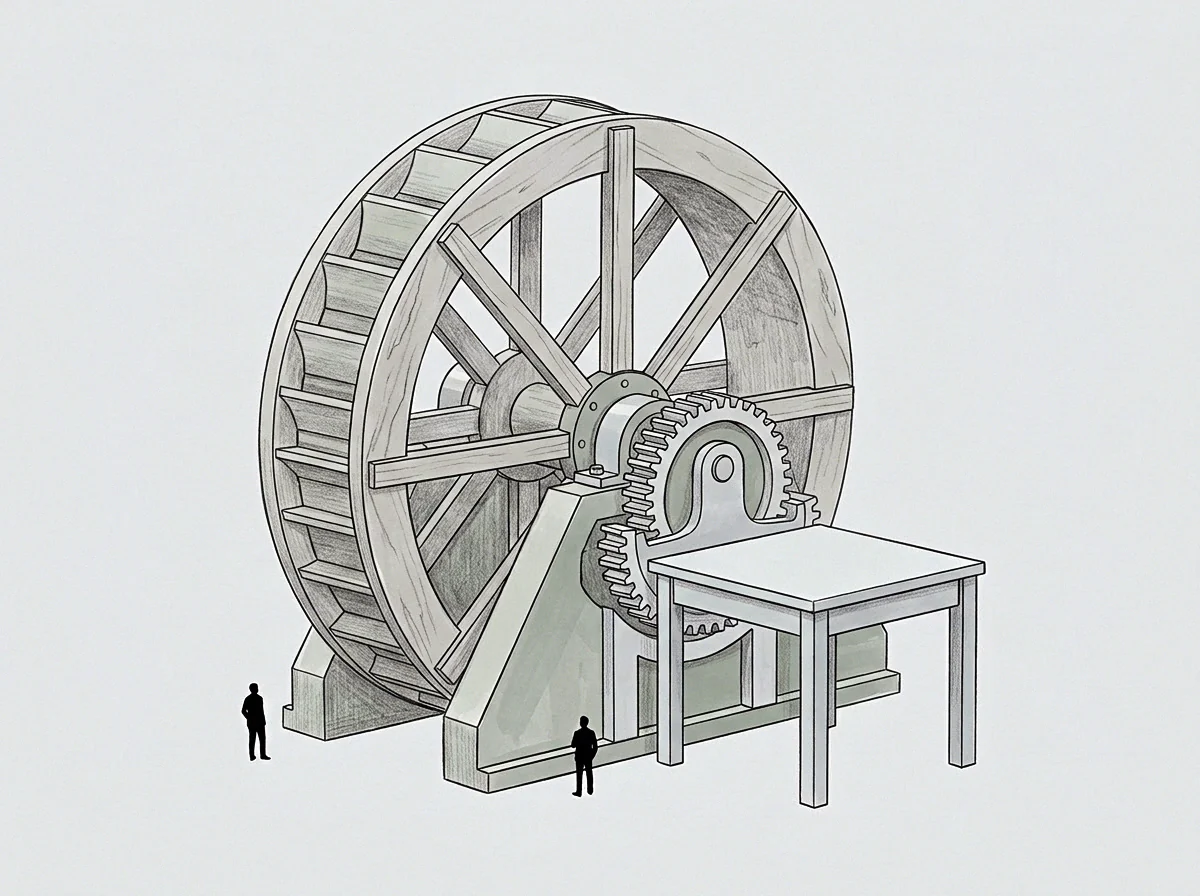
Updating an ingrained regulator template cannot be achieved through intellectual understanding alone. Relational working models shift through repeated physiological experiences of shared regulation under load. Stability needs a second baseline.
Building Second Templates Through Earned Security
Earned security develops when a historically self-reliant individual experiences consistent, non-punitive support from reliable peers during high stakes moments. Over time, these interactions rewrite neural expectations, allowing the leader to offload stress without anticipating structural failure or relational abandonment.
This shift requires deliberate, structured structural adjustments executed over extended execution horizons:
- Establish weekly peer updates focused purely on operational reality without demands for emotional management.
- Delegate complete authority over high-stakes functional domains to competent executives, removing central oversight.
- Enforce strict off-grid recovery windows to train the organisation to resolve mid-level crises independently.

Relational Delta Over Execution Horizons
Repeated reliability builds second templates. As executive teams adopt distributed regulation models, the biological load on the founder decreases, reopening prefrontal capacity for long-term strategic vision.
Repeated relational reliability alters internal working models more permanently than intellectual analysis alone.
The transition from individual absorption to shared resilience restores operational balance across the entire leadership structure.
Strategic clarity returns as autonomic stability settles into the daily operating cadence of the team.