
Autonomic Load Distribution Across Co-Founding Teams Under Structural Pressure
Structural pressure forces co-founders to share autonomic regulation costs, shifting threat processing load onto the partner displaying lower physiological reactivity.

Weight
Four active communication channels run simultaneously on a Tuesday evening while two co-founders review an unscheduled pitch deck and an enterprise counterparty stalls on a renewal. One partner sits motionless before a laptop screen, showing suppressed heart rate variability and elevated skin conductance, while the other sends seventeen consecutive messages about non-critical interface adjustments. The rapid activity of the second partner represents an autonomic effort to discharge threat arousal through low-stakes tasks.
The stillness of the first reflects heavy stabilization work, holding the structural tension of the stall so the organization maintains operational continuity.
Human nervous systems budget metabolic resources based on environmental demand and social proximity. When structural pressure hits an early-stage company, total threat processing expenditure scales exponentially rather than linearly. The brain treats commercial insolvency, key-person exits, and regulatory failure as physical survival challenges, mobilizing glucose and activating sympathetic pathways to sustain vigilance.
In co-founding pairs, this autonomic expenditure rarely divides evenly across the cap table. Metabolic load defaults to whichever partner demonstrates greater baseline stability. When acute stress hits the venture, the less reactive partner absorbs a disproportionate share of the team’s co-regulatory work, operating as a physiological shock absorber.
The reactive partner leans on that steady baseline to down-regulate their own nervous system, offloading metabolic expenditure in the process.
This transfer occurs without conscious coordination or formal agreement. Maintaining calm in a high-threat environment carries substantial biological cost, requiring continuous prefrontal inhibition of alarm signals, active suppression of escape impulses, and the metabolic energy needed to maintain an open posture. When one founder relies on another for autonomic stabilization, the stabilizing partner incurs an invisible biological deficit that accelerates physiological exhaustion while appearing completely composed to outside observers.
Structural threat converts social proximity into a direct transfer mechanism for metabolic regulation costs across executive teams.
The asymmetry deepens as structural pressure persists over operational quarters. Processing both the direct commercial threat and the ambient anxiety of a partner steadily exhausts the stabilizing founder’s central nervous system capacity. The reactive founder easily mistakes external composure for limitless emotional bandwidth, directing further operational volatility toward the steady partner.
Left unmanaged, this distribution pattern forces the stabilizing founder into sudden autonomic shutdown, leaving the leadership structure vulnerable to concurrent functional collapse.
Wall
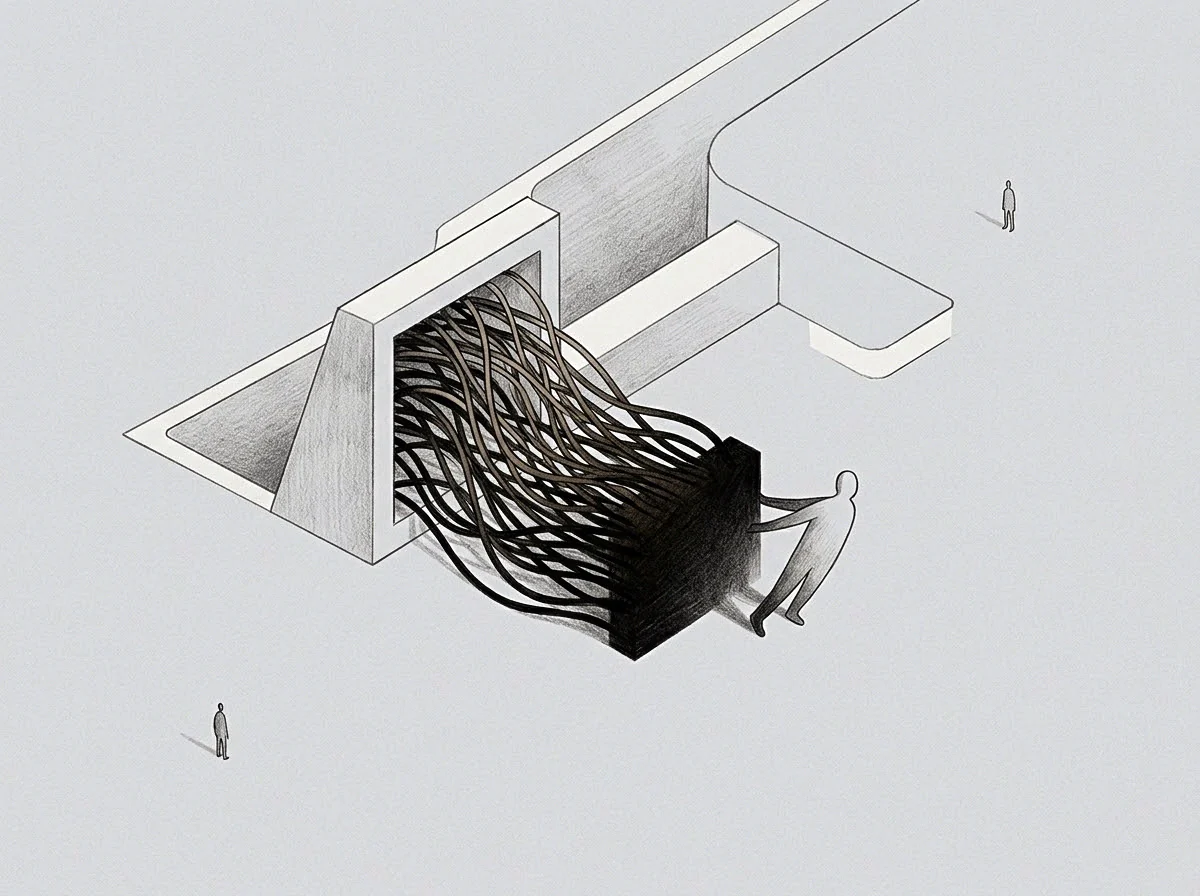
Executive boundaries under commercial strain function as metabolic gates rather than personal preferences. When an early-stage company faces existential threats, structural pressure breaks down operational divisions and exposes the biological boundary between executive partners. Social baseline theory demonstrates that human neural architecture defaults to sharing environmental load whenever a reliable conspecific is present in close physical or operational proximity.
The central nervous system registers the energetic cost of meeting a threat as lower when a trusted partner stands within the operational environment. When executive communication fractures or becomes purely digital, this proximity effect collapses. The brain registers the loss of shared presence as an immediate increase in environmental threat, forcing each founder back into high-cost, solitary self-regulation.
Leadership configurations under structural pressure tend to organize into distinct operational patterns:
- Unilateral Biological Absorption where a single executive stabilizes the entire management tier by repressing visible stress responses while absorbing secondary emotional input from peers.
- Reciprocal Load Shifting where co-founders alternate baseline regulation duties depending on domain expertise, distributing autonomic expenditure evenly across strategic crises.
- Autonomic Hyper-Reactivity where neither partner possesses the physiological headroom to offer regulation, causing mutual stress amplification across every operational feedback loop.
- Defensive System Severance where partners isolate their decision-making processes completely, eliminating co-regulatory support to protect remaining cognitive bandwidth.
Structural boundaries determine whether an executive team maintains operational cohesion or defaults to systemic friction. When communication protocols break down during acute crises, autonomic load cascades onto the most accessible partner. Every unbuffered notification, unexpected escalation, and ambiguous strategic query requires immediate prefrontal processing, draining finite metabolic reserves.
Unclear operational protocols force individual nervous systems to remain in perpetual threat readiness during commercial strain.
When load distribution mechanisms fail across an executive team, the reactive partner frequently misinterprets structural boundaries as personal rejection. Frustration surfaces when the stabilizing co-founder suddenly becomes distant, analytical, and unresponsive to emergency communication during a capital crunch.
Buffer
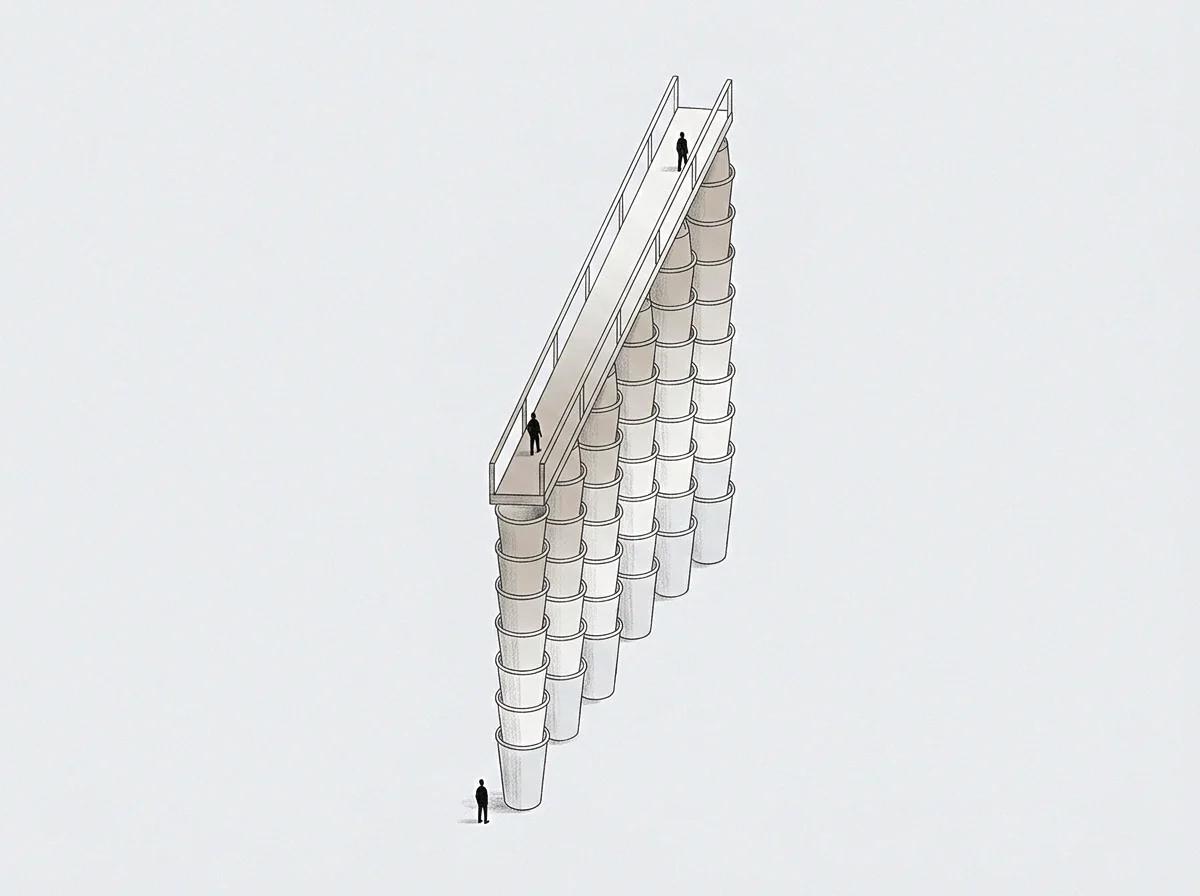
Co-regulation functions as an economic transaction executed through autonomic pathways. When two founders sit in a strategic review meeting, their nervous systems continuously exchange non-verbal indicators of safety and threat. Subtle alterations in vocal tone, facial micro-expressions, respiratory rates, and posture transmit operational data directly to subcortical regions.
A steady co-founder lowers the physiological cost of cognitive processing for the surrounding team.

How Does Autonomic Load Transfer Between Founders?
The transfer of autonomic load relies on internal working models formed through repeated executive interactions. When an executive partner consistently displays predictable, grounded responses during revenue drops or board disputes, the co-founder builds an internal template of that partner as a reliable regulatory baseline. The brain uses this template to pre-emptively lower its own defense posture, conserving biological resources for strategic problem-solving.
When both partners share a synchronized perception of external risk, individual autonomic expenditure drops, dividing the load predictably across the pair. Mismatched threat perception destroys this balance. If one partner views an enterprise delay as a manageable operational adjustment while the other perceives it as an immediate company-killing catastrophe, the regulatory burden splits unevenly.
The hyper-vigilant partner floods the shared space with threat signals, demanding that the calmer partner validate the alarm.
To protect remaining central nervous system capacity, the stabilizing partner often engages in autonomic throttling. Throttling manifests as emotional flattening, brief factual responses, and the complete elimination of conversational pleasantries. This response represents a defensive preservation of baseline biological capacity rather than personal hostility or organizational disengagement.
A steady executive baseline reduces the metabolic expenditure required for high-stakes decision-making across the entire management team.
Long-term operational survival demands that executive teams construct explicit structures to manage co-regulatory budgets. Without deliberate load balancing, the stabilizing founder eventually exhausts internal reserves, resulting in severe clinical fatigue, sudden structural withdrawal, or uncharacteristic explosive conflict during critical negotiations. Extended capital delays frequently accelerate the shift from mutual regulation into competitive self-preservation.

Bench
Executive capacity allocation requires clear measurement of autonomic load across strategic roles. Under structural pressure, team members display distinct physiological profiles that dictate their ability to process complex organizational decisions. An internal model requiring complete self-reliance often leads a founder to reject external regulatory support, consuming massive amounts of glucose simply to maintain an impression of absolute control.
Systemic performance varies according to the primary regulation strategy deployed across the executive table:
| Regime Dimension | Unilateral Absorption | Synchronized Distribution | Isolated Self-Reliance |
|---|---|---|---|
| Primary Regulator | Single Stabilizing Founder | Shared Executive Pair | Fragmented Individual Operators |
| Biological Cost | High Asymmetric Deficit | Balanced Moderate Expense | Maximum Isolated Expenditure |
| Communication Style | Continuous Threat Escalation | Structured Factual Exchanges | Minimal Closed Channels |
| Strategic Headroom | Severely Constrained for One | Sustained Executive Wide | Rapidly Depleted for All |
| Systemic Vulnerability | Single Point Failure | Distributed Resilience | High Friction Collisions |
When executive capacity collapses, leadership teams must deploy explicit structural adjustments to rebalance autonomic expenditure across the organisation. The following operational sequence stabilizes co-founding teams facing severe commercial pressure:
- Establishing hard communication windows to allow prefrontal recovery between high-stakes negotiations.
- Offloading non-essential operational decisions to senior managers to protect executive processing headroom.
- Converting qualitative operational panic into standardized quantitative status metrics before executive review.
- Assigning clear strategic domains to eliminate cross-functional boundary ambiguity during acute crises.
When co-founders introduce structured communication breaks, the resulting silence resets the baseline and accelerates autonomic recovery across the leadership team. Standardized reporting formats strip emotional resonance from operational updates, reducing the biological cost of threat evaluation.
Standardizing crisis reporting formats eliminates emotional resonance and reduces prefrontal metabolic tax during strategic evaluations.
The installation of explicit operational boundaries alters the structural baseline of the leadership team. Replacing personal co-regulation with clear operational constraints reduces the biological cost of maintaining organizational stability, preserving strategic capacity for complex commercial execution.

Relief
Updating an executive team’s autonomic load distribution requires deliberate operational restructuring rather than simple interpersonal alignment. Insight into regulatory mechanics fails to alter physiological defaults unless accompanied by concrete changes in daily workflow. The baseline capacity of a co-founding team expands only when structural pressure meets reliable operational boundaries, because physiological capacity remains finite.
A founder cannot think or negotiate their way out of autonomic depletion without altering the environmental inputs driving central nervous system activation.
The transition from asymmetric load absorption to shared structural distribution occurs through repeated exposure to explicit operational limits. When an executive team establishes firm protocols around communication availability, decision ownership, and crisis escalation, the stabilizing partner gains systemic permission to step off the regulatory bench. The reactive partner learns to process routine commercial ambiguity without demanding immediate biological steadying from a co-founder.
By establishing precise criteria for what constitutes a true commercial emergency versus a standard operational variance, executive pairs eliminate the perpetual state of hyper-vigilance that drains metabolic reserves. When each founder understands exactly which metrics dictate strategic intervention, the autonomic system disengages from ambient organizational monitoring duties.
Consistent operational boundaries convert chaotic interpersonal regulation into predictable structural support across executive teams.
Over time, this structural transition creates earned security within the executive relationship. The co-founding pair builds an operational dynamic grounded in reliable organizational systems rather than continuous personal heroics. Autonomic load distributes evenly across clear strategic workflows, protecting individual executive bandwidth, preserving long-term leadership capacity, and maintaining stable organizational focus through the most intense cycles of commercial strain.