
Neural Mechanisms of Metabolic Resource Budgeting and Relational Capacity Degradation Under Chronic Physiological Strain
Chronic physiological strain forces the brain to shunt scarce metabolic fuel away from expensive prefrontal social circuits, degrading relational capacity.

Shunt
Four direct messages sat open across two screens at midnight while a spreadsheet recalculation hung at seventy percent. The person at the desk stared at a two-sentence inquiry regarding team morale from an operating partner and experienced complete cognitive paralysis. Crafting an answer that acknowledged another human being required an impossible physical exertion.
The person closed the laptop lid, walked into the kitchen, and drank cold tap water in silence. The brain budgets energy continuously. Under sustained allostatic pressure, systemic physiology redirects circulating glucose, oxygen, and glycogen away from high-order associative networks to protect baseline visceral survival.
Relational attunement carries an immense metabolic surcharge.
The central nervous system accounts for roughly two percent of total adult body mass while consuming twenty percent of basal energy expenditure. Within this organ, the cost of neural tissue scales with axonal length, synaptic density, and firing frequency. The prefrontal cortex, the anterior cingulate cortex, and the temporoparietal junction form an exceptionally greedy metabolic sink.
These regions sustain mentalizing, perspective-taking, prosocial affect modulation, and fine-grained communicative calibration. When an individual operates under chronic physiological strain, systemic inflammatory cytokines and glucocorticoids signal a contraction of available metabolic headroom. Cortisol mobilization, catecholamine surges, and disrupted peripheral insulin sensitivity alter the cerebral metabolic rate of glucose.
Under sustained physiological depletion, cerebral blood flow reallocates to primary survival circuits before relational associative networks can draw their basal ration.
The brain operates on predictive allostatic budgeting. Peter Sterling and Bruce McEwen established that neural architecture does not react to physiological disturbance through simple homeostatic negative feedback loops; rather, the organ anticipates energetic demands and adjusts systemic parameters preemptively. In states of persistent threat, prolonged sleep fragmentation, or commercial peril, predictive models register a severe environmental deficit.
Astrocytic-neuronal lactate shuttling prioritizes subcortical survival structures, specifically the amygdaloid complex, the locus coeruleus, and the periaqueductal gray. Glucose reserves drain rapidly under threat. Associative cortex suffers immediate rationing.
The metabolic trade-off manifests as an abrupt narrowing of executive bandwidth. Complex social interaction demands continuous internal working model maintenance, decoding of subtle micro-expressions, prosodic modulation, and real-time inhibition of defensive reflexes. These computations require uninterrupted aerobic glycolysis within frontoparietal control networks.
As peripheral fuel reserves dwindle and basal inflammatory signaling climbs, astrocytes restrict local glycogen degradation within associative cortical layers. The organism treats relational nuance as an expendable energetic luxury. Prefrontal tissue consumes immense fuel.
When an executive attempts to process relational signals during systemic exhaustion, the neural hardware enters metabolic throttling, yielding cognitive blunting, emotional detachment, and communicative withdrawal.
Relational degradation under chronic load stems directly from this metabolic resource reallocation. Observers misinterpret this defensive neural rationing as interpersonal callousness, sudden indifference, or deliberate hostility. The person inside the physiological contraction simply lacks the intracellular adenosine triphosphate required to sustain the neural assemblies that generate empathetic connection.
An unstated consequence follows when leadership treats this metabolic shutdown as a motivational failure, driving the organism into deeper allostatic exhaustion until organ system decompensation forces cessation.

Gate
Social input reaches the central nervous system through sensory gateways governed by predictive gating mechanisms. The temporoparietal junction, working alongside the medial prefrontal cortex and superior temporal sulcus, constructs a continuous simulation of other minds. This computational process allows a partner or coworker to be perceived as an intentional, feeling entity whose vocal inflection and facial tension warrant nuanced interpretation.
In a normatively resourced brain, social baseline theory indicates that the baseline physiological state assumes proximity to reliable conspecifics. Social presence normally distributes the metabolic cost of environmental vigilance and threat appraisal across multiple brains.
Chronic physiological strain reverses this fundamental neural assumption. When systemic strain persists across months without metabolic replenishment, the internal working model of the social environment mutates from a co-regulatory resource into a predatory expenditure. Incoming interpersonal communication ceases to register as potential relief; each message, request, or emotional disclosure registers as an unpayable energetic extraction.
The ventromedial prefrontal cortex down-regulates its inhibitory control over the dorsal vagal complex and the sympathetic nervous system. The organism protects core viability first. Social interaction shifts from an anabolic investment to a catabolic liability.
A persistent metabolic deficit converts incoming social contact from a co-regulatory asset into a direct physiological drain.
The selective shutdown of social reception operates through specific neurochemical and neurovascular choke points, as documented across human neuroimaging investigations of chronic exhaustion:
- Temporoparietal decoupling separates the temporal lobes from prefrontal executive centers, producing an inability to accurately compute the internal mental states of colleagues during routine operational disagreements.
- Medial prefrontal hypoactivation reduces resting metabolic glucose uptake by twenty-five percent in chronic strain cohorts, eliminating the capacity for empathic attunement while sparing rapid threat detection.
- Sympathetic hypervigilance maintains continuous pupillary dilation and elevated tonic skin conductance, locking the individual into defensive scanning that interprets neutral facial postures as latent professional threats.
- Dorsal vagal dominance dampens the myelinated social engagement system described in polyvagal research, flattening facial expression, eliminating vocal prosody, and creating an impassive communicative demeanor that destabilizes team members.
These biological shifts dictate how an exhausted operator processes incoming relational demands during typical operational crises. Below, the differences between a normatively resourced neural state and a chronically strained state appear across key neurofunctional parameters.
| Neurofunctional Parameter | Normative Resourced State | Chronic Physiological Throttling |
|---|---|---|
| Primary Metabolic Allocation | Distributed aerobic glycolysis across frontoparietal networks and default mode subregions | Subcortical prioritization favoring the amygdala, brainstem nuclei, and sensorimotor strips |
| Theory of Mind Processing | Spontaneous temporoparietal attunement to relational nuance and emotional distress | Complete functional attenuation of mentalizing circuits unless driven by acute threat appraisal |
| Vagal Tone Modulation | High heart rate variability supporting flexible social engagement and communicative ease | Suppressed respiratory sinus arrhythmia with dominant sympathetic tone or dorsal vagal immobilization |
| Social Baseline Computation | Presence of an ally reduces autonomic threat reactivity and perceived task difficulty | Presence of an ally registers as an additional metabolic claimant demanding scarce vigilance resources |
| Affective Response to Inquiries | Patience, contextual curiosity, generative problem formulation, open auditory processing | Irritation, auditory gating, monosyllabic defensive posturing, somatic withdrawal reflexes |
When the social gate closes at the neural level, interpersonal dialogue degrades into staccato operational commands or complete mutism. The exhausted operator cannot maintain reciprocal eye gaze because gazing at a human face requires intense neural computation across the fusiform face area and social evaluation networks. Looking away conserves micro-joules of cerebral glucose.
The team member across the table interprets this averted gaze and flat tone as personal disdain or professional contempt. The colleague concludes that the person sitting opposite simply stopped caring about the collective enterprise.

Friction
Relational friction accumulates as an arithmetic consequence of mismatched metabolic capacities. Consider two partners running an enterprise for eighteen months under severe cash-flow constraints. One partner possesses personal financial reserves, a functional domestic support structure, and eight hours of uninterrupted sleep per night.
The second partner holds seventy percent of the operational liability, wakes every two hours with elevated resting pulse, and consumes sixteen hundred calories of processed carbohydrates per day while working eighty hours weekly. The second partner sits in deep metabolic insolvency. Social calculation yields to survival demands.
The well-resourced partner enters a morning briefing expecting collaborative brainstorming, generative ideological friction, and mutual reassurance. The depleted partner experiences the resourced partner’s animated voice as a physical assault on sensory processing circuits. In the auditory cortex, sustained allostatic strain impairs tonotopic tuning; loud speech strains the stapedius muscle reflex, making vocal frequencies sound harsh and abrasive.
Empathy requires high metabolic investment. The depleted partner cuts the discussion short with a harsh operational ultimatum. The well-resourced partner registers this curt dismissal as a betrayal of their egalitarian partnership pact.
Interpersonal breakdowns under chronic physiological strain do not originate in philosophical incompatibility or psychological personality pathology. They stem from an unacknowledged metabolic divergence where one brain can afford the luxury of social curiosity while the other must conserve every millimole of glucose to maintain basic motor and cognitive control. Depleted tissue halts complex modeling.
The depleted individual lacks the biological capital required to borrow another person’s perspective. In response, the unstrained partner escalates bids for connection, asking repeated questions about feelings, vision, and strategic direction, each bid consuming more of the depleted partner’s non-existent metabolic reserves.
When one partner operates in severe metabolic insolvency, every interpersonal bid for emotional attunement registers as an aggressive energetic extraction.
A secondary consequence unfolds within the attachment dynamic. Humans instinctively attach to the nervous system of an individual who appears stable, decisive, and unflappable during systemic stress. An exhausted operator who masks their physiological strain behind rigid composure attracts additional dependency from surrounding personnel.
Colleagues unconsciously offload their anxiety onto the seemingly steady person, borrowing the operator’s apparent calm to settle their own autonomic reactivity. This borrowed regulation comes at a hidden metabolic cost. The operator’s brain spends precious energy inhibiting internal distress to project a stable external baseline for four or five direct reports.
Silence registers as active hostility.
The regulatory transfer runs entirely in one direction. The team leaves the executive’s office feeling grounded, focused, and relieved, while the executive collapses into an armchair, entirely depleted of the glycogen reserves needed to sustain their own domestic relationships that evening. The cost of supplying borrowed calm without receiving co-regulatory replenishment remains completely unpriced inside commercial organizations.
What unresolved biochemical tipping point dictates whether an individual’s neural architecture collapses into depressive hypoactivation or fractures into explosive adrenergic rage when pushed past this point of metabolic insolvency?
Shelf
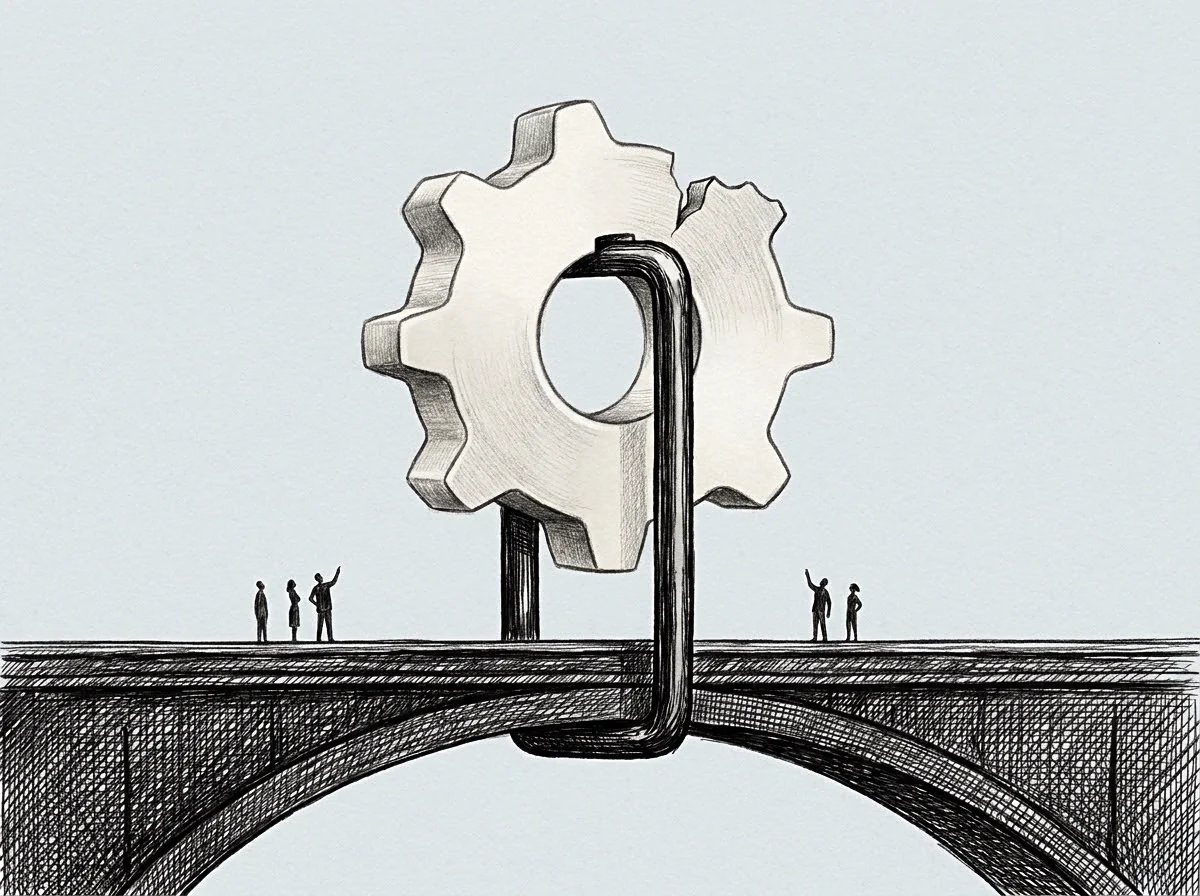
Every biological system possesses a finite capacity shelf, an absolute ceiling beyond which adaptive compensation morphs into cellular pathology. In the context of chronic stress, Bruce McEwen categorized allostasis into four distinct failure profiles: repeated hits from novel stressors, lack of adaptation to identical stressors, prolonged response with delayed shutoff, and inadequate compensatory response leading to secondary system collapse. Relational capacity tracks these profiles with mathematical precision.
During the initial months of high operational strain, an operator draws upon reserve glycogen, increases baseline glucocorticoids, and maintains social attunement through brute cognitive control. The body cuts peripheral expense.
Over time, this compensatory strategy exhausts the capacity shelf. High glucocorticoid exposure causes dendritic retraction within hippocampal pyramidal neurons and prefrontal pyramidal cells, while provoking dendritic arborization within the basolateral amygdala. The physical wiring of the brain morphs.
The neural pathways that support calm relational processing physically wither, while the circuits mediating immediate threat anticipation proliferate. The operator becomes structurally less capable of relational attunement, regardless of moral intent or philosophical dedication. The partner experiences sudden abandonment.
- Compensatory masking demands elevated basal cortisol as the operator forces eye contact, mimics active listening, and represses autonomic tremors to appear professionally viable.
- Attunement erosion follows as astrocytic support fails in the anterior cingulate cortex, producing noticeable conversational pauses and flat affective replies during interpersonal interactions.
- Systemic withdrawal occurs when the social baseline collapses entirely, causing the individual to avoid all unscheduled meetings, ignore phone calls, and communicate solely through asynchronous text.
- Affective explosion terminates the cycle when minor relational feedback triggers an unchecked catecholamine discharge, resulting in scorched-earth verbal confrontations with trusted allies.
The temporal decay of interpersonal tolerance can be observed during prolonged corporate restructurings. Assume an engineering director sustains an unbroken seventy-hour work week for six months while navigating a complex merger. In month one, the director patiently absorbs executive tantrums, coaches struggling team members, and engages in long strategic dinners.
By month three, the director skips informal team lunches, delegates all internal conflict resolution, and responds to messages with single-word affirmations. By month six, the director experiences acute sensory aversion to the office floor, wearing noise-canceling headphones continuously and terminating any meeting that exceeds fifteen minutes. Rest alone cannot restore baseline.
The relational environment inevitably retaliates against this capacity shelf contraction. Board members, life partners, and direct reports construct narratives of moral failure. They accuse the depleted operator of narcissism, arrogance, emotional unavailability, or operational incompetence.
These labels aggravate the physiological damage. Being perceived as an abusive or negligent leader activates social rejection pathways within the dorsal anterior cingulate cortex and anterior insula, firing the exact neural circuits that process physical tissue pain. The operator’s brain now burns scarce metabolic fuel defending itself against relational condemnation, leaving zero capacity for the operational turnaround that could resolve the underlying crisis.
A reliable rule of thumb emerges: capacity degradation in an exhausted operator always reflects metabolic depletion long before it reflects characterological deterioration.
Fuel
Restoring relational capacity requires treating the central nervous system as an energy-constrained thermodynamic organ rather than an emotional apparatus to be healed through insight. Psychoeducation, cognitive behavioral reframing, and self-help literature offer zero efficacy when the underlying neural tissue lacks the metabolic substrate to fire social cognitive circuits. A person cannot think their way into empathy when their prefrontal astrocytes lack intracellular glycogen stores.
Recovery demands sustained physiological safety. The biological machinery must receive systemic replenishment before complex interpersonal attunement can resume.
Rebuilding the neural substrates of social baseline functioning requires systematic somatic interventions. Sleep represents the primary metabolic clearing process. During slow-wave sleep, the glymphatic system expands by sixty percent, flushing beta-amyloid, tau proteins, and inflammatory metabolic byproducts from the cerebral interstitium while re-establishing prefrontal glycogen reserves.
When deep sleep falls below ninety minutes per night for consecutive weeks, prefrontal metabolic debt compounds. No amount of therapeutic discourse can compensate for an untreated sleep deficit. Unchecked depletion breaks relational bonds.
The second prerequisite involves restructuring the relational contract through explicitly stated limits. An exhausted operator cannot negotiate from an unstated expectation of infinite availability. The operator states an unambiguous operational parameter: communication occurs between eight in the morning and five in the evening, after which all communication channels close completely.
Stating a firm operational limit removes the cognitive tax of continuous threat monitoring. The locus coeruleus dampens its noradrenergic tone, the autonomic nervous system disengages from high-alert sympathetic vigilance, and the prefrontal cortex begins to reallocate glucose toward cellular repair and baseline dendritic stabilization.
True relational recovery begins when an operator replaces the performance of infinite resilience with the hard arithmetic of finite physiological resources.
Co-regulation itself must be re-evaluated as an energy-conserving instrument. Rather than engaging in emotionally intense conversations that demand continuous cognitive empathy, the depleted individual requires passive, low-demand physical proximity with a regulated, non-demanding ally. Walking side by side in silence, sharing a quiet meal without operational debate, or sitting in the same room while reading consumes minimal metabolic fuel while activating the calming influence of the social baseline.
The presence of a regulated conspecific signals to the predictive brain that the local environment is secure, permitting the ventromedial prefrontal cortex to cease its expensive survival calculations. The system demands actual replenishment.
Earned security forms through this repeated physical experience of safety, never through intellectual comprehension. An executive who spent three years running on adrenergic overdrive must physically experience dozens of interactions where stepping down from hypervigilance does not lead to professional annihilation or interpersonal desertion. This slow neural reconfiguration gradually restores the receptor mechanisms in the brain that allow a person to be held, soothed, and supported by others.
When the metabolic balance returns to surplus, the brain reopens its social gates spontaneously, re-engaging empathic attunement without conscious strain. The specific condition for sustainable relational capacity is the non-negotiable protection of somatic reserves, which permanently alters how an operator allocates presence across their enterprise and their life.