
Rebuilding Safe Relational Receptors Across Power Asymmetry
Rebuilding relational receptors across power asymmetry requires external peers who share structural parity without holding financial or operational leverage.
Desk
Four messages sit unanswered across two screens past eleven at night. An operator asks for sign-off on an unvetted vendor contract, the lead engineer wants clarification on equity allocation, an early advisor asks why commercial milestones slipped by three weeks, and a co-founder leaves a voice note detailing their exhaustion. Every sender assumes the person in the middle has capacity to spare.
The recipient feels only a flat stillness, heart rate elevated, breathing shallow. This state does not stem from administrative confusion; the body has spent three continuous years acting as the primary nervous system for an entire capitalization table.
In social baseline theory, the mammalian brain budgets metabolic resources assuming that reliable conspecifics stand close enough to share the load. Proximity to a steady human presence reduces the physiological energy needed to regulate cardiac reactivity, hypothalamic-pituitary-adrenal axis activation, and sensory vigilance. When someone builds an enterprise, this bioenergetic economy flips.
The person in the principal seat becomes the source of stability for employees, investors, and contractors, who unconsciously borrow equilibrium from the founder to quiet their own anxieties.
A nervous system carrying structural authority pays full physiological price for every unit of calm it loans to subordinates.
The borrowing party registers the resulting steadiness as their own composure. Subordinates leave executive briefings focused, unaware that their prefrontal regulation was sustained by the deliberate calm of the person across the table. The founder leaves the same room with depleted glycogen and elevated vigilance.
Over long operating horizons, this one-way distribution of metabolic support breaks down the capacity to take support in. The internal machinery designed to receive regulation requires parity to function safely; where structural dominance exists, receiving support carries severe operational risk.
When the regulator tries to lean on someone downstream in the corporate hierarchy, the structural asymmetry distorts the biological signal. A subordinate confronted with executive distress reads it as a systemic threat: an impending payroll failure, strategic collapse, or organizational dissolution. The junior nervous system destabilizes, forcing the executive to immediately stabilize both parties.
Every attempt to use an asymmetric relationship for mutual regulation produces an intensified net burden for the person at the top.
The Structural Deficit of Authority
Authority alters how the brain processes social proximity. Among peers, shared sensory cues automatically downregulate threat-sensitive amygdala circuits. In hierarchies, every interaction carries evaluation, leverage, and survival consequences.
Someone holding firing authority, capital allocation control, or equity governance cannot engage in casual biobehavioral synchrony with people whose livelihoods depend on those decisions. Subordinates continuously monitor the superior for signals of favor, anger, or instability, creating a constant latency in interpersonal connection.
Attachment patterns established early in development shape how people handle relational inputs under load. Many who gravitate toward institutional command developed inverted internal working models in childhood, serving as emotional stabilizers for volatile or incapacitated caregivers. The child learned to regulate the family system by showing unwavering reliability while suppressing personal distress signals.
This adaptation yields extraordinary effectiveness when founding enterprises, while leaving the adult without functional receptors for receiving care.
A regulator proven under structural strain reliably attracts additional volume from everyone seeking shelter from volatility.
The internal architecture treats being supported as an existential risk. If survival depended on holding up the surrounding adults, leaning on another human being registers neurally as structural collapse. The founder unconsciously constructs organizations that mirror this early distribution, gathering personnel who require steadying, guidance, and containment.
The founder sits in the executive suite surrounded by personnel who confirm the original hypothesis: safety exists solely in holding the load alone, because others buckle the moment weight shifts onto their shoulders.
This dynamic generates deep metabolic isolation. The founder operates as an unbuffered terminal in an expanding electrical circuit. External capital providers compound the problem by demanding emotional predictability as a prerequisite for funding.
Board members measure competence through the founder’s ability to maintain a steady presentation amid supply chain failures or shareholder disputes. Under these conditions, suppressing the biological need for reciprocal regulation becomes an explicit commercial requirement. The nervous system adapts by downregulating social receptors until it ceases to expect interpersonal relief entirely.
The company remains stable so long as the chief executive never displays fatigue or asks for help with the pressure.
Channel
Relational receptors are biological and cognitive pathways built to take in external safety. These mechanisms require three prerequisites: an accurate detector of reciprocal intent, a neural appraisal system that interprets another person’s calm as non-predatory, and an effector pathway that permits smooth muscle relaxation and vagal braking in response to social contact. Prolonged time inside high-leverage asymmetry damages all three components, leading the executive to evaluate every incoming social approach through transaction or threat extraction.
When a subordinate, vendor, or professional acquaintance asks how the leader is holding up, the executive brain does not register social care. It scans for underlying utility, decoding the query as an indirect check on solvency, a covert bid for reassurance, or political reconnaissance to identify vulnerability. In competitive commerce, this cynicism functions as an accurate survival heuristic.
Across repeated operating quarters, this defensive stance calcifies into a permanent perceptual baseline, stripping the nervous system of the plasticity required to open a reception channel even when an encounter carries zero professional risk.
Whose Baseline Absorbs The Operational Shock?
The biological price of solitary self-regulation scales with operational complexity. An individual can maintain physiological homeostasis alone during brief sprints, but sustaining multi-year enterprise operations without external co-regulatory input exhausts neuroendocrine reserves. The brain burns exorbitant glucose maintaining executive control through raw prefrontal inhibition.
By contrast, people embedded in reciprocal social baselines offload cognitive and emotional burden onto trusted peers, cutting metabolic maintenance costs by half.
Rebuilding these receptors while retaining executive accountability requires separating personal biobehavioral regulation from hierarchical structures. An enterprise leader cannot rebuild reception channels through internal staff; doing so exploits subordinates, destabilizes governance, and triggers panic across operating units. The rebuilding process requires external relational environments defined by three conditions:
- Structural parity ensures neither participant holds governance, financial leverage, or administrative authority over the other person.
- Decoupled outcomes remove commercial entanglement so that operational failure in one party’s life poses zero financial threat to the counterparty.
- Symmetrical capacity verifies that the companion possesses sufficient physiological and psychological fortitude to observe high-stakes distress without absorbing it as panic.
Without these constraints firmly established, attempts at relational reopening collapse into habitual patterns of caretaking or defensive posturing. The nervous system requires undeniable proof of structural equilibrium before permitting its receptors to accept external steadiness.
Accepting calm from another requires verifying that they can survive the full weight of the operational reality.
Test
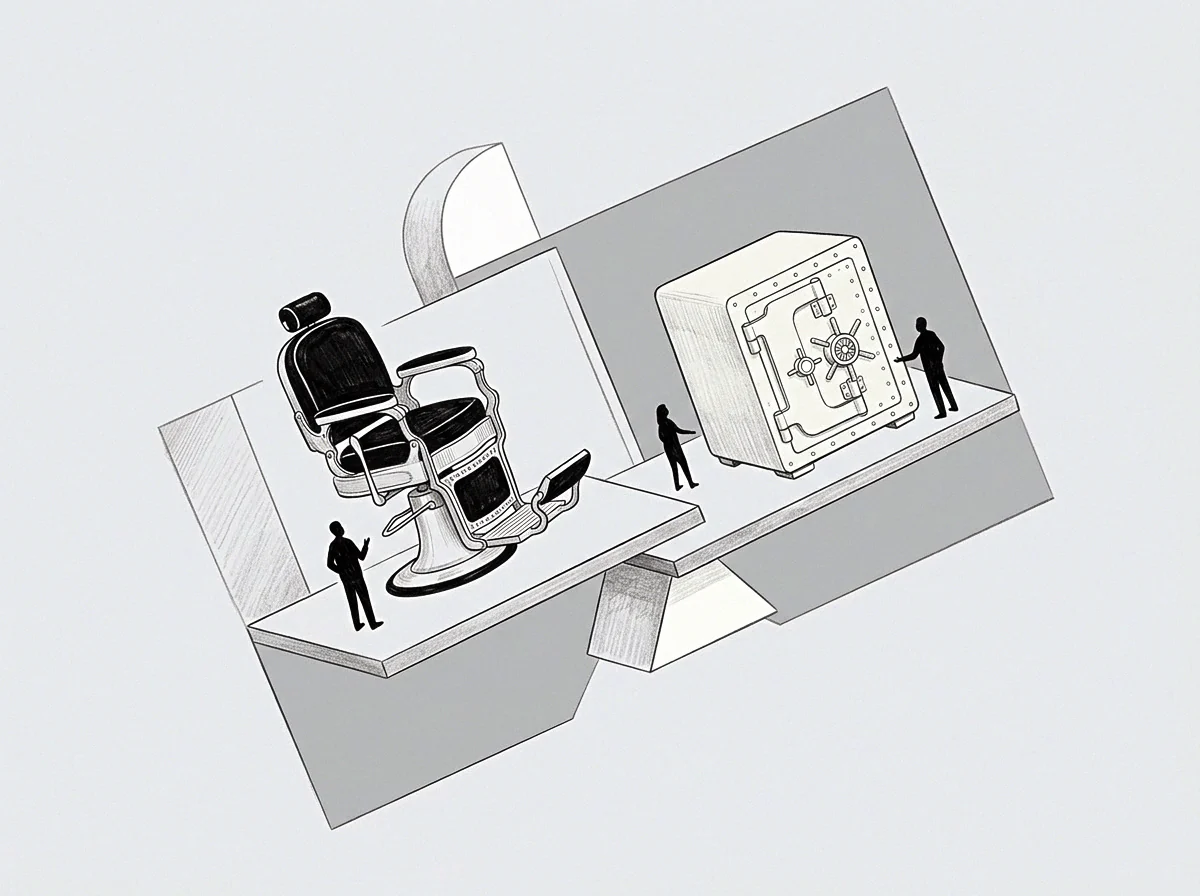
Consider a typical commercial scenario. An enterprise founder managing seventy employees and fifteen million dollars in annual recurring revenue experiences severe sleep fragmentation and progressive executive fatigue. The founder attempts two distinct pathways to restore relational functioning: an open-door policy within the management team designed to foster lateral collaboration, and participation in an external assembly of cross-industry chief executives meeting monthly under structured confidentiality covenants.
The biological consequences of these two arrangements reveal the operational physics of power asymmetry.
| Arrangement | Perceived Signal | Metabolic Expenditure | Receptor Response | Systemic Consequence |
|---|---|---|---|---|
| Internal Management Team | Executive transparency read as institutional instability | Elevated; executive must repair subordinate anxiety | Receptor down-regulation; reinforcement of defensive armor | Subordinate flight risk increases; operational drift |
| External Assembly of Peers | Shared operational load read as normative reality | Reduced; mutual presence lowers prefrontal vigilance | Receptor reactivation; gradual physiological downshift | Preservation of strategic capacity; baseline stabilization |
The comparative data demonstrate why internal vulnerability fails as a biological recovery tool. In the internal configuration, every admission of uncertainty from the chief executive requires thirty subsequent units of administrative energy to settle the management layer. Subordinates lack the structural insulation needed to hold executive ambiguity; they require certainty to run their departments.
Consequently, the leader’s brief bid for lateral connection simply produces a secondary management task: consoling anxious lieutenants.
A stated operational limit protects the enterprise far better than a false display of infinite human capacity.
In the external peer assembly, structural asymmetry vanishes. The counterparties face identical capitalization obligations, operational tensions, and fiduciary liabilities. When one member describes severe institutional pressure, listeners do not interpret the admission as an existential threat to their personal income.
Their nervous systems stay stable, allowing the speaker to observe another human being holding awareness of their predicament without collapsing, panicking, or attempting to exploit the disclosure.
Over eighteen consecutive months of repeated exposure to unshakeable peers, the founder’s neural circuitry updates its working template through the mechanical pathway of earned security. The brain discovers through empirical measurement that it can lower its guard, register external presence, and experience physiological decompression without triggering commercial catastrophe. The relational receptor gradually clears of protective calcification.
A mutual non-disclosure agreement combined with a complete absence of shared equity interest guarantees that neither participant can monetize the other person’s admissions.
Draft
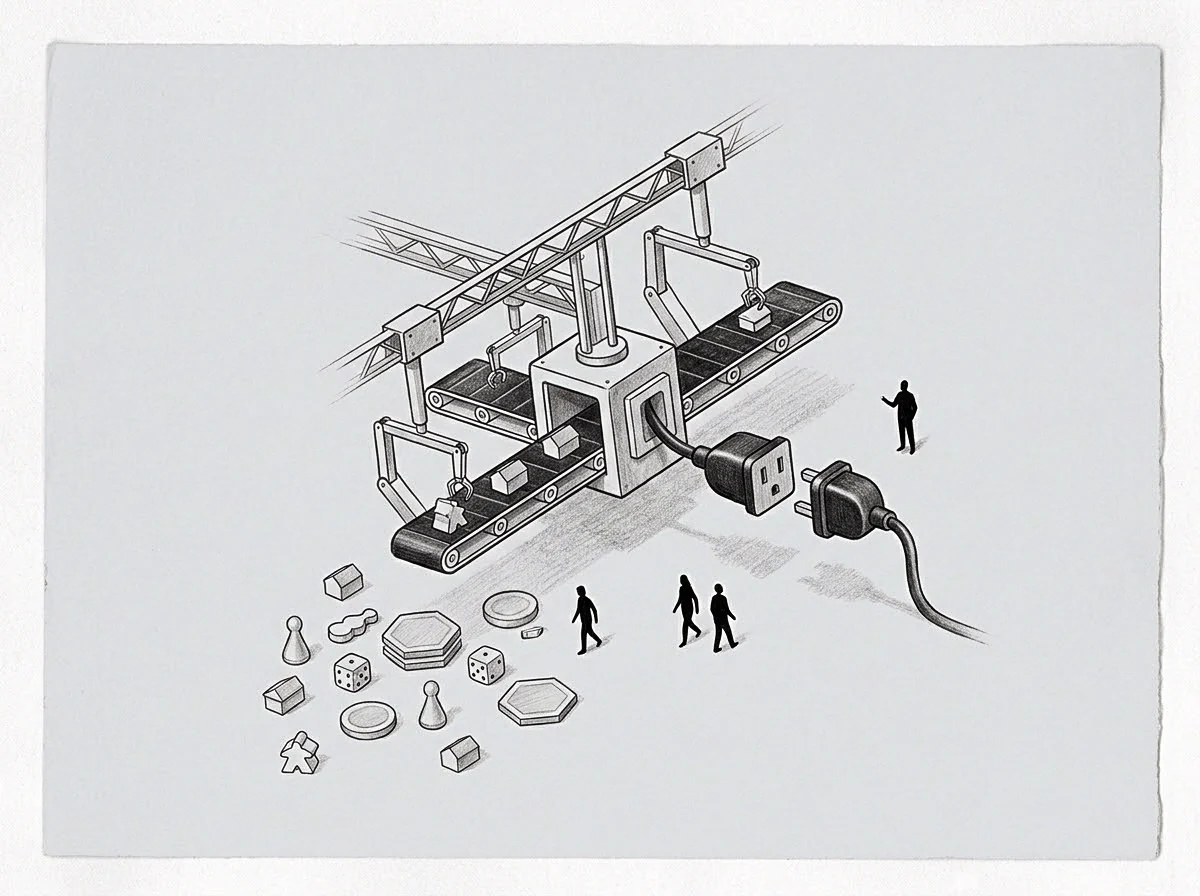
Updating an internal working model occurs through small, physical increments rather than intellectual breakthroughs. An executive cannot read an analysis of attachment mechanics, recognize the pattern, and immediately unblock suppressed relational receptors. Insight names the deficiency; only visceral experience under load replaces the defensive architecture.
The nervous system requires dozens of micro-trials where support is received, leverage remains unexploited, and the sky does not fall.
The initial phase of receptor rebuilding feels physically repulsive to someone whose baseline formed around solitary strength. When a trusted peer offers assistance or a steady presence during an operational crisis, the executive’s autonomic nervous system interprets the gesture as a loss of command. The chest constricts, and the instinct to deflect through professional banter or sudden task orientation surges.
Overcoming this hurdle requires deliberate, low-stakes practice. The founder begins by allowing external peers to hold minor operational problems without rushing to provide answers or assert conversational dominance.
True relational reception registers first as an uncomfortable physical stillness in a person accustomed to continuous management.
A functional method involves establishing structured operational check-ins with two vetted peers outside the company’s operating sector. These interactions follow a rigid protocol: each participant speaks uninterrupted for twenty minutes regarding strategic pressure points while counterparties listen without providing tactical advice or unearned platitudes. The speaker practices remaining physically seated while describing heavy exposure without rushing to smooth over the difficulty.
The listeners practice holding steady facial presentation, slow respiration, and uninterrupted eye contact.
This biological exposure forces the speaker’s brain to process a radical sensory input: admitting operational strain in the physical presence of other human beings who neither flee nor exploit the speaker. The vagal nerve gradually engages its social engagement brake. Peripheral vasodilation occurs, core body temperature normalizes, and the relentless release of stress hormones attenuates.
The founder begins to borrow regulation from the circle.
As this capacity solidifies, the individual brings a changed physiology back to the operating seat. Power asymmetry remains an inescapable reality of organizational command, yet the leader no longer demands that the enterprise serve as an impossible source of co-regulation. Subordinates are freed from the invisible, confusing task of managing the superior’s unspoken isolation.
The executive states limits cleanly, allocates resources without resentment, and leads from a physiological baseline maintained outside the company’s walls.
The unresolved question is how an individual holding unilateral authority across several institutional domains can ever fully verify that an external peer is entirely free of hidden commercial ambitions.