
Restoring Regulation Budgets After Long Periods Of Solo Build Confinement
Extended solitary building dismantles social baseline regulation, forcing the nervous system into high-cost vigilance that updates only through calm physical proximity.
Load
Three mornings after shipping the product, the builder sits at a cleared wooden desk with cold coffee in a ceramic mug and finds that normal conversational volume in an adjoining room triggers an immediate muscular brace. Months of uninterrupted solitary focus train the nervous system to treat incoming social noise as an operational disruption. When someone works for hundreds of consecutive days without an allied counterpart nearby, neural energy shifts away from vegetative restoration and toward threat surveillance.
Social baseline theory treats social proximity as the primary metabolic baseline rather than an optional support. In threat-cue experiments using functional neuroimaging, subjects holding the hand of a responsive partner show clear attenuation in neural threat circuitry, specifically within the dorsal anterior cingulate cortex, insula, and hypothalamus. Operating alone, the brain budgets biobehavioral energy against an assumption of maximum resistance: every anomaly, sound, and physiological shift must be evaluated and calmed using solitary autonomic resources.
A room full of neutral voices registers as an ambush when autonomic reserves are completely depleted.
During long stretches of isolated development, this solitary expenditure runs uninterrupted. Builders rarely identify the condition as fear; it presents instead as sharp technical focus, absolute operational control, and an acute irritability toward outside interruption. Under extended solitary cognitive demands, the sympathetic system narrows attention entirely onto the immediate build while drawing down peripheral regulation reserves.
This reallocation produces predictable changes in working capacity:
- Sensory Hypersensitivity amplifies peripheral movement, background speech, and ambient room noise into visceral physiological disruptions that derail working memory.
- Attentional Tunneling locks cognitive resources onto deterministic execution loops while rejecting relational bids for engagement as hostile interruptions. Two whole days pass before external inquiries receive an acknowledgement.
- Autonomic Exhaustion depresses morning heart rate variability and elevates baseline cortisol output across mundane communicative tasks.
- Affective Flattening suppresses spontaneous facial expressivity and vocal prosody, rendering interpersonal exchange mechanical and exhausting.
Attempting to resume collaborative routines while in operational isolation forces the prefrontal cortex to spend compensatory attention simply tolerating human proximity, which often precipitates abrupt neuroendocrine exhaustion.
Rail
Physical support structures in industrial plants bear kinetic loads directly so workers do not have to carry that weight. A stable physical counterpart serves an identical mechanical purpose in human biobehavioral regulation. Having an ally in the room shifts how the nervous system calculates metabolic expenditure; in genuine isolation, the brain registers physical distances as greater, inclines as steeper, and operational friction as far more demanding.
| Evaluation Dimension | Solitary Baseline Mode | Distributed Social Baseline Mode |
|---|---|---|
| Threat Appraisal | Centralized within individual prefrontal cortex | Distributed across relational dyads |
| Autonomic Caloric Cost | Elevated sympathetic output during routine tasks | Attenuated cardiovascular and neuroendocrine reactivity |
| Sensory Filtering | High conscious suppression of peripheral ambient input | Automated low-energy sensory gating via partner presence |
| Response to Operational Shock | Acute compensatory vigilance leading to cognitive depletion | Shared physiological damping permitting rapid behavioral recovery |
The move from solitary building to collaborative execution breaks down when an operator assumes cognitive awareness can substitute for physiological calibration. Understanding social baseline principles does not alter autonomic function. The autonomic nervous system updates its risk assessments solely through sustained sensory exposure to calm physical proximity.
When a peer occupies the same room without requiring conversation, task coordination, or social engagement, the sensory cortex slowly registers security.
Proximity to a silent counterpart reduces hypothalamic activity when no interaction is demanded.
Operators returning from long stretches of solo construction frequently mismanage this re-entry by treating physical proximity as a signal to debate architecture, redistribute tickets, or align on strategy. That impulse burns through diminished prefrontal capacity. Stepping into close quarters with an active conversational agenda consumes the precise monitoring capacity that isolation depleted, delaying genuine physical rest.
Restorative regulation depends on simple physical presence. Working quietly at opposite ends of a room, taking a walk along the same route without speaking, or eating a meal without screens allows autonomic alignment to happen below conscious thought. When sensory perception registers another person staying physically relaxed within the immediate workspace, the amygdala gradually reduces vigilance.
Autonomic settling spreads between bodies through posture and steady breathing well before spoken language conveys meaning.
Intake
Dry docks hold ocean-going vessels upright within concrete cradles while crews weld hull plates stressed by heavy seas. The vessel has to sit firmly against the keel blocks before the water drains, or unsupported steel plates buckle under structural shear. An isolated builder’s nervous system requires an identical mechanical resting phase before it can handle layered social input.
Can Borrowed Calm Hold Under Unscheduled Interruption?
Autonomic regulation adheres to rigid capacity thresholds. Exiting isolation leaves an operator with narrow reception bandwidth for social input. Sudden team requests, unscheduled calls, and unstructured chatter hit this constrained capacity like pressurized fluid forced through a pinhole, triggering immediate sympathetic flooding.
A stated quiet window prevents sympathetic flooding when operational demands escalate.
Borrowed regulation holds only as long as the intake pace remains below the threshold of autonomic agitation. An operator cannot draw stability from an ally while simultaneously tracking four critical work threads. When an unscheduled interruption breaches the room during an intake window, the body returns to defensive vigilance, releasing catecholamines and breaking relational attunement.
Establishing an effective regulatory intake routine requires three specific constraints:
- Spatial Isolation Windows establish three unbroken daily hours where the founder occupies a closed room without digital alerts, communicative channels, or operational monitoring obligations.
- Asynchronous Ingestion Protocols restrict all external operational inquiries to structured text channels, prohibiting impromptu voice calls or unscheduled video check-ins.
- Low-Stimulus Co-Presence pairs the founder with a non-demanding partner in shared physical silence for forty-five minutes each evening.
Attachment literature measures physiological indices across discrete experimental blocks rather than continuous operating cycles, leaving it unproven whether sixty minutes of physical co-presence delivers twice the regulation of thirty minutes. Without precise dosage data, the operator sets explicit time limits, monitors recovery pace directly, and accounts for the caloric cost of spoken exchanges.
The team needed an answer that afternoon, but the founder left the phone face down on the shelf and remained offline until morning.

Friction
Collaborative contact inevitably produces mechanical strain when participants operate from mismatched autonomic profiles. An operator emerging from solo development relies on habits formed under solitary liability: every variable was internal, decisions had immediate consequences, and individual vigilance kept the project solvent. An incoming partner or team brings a different operational cadence built around ongoing consultation and divided attention.
This structural mismatch creates friction across several everyday touchpoints:
- Interference Misattribution registers routine operational check-ins from colleagues as covert attacks on autonomy and competence.
- Regulatory Monopolization occurs when the founder unconsciously forces the entire team to regulate the founder’s own autonomic anxiety by demanding immediate status answers.
- Receptor Rejection causes the depleted builder to pull away from genuine offers of operational assistance, treating the offer as an implicit accusation of weakness.
- Conversational Burnout drains communicative capacity within twenty minutes of unstructured group dialogue, causing abrupt emotional withdrawal.
Solo operators often attempt to resolve collaborative tension through thorough intellectual explanation, detailing their fatigue, boundary guidelines, and cognitive bandwidth to colleagues. That effort routinely backfires, because producing verbal arguments, narrative context, and logical justifications burns scarce prefrontal capacity, compounding the initial exhaustion.
The operator relies on structured, low-bandwidth touchpoints where terms are documented in writing before meetings happen. When collaborators treat asynchronous technical writing as the primary interface, the founder protects attentional energy for critical engineering tasks. Working arrangements that rely on unspoken assumptions unravel under pressure.
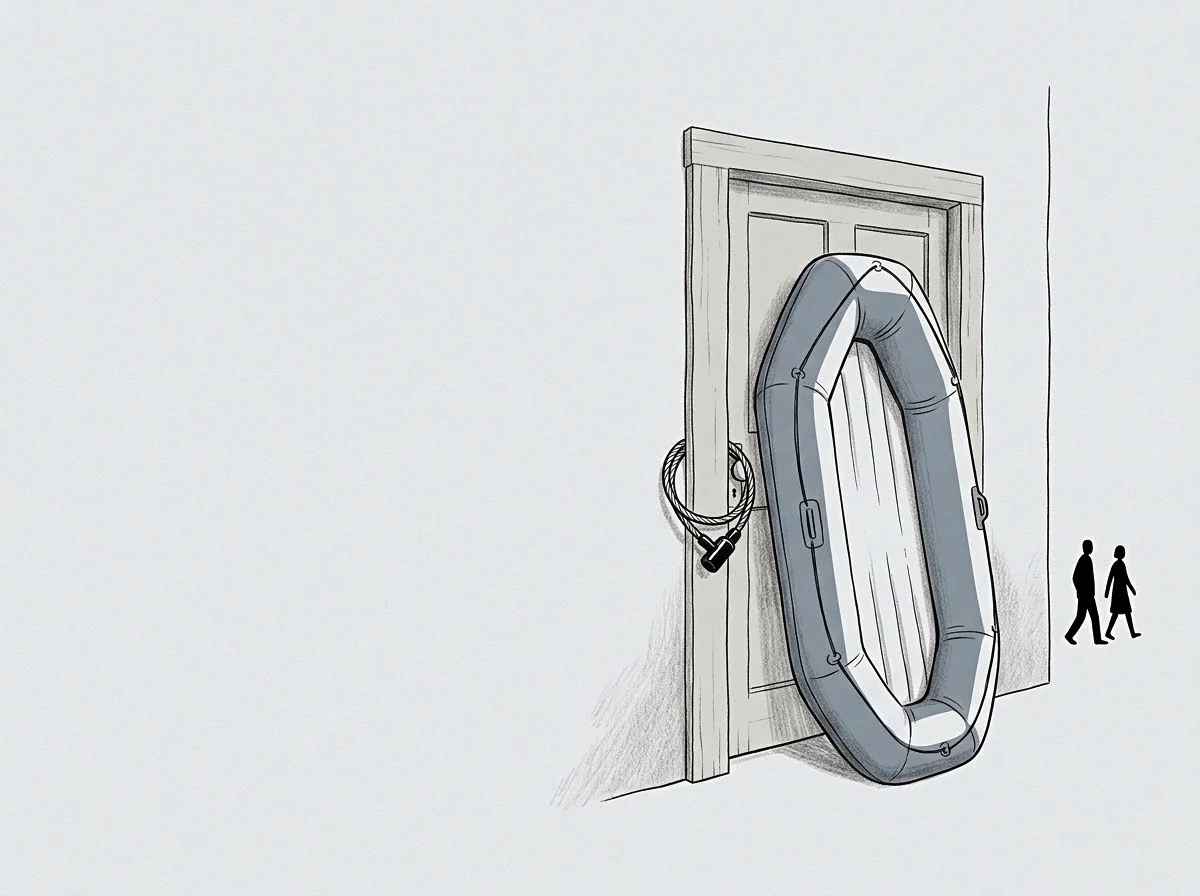
How long can a collaborative partnership endure an asymmetric regulation budget before the partner holding the baseline begins liquidating their own operational reserves to sustain the founder?
Return
Re-establishing a dependable social baseline after months of isolation follows the timeline of biological tissue repair and neural adaptation. Consider an engineer who spent eighteen months writing code alone, logging seventy hours weekly in a converted garage with no real-world contact beyond automated deliveries, who then partners with an operational counterpart expecting thirty weekly hours of real-time debate.
Attempting to meet that volume of synchronous communication immediately leads to cognitive decompensation within six weeks. An internal system organized around independent vigilance treats the persistent ambiguity of unstructured debate as an unsustainable metabolic drain, surfacing as sleep disruption, irritability, executive impairment, and open interpersonal friction.
Sustainable reintegration follows an incremental schedule:
- During weeks one through four, the operator engages only in asynchronous written exchanges and silent, parallel physical presence, keeping synchronous conversational interaction below forty total minutes daily.
- During weeks five through eight, structured forty-five-minute bilateral discussions occur three mornings weekly, separated by mandatory ninety-minute periods of absolute communicative silence.
- During weeks nine through twelve, the operator introduces low-stakes group meetings while preserving total control over execution pacing and spatial boundaries.
Habitual patterns of isolated self-regulation do not lift through rational intent; they change through direct experience showing that close working proximity does not compromise execution control or deplete all physical reserves. Stability develops across hundreds of low-friction interactions where a partner shows up, stays composed under pressure, demands no immediate verbal output, and leaves without draining the operator’s energy.
A contract establishing asynchronous default communication secures the regulatory headroom necessary for neural stabilization.
As nervous system stability returns, communicative capacity expands. The operator discovers that working alongside an unhurried, capable peer reduces the friction of sustained attention, levels out heart rate variability, and extends cognitive stamina. Collaborative work shifts from an acute metabolic drain into an arrangement where execution demands are distributed across multiple people.
A written agreement specifying asynchronous communication as the default mode across all collaborative channels transforms proximity from an operational hazard into a sustainable source of stability.