
Transitioning Operational Leadership Away From Executive Buffering
Operational leaders develop real regulatory capacity only when executives cease absorbing systemic shocks and permit direct exposure to operational friction.
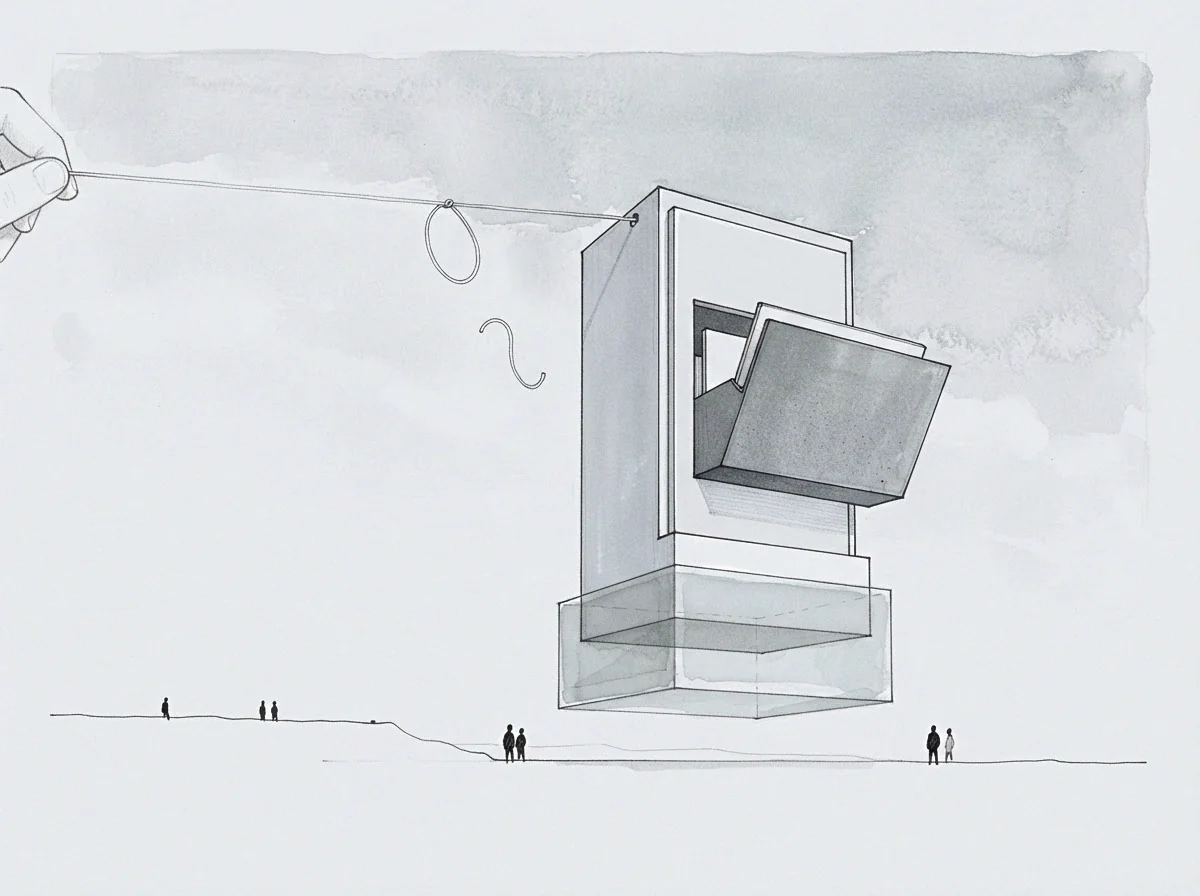
Room
Four direct messages remain unread at midnight while the delivery schedule slips into next week. The founder fields vendor payment disputes, calms an unstable key client, and rewrites the product release notes before morning standup. None of this reaches the newly hired head of operations, who arrives at eight to an orderly queue of tickets, clean spreadsheets, and quiet departmental leads.
The operational layer functions because the executive acts as an unacknowledged shock absorber. The company looks stable, but that stillness was bought with founder hours.
This dynamic defines executive buffering. In early corporate configurations, the company creator absorbs variance to keep early execution moving. Volatility from capital shortages, client defections, and technical outages gets processed by a single person.
When the business expands and operational management transitions to dedicated managers, that habit rarely dissolves on its own. The founder continues stepping in, filtering customer complaints, resolving staff disputes, and absorbing supplier shocks before they reach the operational lead. The operator ends up managing an abstraction of the business rather than the business itself.
A company functions on synthetic stability whenever operational leadership manages only the variance an executive has already dampened.
The habit extracts a measurable toll. Operating as the sole regulatory conduit generates chronic allostatic load across years of expansion, leaving the executive vigilant for the next breakdown. Capacity for capital planning, governance, and commercial strategy dissolves under the weight of immediate operational triage, while the operational lead absorbs none of it, presenting clean progress reports to board observers while lacking the capacity to survive an unbuffered market shock.
This protective habit keeps the operational team from developing the resilience required to run the enterprise.

Tension
Human nervous systems budget energy, attention, and physiological recovery based on the availability of capable others in the immediate social environment. Under social baseline theory, the baseline assumption of human biology is proximity to reliable relational partners. Operating in isolation is metabolically expensive, and proximity acts as an energy subsidy.
Research in affective neuroscience, specifically functional imaging studies assessing neural responses to threat while holding a partner’s hand, indicates that the presence of a trusted partner attenuates threat response in the hypothalamus and anterior cingulate cortex. That finding rests on relational dyads evaluated under immediate physical pain threats. The effect weakens when relational trust is low or the counterpart is perceived as unpredictable.

Social Baselines and Borrowed Regulation
Operational personnel routinely tether their calm to the perceived composure of an executive. The team utilizes borrowed regulation to navigate quarterly pressures, relying on the founder’s presence to settle ambient anxiety. Subordinates observe executive breathing, facial tension, and responsiveness in meetings, adjusting their own stress responses according to those signals.
When the executive absorbs systemic crises without transmitting distress, the team experiences synthetic tranquility, while the executive covers the regulatory cost in personal hours and strain.
A team operates under borrowed regulation when its composure depends on an executive absorbing systemic threats in silence.
Repeated exposure to unbuffered strain alters the internal working model of the buffering executive. A leader who habitually neutralizes operational distress develops an inverted regulator identity, finding equilibrium only while steadying others. Such an individual maintains no internal receptor slot for receiving support.
The organizational hierarchy mirrors this configuration: operational managers offload systemic friction upward, treating the executive as an infinite sink for organizational strain.

The Mechanics of Operational Attachment
Teams form relational attachments to executive calmness rather than to operational agreements. When an executive steps between the operational lead and external reality, several structural breakdowns emerge in sequence:
- Signal suppression obscures true operational costs by burying systemic friction inside executive private hours.
- Skill stagnation prevents department managers from mastering crisis navigation, keeping functional execution dependent on executive intervention.
- Distorted accountability leaves board members unable to discern whether operational success stems from management competence or executive triage.
- Metabolic exhaustion drains executive cognitive reserves until strategic oversight fails under immediate survival demands.
Leaving operational leaders insulated from market volatility produces an illusion of organizational maturity. The executive remains exhausted while the operational lead wonders why the founder refuses to step back and let the team execute.
Brace
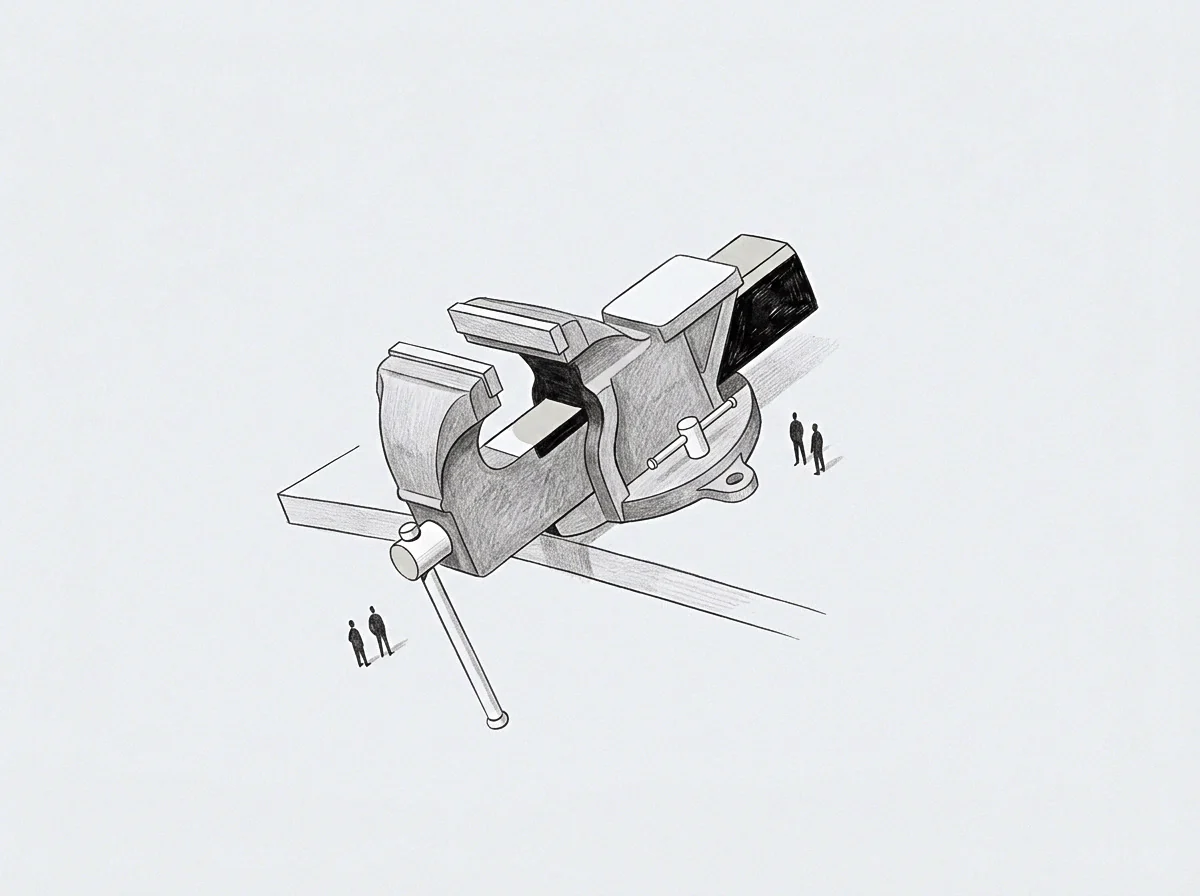
Structural resilience in an organization mirrors structural dampening in high-rise civil architecture. Steel cables sway during high winds, and tuned mass dampers absorb kinetic oscillation to preserve structural integrity, yet every structural beam must still bear its assigned load. Transferring operational steering away from executive intervention requires redesigning the shock-absorbing mechanisms of the business.
| Evaluation Criterion | Direct Executive Buffering | Autonomous Operational Regulation |
|---|---|---|
| Primary Shock Absorber | Individual executive nervous system | Distributed operational protocols |
| Signal Fidelity | Distorted by private intervention | Direct transmission of market pressures |
| Management Skill Development | Arrested at administrative execution | Expanded through direct consequence management |
| Executive Attention Cost | Continuous emergency triage | Protected strategic oversight |
| Systemic Failure Modality | Sudden executive breakdown | Localized operational friction |
The difference between these operating patterns centers on how volatility enters the management tier. In buffered environments, the executive intercepts supplier defaults, cash flow delays, and tier-one client terminations. In autonomous operational environments, operational leadership receives the direct shock.
The team must diagnose root causes, determine corrective interventions, and absorb the discomfort of immediate accountability.
An operational unit matures only in proportion to the raw market feedback it directly encounters and resolves.
Developing internal operational resilience demands that an executive step back from the shock-absorbing role. This withdrawal reveals hidden operational deficiencies: production schedules slip, key accounts register frustration, and software deployments stumble as unbuffered systems register every tremor. The temporary dip in execution marks the commencement of genuine organizational learning, provided the executive resists the temptation to resume the buffering pattern.

Breach
Withdrawing executive insulation initiates an immediate operational rupture. When an executive ceases intercepting escalations, latent friction surfaces instantly across the management tier, leaving operational leads to discover that vendor relationships are frayed, delivery estimates are unrealistically compressed, and key personnel are struggling with conflicting priorities.

Will Operational Systems Hold Without Executive Intervention?
The initial response from operational leadership during this withdrawal phase is typically indignation or disorientation. Accustomed to operating within a pre-filtered workspace, the operational head perceives the unfiltered arrival of crises as executive abandonment or leadership failure. Operational leads repeatedly bring raw crises back to the founder, seeking the familiar protective intervention.
The duration of this withdrawal phase varies across market categories. Certain business environments stabilize within weeks of buffer removal, while complex enterprises require quarters of iterative exposure before operational leaders steady their execution. Under this variance, an executive monitors the fidelity of operational problem-solving rather than setting arbitrary calendar deadlines.
Direct exposure to operational strain produces localized performance drops before independent competence takes hold.
Withdrawal of executive protection introduces distinct operational failure modes:
- Premature retreat happens when an executive resumes firefighting at the first customer complaint, reinforcing team helplessness.
- Reflexive escalation occurs when department leads forward unmodified vendor disputes back to the founder desk.
- Administrative paralysis locks managers in circular planning meetings while urgent field crises remain unaddressed.
- Surfacing attrition drives fragile personnel out of the organization once executive protection dissolves.

The Latent Cost of Unfiltered Operations
Production slows while accountability clears. During this transitional period, customer churn may rise and delivery cycle times extend. Executives who panic during this phase step back into operational triage, resetting the learning timeline and confirming to the team that the founder will continue absorbing the cost in personal capacity.
If the executive steps back permanently, operational managers are forced to confront the mechanical constraints of their workflows, negotiate directly with distressed stakeholders, and develop authentic functional equilibrium.
Attempting to bypass this exposure period leaves an enterprise structurally fragile, guaranteeing that the business will fracture the moment market conditions overpower the founder’s capacity to absorb the impact alone.
Compact
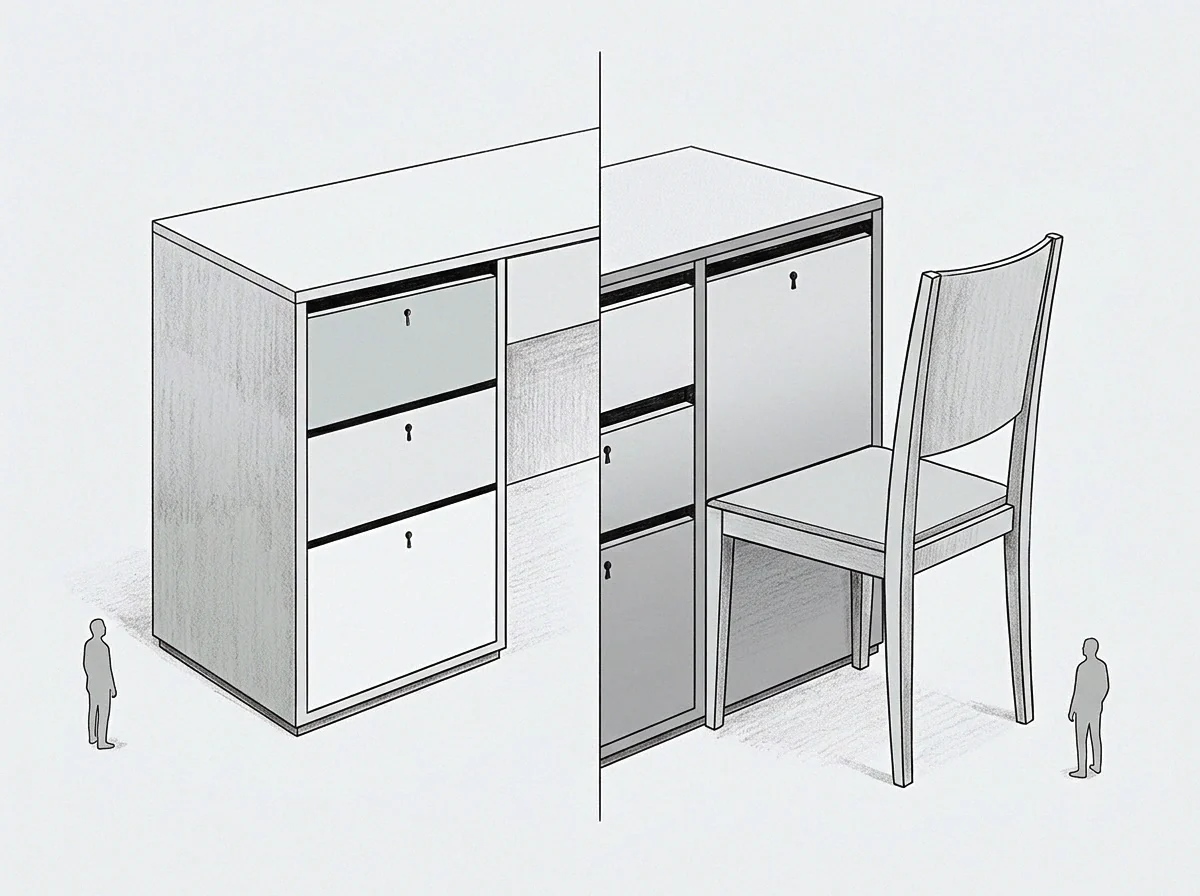
Establishing autonomous operational steering requires an explicit compact that separates strategic governance from functional execution. The founder defines the boundaries of corporate viability, capital constraints, and institutional purpose, leaving operational leads to carry full accountability for functional execution.

Stated Limits and Authority Boundaries
Sustainable handoffs require establishing a firm stated limit. The founder must establish clear non-intervention thresholds, refusing to attend operational resolution sessions, arbitrate routine employee conflicts, or rewrite operational runbooks, which forces the operational head to take unambiguous ownership of business continuity, delivery timelines, and team performance metrics.
A governance boundary exists only where an executive systematically refuses to resolve crises falling within delegated authority.
This operational boundary allows the operator to develop earned security in the leadership seat. In developmental psychology, earned security represents the acquisition of autonomous emotional stability through repeated, corrective relational experiences over time. The concept rests on longitudinal attachment interview research spanning adult developmental transitions, tracking individuals who shifted from insecure attachment states to stable autonomous organization through structured relationships.
In an operating environment, an operational lead develops managerial earned security not by receiving verbal encouragement, but through repeated exposure to direct operational hazards followed by successful autonomous resolution.

Establishing True Operational Accountability
The distribution of hours reveals the true dependency. True operational handoff is complete when systemic shocks no longer route to the executive desk, stopping instead with the operator. Strategic decisions take precedence during executive hours because operational fires are managed entirely within the operations hierarchy.
Sleep deficits compound across quarters when boundaries fail, but strict boundary adherence preserves the executive’s capacity for enterprise strategy.
The definitive operating contract specifies that any emergency falling within the agreed operational charter belongs entirely to the operational lead, stripping the executive of operational intervention rights and transferring institutional accountability to the person occupying the operational seat.