
Asynchronous Filter Structures That Shield Executive Headroom During Operational Outages
Asynchronous filter structures preserve executive headroom during outages by converting intrusive escalations into batch updates at enforced physical boundaries.

Wall
Four communication channels light up at once while production databases lock, customer success leads ask for immediate client messaging, and infrastructure teams split triage across separate voice bridges. The organizational impulse in that first half-hour is always to find the founder, unload the ambiguity into their direct inbox, and borrow centralized authority to settle competing priorities. Acting as an unscheduled circuit breaker forces the founder to absorb unfiltered panic across departments.
Rapid context-switching sets in just as systemic uncertainty peaks. Under that concurrency of notifications, cognitive headroom vanishes. That reserve represents the remaining capacity needed to evaluate unmodeled enterprise exposure, protect cash reserves, and track solvency limits.
It functions as a finite physiological constraint rather than a matter of discipline.
Preventing executive depletion during a major outage requires a structural partition rather than stamina or fast typing, isolating executive attention like a dedicated compute node instead of an open messaging inbox. A stated rule acts as that partition. Unchecked operational systems push against leadership until hitting a boundary that refuses to yield, and an explicit filter is the first non-human obstacle they strike.
Without enforced definitions of an executive-level emergency, the operational layer instinctively routes every unresolved issue upward. The founder turns into an unpriced buffer, absorbing friction that engineering teams and operational managers hesitate to resolve on the ground.
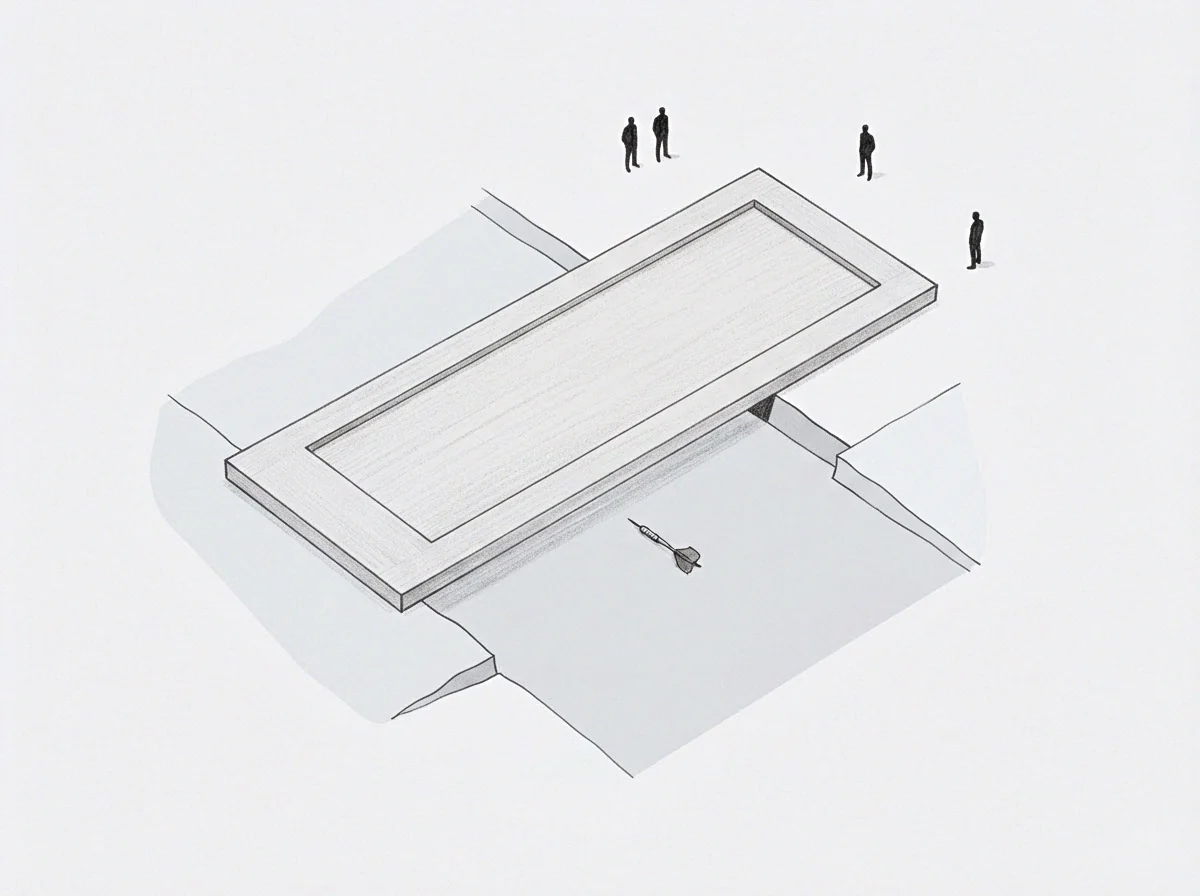
A stated limit functions as a wall when incoming stress meets an immovable boundary instead of an elastic individual.
An asynchronous filter fundamentally changes this dynamic. Escalations must clear explicit, pre-authorized criteria before reaching executive attention. Unless an incident threatens corporate solvency, triggers non-remediable regulatory violations, or forces irrevocable commercial concessions, it stops at the boundary.
The operational team logs incident progress in an isolated status register updated on strict forty-five-minute intervals. The executive reviews the entries, assesses systemic drift, and stays silent until a designated threshold is breached.
Physiological state determines cognitive output, while mood merely reflects that underlying condition. As allostatic load climbs under continuous notification pings, the nervous system throttles deliberative reasoning in favor of reflexive reactions. Analytical capacity erodes over forty-five minutes of fragmented chat chatter.
Establishing an asynchronous barrier preserves the cognitive baseline of the executive seat, so that if enterprise-level intervention is actually called for, the person stepping in retains the clarity needed to make irreversible decisions.
Drift
Severe incidents drive a fast wedge between raw telemetry and executive perspective. As alerts crowd operational dashboards, team leads lose peripheral vision. A deadlocked database looks existential to the reliability engineer, just as a halted third-party settlement gateway looks fatal to a merchant account manager.
With unrestricted access to executive channels, every group tries to push its immediate panic directly onto the founder. The resulting noise generates dangerous operational drift. A founder can easily lose ninety minutes parsing stack traces to reconstruct an incident’s scope, entirely missing board-level debt covenants or exposures in counterparty agreements.
Escalation Mechanics Under Unbounded Concurrency
Take an organization running four core services with forty distributed engineers. When a primary database cluster stalls, the lack of an intake funnel splits communication into sixteen simultaneous threads across chat apps, SMS, and conference bridges. Each channel circulates partial updates, speculative theories, and requests to bypass change-control procedures.
Assuming active visibility shows solid leadership, the founder tries to answer every thread in sequence.
The result is severe task-switching drag. Research in cognitive ergonomics shows that returning to deep analytical focus after evaluating an incomplete status update takes up to twenty-three minutes. Interrupted every four minutes, an executive never regains the continuity required to weigh long-range implications.
They fall into operational capture, working essentially as an emergency dispatcher rather than directing company strategy.
| Escalation Attribute | Synchronous Direct Escalation | Asynchronous Filter Partition |
|---|---|---|
| Intake Mechanism | Unscheduled direct messages and real-time voice bridges | Structured ledger updates filed at fixed time intervals |
| Threshold Requirement | Individual engineer perception of technical urgency | Irrevocable capital loss or contractual termination trigger |
| Executive Cognitive State | Continuous reactive processing and allostatic exhaustion | Preserved analytical baseline for solvency decisions |
| Channel Verification | Continuous alert pings requiring immediate acknowledgement | Silence interpreted as operational stabilization |
These routing structures dictate how much cognitive capacity an organization preserves during a crisis. Direct synchronous communication lets ground-level panic spill into executive channels without friction. An asynchronous protocol obliges teams to verify data, condense findings, and filter noise before submitting an escalation report.
Availability is observed through behavior rather than declared. Sitting in an active incident channel signals round-the-clock availability, prompting engineers to defer hard technical choices simply because final authority is in the room. By closing the channel, providing an intake format, and setting a forty-five-minute check-in, an executive signals that triage belongs on the ground.
Staff stop offloading problems and run existing procedures instead. Executive silence anchors that boundary.
An organization will route upward every operational decision it is allowed to hand off.

Filter
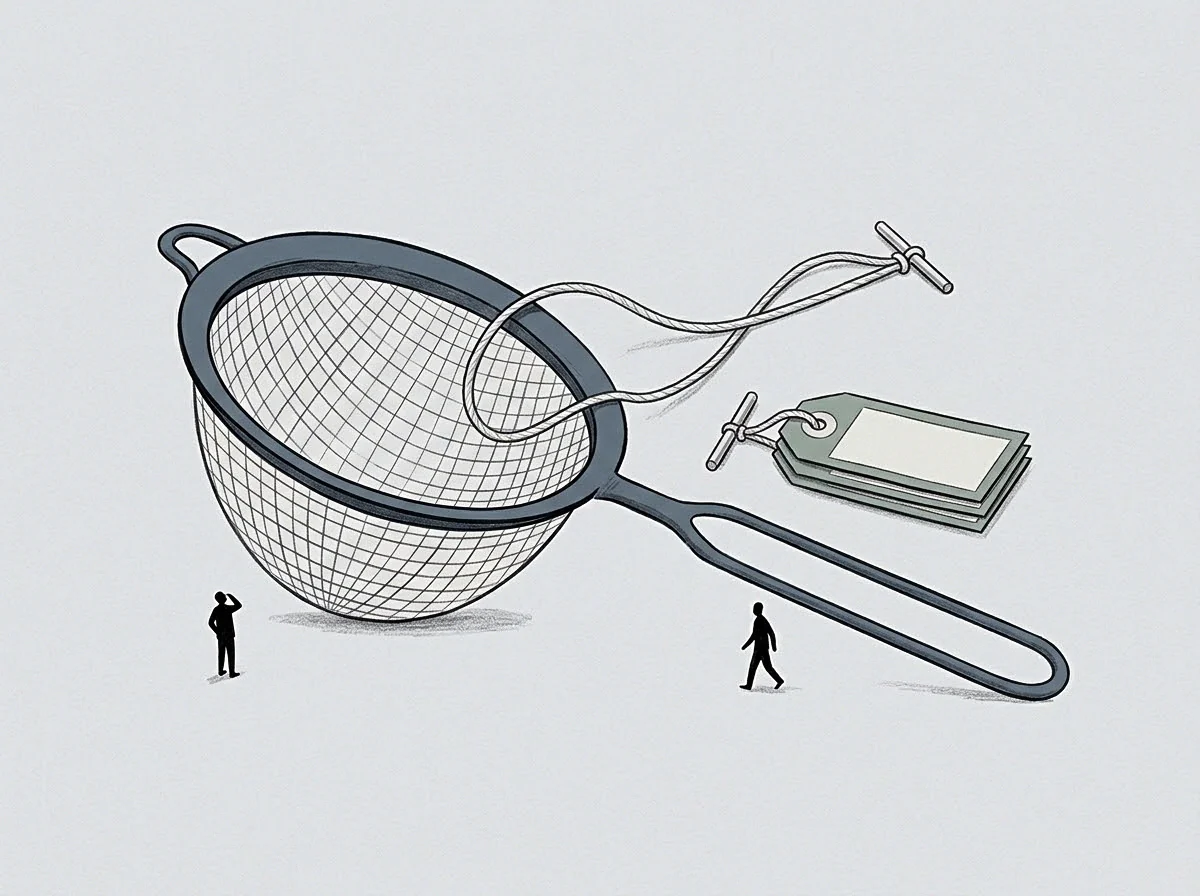
Setting up an asynchronous filter means building clear separations between technical triage teams and executive attention. Rather than soft administrative recommendations, these controls act as mechanical check valves that discard low-priority data before it drains executive focus. The setup relies on three sequential stages: parameter verification, batch consolidation, and threshold gating.

Structural Elements Of The Operational Partition
The intake layer has to strip subjective narrative from technical logs before any escalation reaches leadership. Crises generate an enormous amount of commentary: engineers floating unverified root causes, managers venting about client tempers, and account reps requesting status calls every ten minutes. The filter eliminates sentiment in favor of rigid reporting syntax.
- Structured Ledger Logs replace open-ended narrative chats with four required data fields covering current operational impact, containment hypotheses, remediation blast radius, and unmitigated risk projections.
- Batch Cadence Intervals enforce a minimum gap between non-terminal operational updates, preventing partial data from interrupting high-level analysis.
- Designated Escalation Proxies hold the sole authority to elevate an incident to the executive tier, preventing ad-hoc escalations by unverified staff.
- Binary Authorization Forms transform open-ended tactical strategy discussions into simple, pre-computed trade-off packages requiring only an operational sign-off.
A concrete example illustrates how the protocol works. Suppose a mid-sized financial infrastructure firm suffers an undetected message-bus breakdown during peak volume. Transactions back up, and downstream reconciliation stalls across twelve international partner nodes.
Under conventional handling, the founder receives fifteen direct notifications inside eight minutes, pulling them straight into the live war room.
Under an asynchronous protocol, the incident lead sequesters the response team in a local triage room. At 14:00, the lead files a single register update detailing backlog volume, projected time until storage buffers fill, and remediation risks. The report confirms that zero customer deposits have been lost and no third-party regulatory thresholds have been crossed.
Placed in the asynchronous queue with a sixty-minute refresh window, the filing is reviewed by the founder at 14:15. Seeing that solvency is secure, the founder logs zero comments and continues tracking counterparty banking exposures. Receiving no notes, the engineering team takes executive silence as confirmation to execute existing runbooks.
Operational silence serves as structural confirmation that triage remains delegated to the engineering edge.
This approach involves a definite trade-off: leadership surrenders minute-by-minute visibility into tactical engineering maneuvers. If an incident lead misdiagnoses a technical failure, the executive learns of the error thirty to forty minutes later instead of immediately. Organizations accept that operational risk because the alternative, cognitive exhaustion and erratic executive interference during systemic failures, carries far greater liability.
The report is logged, the clock is running, and the incident team holds the floor.

Door
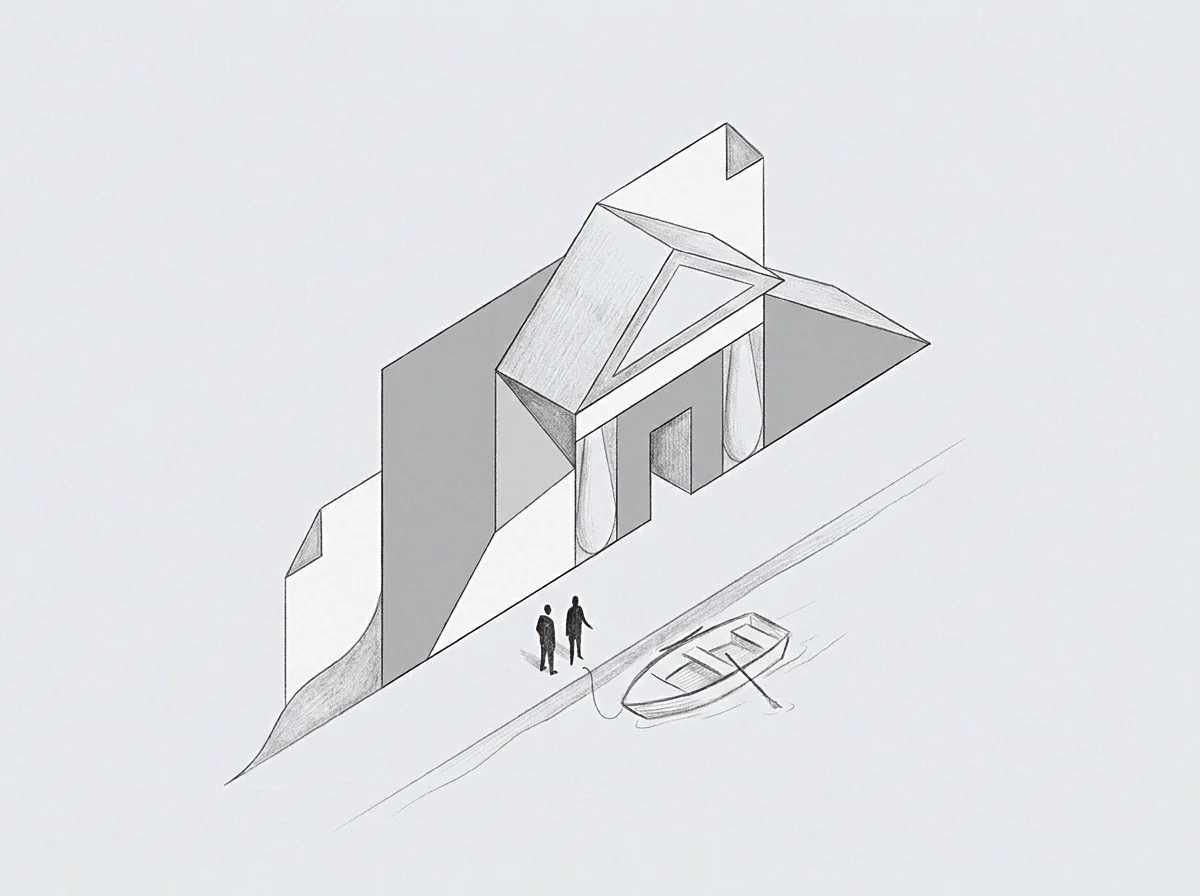
An asynchronous filter establishes a mechanical partition during an enterprise emergency, serving as an operational airlock. It keeps ground-level panic outside executive offices while stopping leadership anxiety from trickling down to the engineering team. When a founder drops into an incident bridge during an outage to ask three rapid technical questions, staff abandon their repair procedures to respond, degrading overall technical efficiency.

Can Operational Escalations Bypass The Triage Buffer?
Any triage filter requires an explicit bypass mechanism, a hard tripwire that overrides asynchronous intervals and demands real-time executive intervention. Without strict bypass terms, an asynchronous boundary turns into blind isolation that prevents leadership from responding to existential exposure.
Bypass conditions must be binary, quantitative, and authorized in advance. An engineer never pages leadership simply out of discomfort. Escalation overrides trigger only under specific systemic thresholds:
- The technical failure exposes the company to immediate, irreversible regulatory asset freezes.
- A malicious data exfiltration attack is verified alongside active operational degradation.
- Remediation requires committing capital exceeding the autonomous spending threshold of the incident commander.
- The projected time-to-recovery extends beyond the formal service level agreement breach limit that triggers commercial contract cancellations.
This criteria set omits qualitative factors entirely. Client frustration, public social commentary, and internal anxiety never qualify as emergency triggers. If an outage fails to meet concrete operational thresholds, it stays behind the filter, regardless of chatter on external communication feeds.
Mechanically, operational actions divide into decision-gated and state-gated categories. A decision-gated step happens on demand: signing off on emergency infrastructure spend, postponing a scheduled release, or publishing an incident notice. A state-gated action depends entirely on physiological and situational readiness.
Synthesizing complex risk from partial data is fundamentally state-gated. If an executive’s nervous system is flooded with stress hormones after an hour of unstructured notifications, synthesis becomes biologically impossible, regardless of willpower. The asynchronous barrier maintains the baseline necessary for high-stakes reasoning.
Without pre-defined bypass thresholds, response teams predictably escalate minor tactical friction while leaving structural risks unflagged, assuming someone else has alerted leadership.

Cadence
The pacing of updates dictates whether an executive maintains strategic control or slips into reactive habits. Working memory cannot track complex scenarios while absorbing sporadic alerts. Unscheduled pings trigger orienting reflexes that keep stress responses elevated, steadily burning cognitive energy and attention capacity.
An erratic notification channel directly undermines sustained focus.
Enforcing a strict cadence, such as status drops delivered at the bottom of the hour, converts random disruptions into predictable review blocks. The executive sets a physical timer and mutes notifications completely between intervals. Knowing that no updates will be checked until the timer elapses, short of an explicit bypass tripwire, restores operational headroom immediately.
During those thirty or sixty minutes, the founder can assess structural exposure: liability terms, runway under extended downtime, or statutory disclosures. Engineering teams handle remediation without interruption. When an update arrives, it comes as a consolidated state briefing rather than a raw transcript of technical chatter.
Consider what happens when that structure is missing. Two founders spend four years scaling an enterprise SaaS business to thirty million dollars in annual recurring revenue without an escalation framework. When a severe DNS misconfiguration drops global traffic on a Tuesday afternoon, both founders spend five hours on the active engineering call.
They listen to debates over TTL settings, skim logs, suggest terminal commands, and juggle panicked messages from sales reps.
By hour six, the outage persists, and the founders have exhausted their attention capacity. When an enterprise account calls to demand a termination waiver or a ten-million-dollar indemnification rider, leadership lacks the stamina to negotiate firmly. They agree to damaging concessions under acute exhaustion, permanently squeezing company margins.
The breakdown occurs at the access point because no cadence was established to protect executive capacity.
Contractual concessions made during infrastructure outages are almost always the direct economic consequence of unshielded executive exhaustion.
The friction in holding to these intervals is the discomfort of temporary detachment. Waiting forty-five minutes during a service disruption creates a strong urge to open logs, prompt the team, or verify progress. Maintaining cadence requires resisting that impulse, acknowledging that checking an incident channel calms personal anxiety only by draining engineering focus and executive reserves.
The operating rule remains absolute: until the scheduled minute arrives, the response team provides no intermittent reports, and the executive grants complete operational silence.
Reserve
Executive reserve functions as an organizational asset that never appears on standard financial statements. During an operational failure, capital, technical capacity, and client trust are all vulnerable. The final backstop remains the cognitive focus of the person in the leadership seat.
Burning through that capacity early on trivial alerts means the organization exhausts scarce cognitive bandwidth on low-priority friction.
Protecting that capacity with asynchronous filters is a safety requirement rather than a personal luxury, serving the same function as containment walls in an industrial facility. Blast barriers are not designed to keep operators comfortable. They ensure that if a processing tank ruptures, the crew responsible for isolation valves still has the air, visibility, and structural shelter necessary to prevent total plant destruction.
Moving from an early-stage founder who intervenes in every outage to an executive who enforces asynchronous discipline marks a critical developmental transition. It replaces individual heroics with structural resilience. A founder who sets a boundary, maintains an intake filter, and honors the operational wall retains the cognitive capacity needed to guide an enterprise through prolonged operational failures.
Whether this filter structure holds when an outage deteriorates into multi-week infrastructure collapse, degrading operational proxies altogether, remains an open empirical question.