
Designing Asynchronous Telemetry Filters to Protect Decision Headroom
Asynchronous telemetry filters preserve decision headroom by converting erratic, high-frequency operational signals into structured, periodic aggregate reviews.
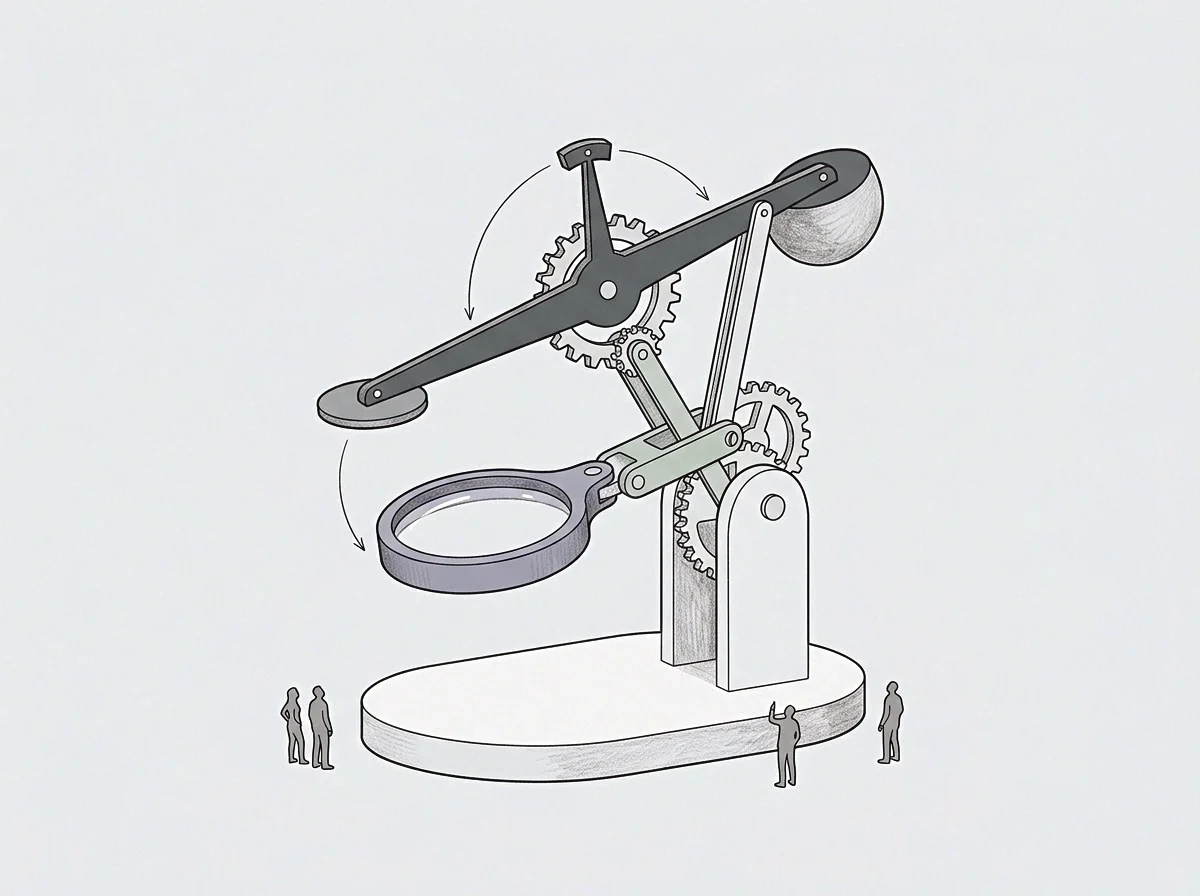
Spill
A founder sits before three monitors at midnight as automated exceptions scroll across an operational console. Every ping marks a real signal from production code, customer activity, or capital movement, and none of them is a fire on its own. Packed together, though, they saturate the sensory capacity of the person responsible for allocating capital.
The operational state of the business spills directly into executive attention, eroding the reserve capacity required to weigh strategic trade-offs.
The autonomic system treats incoming stimuli as demands for immediate intervention. Cognitive load theory shows that working memory has hard physical limits, handling roughly four operational chunks before processing degrades. When unfiltered updates arrive asynchronously, every item claims a slot in conscious attention.
The body reacts with sustained sympathetic activation, driving up cortisol and circulating catecholamines over long stretches. That metabolic cost builds as allostatic load, quietly undermining prefrontal executive control.
Perspective narrows as a result. The founder reacts instantly to minor operational blips while major capital decisions stall out, or tilts toward risk aversion and quick, impulsive clearances just to clear the backlog.
Incoming operational noise directly consumes the metabolic reserves allocated for high-stakes capital decisions.
Early-stage information architectures often mistake visibility for control. Teams set up webhooks, notification bots, and direct metric feeds assuming real-time awareness protects stability. In practice, unfiltered telemetry creates a constant run of small interruptions.
Every notification forces a quick choice to drop it, watch it, or step in, and even when the choice is to do nothing, the context switch leaves a biological mark. The executive processor never gets a chance to clear.
That wear shows up in a distinct operational state. The person can still process incoming data, run short-term tasks, and answer day-to-day questions, but multi-variable scenario modeling and ambiguous trade-offs become exhausting. The organization assumes the founder lacks strategic vision, when the nervous system is simply running with zero headroom.
Preserving that headroom requires structural separation between raw operational telemetry and executive evaluation.
Without that architectural split, chronic cognitive exhaustion easily looks like a failure of leadership capability.
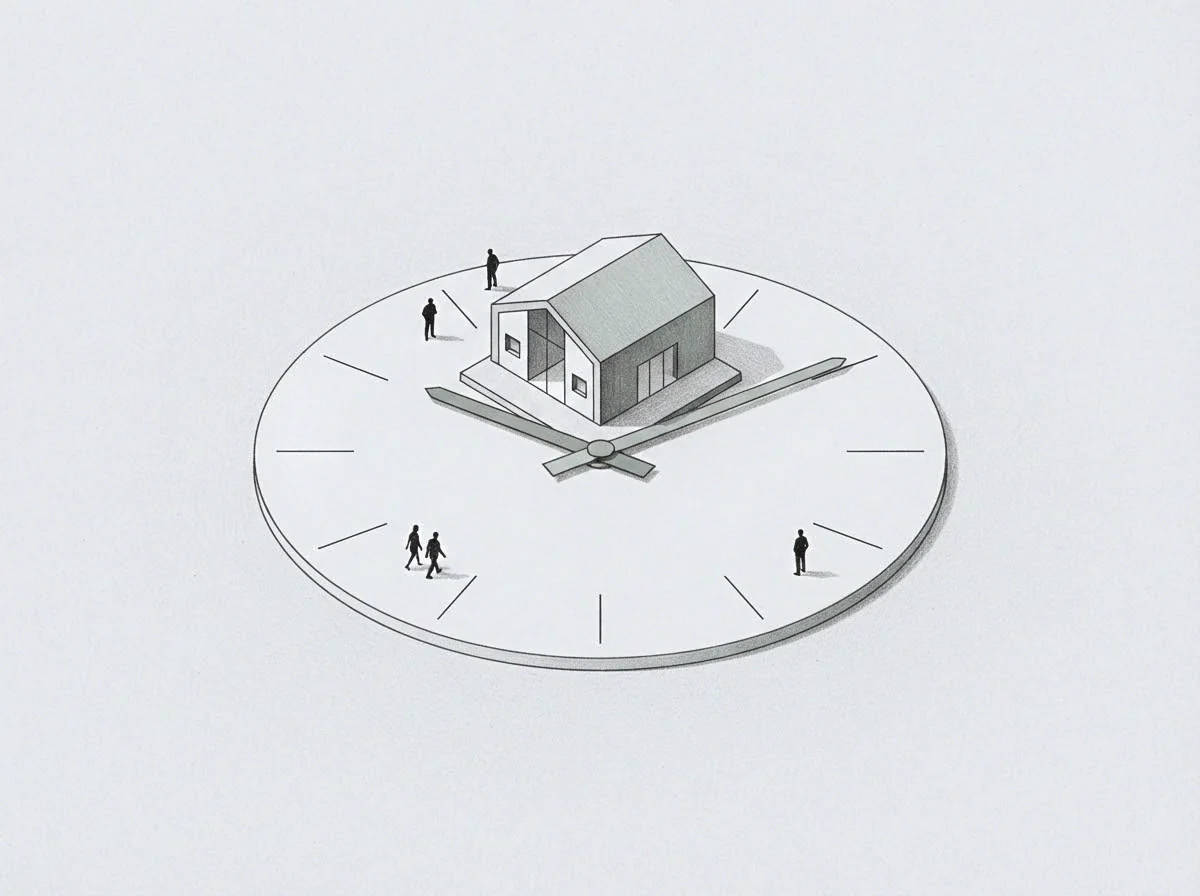
Valve
Protecting decision headroom requires mechanical filtering instead of personal willpower. Self-regulation is a finite metabolic resource that drains under constant demand. Trying to ignore incoming notifications while leaving channels open fails because staying vigilant takes glucose and neural bandwidth.
The filter has to live in the data transport layer, upstream of executive attention.
A telemetry filter acts like a one-way valve, turning high-frequency operational signals into low-frequency state updates. Its main purpose is saving cognitive capacity by setting strict boundaries around what reaches the founder. Doing that means sorting all operational telemetry into explicit classes.

Categorization of Operational Telemetry
Information streams fall into three structural categories based on urgency and operational necessity:
- Deterministic breaches require immediate operational correction because capital, legal compliance, or core service delivery is actively breaking.
- State shifts indicate meaningful changes in organizational velocity, unit economics, or team composition without demanding instantaneous response.
- Continuous variance comprises normal metric fluctuations, minor system exceptions, and ambient internal conversation.
Continuous variance accounts for ninety percent of incoming asynchronous volume. Without a filter, these events bypass triage and drop right into executive channels. A proper system stops continuous variance at automated aggregators or operational dashboards checked on a set schedule.
A filter that relies on founder discipline to ignore live updates will inevitably fail.
State shifts belong in periodic summaries rather than real-time streams. A weekly or bi-weekly cadence turns erratic operational spikes into clear trendlines, moving analysis from threat reaction to deliberate pattern recognition. Only deterministic breaches get to bypass the filter and interrupt executive focus.
Where the threshold for a deterministic breach is set determines daily interrupt volume. If a system failure costs ten thousand dollars an hour unresolved, but fixing it consumes five hours of strategic focus worth half a million dollars in delayed market positioning, sending that alert straight to the founder burns net organizational value.
When strict telemetry filters are put in place, team leads often worry that executive isolation will hide emerging frontline failure modes.
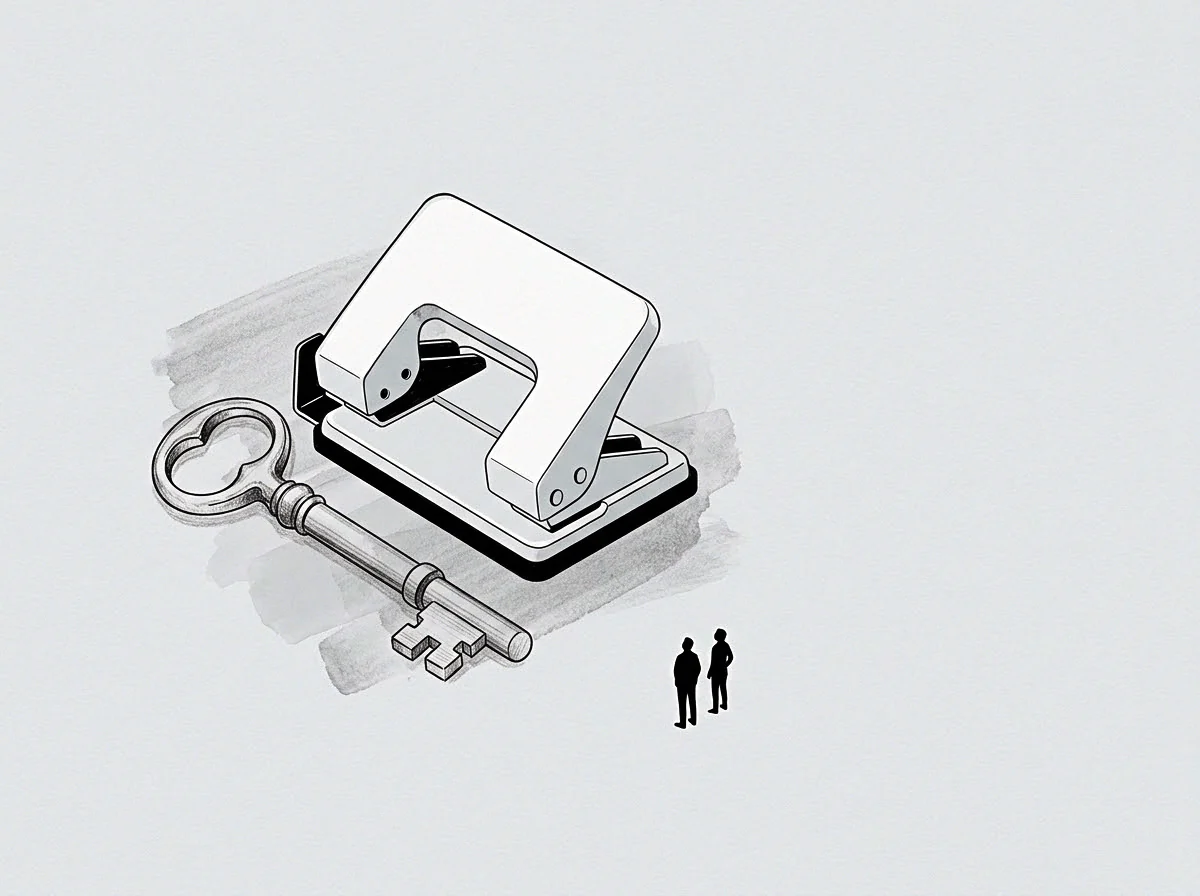
Triage
Effective filtration relies on an explicit contract governing how signals move across organizational boundaries. Telemetry cannot be filtered by content alone; it has to be evaluated against operational thresholds and pre-assigned delegation boundaries.
Stress physiology shows that unpredictable demands carry the heaviest allostatic cost. Predictable demands, even heavy ones, allow for physiological adaptation. When notifications arrive at random intervals, the recipient stays in constant vigilance, heart rate variability drops, and muscle tension remains high as the nervous system waits for the next ping.
A structured triage architecture brings back predictability by converting erratic alerts into scheduled review windows.
| Telemetry Stream | Raw Event Frequency | Filter Mechanism | Executive Delivery Cadence | Headroom Preservation Impact |
|---|---|---|---|---|
| System Infrastructure Health | 10,000 events / minute | Automated circuit breaker | Post-incident digest (Monthly) | Eliminates continuous micro-arousal |
| Customer Friction Tickets | 500 events / day | Severity and cohort tagging | Thematic summary (Bi-weekly) | Prevents localized over-reaction |
| Financial Outflows and Inflows | 50 events / day | Variance band gating | Variance report (Weekly) | Maintains capital perspective |
| Personnel and Sentiment Pulses | Continuous feed | Direct manager ownership | Executive review (Monthly) | Stops emotional contagion |
| Catastrophic Solvency Breaches | < 1 event / year | Unfiltered emergency line | Instant synchronous interrupt | Preserves baseline attention |
The table outlines how telemetry streams convert into stable reporting cadences. For infrastructure health, millions of raw metric points condense into zero executive interventions during normal operations. Engineering leads retain the authority to handle operational anomalies within agreed parameters.
The founder encounters infrastructure data only when an incident crosses pre-agreed financial thresholds or during structured reviews.
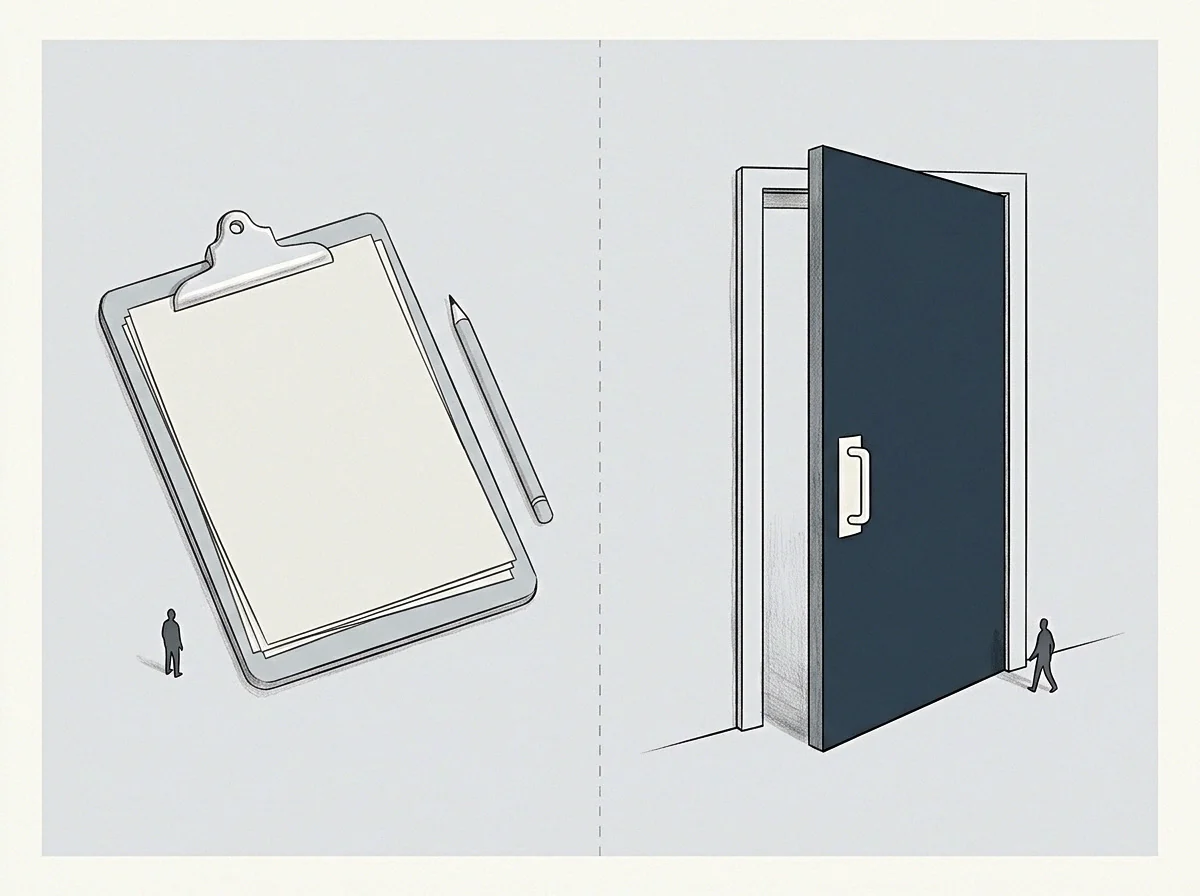
Establishing Gated Routing Policies
Operational data streams need clear ownership contracts before entering production monitoring systems. Unowned telemetry defaults to the founder by vacuum. When an automated alert lacks a designated human resolver with a clear mandate, it lands in a general channel or an executive inbox.
That systemic ambiguity turns the founder into a default collector for operational noise.
Enforcing a routing contract means every incoming event stream must map to an operational seat with clear remediation authority. If a team cannot handle the alert volume generated by their domain, the fix is scaling back monitoring volume or adding capacity, not routing the overflow upward. A founder who accepts unfiltered overflow becomes the primary bottleneck to team autonomy.
The core rule is simple: information arriving without an explicit decision mandate belongs in an archive, not an inbox.
Shelf
Telemetry filtration only works if backed by a reliable storage layer. When an executive worries that muted signals mean lost context, anxiety drives them right back to continuous monitoring. The filter needs a shelf: a searchable, persistent historical repository that preserves raw data without taking cognitive attention.
This structure separates data retention from data presentation. In traditional executive suites, briefings came via physical reports delivered at set hours, leaving the desk clear in between. Modern digital tools invert that model by combining the archive with the delivery interface.
The inbox functions at once as a communication channel, a triage system, and an chaotic filing cabinet, ensuring constant exposure to operational problems across past, present, and future.

Decoupling Ingestion from Executive Consumption
A proper telemetry architecture separates event collection from notification interfaces. The ingestion pipeline gathers raw events from application monitoring, database replication, payment processors, and customer support queues, storing them in analytical data stores built for quick querying. They do not feed directly into chat apps, mobile devices, or desktop notifications.
Access happens through deliberate pull requests rather than automatic push signals. When reviewing user churn, the founder queries the shelf to examine ninety-day aggregate patterns, rather than watching individual cancellations filter through on a Tuesday afternoon. Single cancellation alerts trigger immediate loss-aversion reactions and drive reactive changes; ninety-day aggregate views engage prefrontal analytical thinking to highlight systemic causes.
The shelf turns telemetry from an active stressor into an inert resource. The data remains sitting in state until requested, placing no metabolic draw on working memory.
There is a risk in this setup: during periods of rapid growth, sudden shifts in baseline metrics might end up archived unread, letting small process failures compound quietly behind the filter.

Margin
Decision headroom is the cognitive space between receiving a stimulus and making a commitment. Physiologically, it reflects the reserve capacity of the central executive network. When headroom nears zero, cognitive flexibility breaks down, and the executive falls back on rigid routines, short-term threat avoidance, and reactive decisions.
Protecting this capacity requires an intentional margin between operational outputs and executive awareness.
At rest, the human brain consumes roughly twenty percent of the body’s metabolic energy while making up only two percent of its weight. The default mode network, active during unstructured thinking, synthesizes complex social data, identifies non-linear patterns, and evaluates hypothetical scenarios. When asynchronous telemetry constantly fills working memory, this network stays suppressed, leaving the founder stuck in tactical reaction mode and unable to develop long-term solutions.
Allocating Slots for High-Stakes Operations
Working memory operates under a tight concurrency limit. A person can maintain focus on only a few strategic priorities before decision quality drops sharply. If three of those slots are consumed by server uptime, payment delays, and support tickets, only one remains for long-range organizational strategy.
The margin provides that buffer, protecting cognitive bandwidth from low-leverage operational noise. Building this margin requires five structural steps:
- Audit telemetry sources across all communication channels to catalogue raw inbound event frequencies.
- Define deterministic breach triggers that qualify for synchronous executive interruption based strictly on irreversible enterprise risk.
- Establish low-frequency aggregation pipelines that convert daily operational noise into periodic analytical summaries.
- Sever direct notification integrations between real-time production systems and personal communication interfaces.
- Conduct periodic reviews to recalibrate alert thresholds as organizational scale and operational talent mature.
These adjustments do not alter underlying operational facts: code still breaks, customers still churn, and payments still fail. What changes is the time gap between an event happening and the founder processing it. Separating the two protects the organization’s most expensive asset: deliberate executive judgment under high ambiguity.
Under this contract, any event falling short of enterprise mortality waits for the scheduled Friday review, regardless of the reporting party’s sense of urgency.