
Deriving Operational Availability From Position Rather Than Continuous Negotiated Consent
Operating limits derived from fixed positional rules eliminate continuous relational bargaining, forcing counterparties to calculate access from observable terms.
Position
Incoming notifications sat unanswered across three separate messaging clients at midnight while an exhausted builder reviewed operational dependencies. Every incoming message carried an implicit demand for immediate conversational accommodation. Each thread sought permission to pull attention into an ad hoc discussion about priorities, scheduling adjustments, and scope changes.
In an unanchored working arrangement, personal availability defaults to an unending sequence of micro-negotiations. An operator repeatedly calculates how much goodwill remains before declining an inbound request, transforming simple scheduling into an active tax on cognitive bandwidth.
The alternative relies on explicit, non-contingent standing parameters. A stated parameter acts as a physical boundary rather than a relational preference. When an operator establishes fixed times of direct contact, explicit delivery gates, and unambiguous criteria for asynchronous intake, personal availability ceases to be a subject of perpetual negotiation.
The boundary exists prior to any inbound request. Counterparties do not ask whether the operator feels inclined to speak; they consult an established structural perimeter. Pressure transfers from relational bargaining directly onto the published condition.
The wall stood.
A standing term resolves relational pressure by substituting a structural perimeter for personal discretion.
Continuous negotiated consent forces both parties to re-adjudicate access during every single transaction. The party requesting attention must construct a justification, measure the emotional disposition of the respondent, and calibrate the request to avoid friction. The receiving party expends energy assessing whether declining the interaction damages the alliance.
This repetitive evaluation generates immense operational friction. When availability is instead anchored to an explicit, invariant stance, the entire evaluation loop disappears. Counterparties observe what the structural position permits and adjust their own sequencing accordingly.

Structural Foundations Of Standing Terms
Operating boundaries function cleanly when communicated as operational realities rather than personal sentiment. Declaring that deep technical execution occupies the morning block between eight and noon creates an objective barrier. The statement describes the physical arrangement of production rather than an emotional state or an interpersonal preference.
Counterparties treat an objective schedule differently than an appeal for space. They route tasks around a schedule because schedules describe operational mechanics.
When an operator negotiates availability on an ad hoc basis, counterparties rationally infer that enough social force will alter the outcome. Every past exception teaches collaborators that persistence yields access. The system pushes against the individual until it identifies the exact point where resistance fractures.
Placing a published term between the operator and incoming demand absorbs that systemic load. The load transferred elsewhere.
They assumed the lack of an immediate answer indicated deliberate administrative neglect.

Clock
Temporal distribution of effort serves as the primary instrument for detaching availability from ongoing consent. Instead of deciding each morning whether an inbound meeting request deserves an affirmative answer, an operator locks calendar allocation into strict recurring sectors. Certain blocks exist exclusively for internal production, others handle client escalation, and designated windows process administrative review.
Availability becomes an automatic function of the calendar configuration rather than a live social judgment.
Consider an operational model where an executive partner handles critical technical execution while collaborating with an external client group. In an unstructured arrangement, the partner replies to incoming inquiries within thirty minutes throughout a twelve-hour workday. The rapid response cadence creates a mutual expectation of permanent synchrony.
Once client leadership encounters an unexpected operational variance, they immediately demand a real-time conference, consuming whatever uninterrupted work the partner had scheduled. The partner attempts to resist the interruption, initiating an uncomfortable negotiation over urgency.
Shifting to positional availability alters the baseline assumptions of the client engagement. During onboarding, the partner specifies that external communication occurs exclusively between three and five in the afternoon, with emergency technical overrides restricted to documented outages through an automated telemetry hook. When non-critical pings arrive at ten in the morning, the partner does not negotiate, explain, or apologize.
Silence settles the interval.
A fixed temporal boundary eliminates the cognitive overhead of real-time social evaluation.
Response Latency As Fixed Architecture
Batching outbound communication into designated windows trains the surrounding system to operate asynchronously. Latency ceases to indicate reluctance or neglect. It reflects an architectural choice that protects operational continuity.
Research in occupational task switching demonstrates that recovery from an unscheduled interruption requires up to twenty minutes of cognitive realignment. An environment that permits continuous ad hoc negotiation over communication times exposes its operators to constant cognitive fragmentation.
Establishing predictable response rhythms protects internal cognitive capacity while delivering reliable service levels to collaborators. Counterparties do not require instantaneous access; they require absolute certainty about when information will move. A guaranteed two-hour response window at the close of business offers superior operational predictability compared to erratic bursts of immediate availability followed by days of silent burnout.
The term did not bend.
The calendar configuration governs capacity better than interpersonal goodwill.

Channel
Routing interactions across distinct media streams establishes operational containment without personal confrontation. When all communications converge on a single messaging inbox, urgent escalations mix with casual check-ins and strategic debates. This aggregation compels the operator to parse every notification, evaluating its weight and determining whether to accept an interaction.
Partitioning communication channels based on objective operational criteria eliminates this continual triage.
A structured operating architecture separates transmission lines into explicit tiers: direct voice channels reserved for catastrophic failures, asynchronous ticket boards for operational requests, and designated email registries for legal or financial governance. Each transmission medium carries an immutable service level expectation that counterparties observe before transmitting data. The medium itself dictates the availability of the recipient.
| Structural Property | Continuous Negotiated Consent | Derived Positional Availability |
|---|---|---|
| Intake Arbitration | Subjective evaluation of incoming request value | Objective routing dictated by explicit channel rules |
| Response Baseline | Dynamic expectation based on counterparty persistence | Fixed latency parameters linked to medium tier |
| Cognitive Load Location | Borne continuously by the recipient | Absorbed up front by the communication protocol |
| Systemic Vulnerability | Susceptible to escalating social pressure | Insulated by unambiguous operational policy |

Asymmetry In Transmission Lines
High-leverage builders frequently construct deliberate transmission asymmetry into their working relationships. Direct outward broadcasts occur rapidly, while inward inputs pass through rigorous filtration filters or scheduled digests. An engineering lead, for instance, might broadcast system updates immediately to all team members while processing inbound team requests exclusively through a morning backlog review.
This asymmetry protects deep execution capacity from distributed disruptions.
The channel that does not ping ceases to generate operational anxiety. When counterparties recognize that a specific medium produces no immediate audible alert, they stop using that medium for speculative demands. They compose structured, comprehensive inquiries rather than fragmentary thoughts.
The structural limit held.
The service agreement explicitly assigns ticket triage to an asynchronous four-hour queue, which completely prevents real-time scheduling interruptions during morning production blocks.
Cost
Operating through perpetual consent extracts a devastating toll on physical and cognitive stamina. Every negotiation over access expends finite mental capital. The operator who repeatedly evaluates whether to grant exceptions suffers from chronic decision depletion, leaving minimal energy for core technical, strategic, or creative production.
This attrition rarely presents as sudden catastrophic failure; it accumulates through small, unrecouped daily expenditures.
The systemic friction of constant availability degrades the quality of execution across an enterprise. When key contributors remain perpetually reachable, strategic deliverables take secondary placement behind immediate social demands. Projects slip past deadlines because contributors cannot secure three uninterrupted hours to complete complex tasks.
Over time, the entire enterprise slows down, paralyzed by the coordination overhead of its own workforce. Capacity governs the sequence.
Perpetual relational negotiation over access slowly drains the executive capacity required for deep execution.
The Fallacy Of Universal Accessibility
An implicit belief persists across collaborative corporate environments that immediate responsiveness signals competence and commitment. Teams often mistake continuous presence for high productivity. This perspective fails to account for the severe production deficits created by attention splintering.
An operator who replies to chat pings within two minutes produces work riddled with shallow analytical assumptions and fragmented architectural logic.
Enforcing positional boundaries inevitably generates friction with counterparties accustomed to frictionless access. Certain collaborators interpret non-responsiveness as personal rejection or operational incompetence. A founder who refuses to attend unscheduled status calls may face initial resistance from co-founders or capital providers.
Absorbing this upfront friction represents an unavoidable operational expenditure. The operator exchanges short-term social discomfort for long-term production integrity. The perimeter held.
A failure to establish explicit positional limits inevitably produces catastrophic cognitive depletion, chronic operational delays, and eventual relational rupture across key organizational dependencies.
State
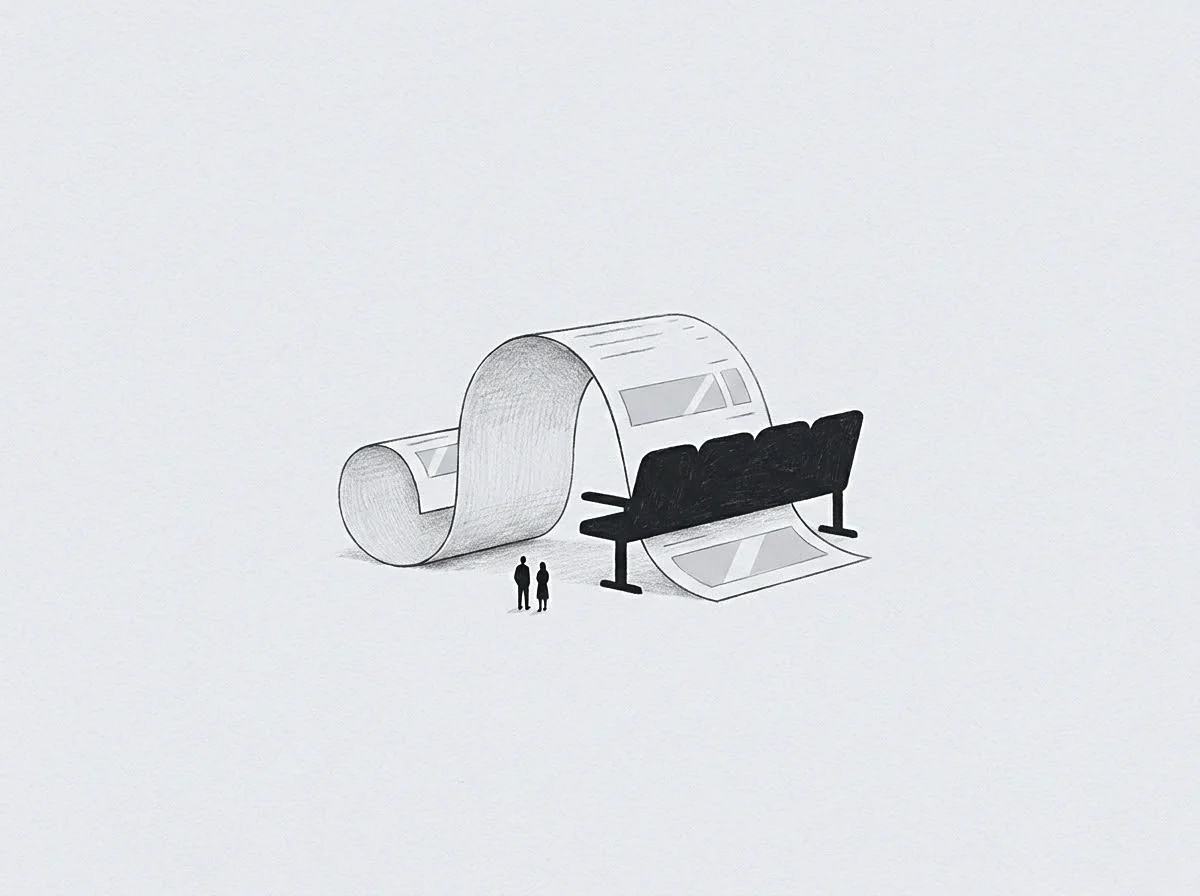
An operator’s internal physiological readiness functions as the ultimate transfer function determining production throughput. Cognitive science and occupational health findings confirm that acute systemic exhaustion fundamentally restricts high-order analytical reasoning. When an individual operates under severe physiological strain, their capacity to process complex trade-offs drops precipitously.
State controls the intake.
In this context, distinctions between state-gated acts and decision-gated acts become self-evident. A decision-gated act requires only an alignment of intent, such as approving an invoice or signing an operational charter. A state-gated act, by contrast, demands specific neurochemical and physiological reserves, such as synthesizing a complex engineering protocol or resolving a volatile dispute.
No magnitude of willpower forces high-quality execution through an exhausted nervous system. That assumption decays quickly.
Biological Baselines And Operational Headroom
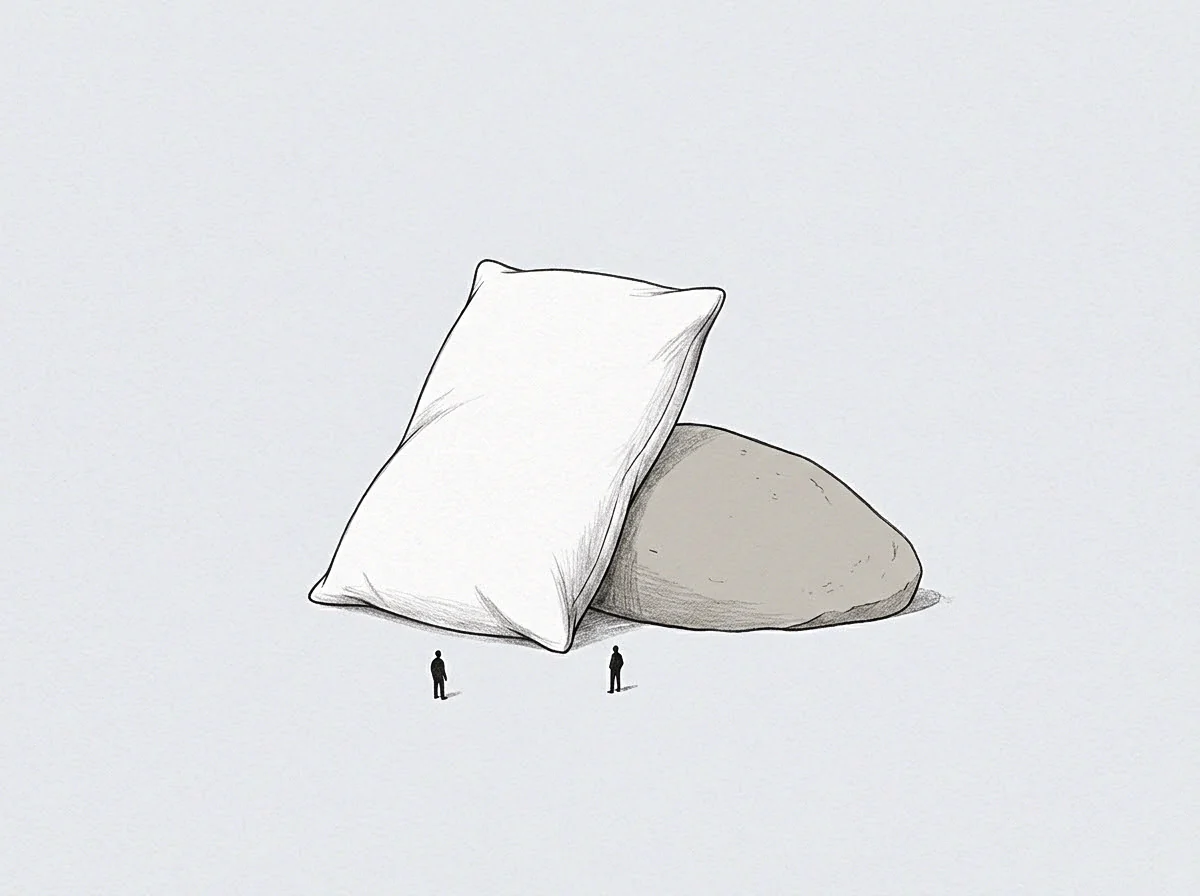
Stretching availability beyond sustainable physiological boundaries produces catastrophic performance drop-offs. Research in allostatic load demonstrates that prolonged exposure to continuous operational stressors impairs prefrontal regulation, elevating default threat responses and degrading risk appraisal. When availability is continuously negotiated, the nervous system remains in a permanent state of anticipation, unable to enter restorative down-regulation.
The body registers uninterrupted accessibility as chronic exposure to environmental volatility.
Positional availability aligns operational demands with biological constraints. By fixing hard temporal perimeters around deep focus and restorative periods, the operator insulates baseline physiological systems from external fluctuations. The system operates within defined headroom rather than constantly flirting with capacity limits.
Demands push against the outer rules of engagement, leaving the individual inside those rules protected and stable. The ping went unanswered.
Whether an organizational culture predicated on continuous synchronous visibility can comfortably survive an aggressive transition toward strictly positional availability remains an open and contested question.