
Deriving Executive Capacity Boundaries Through Stated Operational Limit Conditions
Executive capacity limits emerge when stated operational limit conditions establish explicit walls that stop external system load transfer.

Room
Between eight and eleven o’clock on a Sunday night, four distinct priority streams arrived through direct messaging channels. The founder sat in the office watching notifications come in from investment partners, senior engineering leads, customer success managers, and prospective hires. Each message carried an unspoken expectation of immediate review.
While no single inquiry called for an immediate operational shift, the total volume created an acute cognitive demand during hours intended for physiological recovery. The immediate instinct was to clear the queue before morning.
Executive bandwidth degrades rapidly when incoming operational queries bypass temporal and functional parameters. Without explicit limit conditions, external actors default to treating executive availability as an infinite resource. Operational systems push against unmonitored human nodes until they meet resistance.
When no external wall exists, that friction is absorbed entirely by the internal neurobiology of the executive in the seat.

Operational Saturation at the Executive Desk
The executive answered every incoming inquiry within six minutes to maintain momentum across active workstreams. That continuous responsiveness established an unwritten baseline across the company. Operating leads learned that urgent issues and routine updates received identical processing speeds regardless of the hour.
Input volume doubled over the following quarter as a result. The operational desk became a clearinghouse for raw organizational anxiety instead of a strategic decision node.
An operational wall holds only so long as the boundary is maintained against demand.
Structural fatigue accumulates across the organization as that responsiveness continues unchecked.
Capacity exhaustion rarely shows up as a sudden collapse. It appears through subtle shifts in processing quality. Decision latency increases as cognitive bandwidth saturates under constant context switching.
Strategic decisions get deferred while incoming messaging pings take priority. In practice, the executive operates under chronic operational saturation while maintaining the appearance of total control.
An executive who answers late pings establishes continuous baseline access as an organizational standard.
When operational systems encounter zero resistance at the executive boundary, queue volume expands to fill all available processing time. External teams stop filtering minor friction and transfer low-level decisions straight to the founder. The immediate cost sits in lost strategic processing capacity, while the long-term cost manifests as persistent neuroendocrine strain on the individual regulator.
Because the founder seemed responsive at all hours of the evening, operational adjustments were sent directly as they arose.
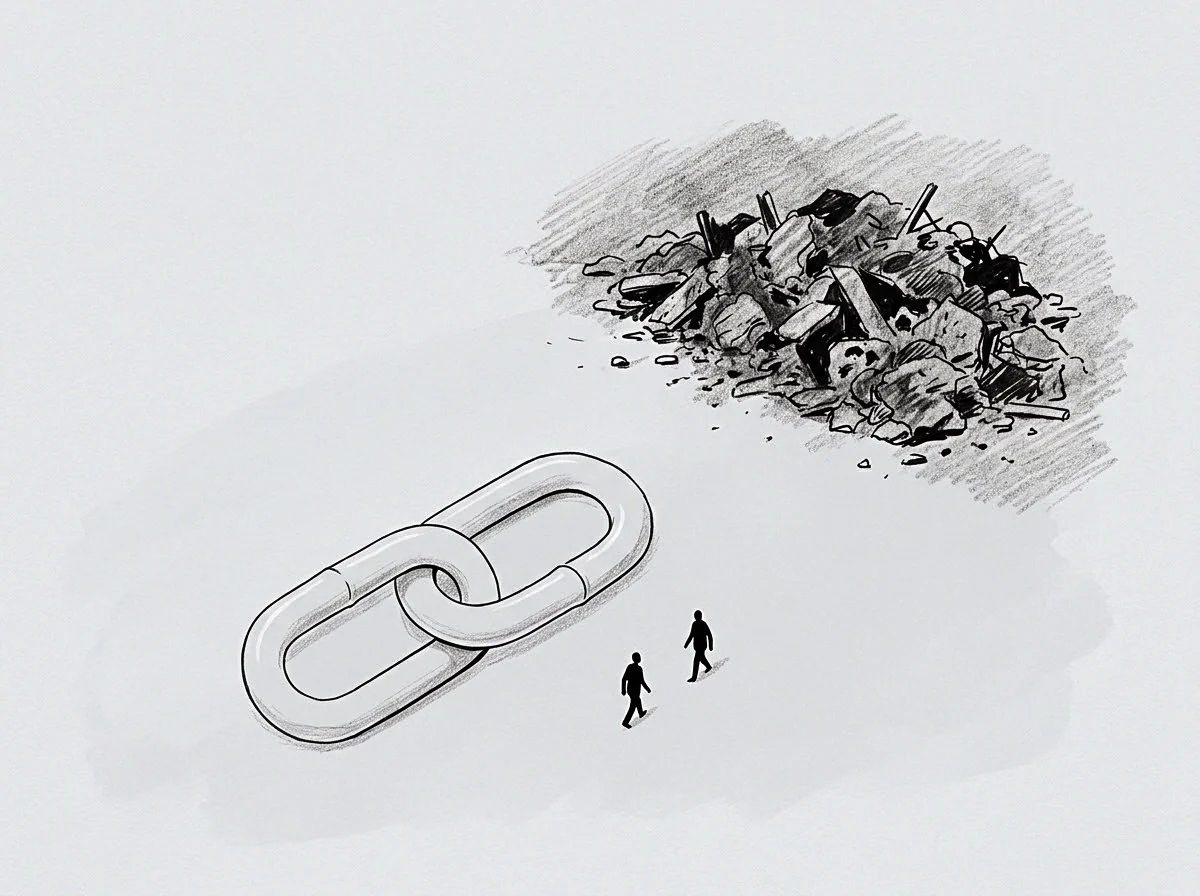
Load
An executive capacity limit represents the maximum volume of simultaneous cognitive inputs a person can process before setpoint degradation occurs. Human processing operates under strict neurophysiological constraints. When continuous task demands exceed internal operational setpoints, the biological system triggers compensatory stress responses to maintain baseline function.
The cumulative burden of this compensation manifests as allostatic load across cardiovascular, metabolic, and neural systems.
Operational load transfers downstream whenever boundaries remain undefined.
Unstated capacity invites continuous expansion from surrounding teams.
In high-growth operational environments, external systems treat unstated capacity as open capacity. Investment partners, direct reports, and commercial clients push demands downstream until an explicit barrier stops the transmission. If the executive relies on willpower or fluctuating energy to stem incoming load, the boundary remains permeable.
Operational systems push past soft personal preferences every time.

Mechanisms of Unthrottled Load Transfer
When an operating system encounters no hard friction, external demands expand to fill all available executive processing cycles. The absence of stated operational limit conditions creates an implicit invitation for continuous load transfer. Subordinate teams default to escalating unresolved decisions upward, avoiding internal risk while depleting executive cognitive headroom.
- Setpoint drift shifts baseline biological parameters gradually as incoming demands bypass unstated operational capacity limits.
- Load absorption occurs when an executive internalizes organizational friction that should be processed by subordinate operational units.
- Concurrency ceiling establishes the hard physical boundary where parallel decision processing degrades into sequential queue delay.
- Friction transfer redirects operational uncertainty back toward originating teams when stated limit conditions encounter incoming requests.

Autonomic Costs of Coregulation
In social baseline theory (Coan et al.), human neurobiology treats proximity to a reliable partner as an energy-saving biological subsidy. The model rests on functional magnetic resonance imaging studies measuring threat-related neural activity during personal proximity under acute stress. This physiological framework shows that biological systems expend less neural energy managing external demands when reliable structural support exists.
The finding would lose validity if physiological autonomic dampening failed to occur across non-bonded operational partner pairs during high-stress operational tasks.
Cognitive headroom contracts rapidly as unmanaged load accumulates.
When incoming operational demands exceed cognitive processing capacity, neural setpoints degrade to maintain basic task execution.
When an executive operates without stated limit terms, coregulation dynamics invert. Instead of acting as an energy-saving biological anchor for the organization, the founder becomes an unbounded baseline sponge for systemic stress. The executive absorbs unstructured operational anxiety from across the team, elevating baseline cortisol levels and eroding analytical capacity.
An unstated capacity limit forces the operating system to increase pressure until structural performance drops across active workstreams.

Signal
A priority request sent across a direct messaging channel functions as a diagnostic probe into executive bandwidth. The sender measures response latency to gauge the executive’s availability setpoint. Rapid replies signal unconstrained operational real estate, prompting subsequent messages of lower priority.
Delayed or structured replies signal operational density, forcing the sender to consider whether an inquiry warrants executive attention.
Silence across a channel serves as a direct operational signal.
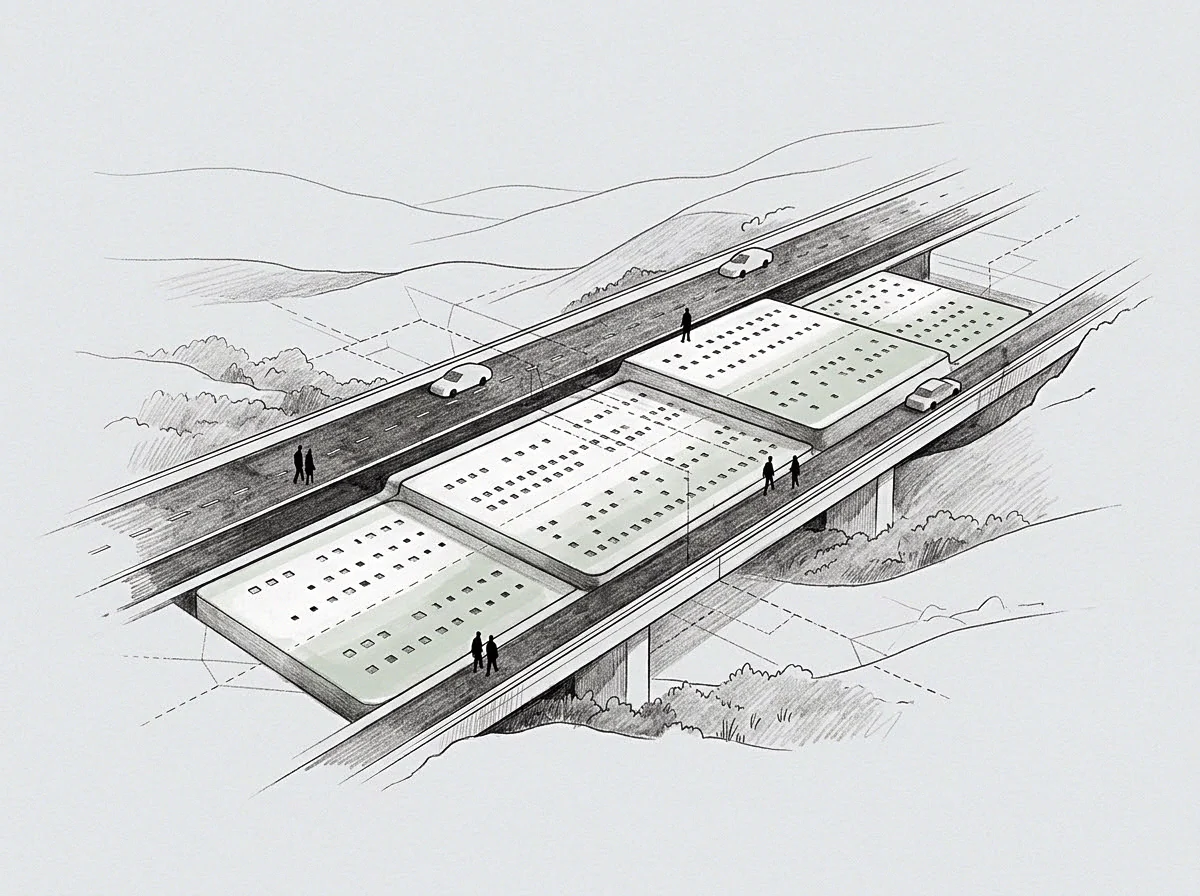
Why do load transferring systems ignore unstated limits?
External operators evaluate availability based purely on observed response patterns rather than internal exhaustion. A limit that resides solely in executive consciousness carries zero information value for the organization. Operational systems adjust input volume exclusively in response to explicit, physical feedback from the receiving node.
The exact latency threshold where ping frequency shifts from informative communication to cognitive capacity erosion remains unquantified across heterogeneous engineering teams. In the absence of definitive experimental data, an executive establishes an empirical forty-eight-hour response window based on observed output quality rather than real-time tracking of message volume. This stance protects high-value cognitive cycles while maintaining predictable communication pathways.

Deriving Availability Through Silent Channels
When an executive establishes explicit parameters for response times, external teams recalculate their submission schedules. Stated positions remove the need for constant diagnostic probing. Channels that stay silent during designated deep-work blocks reflect successful derivation of executive availability terms by external team members.
- An executive declares explicit daily communication blocks and turnaround terms for external inquiries.
- Operating partners observe that non-urgent inquiries sent outside designated windows receive no immediate response.
- External teams adjust intake protocols by filtering minor issues internally prior to direct escalation.
- Incoming ping frequency stabilizes at a sustainable baseline without requiring continuous manual intervention.
Unscheduled notifications consume continuous cognitive processing cycles.
Silence across an active messaging channel indicates that external operators have derived operational boundaries from stated positions.
External teams derive availability entirely through observed response habits.
A channel that does not ping indicates aligned priorities. When external operators know precisely when and how an executive processes incoming inputs, they batch requests accordingly. The resulting silence represents preserved capacity rather than organizational friction.
A communication channel that stays quiet under stated position criteria confirms that priority alignment has occurred without direct intervention.

Term
A stated operational limit condition functions as a fixed mechanical barrier rather than a personal plea for relief. Stating terms shifts the operational burden back onto the external system. The term defines intake rules, batching schedules, response windows, and escalation thresholds.
Once declared, it operates independently of executive mood or daily stress variance.

Explicit Limit Conditions as Operational Walls
Declaring explicit criteria for decision intake alters structural dynamics between an executive and external operating units. Terms transform vague personal capacity requests into operational protocols. When an external team encounters a stated term, they adjust their workflow to meet intake criteria before attempting transmission.
Naval architecture provides a clear parallel through structural strain limits engineered into steel vessel hulls. Engineers specify maximum allowable hull flex before maiden deployment rather than calculating stress limits during hull fracture at sea. Explicit operational terms serve that structural function for executive processing nodes.
Stated terms establish the operational boundaries for incoming demands.

Worked Comparison of Capacity Architectures
Assume two executive operators oversee an early-stage engineering enterprise with twenty employees and four active commercial projects. The first operator works without explicit limits, answering messages at all hours and adjusting schedules upon request. Within six months, incoming ping volume expands by three hundred percent, while decision latency increases from two hours to thirty-six hours due to cognitive saturation.
The second operator establishes explicit operational limit conditions: a single daily communication block for non-urgent matters, a zero-messaging window between seven in the evening and seven in the morning, and explicit forty-eight-hour turnaround terms for capital allocation decisions. External teams adapt by batching queries, reducing total message volume by sixty percent, while executive decision latency drops to four hours.
| Operational Dimension | Implicit Operational Capacity | Stated Operational Limit Conditions |
|---|---|---|
| Load Transfer Mechanism | Unfiltered upward escalation to executive seat | Gated intake through batching and structured terms |
| Availability Derivation | Real-time probing via continuous messaging pings | Derived from explicit temporal and functional rules |
| Setpoint Stability | High setpoint drift and chronic allostatic strain | Stable biological setpoints and protected headroom |
| Channel Ping Dynamics | High-frequency continuous message volume | Low-frequency batched communication streams |
Explicit conditions halt the unthrottled transfer of operational load.
A stated forty-eight-hour decision window forces external teams to resolve intermediate friction before escalating queries.
Operational friction shifts back to originating teams once terms are set.
Operational stability depends on replacing implicit capacity expectations with explicit limit terms. When terms are clearly defined, external parties adapt without organizational rupture. The executive seat regains its role as a strategic synthesis node rather than an unbounded operational relief valve.
A forty-eight-hour response window specified for non-critical capital decisions converts continuous pings into batched operational review.

Clock
Time distribution across executive functions depends directly on the physiological setpoint of the biological regulator. A depleted regulatory system cannot sustain high-level cognitive focus regardless of schedule design. Operational capacity boundaries protect temporal allocations by preventing unscheduled incursions into reserved deep-work blocks.

State Gated Acts Versus Decision Gated Execution
Certain high-level cognitive choices require physiological headroom that sheer determination cannot supply. Strategic synthesis, complex capital allocation, and delicate equity negotiations represent state-gated acts. These operations demand low baseline autonomic arousal and clear neural processing capacity.
When an executive attempts state-gated tasks under high allostatic strain, decision quality degrades rapidly.
The executive seat operates under definite biological constraints.
Autonomic state dictates the quality of executive output.
Conversely, decision-gated acts rely on established operational playbooks and simple rule execution. Processing routine expenses, reviewing standardized milestone updates, and approving pre-budgeted resource allocations represent decision-gated tasks. These activities proceed effectively even under moderate physiological fatigue because they place minimal demands on novel cognitive synthesis.

Temporal Boundaries and Cognitive Recovery
The allostatic load index (McEwen et al.) tracks biological strain resulting from sustained neuroendocrine responses to ongoing environmental demands. This physiological model rests on clinical assays measuring cortisol, catecholamines, and metabolic biomarkers under persistent workload exposure. The framework would require re-evaluation if neuroendocrine markers decoupled entirely from chronic cognitive processing demands in high-intensity operational roles.
Volitional effort cannot compensate for sustained physiological depletion.
Executive capacity management requires aligning incoming operational demands with the biological state of the operator. Stated limit conditions protect the physiological recovery windows needed to restore neural processing setpoints. Without hard limit terms governing intake cycles, chronic cognitive saturation permanently impairs strategic execution.
Whether an organization can maintain operational velocity after an executive transitions from implicit availability to hard limit conditions remains open to field verification.