
Deriving Structural Availability From Asynchronous Task Queue Throughput Metrics
Structural availability is derived by measuring actual task queue drain rate and completion latency against arrival volume rather than message acknowledgment speed.

Telemetry
Four communication streams flash with unread badges while the operator finishes a midnight deployment run. Each inbound message receives an acknowledgment within ninety seconds. That rapid response suggests immediate availability, even as the underlying execution pipeline sits blocked behind three unfinished architectural reviews.
Senders take quick message receipts for active capacity, while the worker absorbs incoming requests into an unbounded thread where actual tasks sit waiting.
Telemetry from asynchronous message queues records two distinct timestamps for every payload: ingress acknowledgment and completed execution. The gap between those points marks the difference between interface responsiveness and structural throughput. When arrival rates outpace downstream processing, the interface keeps returning success codes while the queue behind it expands until storage limits trigger an outage.
Counterparties confuse this interface responsiveness with true processing capacity.
A processing pipeline operating above eighty percent sustained capacity increases completion latency exponentially with each additional unit of intake.
Confusing socket connectivity with execution capacity distorts how technical teams work together. Upstream senders assume rapid replies mean their dependencies are being processed immediately, while receivers mistake fast intake for real progress. An acknowledgment is merely a transport handshake; completion reflects actual capacity.
Equating the two creates unrealistic delivery expectations, leading to sudden project stalls when an unmonitored backlog hits resource limits.
He answered every note inside two minutes, so the delay on the delivery was impossible to predict.

Floor
Service capacity is bound by physical constraints regardless of organizational intentions. An asynchronous worker follows the mathematical logic of Little’s Law, where average inventory equals arrival rate multiplied by average residence time. When an operational node tries to process twenty concurrent work items on a floor designed for four, context switching consumes the available processor cycles and stalls actual execution.
| Operating Regime | Arrival Rate Relative to Capacity | Acknowledgment Latency | Processing Latency | Structural Availability |
|---|---|---|---|---|
| Balanced Flow | Below sixty percent | Under one second | Constant baseline | Full nominal capacity |
| Saturated Queue | Eighty to ninety-five percent | Under one second | Linear delay expansion | Severely constrained |
| Head of Line Blocking | Exceeds single thread capacity | Under one second | Exponential growth | Functionally zero |
| Explicit Backpressure | Excess load rejected at entry | Immediate error code | Constant baseline | Predictable for accepted tasks |
Acknowledgment latency remains artificially uniform across nearly all operating states. A node near total exhaustion accepts a new work packet just as quickly as an idle node, even while completion throughput degrades predictably as queue density builds. Structural availability reflects whether an execution pipeline can actually process and clear inbound tasks within an acceptable timeframe.
A system operating without admission limits converts unhandled tasks into systemic degradation.
Manufacturing assembly lines handle this through physical staging areas. When a station accumulates six unworked steel chassis on the shop floor, the upstream conveyor belt mechanically stops feeding parts to it. Software teams often bypass this safeguard by setting up infinitely expandable cloud memory buffers, which hide the congestion and trap tasks in an invisible backlog where items grow stale before anyone touches them.
A worker that accepts tasks faster than it clears them builds an unstated backlog that eventually ends in system failure.
Drop
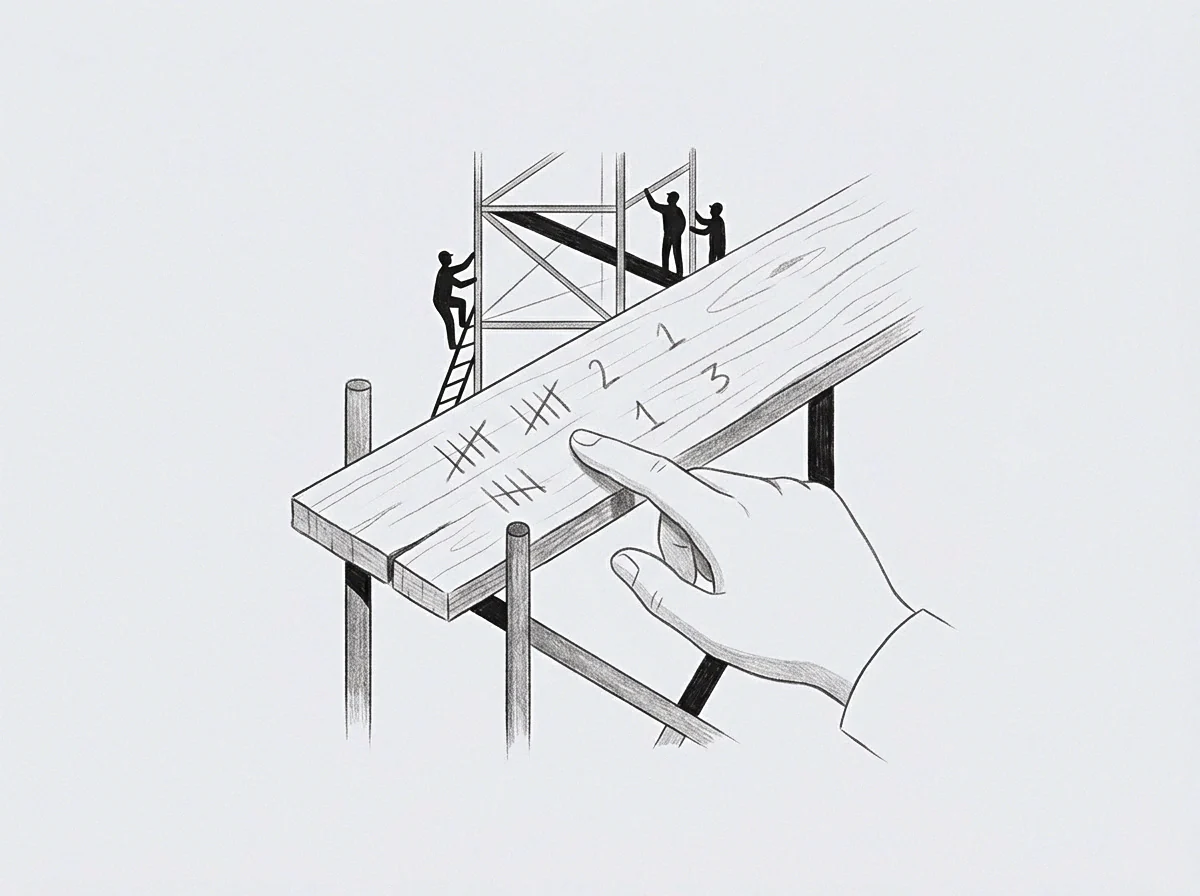
Rejection boundaries preserve downstream stability during sudden volume spikes. When inbound work arrives at four times the steady drainage rate, an uninstrumented worker tries to ingest every unit, either crashing from resource exhaustion or delaying every task past its useful window. Setting a hard admission limit establishes a firm boundary where excess load encounters an immediate drop signal.

Is Latency Expansion Readable as Capacity Loss?
Upstream services frequently mistake rising completion latency for temporary queue friction rather than capacity failure, delaying necessary intervention. Without explicit boundaries, queue latency swells until dependent systems hit cascading timeouts. The growing queue acts as a silent buffer, hiding organizational bottlenecks until entire product releases miss their launch dates.
- Admission Rejection terminates excess incoming requests at the ingestion gateway before execution threads allocate resources to them.
- Dead Letter Quarantine routes unprocessable or poisonous payloads into an isolated, inspectable holding tank without stalling active consumers.
- Concurrency Throttling bounds the number of simultaneous active executions per worker to ensure predictable compute resource availability.
- Dynamic Backpressure transmits explicit upstream signals instructing callers to reduce transmission frequency according to downstream drain rates.
These four mechanisms establish clear operational boundaries, forcing the system to reject excess input rather than accepting unlimited obligations into an opaque buffer. Backlog growth reveals the actual underlying capacity.
A stated processing ceiling converts invisible operational degradation into an explicit systemic boundary.
The operator pays in fragmented attention. Without admission limits, an operational role can spend sixty percent of working hours triaging incoming tickets that have zero statistical probability of being executed within the current quarter.
Absorbing excess load without an explicit rejection boundary transfers catastrophic latency to every dependent thread simultaneously.

State
Internal execution parameters dictate whether an incoming signal produces productive work or immediate failure. Mood is a transient subjective state that carries no structural information about capacity, whereas operational state acts as the deterministic function mapping incoming tasks to concrete outcomes. An overloaded node may appear ready to assist even while its working memory sits at ninety-eight percent saturation.
Consider an operator handling sixty incoming architectural review requests each week across three distinct software products. Sustainable throughput caps out at forty requests per week under ideal conditions. Without an intake filter, the operator falls into a chronic overload cycle, working sixteen hours a day to bridge the gap.
The human system behaves much like an over-utilized compute worker, showing elevated stress markers and declining decision accuracy as human capacity limits mimic silicon memory constraints.
Certain actions depend strictly on system conditions rather than voluntary intent. Deciding to accept thirty additional tasks cannot yield completed output when concurrency limits have already locked the execution loop. The distinction between state-gated actions and decision-gated actions determines whether operational planning succeeds or fails:
- The intake gateway inspects worker queue depth and memory saturation against predefined threshold values.
- Tasks arriving when metrics sit within nominal operating limits enter the processing sequence automatically.
- Inbound items meeting a saturated condition trigger immediate rejection responses regardless of sender seniority.
- The queue consumer executes accepted tasks at fixed operational speeds without attempting parallel oversubscription.
This division prevents structural deception. Counterparties receive accurate feedback about real throughput rather than polite promises that break during execution.
A written concurrency cap shifts the burden of prioritization back onto the sender before execution begins.

Audit
External counterparties eventually stop relying on verbal assurances when delivery cadences repeatedly diverge from promised timetables, turning instead to observable outputs. Throughput metrics, release cadences, and task drain rates form an empirical record that reveals structural availability without ambiguity. When a project lead inspects real delivery rhythms, promotional statements about team dedication dissolve before recorded completion timestamps.
Silence functions as an active structural position in communication protocols. When an asynchronous queue drops an unprioritized request without triggering back-and-forth negotiation, the sender must either drop the dependency or find other resources to resolve the bottleneck. This silent posture forces load-transferring systems to seek alternative paths rather than continually dumping unvetted work onto an available worker.
No apology alters the arithmetic.
Throughput data reveals the structural boundaries of an operational position regardless of conversational agreements.
Systems engineering research demonstrates that distributed clusters maintain operational health through deterministic protocols rather than emotional negotiations.
The question remains whether an external counterparty can ever distinguish an intentional backpressure signal from an uninstrumented system collapse before the contract expires.