
Deriving Systemic Availability Through Stated Contract Terms and Position Silence
A stated contract term transforms personal boundary defense into an objective barrier, while silence forces counterparties to derive availability from cost.

Post
Three incoming transmissions sit unread on a screen past midnight while the recipient calculates the expenditure of answering. The incoming load transfers from an external operation directly into the body of the operator because no external obstruction absorbs the impact. In human systems, an unstated limit functions as an invitation to apply force.
When an operating partner or client transmits a demand, the operational circuit seeks equilibrium by distributing strain to whatever node offers the least resistance. The person in the central seat absorbs the tension until physiological depletion forces an abrupt stoppage.
The insertion of a stated term creates an immovable boundary. A written contractual stipulation functions as a concrete physical barrier rather than an emotional negotiation. When a counterparty pushes against a regulatory limit held only in someone’s head, the counterparty pushes against human flesh, detecting hesitation, guilt, and variable stamina.
That push continues until the internal regulator yields. Conversely, when the counterparty meets a stated contractual clause, the counterparty meets an inanimate object. The load-transferring apparatus ceases its advance because the contract term offers neither compliance nor distress.
A load-transferring operation redirects force into adjacent nodes until an inanimate contractual limit arrests the transmission.
Stipulating terms shifts the baseline of interaction from personal endurance to structural capacity. Consider the operational friction that emerges across commercial engagements:
- Stated delivery latency establishes an unyielding schedule that prevents counterparties from treating real-time execution as an assumed baseline of service.
- Explicit operational thresholds terminate inbound workflows the moment designated hourly limits expire during any billing cycle.
- Defined escalation pathways intercept incoming crises by forcing outside requests through secondary administrative filters before reaching senior personnel.
The absence of stated specifications converts every exchange into a contest of stamina. Unstated expectations generate implicit obligations, known in organizational research as the psychological contract. When an operator relies on goodwill to govern operational demands, counterparties naturally interpret access as limitless.
The strain accumulates silently within internal tissues. Left unchecked, the systemic failure to specify terms forces the human node to absorb the total debt of the enterprise, terminating in physiological collapse.

Clock
Temporal cadence governs the derivation of operational availability. Every counterparty maintains an internal estimator that monitors latency between stimulus and response. When an incoming ping produces an immediate reply, the counterparty updates the estimator, recording that the channel is open, attentive, and inexpensive to access.
The immediate response signals zero internal friction. It tells the sender that the recipient possesses surplus capacity, regardless of whether that capacity exists in reality. Systemic availability is derived through response intervals rather than announced policies.
The channel that remains silent generates an operational calculation. Silence communicates an active position. When an operator declines to answer a communication outside contractual parameters, the silence functions as an economic price tag.
It imposes an operational delay on the counterparty, forcing the counterparty to generate internal regulation or locate alternate resources. The ping ceases to be an unmetered extraction of attention.
| Signaling Mode | Latency Baseline | Derived Availability | Systemic Load Result |
|---|---|---|---|
| Immediate Dispatch | Sub-fifteen minutes | Total and unreserved | Exponential demand expansion |
| Batched Response | Four to six hours | Conditional on priority | Controlled queue formation |
| Stated Position Silence | Contractual window only | Constrained by structure | Self-contained resolution by sender |
Latencies produce systematic changes in counterparty behaviour over ninety-day observation windows. In clinical and organizational studies of communication density, teams that experience structured delays reduce unnecessary queries by more than forty percent. The sender learns that the cost of pinging includes waiting.
That waiting period forces the counterparty to evaluate the necessity of the request before sending it.
A channel that stays quiet during non-contractual windows registers an operational cost that compels the counterparty to self-regulate.
Deriving availability requires persistent maintenance of temporal intervals. The clause stating that communications receive attention solely between defined morning hours alters the counterparty’s scheduling architecture by terminating evening demands at the server gate.

Wire
Living organisms regulate metabolic expenditures by borrowing regulatory stability from predictable structures. Under social baseline theory, the human brain treats relational and contractual reliability as an energetic resource. Proximity to a dependable, structured environment signals that environmental burdens are shared, lowering the baseline vigilance of the nervous system.
When working arrangements lack explicit terms, this physiological economy breaks down. The operator’s biological circuitry remains in high-vigilance allostatic load, anticipating sudden inputs across every open channel.
Structural clarity stabilizes metabolic debt. The formal contract represents a hardened biological circuit. By stating explicit parameters for deliverables, payment schedules, and operational availability, the operator externalizes the regulatory function.
The contract assumes the burden of saying no. The nervous system steps down from continuous anticipation, releasing metabolic capacity for primary technical work.
Uncertainty in systemic boundaries forces biological systems to maintain defensive postures. A practitioner operating without rigid contractual protections exhibits elevated salivary cortisol and disrupted vagal tone during off-hours, identical to individuals subjected to unpredictable environmental threats. The body cannot distinguish between an ambiguous commercial partner and an unstable territorial condition.
The cost of ambiguity is biological degradation.
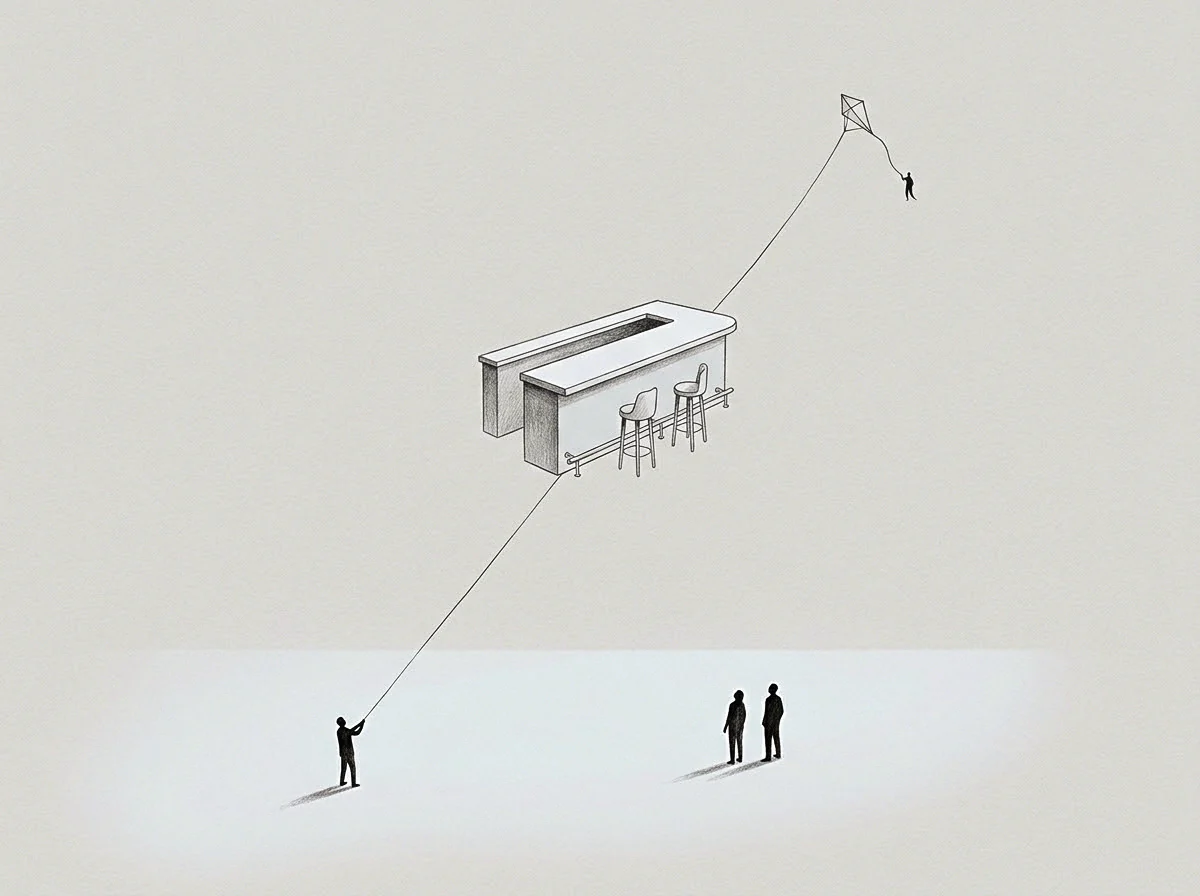
Biological systems step down from continuous defensive vigilance only when operational parameters are held by external structural barriers.
A physical wall absorbs pressure without altering its dimensions, and an operational term functions on identical mechanics.
Floor
Systemic capacity divides into states and decisions. A common error among founders and technical operators involves treating work throughput as an act of pure determination. An individual attempts to override systemic exhaustion through willpower, ignoring the reality that certain acts are strictly state-gated.
A state-gated act requires specific physiological and operational headroom. When allostatic load reaches ceiling levels, biological systems throttle complex decision-making, executive function, and relational patience to preserve vital organs.
Decisions operate successfully only within the bounds permitted by the baseline state. When systemic capacity is exhausted, selecting another task does not produce output; it produces erratic errors and cognitive paralysis. The operator must construct an immovable operational floor through explicit contractual commitments that protect the state before the decision point arrives.
The contract dictates the floor below which operational capacity cannot be sold.
Consider an operational partner holding significant equity while managing twenty separate client deliverables without formal service level definitions. The partner believes that sheer effort can compensate for structural omission. As client pings multiply, the partner enters severe cognitive throttling.
Response quality deteriorates, errors compound, and client interactions become defensive. The counterparty observes the erratic delivery and concludes that the operation lacks basic competency.
If you intended to maintain strict operational boundaries, you should have included those specific hours directly inside our commercial agreement.
Silence
Position silence operates as an affirmative structural stance. It requires no interpersonal aggression, no emotional explanation, and no defensive justification. When an operator meets an out-of-scope demand with total silence, backed by a previously executed agreement, the silence functions as an immovable wall.
The other party attempts to transfer panic, seeking a human container to hold the overflow of their own poor planning. Meeting that panic with verbal explanations merely sustains the negotiation. Explanation invites counter-argument, bargaining, and relational friction.
Position silence terminates the circuit. The counterparty sends an urgent message on a Saturday afternoon. The contract states that operations occur Monday through Thursday.
The operator does not write back to explain family obligations, fatigue, or personal boundaries. The operator leaves the transmission completely unaddressed. The silence holds the counterparty against the cold surface of the text they signed sixty days earlier.
A contract term left to defend itself in absolute quiet strips the counterparty of any surface for negotiation.
The counterparty experiences the silence as an objective reality. They check the time, consult the documentation, and realize that the channel is closed. Over successive repetitions, the counterparty ceases to attempt the transmission.
The operator has not fought, argued, or experienced an interpersonal rupture. The system settled into compliance because the stated term remained rigid and the operator remained entirely silent behind it.