
Designing Software Triggers That Shift Daily Operational Sign-Offs During High Latency
Software triggers shift operational sign-offs during latency by transferring authorization authority to dynamic regional nodes when ping thresholds fail.

Queue
Four high-priority deployment payloads sit unexecuted on an operations dashboard while network packet drop between cross-region data centers climbs past twelve percent. Operators sit in seats across three time zones, waiting for manual cryptographic sign-offs that cannot transmit across the degraded telemetry pipe. Incoming system events accumulate rapidly.
The setpoint holds. Human intervention halts because every approval step requires a round-trip signature confirmation across the congested link. When network round-trip time breaches six hundred milliseconds, manual authorization patterns break down completely.
Operators experience cognitive load accumulation as unread alerts stack up on monitoring screens. The operational bottleneck stems directly from software designs that treat network links as permanently instant and reliable.
Operational approval delays compound exponentially when network degradation hides the physical state of primary services.
System architectures built on synchronous sign-offs freeze entirely during sustained network partitions. The operator layer attempts to resolve the backlog through repeated manual retries. Packet loss increases load.
This pushing mechanism fails because the underlying channel lacks transmission capacity. A software trigger designed for high-latency conditions moves approval authority away from stalled primary seats. The trigger reads latency telemetry directly from network interfaces.
It operates independently of human incident declarations. When latency metrics cross a pre-defined threshold, the trigger initiates state-gated delegation logic. This transfer reassigns pending verification items to local node controllers capable of executing deterministic safety protocols.
The seat transfers. System operations continue under bounded safety rules without waiting for remote authorization.
A ninety-second latency persistence clause converts manual authorization into deterministic state delegation.

Channel
Software systems measure operational health through continuous signal streams generated by network transport interfaces. When transmission lines experience severe packet jitter, the transfer function governing authorization shifts from active decision-making to state-based fallback rules. State drives output.
Mood carries no telemetry weight when evaluating system responsiveness. System engineers separate operational states into discrete bands based on measured packet loss, round-trip delay, and node availability.

System Behavior Under Latency Degradation
Network transport metrics dictate which authorization pathways remain active during operational brownouts.
| Trigger Mechanism | Latency Threshold | Delegation Target | Failure Mode |
|---|---|---|---|
| Static Timeout Handover | 300 ms over 60 seconds | Secondary On-Call Seat | Cascading manual backlog |
| Telemetry-Gated Bypass | 500 ms packet delay | Automated Local Script | Unauthorized mutation risk |
| Asynchronous Quorum Shift | 15% cross-zone packet loss | Regional Node Majority | Stale telemetry evaluation |
Software triggers reallocate authorization authority to secondary seats only when telemetry signals verify that primary approval loops have stalled.
Operational triggers evaluate network conditions against fixed capacity boundaries. Below the baseline latency setpoint, sign-offs proceed through standard human operations desks. Beyond the baseline setpoint, automated fallback systems alter the authorization structure.
- Telemetry-Gated Bypass transfers execution authority to secondary automated scripts when heartbeat packet delay exceeds four hundred milliseconds for three consecutive cycles.
- Asynchronous Quorum Shift drops required sign-off seats from three leads to two regional operators whenever cross-zone RPC latency breaks nominal SLAs.
- Degraded State Fallback freezes non-essential operational mutations while auto-approving read-only state synchronizations during packet loss events. System protection remains paramount throughout the brownout window.
Silence on an operational telemetry line indicates system degradation. It marks a network failure state.

Bound
Operational limits function as structural walls within software control loops. When a load-transferring system pushes against an unresponsive sign-off seat, it pushes until it hits an explicit programmatic limit. Assume an infrastructure organization operating across twelve regional data centers during an undersea fiber optic cable severance.
Network latency spikes from twenty milliseconds to twelve hundred milliseconds across international transit routes. Operators on duty face a wall of unconfirmed deployment actions. Manual intervention cannot clear the queue because signatures time out before reaching destination nodes.
The organization incurs heavy operational overhead when sign-off triggers remain locked in synchronous modes.
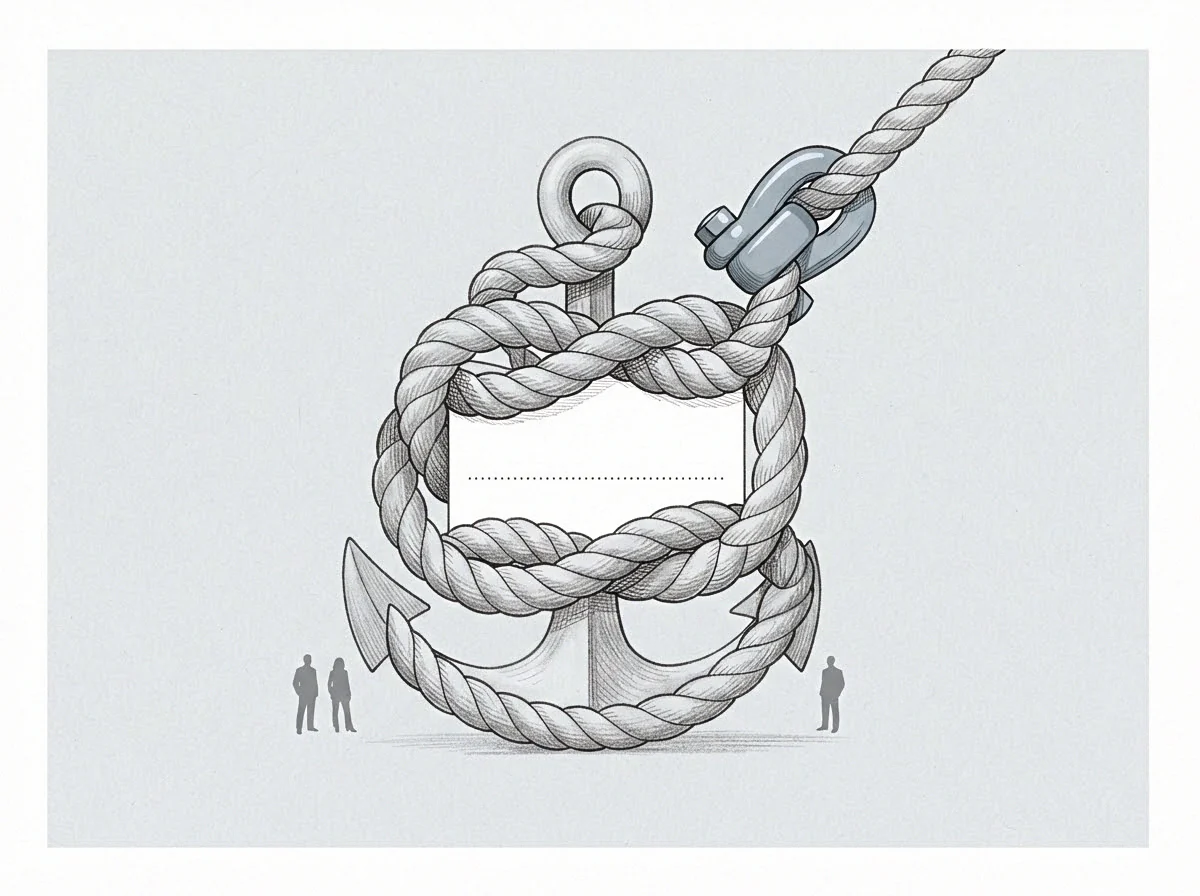
Are Silent Escalation Thresholds Defensible Under Audit?
Compliance frameworks require deterministic verification logs even when system components operate under disconnected conditions. Software triggers resolve audit compliance issues by recording local state snapshots prior to reassigning sign-off authority. The system generates a cryptographically signed operational ledger entry at the moment latency crosses the delegation limit.
This log entry documents the network metrics, the active setpoints, and the exact timestamp of the authority transfer. Telemetry provides truth. Subsequent operational actions take place under temporary emergency privileges granted strictly to local system agents.
Once network links stabilize, the software trigger initiates a synchronization protocol that reconciles all actions taken during the high-latency period.
An unstated operational boundary forces operators to absorb latency costs through extended manual shifts.
A state-gated act executes automatically once environmental preconditions match the trigger matrix. No amount of human decision-making can force a synchronous sign-off through a broken network pipe. The system relies on hard programmatic limits rather than operator persistence.
Decision-gated actions belong exclusively to low-latency operational states where real-time coordination remains cheap. The signature expires. Under sustained latency, forcing manual sign-off attempts degrades system availability and exhausts human incident response capacity.
Systems designed without state-gated sign-off shifts consume engineering capacity by forcing manual verification during major infrastructure brownouts.
Pact
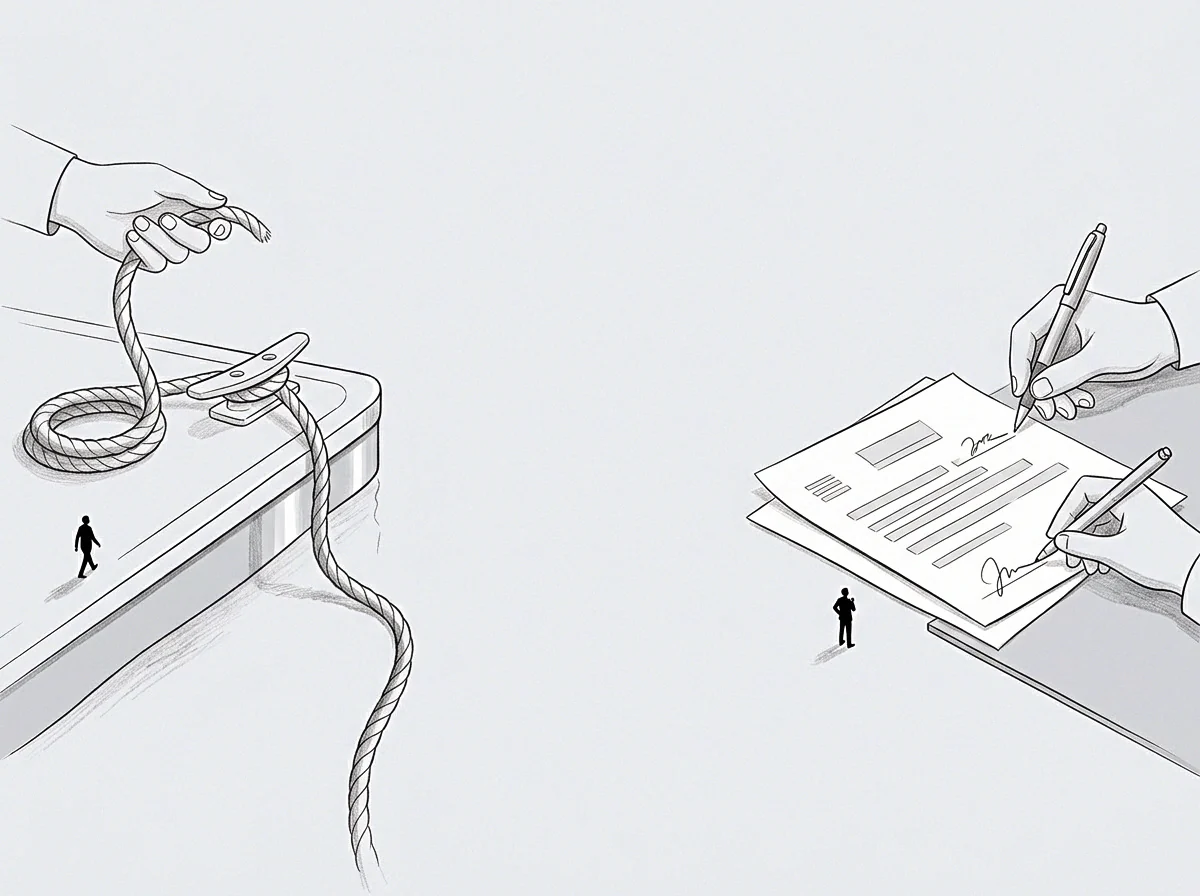
Operational agreements between software modules establish clear governance rules for degraded execution modes. These structural rules define exactly when authority transfers from centralized approval seats to distributed edge components. The wall stands.
Software triggers enforce these terms through continuous automated evaluation of transport quality metrics.
- Network monitors measure round-trip ping time against the primary setpoint.
- The gateway flags signature timeouts and logs structural telemetry. Telemetry metrics confirm link degradation across primary regions.
- Software triggers evaluate local operational capacity before invoking fallback logic.
- Sign-off authority shifts to the designated regional node for the duration of the latency spike.
Automatic delegation holds operational stability only when downstream dependencies accept state assertions without manual confirmation.
The sequence operates without human prompts. System health relies entirely on deterministic criteria established long before network failures occur. The fallback activates.
Authority shifts immediately upon threshold breach, preventing operational stagnation across distributed nodes.
State verification stalls because primary sign-off keys remain unreachable over broken transmission links.

Fence
Structural containment mechanisms protect distributed infrastructure from cascading operational failures during extreme network isolation. Software triggers act as protective barriers by locking high-risk administrative actions while unlocking isolated operational handovers. Latency changes capacity.
When cross-datacenter telemetry drops below minimum viability standards, the software trigger isolates affected regions into autonomous operation cells. Each cell enforces strict local safety invariants while maintaining minimal operational throughput. Load meets limit.
Operators inside an isolated cell work within bounded operational scopes. They cannot issue global infrastructure mutations, but they maintain full authority over local service recovery. This containment strategy prevents partial network partitions from corrupting global configuration states.
The software trigger automatically restores global sign-off workflows only after network interfaces report stable round-trip latency for a continuous observation period. System setpoints maintain operational integrity through every phase of network degradation and recovery.
The unresolved question is whether cryptographic zero-knowledge proofs can bypass manual sign-off delays entirely without compromising regulatory compliance during prolonged offline partitions.