
Establishing Sustainable Decision Latencies Under Asymmetric Communication Pressure from Distributed Executive Counterparties
Executive decision latency stabilizes when communication availability is derived from internal system capacity rather than unbatched incoming counterparty pressure.

Wire

Asymmetric Inbound Trajectories Across Distributed Nodes
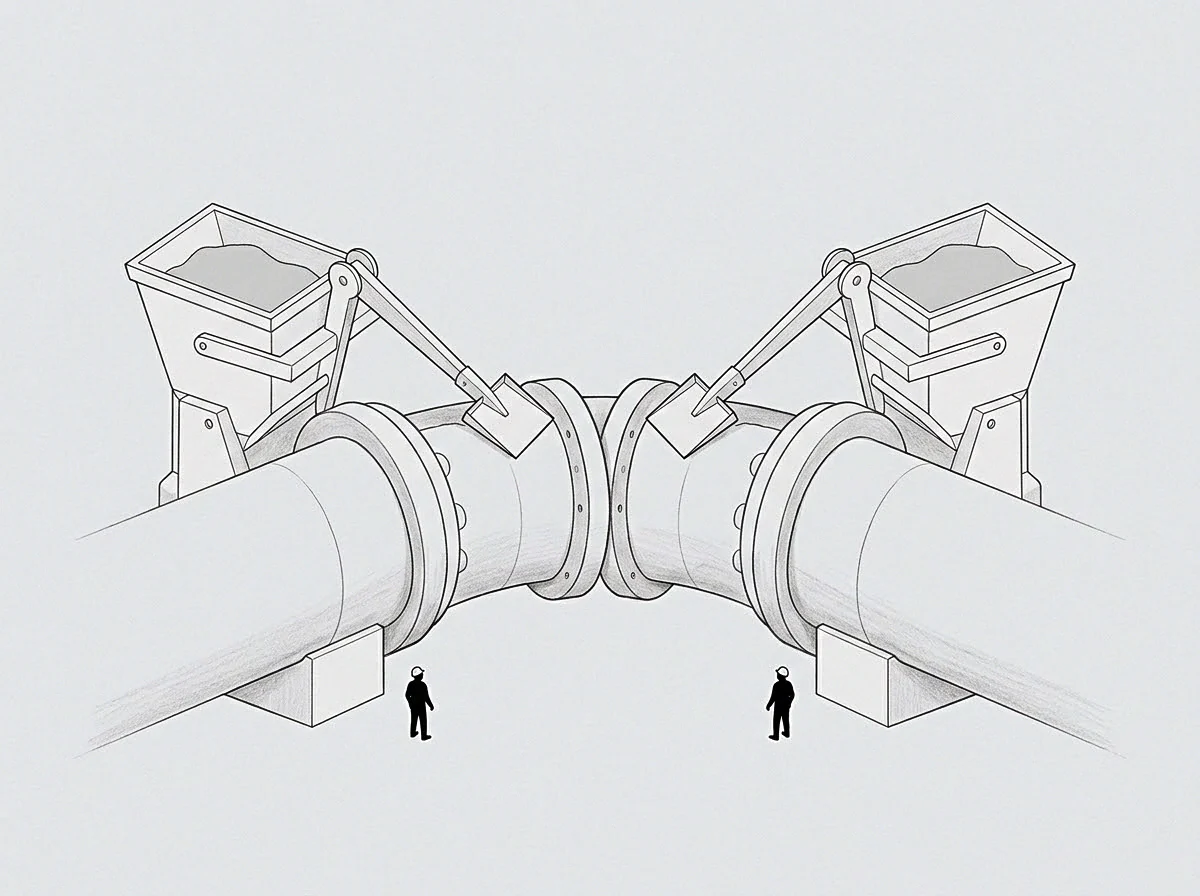
Four executive counterparties in separate time zones transmit unresolved queries between midnight and six in the morning local time. Each transmission arrives as an unbatched request, generating an immediate expectation of rapid triage despite the absent context. Inbound communication streams operate without physical barriers, which allows remote counterparties to offload cognitive debt onto the receiving executive.
The receiving node absorbs the pressure of uncoordinated deadlines, shifting the internal working model from deliberate evaluation to reactive processing.
Distributed counterparties rarely coordinate their outbound cadence with the recipient’s internal allocation schedule. A counterparty operating in daylight hours experiences low internal strain while dispatching high-priority requests, while the recipient operates under depleted cognitive headroom. The imbalance creates an immediate structural disparity.
The sender converts internal uncertainty into an active prompt, transferring the burden of latency management to the opposite side of the table.
Continuous unbatched inputs break executive concentration through frequent micro-interruptions. Research in cognitive ergonomics shows that returning to a complex decision state after an interruption consumes significant processing time. The cumulative cost of these state switches reduces the depth of analysis applied to core trade-offs.
The node operates at capacity while producing shallow outputs.
Unbatched incoming requests transfer cognitive load to the receiving node before priority is established.
The Acceleration of Reactive Latency Decay
Defaulting to rapid responses establishes an unsustainable operating setpoint. When an executive answers an early morning ping within minutes, the counterparty reads that response speed as baseline availability. The counterparty adjusts their operational rhythm to expect identical latency for all future interactions.
This expectation amplifies incoming volume, creating a continuous feedback loop that compresses evaluation windows.
Systemic decay occurs when decision speed replaces decision quality as the primary evaluation metric. The executive spends available hours clearing incoming queues rather than setting direction or evaluating risk. The internal state shifts from reflective synthesis to continuous emergency triage.
The organization loses strategic alignment while maintaining high communication throughput.
Unmanaged latency decay leads directly to state exhaustion. The individual seat attempts to resolve structural imbalance through personal effort, consuming physical and mental reserves. Capacity collapses under sustained load, leaving the executive unable to process basic approvals.

Stance

State Separation Against Environment Demands
Maintaining decision integrity requires treating operational availability as a derived property rather than a public contract. Executive state functions as an internal transfer function that dictates what incoming inputs can produce. Mood reflects transient output signals, whereas state governs long-term throughput capacity.
Conflating internal capacity with external communication pressure leads to reactive operational failures.
When inbound load exceeds current capacity, attempting to decide through force of will degrades output quality. A state-gated act remains blocked until internal capacity recovers to the required threshold. Decision-gated acts proceed through deliberate choice once conditions are satisfied.
Recognizing the distinction prevents the executive from committing to complex choices under acute cognitive fatigue.
Availability remains a derived outcome of internal capacity rather than a response to inbound pings.

What Converts Intermittent Inbound Pressure into Structural Delay?
Asymmetric pressure converts into system-wide latency through unmanaged operational boundaries. Without clear transmission protocols, every inbound prompt demands immediate evaluation regardless of underlying business value. Counterparties continuously push against passive resistance until they encounter an unyielding operational constraint.
A stated limit creates an explicit wall that redirects external pressure back to the originating party.
Establishing clear conditions for response timing alters the counterparty’s submission behavior. When counterparties recognize that rapid pinging does not accelerate processing speed, they consolidate loose queries into structured updates. The shift reduces total transaction volume while improving input quality.
The executive recovers continuous time blocks required for heavy analytical tasks.
- Stated Latency Terms establish formal windows for decision intake and resolution across distributed operations.
- Batch Processing Protocols compel counterparties to aggregate minor operational dependencies into periodic standard reviews.
- State Gating Registers block complex authorizations until internal processing capacity meets pre-established operational thresholds.
- Asynchronous Escalation Pathways route emergency disruptions through dedicated operational channels to shield baseline reflection time.
Counterparties adapt to predictable operating structures faster than to erratic availability patterns. Clear boundaries eliminate the guesswork associated with variable response times. The operational relationship stabilizes around published processing intervals.
A counterparty experiencing delayed responses within declared terms typically remarks that the partner has become entirely unreachable during critical operational phases.

Interval
Quantifying the Latency Trade-Off Under Load
Managing executive throughput demands systematic evaluation of response windows across different operational channels. The trade-off between immediate availability and structural decision quality remains constant across organizational designs. High availability reduces short-term friction for counterparties while imposing heavy cognitive switching costs on the central node.
Controlled latency protects analytical depth at the expense of real-time responsiveness to distributed prompts.
Empirical evidence across occupational health literature indicates that continuous task switching increases error rates in strategic choices. When decision windows shrink below necessary synthesis thresholds, individuals rely on intuitive heuristics rather than thorough risk modeling. The table below details the operational trade-offs associated with distinct communication latency models in distributed executive environments.
| Latency Profile | Response Window | Cognitive Switching Cost | State Degradation Risk | Structural Outcome |
|---|---|---|---|---|
| Continuous Reactive | 0 to 15 minutes | Severe continuous load | High overall exhaustion | Shallow triage and high error rate |
| Scheduled Batching | 4 to 8 hours | Moderate predictable load | Controlled baseline strain | High analytical depth and stable velocity |
| State-Gated Hold | 24 to 48 hours | Low isolated load | Minimal capacity impact | Deterministic decision execution |
Selecting an appropriate latency profile depends on the operational context and the complexity of pending choices. Critical strategic pivots demand state-gated evaluation windows to prevent catastrophic misallocation of capital. Routine operational approvals function efficiently under scheduled batching protocols.

Execution Dynamics in Asymmetric Environments
Consider an operational scenario involving a technology enterprise with executive teams split across three continents. The product head operates in London, the technical lead works in Singapore, and the commercial director sits in San Francisco. Over three years, the London executive processed incoming requests continuously across all time zones without explicit intake protocols.
The Singapore and San Francisco teams routinely submitted unvetted feature requests, strategic pivots, and budget approvals at all hours.
The London node spent six hours daily responding to incoming pings, leaving zero uninterrupted time for long-term operational planning. Decision latencies for complex architectural choices stretched to weeks due to constant cognitive disruption. The executive attempted to resolve the backlog by extending working hours, resulting in severe state depletion.
Strategic decisions suffered from poor risk evaluation, leading to costly project revisions.
The executive implemented a firm operational reset by declaring fixed decision intake windows. Complex submissions required complete documentation and passed through a forty-eight-hour evaluation interval. Inbound pings outside emergency channels received no response until the designated batching hour arrived.
Counterparties initially resisted the change, attempting to bypass the structure through urgent messaging.
The firm protocol held firm. The Singapore and San Francisco counterparties began consolidating their requests into comprehensive weekly proposals to maximize the utility of the evaluation window. Strategic decision latency dropped from three weeks to four days because the London executive reviewed complete data packages within dedicated focus blocks.
Total communication volume fell by half while high-impact output increased. The system met the wall and rebalanced around the stated term.
The seat holds firm.
Will distributed executive counterparties accept structured delay without attempting to build covert communication channels around the wall?

Lock

Structural Mechanisms for State Protection
Protecting decision latency requires concrete structural mechanisms that operate independently of personal mood or social pressure. Relying on daily willpower to refuse incoming requests guarantees eventual failure under sustained pressure. A stated term functions as an objective wall, taking the negotiation off the interpersonal plane.
The system encounters the stated constraint rather than a person making an ongoing effort to resist.
State-gated acts rely on fixed criteria to open or close intake pathways. When internal operational capacity drops below a defined floor, the system automatically engages throttling protocols. Communication incoming through standard channels buffers in automated queues until processing headroom recovers.
The mechanism protects the executive seat from acute overload without requiring active intervention.
A stated term establishes an explicit operational limit that protects cognitive headroom.

Implementing Deterministic Operational Throttling
Transitioning from reactive availability to sustainable latency requires sequential implementation of structural controls. Each step isolates executive processing from raw environmental noise, creating space for deliberate evaluation.
- Define clear latency tiers based on decision complexity and business impact.
- Establish asynchronous intake channels that forbid real-time pinging for non-emergency issues.
- Publish operational availability terms to all distributed executive counterparties.
- Enforce strict batching schedules for routine approvals and status updates.
- Buffer incoming requests into state-gated processing queues during periods of peak cognitive load.
Implementing these controls converts erratic communication habits into predictable operational workflows. Counterparties adjust their expectations to match the published processing parameters. Strategic focus recovers as reactive noise recedes.
The intake clause modifies the contract by establishing that unbatched submissions reset the evaluation clock to zero.

Pace
Sustainable Latency as an Operating Setpoint
Achieving sustainable decision latencies establishes long-term operational stability across distributed leadership teams. Latency functions as a vital system parameter rather than a personal deficiency or operational bottleneck. Maintaining controlled response windows protects executive cognitive capacity across multi-year horizon cycles.
Organizations operating with predictable decision rhythms demonstrate higher strategic clarity and lower executive turnover.
The distribution of executive authority across time zones requires continuous commitment to structured communication terms. Counterparties learn to operate within established intake windows, refining their inputs before submission. The overall system operates with lower internal friction and reduced error rates.
The executive protects internal reserves while maintaining consistent decision velocity.
Sustainable Latency derives from fixed operational constraints rather than variable personal effort.