
Longitudinal Resilience Limits When Downstream Autonomous Execution Meets Unprecedented Operational Intake Overload
Downstream autonomous execution accelerates incoming volume while funneling concentrated edge cases to human supervisors, causing cognitive collapse without hard limits.
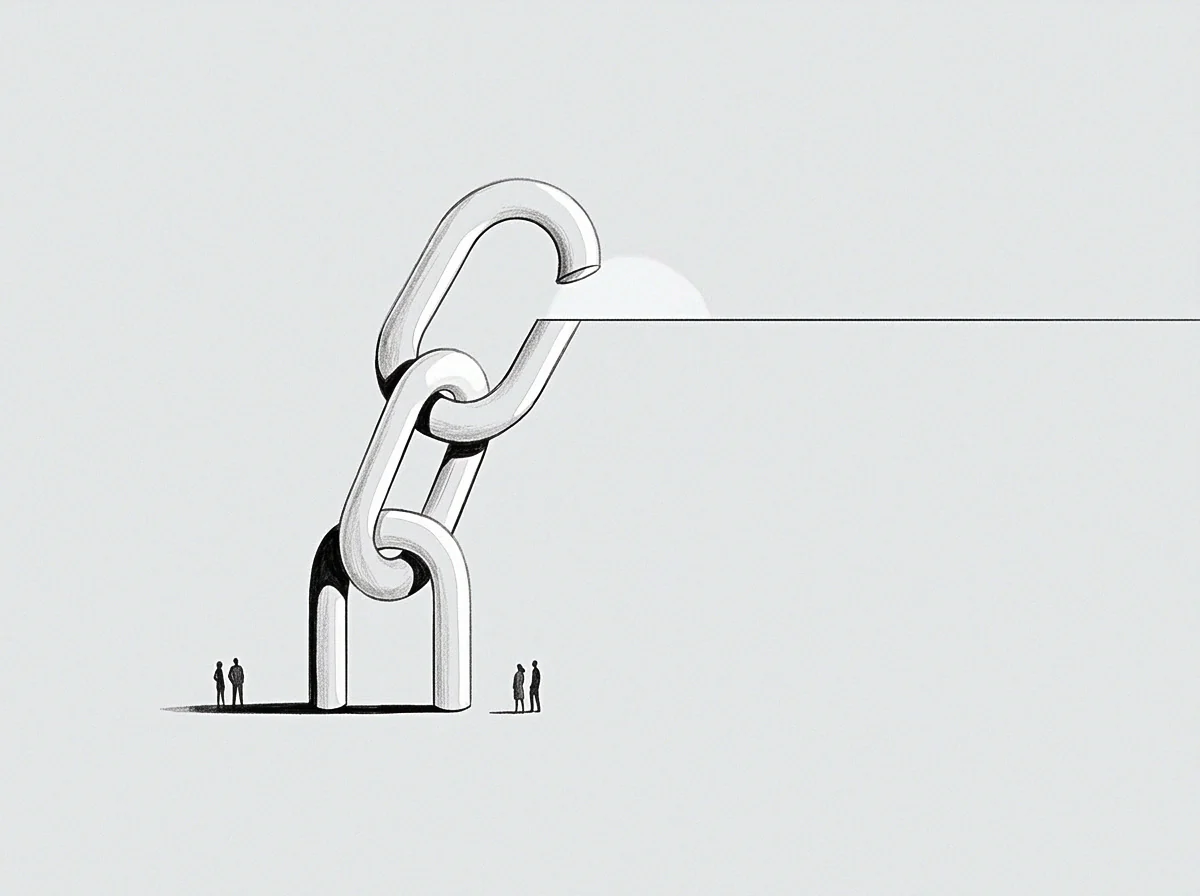
Spill
Four dispatch queues remain illuminated on a dual-monitor stand at three in the morning. When incoming requests compound beyond historical baselines, downstream autonomous scripts process transactions at machine velocity, while the human operator in the verification seat watches the residual exceptions stack up without pause. Every execution engine accelerates downstream throughput, yet incoming volume creates a continuous backlog of edge cases that require unscripted discernment.
The intake queue climbs. The operator clears seven tickets, and eighteen unclassified exceptions settle into the triage pool during the same forty minutes.
Intake pressure generates an immediate operational distortion when downstream processors run without friction. Autonomous agents clear standard actions in fractions of a second, leaving the person at the terminal exposed to concentrated ambiguity. Each automated workflow strips out routine tasks, depositing irregular, high-friction anomalies directly into the operator’s queue.
The work shifts from rhythmic execution to relentless exception handling under conditions of severe volume expansion. The screen flickers white. The human sitting upstream functions as an unbuffered dampener for system irregularities, absorbing systemic noise that software cannot classify.
A human operator absorbing concentrated edge cases exhausts cognitive bandwidth before the intake cycle completes its first operational shift.
Downstream speed creates the appearance of infinite operational capacity, which prompts clients, partners, and external interfaces to inject still higher volumes into the intake funnel. An automated execution loop satisfies incoming queries instantly, signaling to external counterparties that the company possesses unlimited bandwidth. The external counterparty responds to rapid execution by sending larger batches, harder constraints, and unstructured files.
The automated surface expands intake while the person holding operational accountability remains bound by biological recovery cycles. Load seeks an exit.
Automated output operates without circadian rhythms, whereas human oversight degrades along documented physiological curves. When operations run continuously through automated workers, the human supervisor remains on call to catch terminal failures during off-peak hours. Sleep fragmentation sets in within seventy-two hours of sustained intake saturation.
The supervisor checks handheld monitors during waking interruptions, parsing critical pipeline warnings while neuroendocrine recovery halts. The regulator yields.
The client assumes that rapid automated task resolution reflects comprehensive organizational capacity rather than an unbuffered human supervisor absorbing edge cases in the dark.

Wall
Physical limits govern operational capacity long before administrative policy acknowledges exhaustion. A load-transferring structure continues to push against its human components until those components present a rigid boundary. In operational engineering, a stated limit behaves like a concrete obstruction rather than a personal preference.
When a supervisor states a hard operational ceiling, the surrounding intake workflows either reroute or fail at the interface. The push met a stated wall.
Autonomous systems lack self-limiting mechanisms when external intake accelerates. Software routines accept payloads until memory buffers saturate or storage drives write to capacity. In contrast, the human element within an autonomous execution loop requires an explicit structural barrier to prevent total collapse.
The limit exists as an external object, defined in explicit terms, functioning as a circuit breaker against unbounded transaction arrival.
Consider an operational design that establishes explicit performance parameters:
- Hard Intake Cutoffs define absolute maximum thresholds for unresolved edge cases, halting automated intake ingestion whenever human review queues exceed twenty pending items.
- Synchronous Blackout Windows enforce strict temporal intervals during which incoming alerts queue on disk without dispatching notifications to supervisory personnel.
- Rejection Protocols specify programmatic rules for rejecting non-conforming data payloads automatically before exceptions reach the triage operator.
Stating a binding threshold transfers operational friction back to the sending entity.
Setting an uncompromising operational barrier reallocates system stress across the organization. When the supervisory engineer refuses manual intervention for off-baseline exceptions, downstream autonomous scripts enter fallback states. Automated tasks halt at designated checkpoints, exposing intake distortions to executive leadership.
Without that barrier, the operator absorbs the volume silently through personal exhaustion. The boundary protects operational integrity by compelling external counterparties to clean their data before transmission.
Limits stated without conditions hold their ground while personal accommodations collapse under pressure.
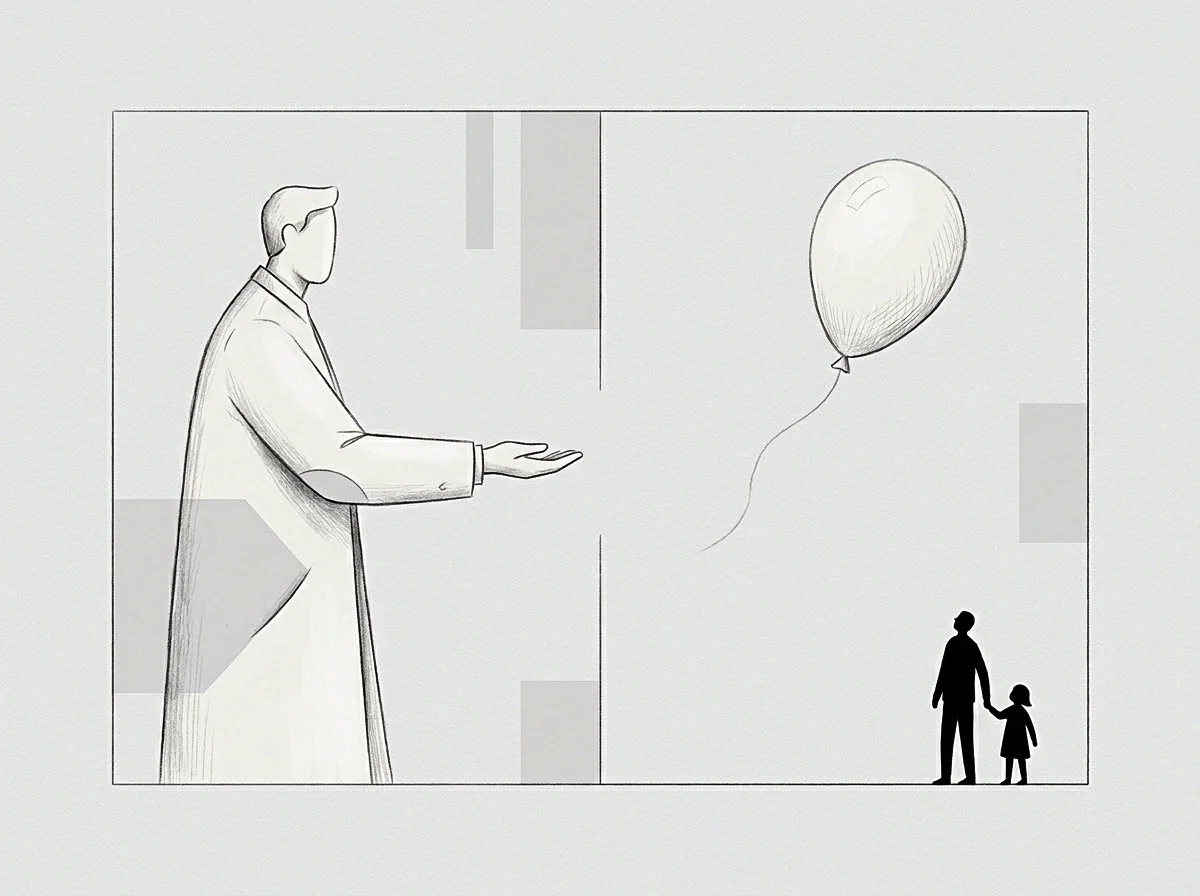
State
Human operational throughput depends on physiological capacity rather than conscious determination. An individual’s physiological status acts as a transfer function, determining how much informational load an operator can process before error rates rise exponentially. Fatigue degrades pattern recognition, slows latency in decision loops, and impairs motor reflexes during critical reviews.
Mood functions as an epiphenomenon that carries no diagnostic value for throughput capacity. State governs throughput.
Laboratory trials in cardiovascular impedance and pupillometric pupil-dilation demonstrate that autonomic nervous system resource depletion directly tracks continuous multi-cue monitoring under sleep deficit. Social baseline research demonstrates that shared supervisory oversight lowers the metabolic expense of continuous attention, whereas solitary vigilance dramatically accelerates prefrontal cortex exhaustion. If replicated trials were to demonstrate stable vigilance decrements without concurrent sympathetic nervous system activation, the metabolic explanation for cognitive fatigue would require substantial revision.
Under current physiological evidence, solitary oversight of high-volume automated systems accelerates neuroendocrine wear.
| Evaluation Metric | Synchronous Human Arbitration | Downstream Autonomous Execution |
|---|---|---|
| Intake Capacity Ceiling | Constrained by biological hours and cognitive speed | Unbounded until disk, memory, or network limits bind |
| Exception Handling Profile | Evenly distributed between routine and novel tasks | Concentrated exclusively on ambiguous edge cases |
| Failure Signature | Gradual latency increase across all transactions | Instantaneous queuing and silent upstream depletion |
| Metabolic Cost Allocation | Shared across the execution cycle | Transferred entirely to the human exception reviewer |
Municipal electrical networks handle summer demand spikes by initiating controlled rolling brownouts, sacrificing peripheral distribution loops to preserve primary generation stations. Operational systems demand an identical hierarchy when transaction intake outpaces cognitive arbitration limits. A supervisor who treats human stamina as an elastic sponge invites cataclysmic pipeline failures.
Preserving core judgment requires shutting down peripheral automated pipelines before exhaustion destroys supervisory discernment.
A degraded human physiological state increases critical arbitration errors regardless of subjective dedication.
When an operating system fails to align intake volume with human physiological limits, chronic exhaustion produces structural blindness, yielding downstream automated errors that compromise the enterprise.

Strain
Continuous operational intake induces severe systemic distortion when automated pipelines run unchecked. Autonomous workflows mask organizational stress by maintaining high throughput metrics even while supervisory capacity deteriorates. Dashboard metrics display completed transactions, masking the escalating backlog of unresolved anomalies trapped in secondary queues.
Attention has fixed boundaries. The organizational facade suggests effortless scaling, while internal operational friction accumulates toward a structural break.
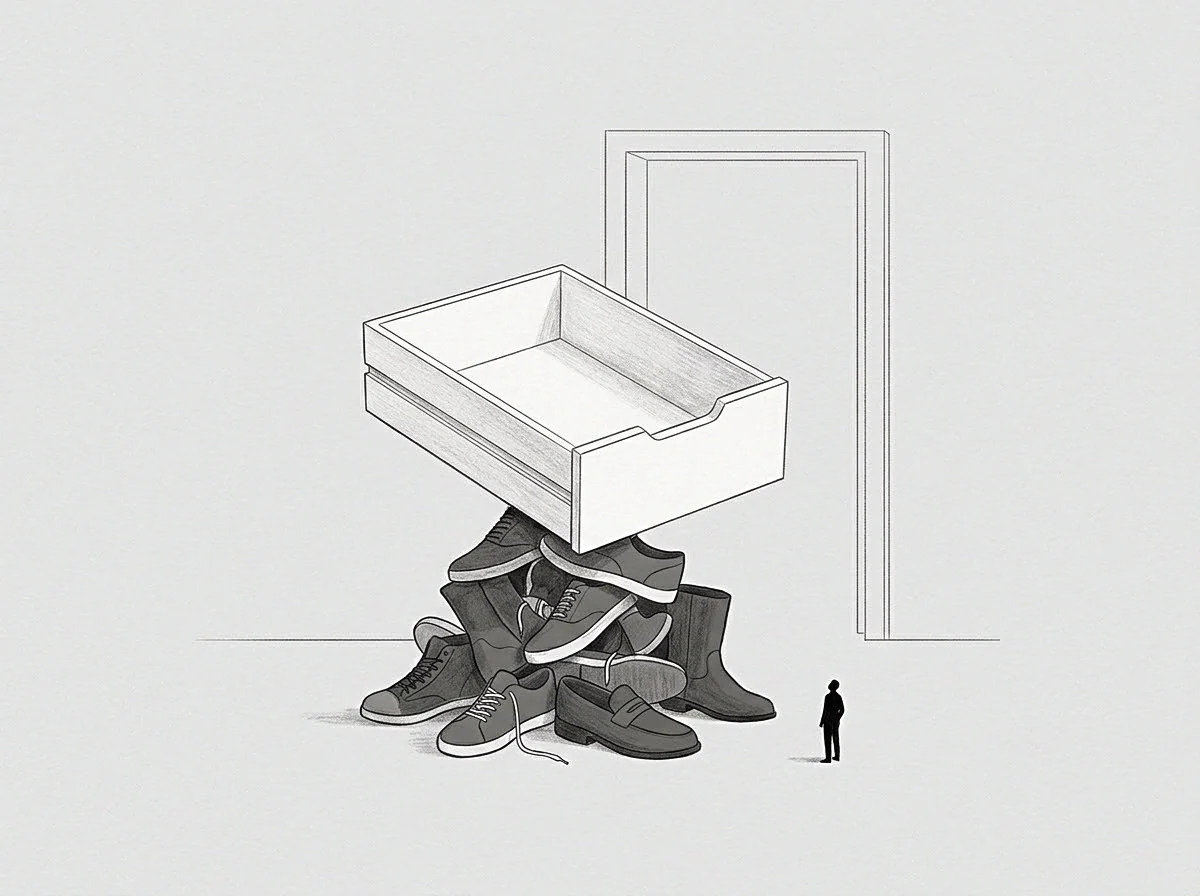
Does Operational Acceleration Hide Upstream Degradation?
Superficial performance metrics create dangerous operational illusions for company leadership. While software engines process thousands of standard entries, complex edge cases gather in unmonitored staging tables. The human reviewer experiences mounting allostatic load, measured by sustained neuroendocrine activation and elevated inflammatory markers under continuous vigilance conditions.
Longitudinal studies of workplace stress indicate that sustained sympathetic nervous system arousal without recovery intervals leads directly to acute attention dropouts. If broad cohort analyses were to reveal sustained supervisory vigilance without corresponding neuroendocrine disruption, the established model of chronic vigilance exhaustion would collapse. The data confirms that human vigilance degrades rapidly under relentless error arbitration.
The push met cold silicon.
Supervisors managing high-volume automated workflows exhibit distinct stages of operational degradation:
- Latency Inflation marks the initial phase where an operator takes three times longer to resolve routine classification ambiguities.
- Heuristic Compression occurs when an exhausted reviewer bypasses comprehensive verification rules to clear ticket backlogs rapidly.
- Selective Inattention represents the terminal failure state where incoming critical alerts remain unread in active messaging channels for hours.
The system absorbed silence. Unaddressed anomalies compound within downstream databases, creating corrupted data states that corrupt autonomous decision pathways. The cost remains unpaid.
Software tools execute tasks based on flawed operational premises because the human arbiter lacked the cognitive clarity to challenge incoming data assumptions. System failure eventually manifests downstream, not because the software crashed, but because the human regulator could no longer police the intake threshold.
The service agreement clause that caps unassisted ticket intake at fixed hourly volumes alters operational survival by transferring transaction friction back to the customer.

Line
Drawing an unyielding line in operational intake separates functional architectures from terminal administrative burnout. Autonomous downstream execution magnifies incoming volume, turning human arbitration into the primary point of systemic failure. Preserving operational integrity requires explicit structural constraints that throttle automated ingestion at the perimeter.
The founder must establish clear boundaries between software capability and human physiological reality. The loop remained open.
Field evidence remains divided regarding whether fully autonomous secondary validation loops can eliminate human oversight entirely, or whether autonomous systems merely delay catastrophic data contamination until third-quarter audits expose corrupt records. Under this operational uncertainty, prudent operators construct defensive architectural constraints, treating every automated intake channel as a potential hazard to human supervisory capacity. The worker went home.
A hard intake ceiling preserves supervisory discernment across protracted operational campaigns.
Capacity is finite. The channel fell cold. Establishing structural boundaries allows the organization to survive sustained volume surges without sacrificing the cognitive stability of its human operators.
Stated limits convert covert human exhaustion into visible operational requirements, forcing external systems to adapt to real biological boundaries.
Whether enterprise engineering teams can design intake throttling mechanisms that balance autonomous execution speed against biological arbitration limits remains an open operational challenge.