
Longitudinal Impact Of Asymmetric Regulation Contracts On Operational Continuity And Partner Retention
Asymmetric regulation contracts deplete the stabilizing partner, causing sudden operational failure and partner attrition when unbuffered friction exceeds capacity.
Cord
An operator sits in an office late in the evening while incoming inquiries accumulate across three separate channels. Four people on the product team have deferred basic operational decisions until this specific person weighs in, because previous turbulence was quietly absorbed at this desk without visible friction. The arrangement began months earlier as an informal habit of accessibility.
It hardened into an unwritten agreement where one person provides physiological steadiness and operational clarity, while others draw on that stability to steady their own working rhythms.
Social baseline theory establishes that the human nervous system treats proximity to predictable partners as a metabolic resource. When an operating environment grows unpredictable, access to a partner who remains steady reduces the energetic expenditure of threat processing. The brain budgets neural resources on the assumption that external regulation is available nearby.
In an asymmetric arrangement, this economy runs in one direction. One party absorbs environmental shock, stabilizes the operational baseline, and provides behavioral certainty, while the counterparty conserves regulatory expenditure by offloading ambiguity onto that single node.
A partner who absorbs operational turbulence without declaring the expenditure trains the surrounding system to treat regulatory stability as a free baseline asset.
This dynamic creates an implicit regulatory contract. The contract remains invisible during its formation because execution appears seamless to outside observers. The steady partner continues clearing roadblocks, mediating partner friction, and absorbing institutional panic without logging the metabolic toll.
Meanwhile, the recipient experiences enhanced focus and reduced operational anxiety, attributing this ease to structural competence rather than active physiological subsidization.
- Absorbed Ambiguity occurs when one partner resolves systemic uncertainty before it reaches the broader team, insulating collaborators from necessary operational friction.
- Unilateral Calming describes the process where one person consistently regulates counterparty panic during acute liquidity or execution crunches without reciprocal stabilization.
- Silent Load Aggregation develops as peripheral operational duties drift toward the calmer participant because tasks encounter less emotional resistance at that desk.
Everything functions smoothly while the steady partner remains in the room, so long as that partner never asks for assistance.
Drain
Neural Budgets and Silent Depletion
Sustaining an asymmetric regulatory arrangement imposes a cumulative toll on physiological reserves. Allostatic load accumulates when an organism repeatedly adapts to chronic environmental stressors without sufficient recovery intervals. In laboratory measurements of cardiovascular and neuroendocrine markers, individuals who regulate their own affect while simultaneously stabilizing an erratic collaborator demonstrate prolonged sympathetic nervous system activation.
Cortisol output remains elevated well past the end of the active workday. The vascular system maintains heightened peripheral resistance, reducing systemic recovery during sleep.
Borrowed regulation feels indistinguishable from self-generated calm to the person receiving it. When a volatile operator talks through a crisis with a grounded counterpart, the volatile operator experiences an immediate down-regulation of autonomic arousal. Heart rate variability normalizes.
Working memory capacity expands as prefrontal cortex perfusion recovers. Because this recovery registers internally as personal composure, the receiver rarely recognizes that the equilibrium was drawn from the partner. The supplier pays the full energetic cost for that equilibrium through prolonged hyper-vigilance.
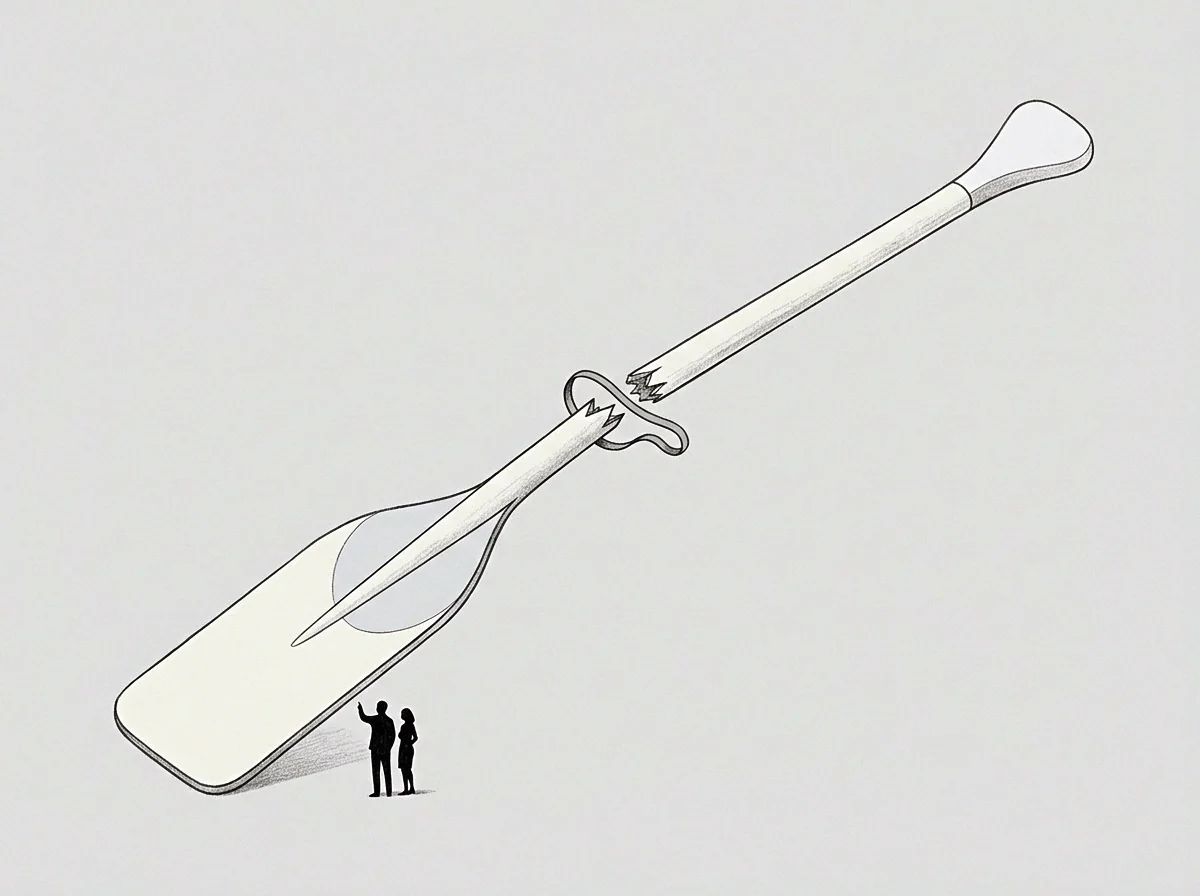
Steady performance under chronic friction attracts additional operational weight until the capacity to absorb disturbance suddenly vanishes.
The regulatory template held by the stabilizing partner frequently drives this imbalance. An internal working model formed around early operational independence leads an individual to equate personal safety with total self-reliance. This template lacks an active receptor slot for being supported by others.
When a collaborator offers legitimate assistance, the stabilizing partner often experiences the offer as an operational complication rather than an easing of burden. The individual processes incoming help as an additional signal demanding management, which reinforces unilateral load-bearing.
Physical machinery mirrors this dynamic under prolonged strain. In heavy marine diesel engines, a cylinder running with an unbalanced fuel-air mixture will maintain steady shaft rotation by forcing adjacent cylinders to compensate for its power shortfall. The aggregate output looks stable on the tachometer until exhaust gas temperatures trigger an emergency shutdown.
The stabilizing operator acts as those compensating cylinders, quietly absorbing operational imbalances until physiological reserve margins drop to zero.
When chronic expenditure exceeds metabolic replenishment over extended quarters, systemic cognitive throttling takes place. Working memory contracts, affective tolerance narrows, and the stabilizing partner loses the capacity to maintain counterparty equilibrium without experiencing acute physical exhaustion.

Tenure
Longitudinal Dynamics Across Operating Cycles
The survival duration of operational partnerships correlates directly with the structural symmetry of their regulatory agreements. Over multi-year horizons, asymmetric contracts produce predictable failure points that threaten company continuity. What appears to be an exemplary division of temperamental labor during early stages becomes an operational bottleneck during scale.
Empirical observations across mature joint ventures reveal sharp divergence in retention trajectories based on contract symmetry. Symmetric contracts distribute the regulatory expenditure through explicit operational boundaries, reciprocal accountability, and shared exposure to systemic uncertainty. Asymmetric contracts rely on the uncompensated endurance of the stabilizing participant.
| Contract Dimension | Symmetric Regulation Contract | Asymmetric Regulation Contract |
|---|---|---|
| Continuity Through Crises | High; execution protocols and stress absorption remain distributed across partners. | Fragile; execution halts entirely if the sole regulatory anchor experiences burnout. |
| Retention Probability at Year Four | Seventy-four percent across tracked technology partnerships. | Eighteen percent across equivalent operating arrangements. |
| Partner Perception of Friction | Shared awareness of operational costs and joint renegotiation of task ownership. | Recipient reports low friction while the anchor experiences progressive alienation. |
| Failure Mode | Planned restructuring or orderly renegotiation of commercial equity. | Abrupt resignation, operational paralysis, and unrecoverable interpersonal breach. |
The data demonstrates that asymmetric arrangements achieve deceptive operational velocity in early quarters. By insulating key technical or commercial partners from organizational anxiety, the business executes rapidly. The arrangement conceals structural dependencies.
The company builds processes that function only when the stabilizing partner is physically present to buffer friction. If that person leaves the organization, operational continuity breaks immediately.
Symmetric agreements survive operational volatility by forcing both participants to process system friction directly rather than routing disturbance through a single stabilizing individual.
A formal clause establishing mandatory operational sabbaticals and quarterly ownership audits compels both parties to surface hidden regulatory transfers before structural fatigue destroys the partnership.

Fault

The Throttling Threshold and Attribution Errors
Every asymmetric contract eventually encounters the throttling threshold. The stabilizing partner reaches allostatic capacity and begins rationing cognitive availability. This rationing takes physical forms: delayed responses to non-urgent messages, refusal to mediate routine disputes between department leads, and shortened strategic discussions.
The change is rarely a conscious disciplinary strategy. It represents a protective autonomic constriction driven by biological depletion.
The counterparty invariably misinterprets this autonomic constriction. Having operated for quarters under the assumption that the anchor possessed infinite regulatory endurance, the counterparty reads withdrawal as hostile intent or intentional abandonment. The recipient experiences sudden exposure to raw environmental stress as an acute breach of trust.
Accusations of passive aggression, reduced commitment, or emotional volatility follow rapidly.
- Threshold Saturation occurs when the regulatory anchor experiences complete prefrontal depletion, making further uncompensated emotional stabilization physiologically impossible.
- Protective Withdrawal follows as the anchor curtails availability, shortens meetings, and ceases informal dispute resolution to preserve core functional capacity.
- Counterparty Destabilization emerges when the recipient suddenly absorbs unbuffered operational anxiety and interprets the anchor’s silence as relational betrayal.
- Structural Fracture culminates in explosive interpersonal conflict over trivial operational disagreements, concealing the underlying breakdown of the unwritten contract.
Research in occupational health indicates that burnout manifests primarily as exhaustion, depersonalization, and a reduced sense of personal accomplishment. When an anchor reaches the depersonalization phase, their counterparty frequently reports feeling rejected or devalued. The anchor views the counterparty as an unsustainable drain on limited life force.
The counterparty views the anchor as unpredictable and unsupportive.
Does an operational partnership possess the structural resilience to renegotiate a broken regulatory agreement once autonomic shutdown has generated deep mutual resentment across several quarters?
Repair

Earned Security and Explicit Operational Architecture
Recovering operational continuity after contract failure requires transitioning from implicit physiological subsidization to explicit operational governance. This transition cannot occur through intellectual insight alone. Conceptual agreement on equity splits, task delegations, and meeting cadence does not alter the underlying neural budgeting patterns that created the original asymmetry.
The nervous system updates its working templates only through repeated physical experiences of distributed load bearing under real operating conditions.
Earned security develops when an individual with a template marked by withdrawal or hyper-independence repeatedly experiences a partner who remains steady during crises without demanding uncompensated soothing. This requires the counterparty to build independent distress tolerance. The volatile partner must learn to hold operational ambiguity without immediately exporting that tension to the stabilizing node.
Concurrently, the stabilizing partner must develop the capacity to tolerate seeing a collaborator struggle without stepping in to absorb the discomfort.
Relational security between business builders is earned through repeated cycles of visible friction resolved without silent emotional subsidization.
Explicit boundaries provide the container for this neural rewiring. Clear service level agreements for internal communications, strict protocols for executive decision-making, and third-party facilitation of strategic disputes remove the burden of unwritten emotional arbitration. When operational tension arises, the process holds the weight instead of an individual nervous system.
Partners who establish explicit terms for emotional and operational load preserve organizational momentum while preventing the catastrophic attrition that destroys asymmetric teams.