
Managing Direct Communication Flow For New Executive Seats
Direct communication routing through formal executive seats preserves management authority and prevents operational bypass across expanding company tiers.

Room
The founder sits with twelve communication windows open on one screen while three newly appointed executives wait for operational direction. Messages arrive from frontline engineers alongside messages from the newly hired department head, each asking for verification on the same product shift. Answering the engineer directly preserves an early habit of personal involvement.
Doing so also empties the authority of the newly appointed leader before their first quarterly cycle concludes.
Direct communication flow breaks the moment an executive tier enters an operating company. Before that arrival, direct transmission carries zero coordination expense: one person holds the context, decides the priority, and speaks to the person writing the code or closing the sale. The introduction of an executive seat splits that wire into multiple nodes.
When direct access persists across the historical paths, the organization begins running two competing control loops simultaneously.
A direct channel kept open across an installed executive seat transfers operational ambiguity downward while pulling tactical execution back to the center.
The physical layout of communication determines who holds decision weight. When lateral lines between founders and technical contributors stay active, the executive seat functions as an expensive observer. The hire listens in planning sessions, constructs operational models, and watches decisions route around the formal chair through legacy direct channels.
The legacy channel stays active because speed feels higher on the familiar path.
Staff members read the preservation of old paths as a signal that the executive lacks authority. They route difficult problems back to the founder through private messages, bypassing the newly created seat whenever resistance appears. The bypass preserves comfort for the contributor and extracts immediate cognitive energy from the person who created the executive role to escape that exact extraction.
Old patterns persist until an explicit term defines what no longer moves through the legacy wire. The person in the new seat cannot state that term without appearing defensive. The founder holds sole structural standing to close the direct line, yet hesitates because direct contact provided their primary operational ground truth for years.
The new executive observes that decisions made in yesterday’s strategy meeting dissolved overnight inside an unrecorded text message.

Signal

Asymmetric Context Transmission
Every operational ping carries context, urgency, and relational history. When a founder pings an executive’s direct report, the report assigns maximum priority to the transmission regardless of the actual content. A casual query about a database schema reads to an engineer as an emergency mandate to rewrite architecture.
The engineer drops planned sprints, redirects team capacity, and conceals the shift from the department head to avoid conflict.
The executive seat exists to pace and filter those exact inputs. Human attention operates as a rate-limited resource across any production unit. When unfiltered signals enter teams from above the executive layer, local calibration collapses.
The department head plans around thirty-day goals while the team scurries after hourly observations dropped into shared channels.
Structural Noise Inside Lateral Channels
Lateral communication channels between founders and newly appointed leaders often suffer from equal confusion. Founders frequently use lateral threads as thinking spaces, testing half-formed intuitions against their senior hires. The newly installed executive, unfamiliar with the founder’s internal processing rhythms, treats each exploratory idea as an imperative operational directive.
A stated protocol separates exploratory conversation from committed execution. Without this protocol, the executive seat incurs massive context-switching expense. The hire spends weekend hours assembling strategic decks for proposals the founder forgot by Monday morning.
The operational line vibrates with phantom intent.
A transmission without an assigned priority tag assumes the maximum urgency of its sender.
The ping functions as a priority indicator. In an unmanaged communication environment, the volume of pings replaces strategic hierarchy. Teams respond to whoever messages most frequently with the highest emotional inflection.
The executive seat, built to govern through deliberate rhythms and clear operational targets, cannot function when informal founder pings override published objectives.
Clear communication boundaries remove the requirement for personal interpretation. When input channels follow structural boundaries, signals retain their intended weight across every layer of the operating hierarchy.
Cost
Where Does Direct Access Produce Structural Distortion?
Direct communication across organizational tiers extracts a predictable toll on operational velocity and retention. When leadership circumvents newly established management seats, those seats rapidly devalue. Executive leaders hired at significant capital expense find themselves reduced to administrative recording clerks.
The talent market penalizes executives who fail to show autonomous execution; those leaders leave once they realize informal networks govern core outcomes.
The table below details the operational shifts that occur across key communication paths when executive seats are introduced without disciplined routing controls.
| Communication Path | Unmanaged Direct Routing | Structured Protocol Routing | Cognitive And Monetary Consequence |
|---|---|---|---|
| Founder to Contributor | Immediate legacy access persists | Directed through functional lead | Unmanaged access dilutes executive ownership and fractures product roadmap discipline. |
| Executive to Contributor | Contested authority and delayed execution | Exclusive operational assignment | Clear assignment lowers context switching and clarifies accountability for deliverables. |
| Contributor to Founder | Bypass routing during team friction | Strict functional escalation paths | Unfiltered bypass consumes founder hours and leaves executive leadership uninformed on core issues. |
| Founder to Executive | Continuous exploratory messaging | Scheduled decision architectures | Ad hoc messaging forces defensive alignment work and inflates executive turnover rates. |
Retention failure represents the most visible capital loss of broken communication routing. Executive recruiting processes consume months of candidate search time, substantial agency fees, and significant equity grants. When an executive resigns within nine months due to functional bypass, the direct placement expense vanishes while team momentum stalls completely.
Less visible costs accumulate inside operational layers. Teams exposed to continuous founder bypass learn to hedge their commitments. They withhold full operational buy-in from their direct manager, knowing the manager can be overruled inside an informal chat thread at any moment.
Production cycles stretch as workers wait to verify whether a managerial instruction represents the true plan.
Executive isolation develops simultaneously. Deprived of direct operational insight because critical inputs flow around them, the new leader makes decisions based on incomplete telemetry. When those decisions fail, the founder points to the failure as validation that direct involvement remains mandatory.
A destructive feedback cycle takes root: founder intervention causes managerial failure, which then rationalizes further founder intervention.
Persistent operational bypass produces an organization unable to scale beyond the personal cognitive ceiling of its first builder.
Line
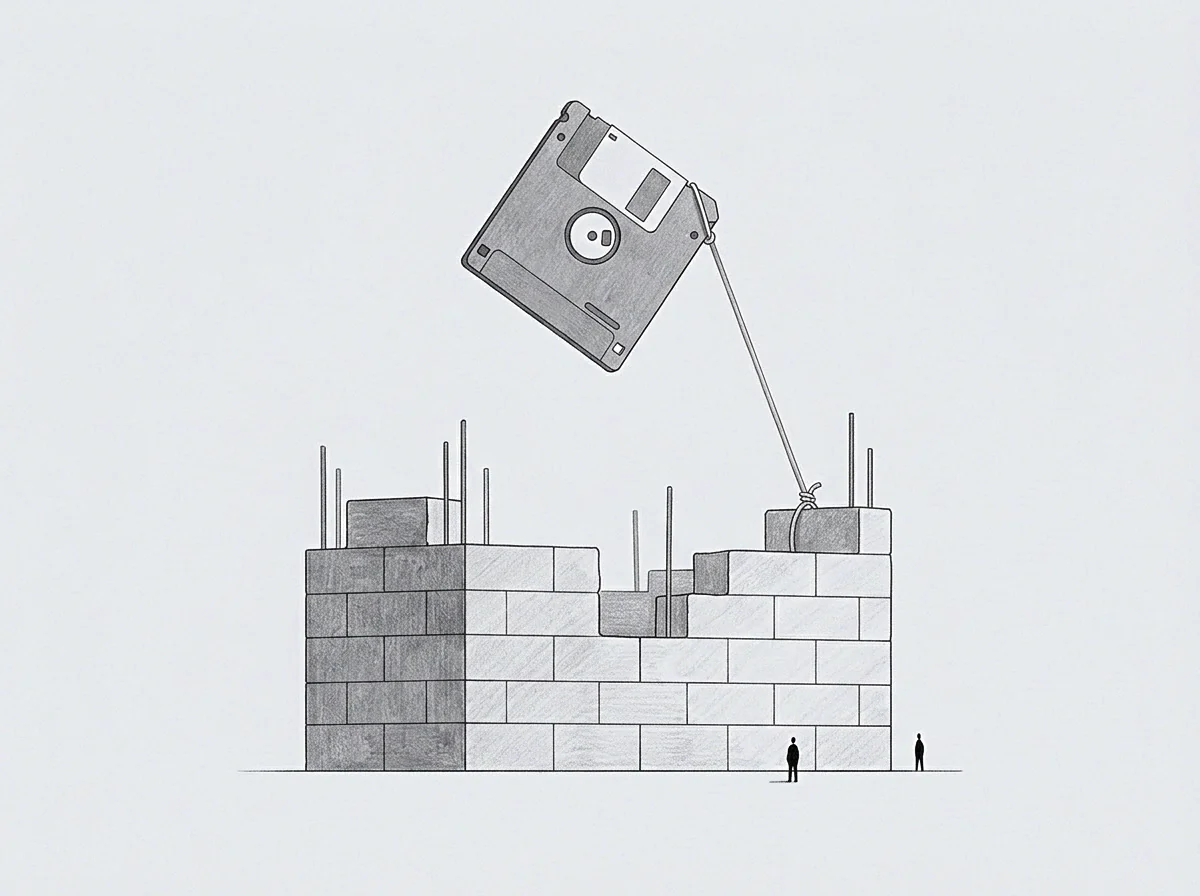
Setting communication lines requires explicit, mechanical boundaries rather than polite requests for alignment. A wall is a stated condition that transfers load elsewhere without continuous emotional negotiation. When an executive arrives, the founder states where the direct wire ends and where the executive’s domain begins.
This declaration occurs in writing, before the entire functional team, removing ambiguity about operational ownership.
The transition involves concrete tactical shifts in daily tooling. Founders leave functional project management boards, mute non-emergency chat channels, and decline unscheduled direct messages regarding tactical operations. When a contributor sends an operational query, the founder replies with a single transfer phrase directing the contributor to their departmental lead.
The founder executes this redirect every time, without exception.
A boundary held inconsistently invites continuous testing from every load-bearing element in the system.
Operational lines depend upon structured escalation rules that establish which issues justify direct executive escalation to founders. These categories govern information movement:
- Existential Solvency Events involve sudden cash position shifts, severe regulatory enforcement, or critical production security breaches that halt business operations immediately.
- Irreversible Structural Choices encompass unrecoverable architecture transitions, key personnel terminations, and commercial contracts exceeding predefined balance-sheet thresholds.
- Lateral Conflict Deadlocks emerge when two peer executives reach complete operational impasse across cross-functional interfaces after documented alignment attempts.
Escalation paths function cleanly only when routine items remain barred from high-level intervention. Product prioritization disputes, minor engineering trade-offs, and customer-specific feature requests belong entirely within the executive’s sphere of control. When those items surface in founder channels, their presence indicates a failure of the stated limit rather than an operational crisis.
Executive onboarding agreements document these communication terms explicitly, defining formal decision ownership and establishing scheduled weekly operational reviews as the sole channel for routine tactical review.
Order
Order returns to an expanding company when communication matches structural accountability. The executive seat, once protected from operational bypass, begins absorbing the coordination load it was purchased to carry. The founder’s daily calendar clears of tactical triage messages, restoring the cognitive headroom required for capital planning, long-range direction, and high-stakes commercial relationships.
Information flow follows a deliberate cadence. Instead of fifty asynchronous daily pings, information arrives through structured weekly briefs, formal dashboard reviews, and dedicated strategic working sessions. This change in cadence slows down reaction time deliberately.
Deliberate friction allows department heads to resolve operational friction inside their own teams before escalating issues upward.
Contributors adapt quickly when legacy paths remain firmly closed. Deprived of the informal bypass, they bring their problems, innovations, and operational realities to their actual manager. The executive gains accurate telemetry, team trust solidifies, and functional execution aligns with published departmental objectives.
The founder experiences this transition as an intentional detachment from the operational nervous system of the company. It brings a temporary sense of informational blindness. The founder no longer knows what every engineer committed to the repository that morning, nor what specific copy change occurred on the landing page.
Tolerating this informational silence separates sustainable commercial scaling from personal operational exhaustion.
How long can an organization sustain this structural distance before strategic intent dilutes inside the management layer?