
Differentiating Cognitive Concurrency Caps From Clinical Anhedonia in High Demand Seats
Cognitive concurrency caps represent structural processing limits under ungated operational load, whereas clinical anhedonia stems from neural reward pathway impairment.
Seat
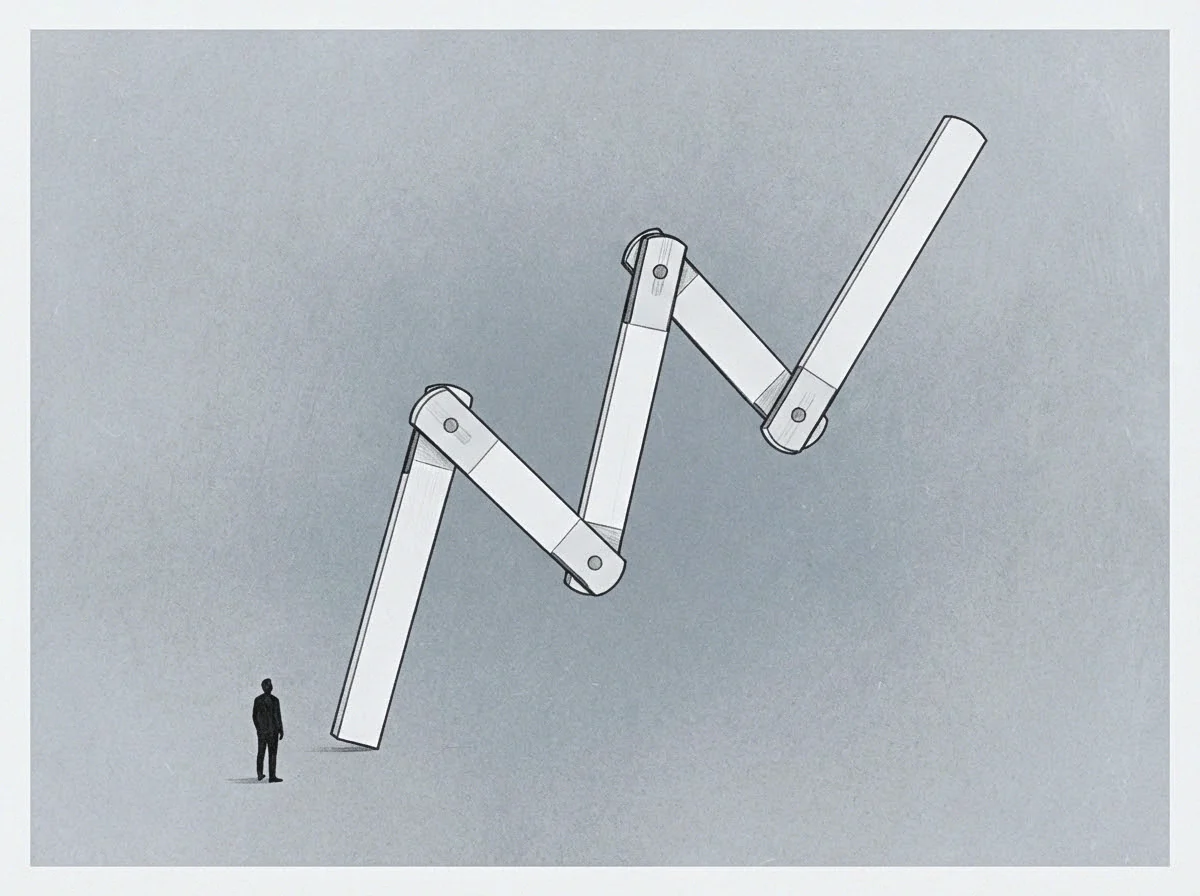
Executive performance in high-pressure roles deteriorates when incoming operational signals outpace parallel processing capacity. Managing four high-stakes negotiations, two senior departures, and an impending capital deadline at the same time pushes cognitive throughput to a hard limit. To maintain basic analytical execution, the mind drops relational warmth and emotional responsiveness.
To outside observers, this protective shutdown looks like psychiatric depression, leading clinicians to misdiagnose it as clinical anhedonia.
Clinical anhedonia stems from neurochemical disruption in mesolimbic dopamine pathways, causing a broad inability to feel pleasure or reward anywhere in life. A cognitive concurrency cap works through a different mechanism entirely. The dopamine circuitry remains intact, but the prefrontal cortex has no remaining attention slots for discretionary emotional input.
High-demand roles impose continuous regulatory stress, forcing the autonomic nervous system to direct working memory solely toward immediate operational priorities.
Misidentifying structural overload as mood pathology carries real consequences. Applying clinical depression treatments to an executive at physical processing capacity leaves the underlying overload untouched. The operator continues carrying unmanaged open channels while attempting reflection techniques that consume even more cognitive bandwidth.
A cognitive concurrency cap reflects temporary resource exhaustion under structural overload, whereas clinical anhedonia stems from systemic neural reward impairment regardless of load.
An operator carrying five un-gated strategic initiatives hits a ceiling through processing saturation, not psychological failure. The absence of warmth or enjoyment during social interactions comes from background tasks running constantly on dedicated cognitive channels. Closing three open operational channels restores hedonic capacity immediately, showing that pleasure circuits were suppressed rather than damaged.
The operational state changes immediately once a formal contract boundary separates active execution from pending evaluation.

Latency
Systemic delays in executive decision-making point to elevated allostatic load in the central nervous system. Prolonged exposure to operational demand raises baseline cortisol and tonic sympathetic activation. Under sustained stress, the anterior cingulate cortex and dorsolateral prefrontal cortex adjust sensory gating to conserve metabolic energy.
Response times lengthen from severe queue congestion across cognitive channels rather than apathy.
When external demand consistently exceeds working memory capacity, predictable failure patterns appear across executive operations.
- Attentiveness fragmentation occurs when incoming queries interrupt analytical work, driving up context-switching costs across all active tasks.
- Affective gating failure arises when the central nervous system suppresses emotional signals to protect core decision-making from sensory noise.
- Discretionary task paralysis shows up as deliberate delay of low-urgency decisions to keep critical operational loops running at capacity.
- Autonomic hypervigilance sustains sympathetic arousal, blocking parasympathetic recovery during brief rest breaks.
Distinguishing sympathetic hyperarousal from depressive hypoarousal requires watching how the system mobilizes during a crisis. An operator at cognitive capacity responds instantly to an unexpected emergency, deploying focused analytical bandwidth without hesitation. Once the emergency passes, that operator returns to an emotionally flat state.
Clinical depression shows the opposite pattern, marked by persistent apathy and slowed psychomotor response regardless of the situation.
Unmanaged operational channels force the central nervous system to suppress non-essential affective feedback to maintain core task execution.
Evaluating working memory throughput means tracking active background processes rather than surface mood indicators. Holding several unresolved operational outcomes in mind consumes steady prefrontal blood flow and metabolic energy. The body registers this demand as physical exhaustion, muscle tension, and gastrointestinal distress.
The operator retains full capacity for logical analysis while losing the ability for spontaneous social coregulation.
The partner reads quiet detachment as intentional emotional abandonment.
Notch
Diagnostic accuracy depends on observing how responses vary as environmental demands shift. A practitioner evaluating an executive needs objective behavioral markers to separate capacity limits from primary mood disorders. Clinical anhedonia persists during extended vacations, quiet weekends, and low-stress settings.
Concurrency throttling clears quickly as soon as operational inputs drop below active processing limits.
Which Variable Separates Concurrency Throttling From Affective Blunting?
Contextual responsiveness marks the clear line between metabolic processing caps and clinical mood pathology. Presenting a major commercial opportunity or critical operational breach triggers immediate engagement in a throttled system. The brain reallocates remaining cognitive bandwidth to address high-value stimuli, showing intact dopamine-driven incentive salience.
Clinical anhedonia shows no contextual shift, maintaining flat affective and behavioral responses regardless of the opportunity or urgency.
| Diagnostic Criterion | Cognitive Concurrency Cap | Clinical Anhedonia |
|---|---|---|
| Stimulus Responsiveness | High mobilization for critical operational inputs; low engagement for discretionary inputs. | Pervasive absence of mobilization across both critical and discretionary inputs. |
| Domain Specificity | Affective blunting restricted to high-demand periods and active open loops. | Generalized loss of hedonic capacity across all personal and professional settings. |
| Response to Loop Closure | Immediate restoration of emotional warmth upon gating or resolving open workflows. | Persistent emotional flatness following task resolution or workload reduction. |
| Autonomic Arousal Profile | Elevated tonic sympathetic tone, persistent muscle tension, high heart rate variability suppression. | Variable autonomic tone, predominantly characterized by central hypoarousal and low drive. |
| Capacity for Focus | Sustained single-task analytical depth when external interruptions are blocked. | Severe cognitive impairment, distractibility, and inability to maintain focus regardless of context. |
| Data synthesized from occupational stress physiology and clinical neuropsychology criteria. | ||
Applying psychiatric pharmaceuticals to simple processing saturation introduces unnecessary physiological risk. Antidepressants that alter serotonin or norepinephrine uptake do not expand working memory capacity or resolve un-gated operational commitments. The underlying physiological strain continues beneath pharmaceutical sedation, eventually leading to full executive breakdown.
Treating a hardware processing limit as a psychiatric deficit leads to ineffective protocols that leave operational debt intact, accelerating systemic exhaustion.

Triage
Restoring executive headroom requires structural intervention rather than psychological reframing. An open loop lacks defined boundaries, clear timelines, and explicit acceptance terms, forcing the brain to run constant background tracking. Converting open loops into gated commitments frees working memory slots immediately, reducing allostatic wear without dropping total output.
Systematic reduction of ungated operational debt follows a direct sequence.
- Catalog every active project, unread channel, and pending decision demanding ongoing cognitive tracking.
- Establish explicit boundary conditions for each active item, defining exact criteria for task completion.
- Assign firm resolution deadlines to every open workflow, removing the ambiguous timeframes that fuel background anxiety.
- Delegate full operational authority for bounded subtasks to qualified staff, removing the executive from intermediate decision loops.
- Archive non-essential initiatives into explicit offline storage, removing them completely from daily review cycles.
A single un-gated communication channel can occupy an entire cognitive slot if left unmanaged. Notifications act as unpredictable micro-stimuli, holding prefrontal cortex activation high and blocking deep analytical focus. Batching incoming communication into fixed processing windows restores continuous blocks of focus time.
Explicit terms and firm operational boundaries convert costly open loops into costless archived tasks.
Moving from constant firefighting to structured capacity management requires firm boundaries around executive focus time. Organizational counterparties often resist these limits, preferring immediate access over structured channels. Navigating this friction determines whether an executive maintains long-term operational capacity or collapses into severe depletion.
What structural mechanisms prevent the organization from consuming every newly created processing slot?
Headroom
Long-term executive sustainability requires a permanent mental processing buffer. Reserves in cognitive architecture allow leaders to handle operational shocks without sacrificing autonomic stability or relational capacity. A system operating continuously at maximum parallel capacity breaks when hit with unexpected external noise.
Managing incoming demand requires enforcing strict task ceilings. Executive roles function best when capped at three active major strategic initiatives. New opportunities must wait in a formal queue, remaining unmonitored until a slot opens through project completion or explicit cancellation.
The desk tracks load through observable state variables rather than subjective emotional self-reports. Monitoring sleep architecture metrics, heart rate variability baselines, and active loop counts provides direct visibility into overall regulatory capacity.
Buffer space in working memory determines whether unexpected operational inputs trigger strategic adaptability or systemic paralysis.
Sustaining executive health over long horizons requires treating cognitive bandwidth as a physical limit rather than a motivational variable. Organizations that respect processing caps preserve leadership performance, while those demanding endless concurrency systematically burn through talent.
Unused processing capacity automatically absorbs unexpected operational friction.