
Managing External Signaling Demands While Preserving High Capacity Exploration
External signaling demands drain cognitive headroom required for divergent search when limits remain unstated and channels allow unthrottled real time pings.

Desk
Four messaging feeds sit open on a workstation late into the evening while early system architecture remains mid-conception. External capital partners submit requests for progress telemetry every thirty-six hours. The founder reads each message as an implicit demand for immediate response, altering focus from primary technical exploration to external audience management.
Cognitive headroom degrades rapidly under continuous contextual shifts. The capacity to hold complex, uncommitted conceptual models collapses when working memory resets to craft status commentary.
External signaling demands create continuous interference across high-capacity cognitive exploration. When an exploratory team operates without stated communication parameters, external counterparties default to high-frequency polling. Polling behavior transfers uncertainty from the outside party onto the technical core.
Every unthrottled inquiry forces an immediate state translation, converting half-formed exploratory findings into prematurely finalized narrative updates.
| Signaling Regime | Cognitive Context Switching | Information Preservation | State Transfer Latency |
|---|---|---|---|
| Synchronous Status Polling | High disruption frequency | Prematurely flattened insights | Near zero real-time delivery |
| Scheduled State Artifacts | Low periodic interruption | High structural fidelity | Fixed interval batch delivery |
| Asynchronous Threshold Signals | Zero routine disruption | Preserved exploratory depth | Event-driven exception delivery |

Structural Tension Between External Auditing and Cognitive Headroom
Exploratory architecture demands low-interference operating windows. High-capacity search requires the mind to hold multiple contradictory states simultaneously while evaluating hidden trade-offs. External signaling demands the exact opposite condition: clear, linear, single-threaded assertions designed to reassure external observers.
When these two operating modes collide without structural insulation, signaling demands routinely overwrite exploratory processes.
External noise degrades focus.
The cost of real-time responsiveness accumulates as invisible allostatic load across the leadership layer. Each incoming update request acts as a cognitive interrupt, requiring the operator to reload system state, clear working memory, and construct a simplified external narrative. Repeated state translation degrades the precision of complex technical reasoning.
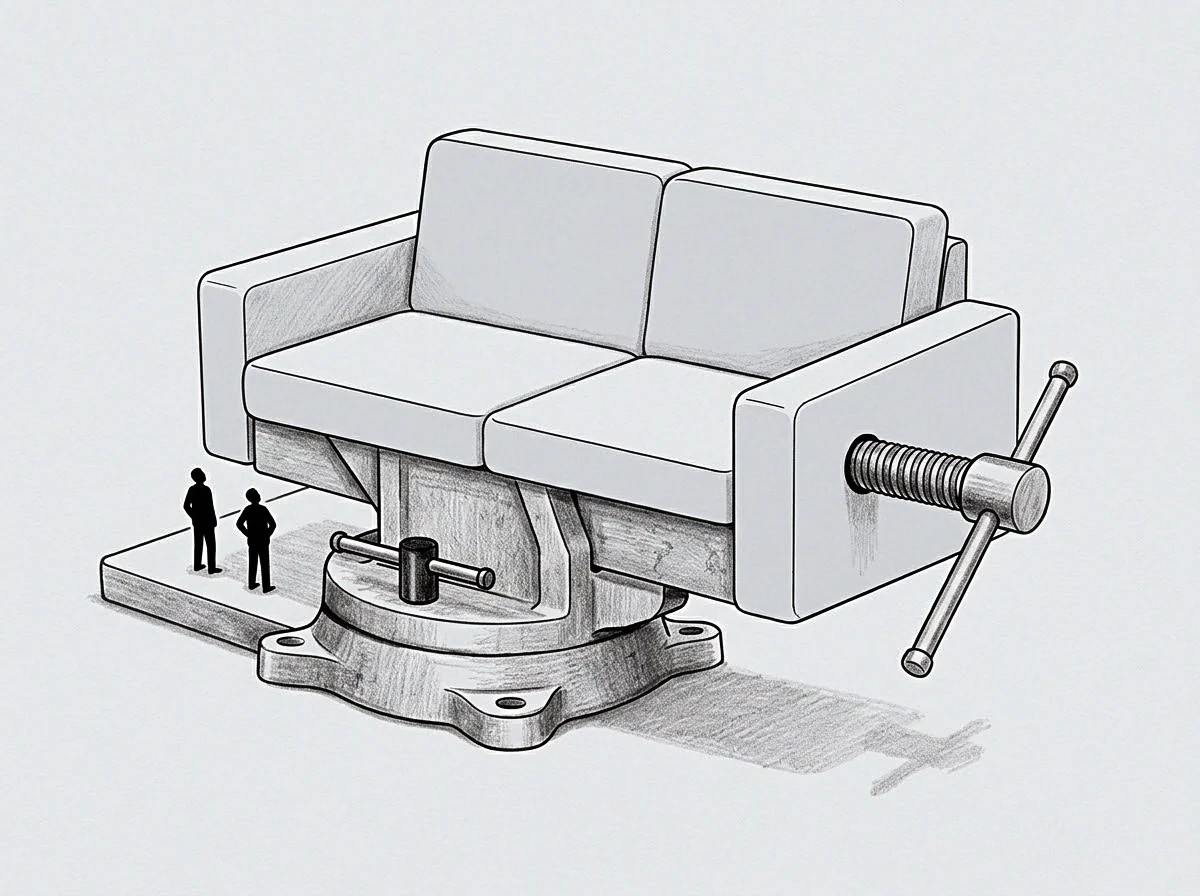
Cognitive Costs of Frequent Context Switching
Task switching incurs a measurable latency penalty inside working memory. When an operator moves from deep architectural synthesis to external correspondence, full cognitive restoration requires up to twenty-three minutes of uninterrupted focus. Interruption resets working memory state.
Unbounded pings destroy state depth.
Uninsulated teams experience rapid state decay under continuous status polling. The organization begins producing superficial, easily explainable modifications rather than tackling fundamental architectural uncertainties. Over time, the exploratory vector bends entirely toward what is simple to communicate rather than what is valuable to discover.
Operating an open exploratory loop without explicit communication parameters guarantees that external polling frequency will expand until internal synthesis breaks completely.

Buffer
Decoupling internal iteration from external reporting requires establishing a dedicated state buffer. A buffer converts continuous, erratic external pings into predictable, batched outputs. By defining explicit delivery windows, the operator restores contiguous blocks of time dedicated exclusively to divergent search and technical prototyping.
State depth dictates solution quality.
Establishing explicit signal boundaries prevents external stakeholders from misinterpreting normal exploratory pauses as structural failure. When counterparties know when the next update will arrive, their baseline urge to poll drops significantly. The buffer replaces reactive availability with reliable structural cadence.

Decoupling Internal Iteration From External Metrics
High-capacity exploration generates non-linear progress. Long periods of architectural testing produce zero visible output until a primary bottleneck yields. External observers, accustomed to linear operational metrics, view these quiet windows with elevated anxiety.
Without an insulation buffer, that anxiety translates into increased signaling pressure.
Batching compresses external signaling overhead.
Batching update signals into fixed cadence windows preserves contiguous cognitive blocks for deep exploration.
- Asynchronous State Artifacts document weekly progress through written technical summaries rather than real-time verbal briefings, preserving deep focus blocks.
- Threshold-Gated Notifications dispatch external alerts only when key validation metrics cross predefined operational parameters, eliminating routine status chatter.
- Stated Communication Intervals define exact windows for external interaction, making silence predictable and structurally meaningful to all parties.

When Does Signaling Degradation Outpace Operational Velocity?
Signaling degradation outpaces operational velocity when the hours spent preparing status communications exceed the hours spent advancing baseline technical architecture. At this threshold, the organization transitions from a research engine into a pure signaling vehicle. The internal feedback loops freeze, locked into serving external updates at the expense of primary discovery.
Exploration demands low external interference.
A structured buffer changes how external counterparties derive team capacity. When availability becomes a derived state derived from published terms rather than real-time responsiveness, external stakeholders adapt their expectations to match the declared release schedule.
Patience from external stakeholders follows predictable release cadences rather than continuous emotional reassurance.

Ping
The unthrottled incoming channel acts as an ongoing drain on organizational focus. Each ping carries an external priority seeking to displace internal focus. In the absence of a stated limit, every incoming notification functions as an urgent demand, regardless of its underlying systemic value.
The ping signal carries external priority.
Managing incoming signaling pressure requires distinguishing between mood and operational state. Mood reflects real-time external anxiety, while state represents the actual technical trajectory of the enterprise. A team that adjusts its exploratory focus to soothe external mood variations forfeits control over its core architectural roadmap.
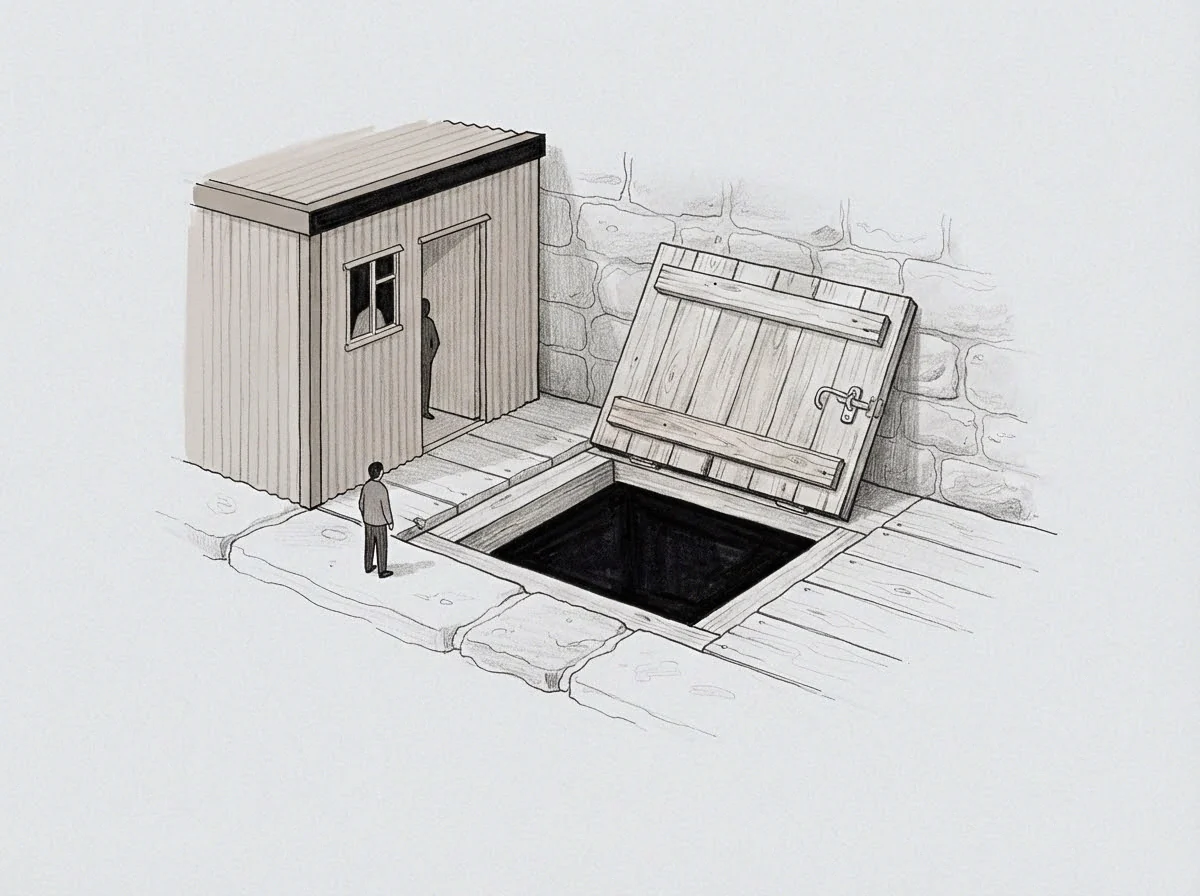
Priority Signals and Channel Noise
Unfiltered communication channels mix low-value status inquiries with high-value strategic signals. When channel noise increases, operators spend excessive bandwidth evaluating message priority rather than executing primary work. Channel structure dictates organizational attention patterns.
Silence reveals true priority.
Stating explicit limits converts ambiguous silence into a structural boundary that protects working memory.
Consider a technical firm building novel database infrastructure. The founding team establishes a strict sixty-day dark window, disabling direct messaging access for external advisors while preserving a single weekly emergency channel. During this period, architectural throughput doubles while external signaling overhead drops to zero.
The emergency channel remains silent for the entire window because most inquiries resolve themselves when immediate response paths close.

State Gated Execution Against External Interrupts
Acts governed by internal operational state resist external disruption. State-gated execution relies on quantitative criteria to govern action, blocking interruptions until predefined operational conditions are met. Decision-gated execution, by contrast, relies on daily willpower, leaving the operator vulnerable to incoming pressure.
Unstated limits invite external pressure.
The regulator absorbs unthrottled load.
When an unthrottled channel remains open, external parties assume continuous availability and interpret brief delays as operational neglect.
We expected regular operational access until the team stated that updates would only arrive on the last calendar day of each quarter.

Circuit
Operational limits operate as structural walls rather than personal preferences. When a load-transferring system pushes against an operator, it continues pushing until it encounters a boundary that does not yield. Stating terms once provides a clear object that absorbs systemic load, protecting the individual behind it.
Terms protect exploratory headroom.
Without clear terms, the external counterparty continuously probes for access, testing where the leader’s boundary softens. The resulting friction consumes high-value cognitive energy that should serve architectural problem solving.
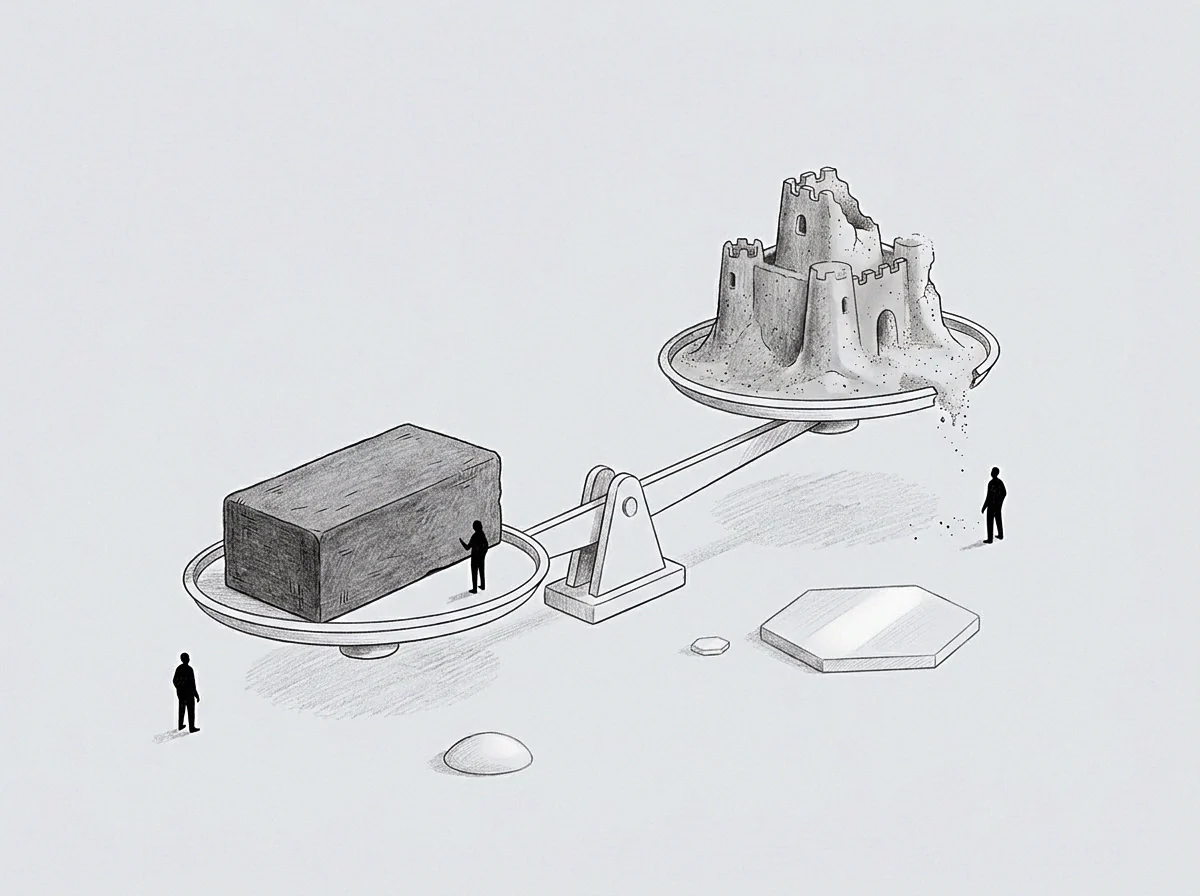
Load Transfer in High Uncertainty Environments
Uncertainty naturally flows toward the least insulated component of an organization. External investors and commercial partners offload their risk-induced stress onto founding teams through frequent reporting mandates. A robust operational circuit redirects this incoming load away from core research personnel.
State decay follows persistent polling.
A stated limit acts as a wall against external load transfer, keeping exploratory space intact under pressure.
- Define explicit boundaries for operational access, stating exact delivery channels and response windows.
- Publish regular state artifacts that address baseline metrics before external counterparties launch inquiries.
- Redirect non-critical inquiries into scheduled review cycles, enforcing the boundary through consistent operational refusal.

Stated Terms as Operational Insulation
Clear contractual terms protect working space far more effectively than ongoing personal negotiation. When terms specify that technical milestones govern signaling cadence, external parties adapt to the structural protocol. The terms carry the authority, relieving the individual operator from defending their time daily.
The circuit breaks under continuous interrupt.
High load compresses attention breadth.
Stating terms early prevents the formation of covert operational expectations that drain capacity over long development cycles.
Executing an exploratory initiative under a written agreement that defines state updates as quarterly deliverables shifts communication responsibility entirely onto scheduled release dates.

Vault
Preserving high-capacity exploration demands an uncompromised internal sanctuary. Long-horizon technical breakthroughs emerge from unstructured conceptual search, where teams test ideas without immediate pressure to prove commercial viability. The vault represents the protected cognitive space where non-linear research continues undisturbed by external signaling noise.
Protecting this space requires disciplined boundary maintenance across all leadership layers. Leaders must filter external inputs before they reach technical core teams, preserving exploratory headroom from continuous context switches. High-capacity exploration thrives only when the internal workspace remains insulated from external urgency.

Preserving Divergent Search Under External Pressure
Divergent search requires tolerance for ambiguity, unexpected technical dead ends, and open-ended exploration. External signaling environments demand certainty, rapid metrics, and predictable progress curves. Reconciling these competing operational modes requires absolute physical and temporal insulation of the creative core.
High-capacity exploration requires an insulated cognitive environment free from external status updates.
Organizations that successfully navigate high signaling demands build strict operational firewalls around their core technical teams. Communication leads handle external signaling obligations completely, allowing engineering personnel to remain focused on primary problem solving. This functional division prevents signaling friction from corrupting architectural development.

Long Horizon Allocation Protocols
Allocating capital and cognitive capacity to long-horizon exploration requires defending early-stage research from short-term signaling pressure. When resource allocation decisions depend on immediate external validation, high-risk, high-reward research projects get systematically abandoned in favor of incremental optimizations.
Sustained technological leadership rests on preserving deep exploratory capacity through disciplined signaling management.
How much structural insulation can an early-stage team maintain before external counterparties interpret silence as operational risk?