
Managing Chronic Allostatic Demands Inside Unbuffered Early Stage Executive Systems
Early executive systems without buffers transfer operational volatility directly to the individual, driving biological throttling misdiagnosed as depression.

Intake
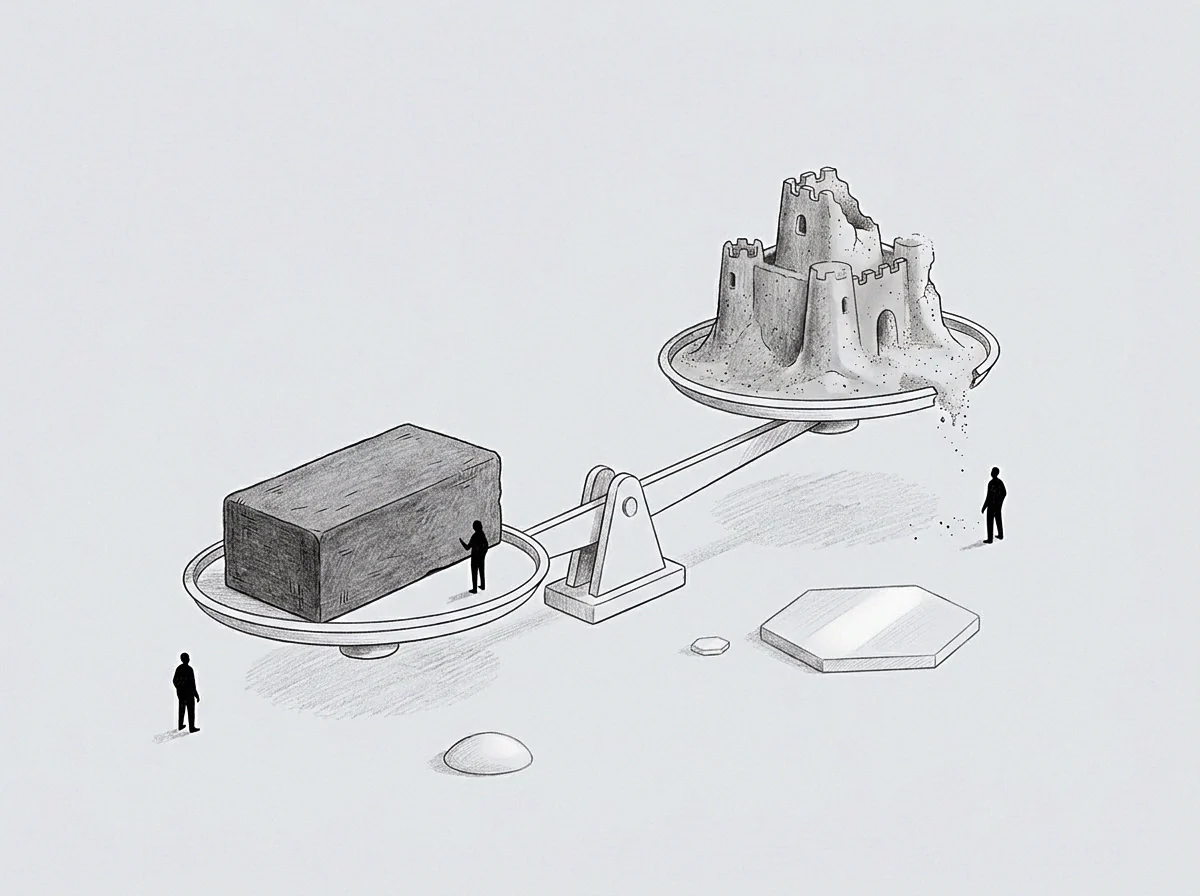
Four terminal sessions and three unread direct communications sit active on a single monitor at midnight while a production deployment stalls. An operator processes an incoming security disclosure while mentally calculating payroll runways for the subsequent twenty business days. The human nervous system serves as the sole shock absorber when an organization contains zero procedural layers between raw market fluctuations and its operational center.
Every inbound request hits biological tissue directly. Structural latency does not exist in these early operational environments to attenuate the force of incoming demands.
The resulting physiological state presents a specific signature. Allostasis designates the process whereby an organism maintains operational stability through active physiological adaptation, altering internal parameters including heart rate variability, glucocorticoid production, and inflammatory signaling. Allostatic load defines the cumulative wear imposed upon tissues and neuroendocrine circuits by the continuous necessity of that adaptation.
Early executive roles lack administrative buffers, legal divisions, operational intermediaries, and specialized support units. The person occupying the central seat functions as the universal catch basin for institutional friction. That structural reality converts environmental volatility directly into biological strain.
A system lacking structural shock absorbers extracts its required stability directly from the physiological reserves of the individual in the central seat.
Inbound signals arrive without filtering mechanisms. A sudden customer departure, an infrastructure failure, an unexpected partner query, and an ambiguous tax filing hit the same single desk within thirty minutes. An established enterprise distributes those impacts across risk compliance teams, communications staff, engineering leads, and external legal counsel.
The unbuffered executive system routes every signal into one central nervous system. Incoming load immediately consumes biological capacity when an organization contains zero intermediary layers to absorb impact. The person absorbs systemic noise directly into somatic tissue.
A persistent misreading occurs at this juncture. Observers witness declining executive velocity and diagnose psychological withdrawal or affective collapse. The operator continues executing urgent customer patches while failing to reply to investor updates or strategic planning prompts.
That diagnostic conclusion overlooks systemic physics. The underlying mechanism represents a deliberate physiological braking sequence rather than a mood pathology.
Stress physiology literature establishes that prolonged neuroendocrine activation alters prefrontal cortex performance, downregulating abstract synthesis while preserving short-horizon threat management. Executive isolation compounds this neurobiology by stripping away lateral validation pathways. The individual works without institutional insulation, operating as the single failure point for every operational variable.
The body initiates autonomic protection to prevent complete somatic collapse when regulatory demand exceeds metabolic replenishment. The engine cuts power to high-order cognitive processes to protect basic biological survival.
The other party in this arrangement typically observes the outward silence and concludes the partner simply ceased caring about collective velocity.
Drain
The metabolic expenditure required to manage early operational complexity multiplies according to the structural architecture of the work. Holding multiple active inquiries degrades performance faster than executing sequential tasks. A closed task with explicit requirements consumes defined energy and clears from working memory.
An ambiguous responsibility lingers indefinitely, draining executive resources even during physical rest. The brain allocates real neurochemical baseline assets to monitor every unresolved operational circumstance.
Cognitive science establishes that human working memory maintains hard biological bounds, successfully holding between three and five active information chunks simultaneously. Ungated threads violate this biological constraint by remaining perpetually unresolved across days, weeks, or financial quarters. An unstated partnership expectation, an indeterminate product launch deadline, or an open-ended investor discussion consumes an active processing allocation continuously.
The individual attempts to manage sixty concurrent institutional liabilities while biologically equipped to process four. That structural divergence forces cognitive processing into severe deficit.
The operational cost compounds through continuous context displacement. Switching between high-stakes negotiations and low-level technical bug triage incurs a documented neurocognitive penalty. Each transition leaves an attentional residue, impairing subsequent intellectual depth and increasing executive processing latency.
The operator does not simply spend time moving between tasks. The individual burns metabolic assets clearing working memory and repopulating operational context. That cognitive tax drains bodily resources long before formal work hours conclude.
An unresolved operational loop extracts continuous metabolic rent regardless of whether active labor occurs on that specific problem.
The following structural patterns consume operational capacity within unbuffered systems:
- Indeterminate ownership loops force repeated biological tracking because no individual assumes absolute finality over operational outcomes, leaving several minds attempting to maintain identical background states.
- Unstructured inbound communication subjects executive attention to continuous, unpredictable interruptions, destroying the sustained focus required for difficult technical or legal problems.
- Asymmetric bilateral dependencies drain stamina when one party acts as the sole functional regulator for another person who lacks self-directed operational discipline.
- Open-ended relational liabilities demand high cognitive spend because the conditions for mutual satisfaction remain entirely undocumented, producing endless interpretive strain.
Social baseline theory demonstrates that the human brain constructs its computational budgets based on the presumed presence of reliable relational allies. Proximity to reliable partners reduces prefrontal metabolic load during stress exposures. Early unbuffered configurations routinely break this mechanism.
Founders frequently find themselves surrounded by early employees, contractors, or seed backers who look upward exclusively for reassurance. The central figure becomes a net exporter of emotional stability to every adjacent seat. Borrowed regulation flows entirely outward from the center, bankrupting the provider of that psychological support.
The metabolic bill accumulates silently across quarters. Sleep architecture degrades as persistent cortisol elevation fragments nocturnal recovery cycles. Chronic low-grade neuroinflammation emerges as microglia respond to sustained sympathetic tone.
The body registers the continuous presence of unresolved systemic threats, refusing to initiate tissue maintenance protocols. Physical depletion arrives not through singular intense exertion, but through the ceaseless monitoring of an organization that cannot survive twenty-four hours without active biological intervention.
The founder ignores early physical indicators until the autonomic nervous system intervenes directly to halt ongoing resource consumption.

Stall
At a critical threshold of regulatory exhaustion, executive throughput shifts character. High-order synthesis becomes impossible. The individual stares at an open strategic document for two hours without generating a coherent paragraph.
Simultaneously, that same individual successfully handles four customer support tickets, cleans a code repository, and reconciles three corporate credit card statements. Observers routinely interpret this state as classical depressive apathy, executive burnout, or personal laziness. The biological reality operates differently.
Throttling functions as an active survival mechanism deployed by an overburdened nervous system to prevent systemic biological failure. The brain detects that metabolic expenditure outpaces energy generation by an unsustainable margin. It selectively reduces power delivery to complex cognitive circuits, particularly the anterior cingulate cortex and dorsolateral prefrontal areas responsible for prospective scenario planning, strategic synthesis, and emotional modulation.
Concrete, highly bounded, repetitive tasks remain accessible because they require minimal prefrontal overhead. Ambiguous, long-horizon decisions require vast working memory assets and are locked out by autonomic circuit breakers.
Distinguishing physiological throttling from clinical depression depends upon objective behavioral markers rather than affective introspection. Depressive pathologies typically involve a global loss of hedonic response across professional, social, and personal domains, accompanied by generalized psychomotor retardation. Throttling demonstrates task-specific selectivity.
The throttled executive retains high capacity for concrete action, mechanical problem solving, and immediate crises. The inability to initiate work applies specifically to open-ended, ungated cognitive threads carrying high ambiguity.
Throttling preserves basic mechanical functioning by selectively terminating power to high-order cognitive processors that require heavy metabolic investment.
The difference between these operational states becomes visible when evaluating performance profiles across different systemic demands:
| Evaluation Vector | Depressive Regulatory Failure | Autonomic Executive Throttling |
|---|---|---|
| Response to bounded tasks | Impaired initiation across concrete and abstract duties equally | High execution speed on clear tasks with low ambiguity |
| Underlying biological mechanism | Generalized disruption of monoaminergic and reward pathways | Prefrontal energy rationing triggered by allostatic ceiling |
| Behavioral output under threat | Pervasive psychomotor slowing and sustained apathy | Sharp tactical clarity during acute, visible operational crises |
| Systemic recovery trigger | Broad clinical interventions and neurochemical remediation | Immediate closure or gating of open cognitive loops |
Occupational health research documents the divergence between generalized burnout inventory scores and specific physiological wear indices. Laboratory assessments measuring hair cortisol concentrations, salivary alpha-amylase, and heart rate variability demonstrate that individuals classified under severe exhaustion often maintain strong underlying motivation alongside paralyzed execution capacities. The engine fires with intact compression, but the fuel pump cannot sustain maximum speed without burning out its wiring.
Interpreting this paralysis as an ideological failure or moral defect generates intense secondary shame, accelerating allostatic load.
The executive trapped in a severe stall burns enormous energy attempting to force cognitive initiation through willpower. Willpower represents a finite biological resource dependent on glucose and prefrontal integrity. Attempting to power through an autonomic shutdown resembles pressing the accelerator while the vehicle transmission is disconnected.
The motor revs violently, fuel burns at peak rates, heat builds dangerously throughout the block, and the vehicle remains stationary.
Continue misinterpreting that metabolic ceiling as simple weakness, and the body eventually drops the transmission entirely through sudden acute cardiovascular or immunological crises.

Triage
Recovering operational capacity inside an unbuffered environment does not occur through positive cognitive reframing or lifestyle optimization rituals. Recovery requires structural load shedding. The executive treats working memory as a hard physical container possessing fixed dimensions.
When the container overflows, the solution involves removing physical items rather than willing the container to expand. The primary move is converting ungated loops into structurally isolated, zero-maintenance tasks.
A gate consists of three strict parameters: a precise scope, an explicit execution date, and defined closure terms. An ungated thread sounds like an intent to review corporate insurance options eventually. That formless duty floats continuously within awareness, extracting daily attention.
A gated thread states that an insurance broker receives a brief on Thursday, delivers three policies by next Tuesday, and the operator selects one option during a thirty-minute window on Friday morning. Prior to Friday morning, that operational matter costs zero cognitive slots. It sits inert outside executive awareness.
Managing operational strain inside an unbuffered company requires a ruthless audit of the organization’s active cognitive commitments. The founder inventories every open conversational loop, deferred personnel decision, ambiguous strategic shift, and pending partnership proposal. That inventory reveals the true source of systemic drag.
The problem was never the sixty hours spent working at the desk. The problem was the forty-five ungated threads running silently in the back of the mind during sleep, meals, and family interactions. Each thread consumed an active processor slot.
The following sequence restores executive capacity during periods of autonomic throttling:
- Inventory every pending open loop across legal, operational, interpersonal, and technical categories without attempting immediate resolution.
- Kill secondary initiatives entirely by communicating immediate, unambiguous termination to counter-parties rather than letting them linger indefinitely.
- Convert remaining open threads into strictly gated tasks featuring explicit delivery dates and quantitative acceptance criteria.
- Park unexecutable operational concepts into cold archival storage, agreeing in writing not to review those documents for ninety days.
Structural latency must be intentionally built into the organization to replace missing institutional shock absorbers. The founder creates latency by decoupling inbound communications from immediate response mechanisms. Eliminating real-time communication platforms in favor of asynchronous, daily communication batches immediately lowers sympathetic nervous system activation.
The external ecosystem demands immediate availability only because the central seat historically provided it. Withdrawing continuous availability resets systemic expectations, forcing surrounding components to develop rudimentary problem-solving capacity.
The individual also evaluates whether current team arrangements represent true operational leverage or hidden regulatory drains. Bringing junior contractors into an early-stage system often multiplies rather than reduces executive load. A junior worker requires architectural direction, emotional buffering, error checking, and continuous motivation.
An unbuffered founder hiring three junior assistants frequently shifts from building a company to running an administrative nursery, exhausting their remaining prefrontal reserves on secondary coordination tasks.
If an early hire cannot operate with autonomous judgment within their designated envelope, that seat costs more allostatic capacity than it supplies in labor output.

Terms
The ultimate defense against chronic allostatic wear involves establishing explicit relational and operational boundaries. Implicit contracts are toxic to early executive health. When boundaries remain unstated, surrounding parties naturally assume infinite availability from the central founder.
Investors send midnight inquiries expecting dawn answers. Co-founders treat every strategic dispute as an open-ended debate without time limits. Early clients assume the founder functions as their bespoke technical implementation lead.
Every unstated boundary operates as an open invitation for systemic load transfer.
A stated limit replaces relational ambiguity with clean operational mechanics. The executive states plainly when they operate, which decisions require their participation, and where their personal responsibility ends. This communication involves zero emotional justification or personal apology.
It defines operational physics. If the partner dislikes the parameters, they negotiate terms explicitly rather than extracting capacity through passive operational creep. Stating limits converts invisible psychological friction into visible operational choices.
Clear operational boundaries prevent the continuous, unmetered transfer of systemic anxiety into the central executive seat.
Consider two founders operating a high-growth infrastructure firm with eighty days of cash runway remaining. The technical partner runs at physiological ceiling, sleeping four fragmented hours per night while handling production architecture, database migrations, and direct customer escalations. The commercial partner generates twelve new potential business concepts weekly, dropping them unannounced into daily channels and asking why technical execution velocity seems sluggish.
The technical partner experiences this communication as an existential threat, running an internal allostatic bill trying to analyze each concept for technical viability.
The technical founder halts this metabolic drain by introducing a binding operating term. All future commercial concepts must arrive as a single structured document submitted by Friday afternoon, containing projected revenue, engineering dependencies, and concrete client commitments. The technical partner reviews this single packet on Monday morning between eight and nine o’clock.
Any concept not matching that criteria is ignored. By introducing this structural boundary, the technical founder gates an unruly swarm of inbound distractions into a single cognitive slot, recovering forty hours of background mental processing weekly.
Establishing such operating terms requires tolerating immediate interpersonal discomfort to avoid long-term physiological bankruptcy. Counter-parties routinely push back when an unbuffered executive installs boundaries. Investors complain about diminished communication agility.
Partners express frustration over formal communication protocols. These reactions represent the friction of an external system losing its free, unmetered shock absorber. The executive allows that external friction to exist without absorbing it as personal guilt.
The survival of the institutional enterprise depends upon preserving the biological integrity of its central processor.
The arrangement stabilizes only when the executive boundary becomes a non-negotiable property of the environment, forcing everyone else to regulate their own operations within those constraints.

Base
Long-term operational durability requires anchoring the executive system within stable baseline environments. An individual cannot survive years of structural volatility without intentional spaces where biological down-regulation occurs automatically. Stress physiology research illustrates that allostatic recovery is an active metabolic process, not merely the passive absence of immediate threats.
The body requires consistent, reliable relational safety to downregulate sympathetic arousal, lower vascular tone, and activate cellular restoration pathways.
The central executive seeks out environments completely disconnected from enterprise performance. This means establishing relationships where one’s professional status, institutional velocity, and intellectual output are entirely irrelevant. When an operator’s entire social circle consists of fellow founders, angel investors, and industry executives, professional performance conditions every interaction.
The nervous system remains hyper-vigilant, monitoring social posture and commercial hierarchy even during leisure hours. Regulatory debt accumulates continuously under such conditions, as the biological system never receives the neural signature of unconditional security.
True operational resilience derives from the absolute insulation of physiological baselines. Sleep architecture, cardiovascular health, protein intake, and daily sensory silence are structural necessities. Sacrificing physical baselines to solve ephemeral operational crises represents an elementary misallocation of assets.
An investor or customer emergency can be managed tomorrow; an autonomic breakdown destroys the core asset around which the entire enterprise is constructed. The executive treats physical baselines as fixed structural infrastructure that cannot be mortgaged for tactical velocity.
Executive performance remains a direct function of biological capacity. When an early-stage company runs without institutional buffers, the person occupying the central seat must consciously construct those buffers around their own biology. Gating incoming threads, bounding conversational loops, establishing explicit operational terms, and defending physiological restoration baselines are not indulgent personal preferences.
They represent the foundational operational architecture that keeps an unbuffered system functional across the multi-year arcs required to achieve commercial stability.
Whether an executive can sustain such rigid boundaries while simultaneously navigating the chaotic, unpredictable volatility of early organizational survival remains an unresolved structural challenge.