
Resolving Creative Decay In High Isolation Latency Protocols During Early Exploration
Early exploration decay in isolation resolves by enforcing physical boundaries and phased non-intervention checkpoints that bound conceptual drift.
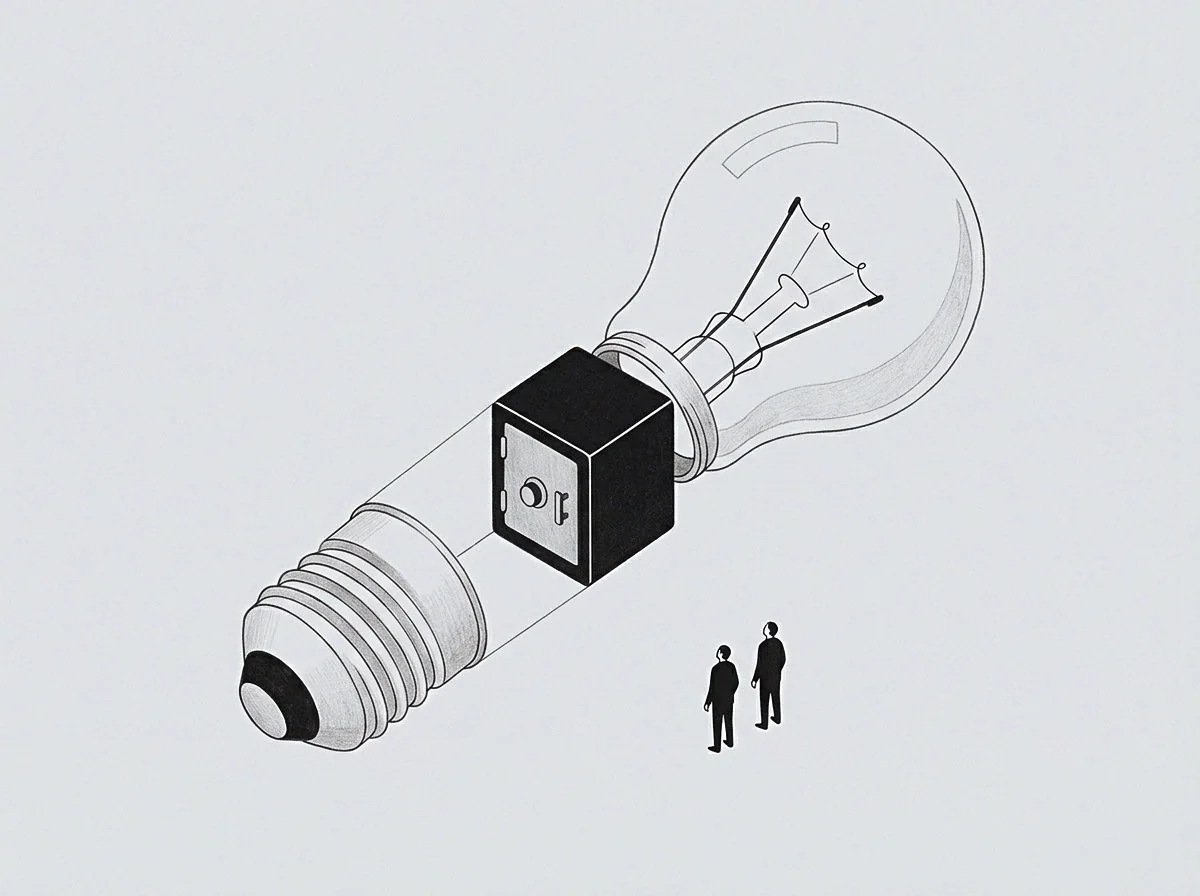
Interval
A builder works behind a muted screen on the twenty-first day of unbroken isolation. Messages accumulate unread in background windows while local directories fill with speculative architecture, divergent prototypes, and private shorthand. What looked expansive on day four stiffens by day twenty.
Without an external surface to test against, the work turns inward, reinforcing assumptions made during the opening hours. Work proceeds quickly even as the error signal vanishes and the actual variance of the output narrows with each cycle.
Isolation latency protocols define how long an operator works away from external review while pursuing alternative paths. Long intervals protect early concepts from premature evaluation, but the arrangement breaks down when isolation outlasts the operator’s capacity to generate real divergence. Sustained divergence drains working memory and cognitive capacity.
Once local variance is exhausted, the work does not stop; it shifts toward optimizing for internal consistency over external fit, taking intermediate assumptions as settled facts.
Prolonged feedback delay causes an isolated system to treat internal consistency as confirmation of structural validity.
Strain accumulates steadily during extended self-evaluation because the operator acts simultaneously as generator and reviewer. Every branch demands an internal decision on whether to proceed, stop, or retool. Without external reference points, continuous appraisal consumes the attention required to recognize other options.
The operator often misreads this fatigue as creative exhaustion, slowing the rate of variation.
Unbounded isolation produces speculative structures so entangled with private context that handing the work to another operator takes more time than rebuilding the asset from scratch.
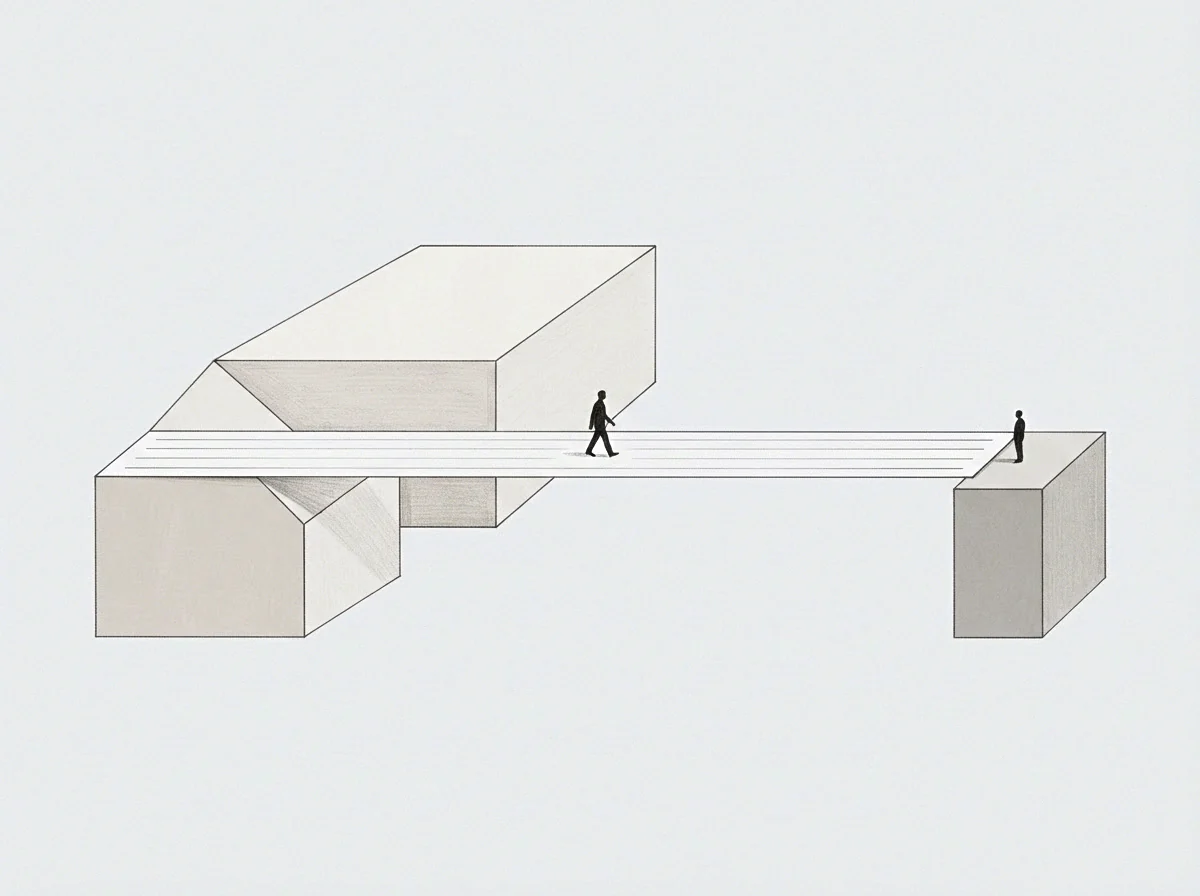
Desk
Physical surfaces ground exploratory work when digital environments encourage unchecked conceptual sprawl. Paper notes, printed schematics, and physical tokens stay put when an application window minimizes. Relying entirely on digital branches allows state to expand indefinitely, hiding how far the work has drifted from the initial problem.
Mapping intermediate stages onto physical cards or a static notebook sets a visible boundary that does not yield to mood.
When an exploratory line reaches the edge of the space allotted on the desk, the protocol forces an explicit review rather than another extension of the canvas. That physical boundary stops the habit of dodging reality by opening another blank file. Without that friction, exploratory sessions turn into sprawling drafts that defer integration indefinitely.
- Unbounded branch proliferation occurs when an operator continuously branches exploratory paths to avoid unresolved structural tensions in the root architecture.
- Premature formalization hardens speculative sketches into rigid software prototypes before the governing problem boundaries are verified.
- Contextual ossification locks intermediate assumptions behind idiosyncratic naming patterns that prevent external peers from parsing the design.
In collaborative ventures, isolation latency is frequently treated as an absolute entitlement rather than an operational parameter with an associated cost in review capacity and delivery time. When the isolated worker returns to the table, thousands of lines of code or pages of prose arrive with an expectation of wholesale acceptance. The partner receives an integrated monolith rather than a direction open to discussion, facing a choice between discarding weeks of effort or adopting an unvetted architecture that cannot easily change.
A document delivered after a month of silence reads more like an ultimatum than a proposal.
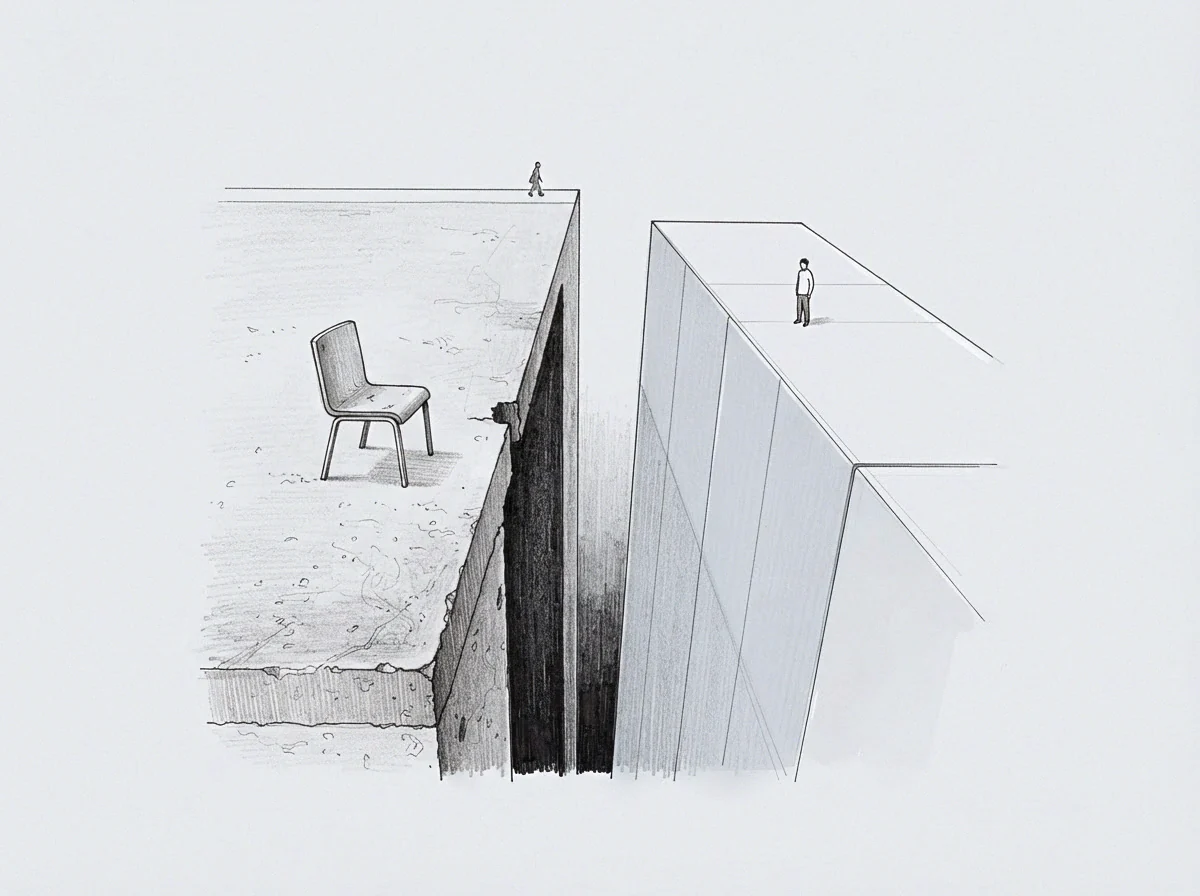
Valve
Regulating exploratory throughput requires a mechanism that releases internal pressure without inviting disruptive feedback. An exploratory valve establishes predictable intervals for sharing partial findings without forcing early convergence. Unlike continuous integration, which interrupts the incubation of delicate hypotheses, the valve runs on discrete temporal triggers: every seventy-two hours, intermediate artifacts are posted to a silent directory without commentary or defensive rationalization.
Physical state governs execution far more decisively than mood. A founder running an exploratory sprint under high physiological arousal interprets minor conceptual ambiguities as systemic failures. With adequate cognitive headroom, that same ambiguity registers as an ordinary condition of frontier work.
High-stakes choices, such as electing to pivot a model, fail when made from a depleted baseline. The protocol therefore gates exploratory pivots behind verified recovery intervals rather than emotional impulse.
A limit stated before exploration commences functions as a wall against load accumulation.
Solitary navigation follows a similar constraint. Sights are taken at predetermined solar intervals regardless of sea conditions, not when the navigator feels the vessel drifting. In long exploratory projects, omitting regular calibration points produces an invisible positional error that multiplies over the entire transit.
The worker assumes the course is true while uncorrected bias turns the voyage in a circle.
Early divergence demands strict batch sizing. Keeping increments small keeps the cost of abandonment low, allowing the researcher to discard unpromising threads without hesitation.

Span
The length of an isolation window sets the balance between structural discovery and insular drift. Short intervals limit the depth of architectural deviation, while long intervals invite unchecked speculation and irreversible drift. Finding a working balance requires weighing latency lengths against structural criteria.
| Evaluation Metric | Continuous Sync | High Isolation Latency | Phased Stated Limit |
|---|---|---|---|
| Novelty Ceiling | Low: social consensus forces premature convergence on familiar forms | Unpredictable: high initial variance rapidly decays into private jargon | High: protected exploration cycles preserve idiosyncratic structural paths |
| Reconciliation Friction | Minimal: alignment is maintained in near-real-time across the team | Severe: returning monoliths trigger defensive posture and integration drag | Moderate: bounded increments allow stepwise verification and critique |
| Headroom Preservation | Poor: constant notification pings fragment sustained working memory | Low: internal regulatory strain accumulates without social buffering | High: structured quiet intervals shielded by explicit check-in boundaries |
| Error Signal Latency | Immediate: external correction intervenes before drift compounds | Extreme: fatal architectural flaws persist undetected for weeks | Bounded: calibration checkpoints expose broken premises within days |
Unbounded isolation remains an unstable protocol for foundational work. While it protects ideas from hasty compromise, it introduces severe friction at the point of reconciliation. The phased stated limit decouples the generation of ideas from their evaluation without eliminating the error signal entirely.
The ping confirms receipt while leaving the receiver undisturbed.
Under a phased latency protocol, the operator submits raw artifacts under an explicit non-intervention agreement: the receiving partner examines the output to gauge trajectory but withholds critique until the pre-agreed evaluation checkpoint arrives. This alters the working conditions directly. Instead of bracing for real-time interruptions, the operator proceeds knowing the intermediate state is observed without being judged.
A written agreement stipulating that all interim artifacts remain immune from line-item critique for seven days enables deep exploratory risk while preserving an irrevocable reconciliation date.

Dock
The terminal phase of an exploratory protocol demands an explicit landing sequence. Folding an isolated exploration back into the shared operational baseline cannot happen through an informal conversation or an unannounced pull request. The landing requires structured reconciliation where the explorer outlines the trajectory of departures from the original premise, identifying exactly where the branch diverged and what structural bets were made.
Reliability derives from stated commitments rather than announced sentiments. When an operator states that exploratory findings will arrive on a specific Tuesday at noon, silence during the preceding ten days represents adherence to an agreed term rather than withdrawal. The counterparty has no need to query the isolated worker to confirm commitment, because the delivery deadline serves as a fixed boundary.
Omitting that query leaves cognitive capacity intact for the core exploratory task.
Headroom collapses when ambiguity enters the schedule. If the counterparty begins requesting informal updates on day five of an agreed ten-day isolation block, the wall is breached. The isolated worker now expends energy managing the counterparty’s uncertainty rather than resolving the frontier problem.
The protocol succeeds only when both parties treat the schedule as an external boundary that protects the integrity of the collective undertaking.
Balancing genuine novelty against external structural milestones without triggering defensive resistance remains an open operational tension.