
Resolving Structural Jurisdiction Disputes Between Secondary Operators When Executive Recovery Protocols Force Total Communications Blackouts
Structural jurisdiction disputes resolve through deterministic time-bounded leases and state-gated write constraints during executive recovery blackouts.

Desk
Four hours into an emergency failover protocol, primary command relays drop out, severing outbound and inbound management telemetry. The infrastructure operations engineer and the application security director both observe a mounting memory leak in the core transaction cluster. Neither can contact executive leadership to obtain a tie-breaking authorization.
The security director initiates an isolated service quarantine, while the operations engineer concurrently fires an automated memory-flush script against the identical nodes.
Two distinct operational logic paths execute simultaneously on the same hardware. The security action revokes network routing to isolate the asset. The operations script requires active network sockets to clear process buffers.
Because neither operator possesses structural visibility into the other’s terminal inputs, each interprets the system’s erratic responses as physical node degradation rather than operational interference.

Operational Isolation During Mandatory Executive Isolation
Telemetry blackout protocols isolate system segments to prevent compromised state propagation. When an executive recovery routine initiates, remote management consoles lock down to secure the control plane. This lockdown leaves secondary operators with functional stability obligations but no direct channel to leadership.
A load-transferring system pushes against available operational boundaries until meeting a hard constraint. Without active signals from executive regulators, secondary operators default to localized control frameworks.
Isolation strips away the co-regulatory signal that keeps parallel operational streams aligned. Secondary operators make allocation decisions using partial data. The absence of top-level command pings forces localized operators to infer jurisdiction, and when operational boundaries overlap, those inferences clash directly.
The operational seat remains occupied, but the structural hierarchy beneath it loses coherence.
A severed communication line forces every operator to read state through local telemetry alone.

Structural Conflict Points Across Parallel Command Paths
Command overlap occurs when two functional leads hold concurrent write permissions to a shared production environment. In standard operations, executive oversight arbitrates priority when functional goals diverge. Operations teams prioritize uptime and throughput.
Security teams prioritize containment and risk minimization. System architecture usually balances these competing vectors through shared approval chains.
During recovery blackouts, shared approval chains collapse. The operations engineer treats service interruption as a failure state to repair. The security director treats service continuity during an anomaly as an unacceptable risk exposure.
Both operators act strictly within their defined technical mandates, yet their actions cancel each other out. The infrastructure becomes an uncoordinated environment where commands overwrite preceding states in rapid succession.
When secondary operators issue mutually exclusive system commands during a blackout, state corruption forces a manual system cold-start that consumes operational capacity for days.

Authority
Functional boundaries define which operator controls specific system subcomponents during isolation events. In the absence of live executive direction, structural rules must dictate precedence before operational drift introduces destructive conflict. Jurisdiction disputes arise when functional boundaries are defined by subject matter expertise rather than explicit systemic triggers.

Defining State-Gated Actions Over Operational Domains
Certain operational commands depend on explicitly verified systemic setpoints before execution. A state-gated act cannot trigger unless pre-defined environment variables match exact quantitative thresholds. Decision-gated acts depend on human evaluation and remain vulnerable to jurisdiction disputes during communications blackouts.
When recovery protocols execute, shifting operational authority from decision-gated mechanisms to state-gated mechanisms eliminates operator ambiguity.
If an infrastructure node reaches ninety percent memory saturation, an automated state-gated protocol executes a predetermined flush routine. Human intervention is neither requested nor permitted. If authority remains decision-gated, the infrastructure engineer and security director debate context while system performance degrades.
State-gated architectures enforce limits as structural walls rather than negotiable boundaries.
An operational boundary holds only when system architecture enforces state locks without relying on active operator consensus.
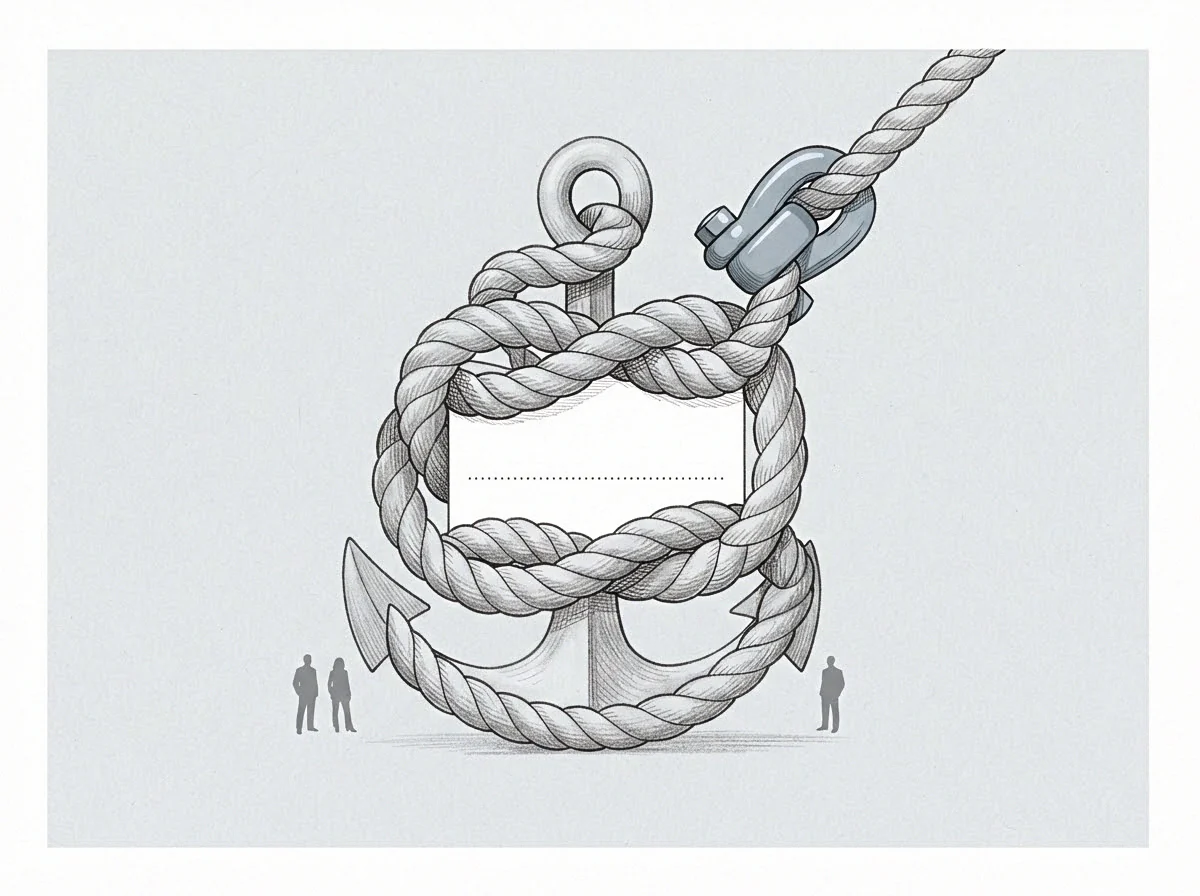
Stated Precedence Vectors in Asynchronous Operations
Pre-established execution hierarchy dictates command priority during total signal loss. Systems designed for high-availability recovery define explicit precedence vectors long before emergency protocols trip. These vectors map functional roles directly to specific system states, removing personal discretion during isolation windows.
Failure to establish clear precedence vectors produces predictable structural breakdowns during blackout windows:
- Jurisdictional Collisions occur when two operators execute contradictory write operations against identical database schemas during isolation windows.
- Recursive Quarantine Escalation develops as isolated security tools lock out operational accounts while site reliability engineers simultaneously re-grant systemic permissions.
- Telemetry Blindspot Blindness emerges when operators interpret complete loss of remote logging streams as physical node failure rather than transport layer termination.
A secondary operator holding primary write access operates under strict, pre-declared constraints. When a threshold breaks, system authority transfers automatically down the vector. No amount of operational pressure from a secondary operator can alter a pre-programmed state gate during an active recovery sequence.
The insertion of a deterministic lock-file condition changes write access from an arbitrary operator decision into a verifiable systemic gate.

Precedence
Hierarchy rules hardcoded into deployment pipelines establish command preference during network isolation. When communication loops break, operational systems cannot wait for administrative consensus. Precedence operates as a mechanical property of the infrastructure platform.
Operational Jurisdiction Assignment Matrix
Matrix structures assign explicit operational domains based on functional risk profiles. System components are partitioned into isolated operational zones where only one secondary operator holds write authority under emergency conditions. Secondary operators maintain complete control within their assigned partition but possess zero execute permissions outside it.
| Allocation Strategy | Conflict Probability | Reconciliation Friction | Execution Latency |
|---|---|---|---|
| Deterministic Hierarchy | Low | High | Minimal |
| Functional Partitioning | Moderate | Low | Low |
| Time-Bounded Authority Leases | Minimal | Moderate | Controlled |
The allocation strategy dictates how system nodes respond to incoming operational commands when executive telemetry is absent. Deterministic hierarchy relies on fixed role assignments where security consistently overrides operations, or vice versa. Functional partitioning splits the system geographically or logically, giving each secondary operator absolute domain over specific infrastructure segments.
Time-bounded authority leases grant temporary, exclusive write keys that cycle predictably between roles based on epoch clocks.

Is Conflict Resolution Possible Without Ping Verification?
Network isolation removes real-time heartbeat verification between command nodes. When an executive ping stops arriving, secondary operators infer whether the executive node experienced a complete crash or merely lost signal propagation. Without verification channels, secondary operators face the classical split-brain dilemma.
If system architecture relies on active confirmation to hold jurisdiction, silence causes total operational paralysis. Effective recovery protocols treat signal loss as a deterministic state change that freezes decision-gated authority and activates pre-defined execution paths. The system does not attempt to resolve conflicts during a blackout; it prevents conflicts from generating by strictly limiting secondary write permissions to deterministic domains.
The secondary operator assumes full operational domain ownership once the executive heartbeat drops below the baseline threshold.

Pacing
Time boundaries structure operational command leases during silent isolation states. When communications collapse, secondary operators cannot hold indefinite authority over critical infrastructure. Time acts as an unalterable regulator that revokes operational permissions automatically as epoch counters advance.

Execution Windows in Isolation Protocols
Epoch counters measure elapsed time independently across isolated operational nodes. By synchronizing physical hardware clocks prior to isolation events, system architectures grant secondary authority in strictly time-bounded leases. A secondary operator receives write permissions for a defined time window before the lease expires.
Consider an enterprise payment gateway entering executive isolation at epoch timestamp 1000. The site reliability lead receives primary infrastructure modification access from epoch 1000 to epoch 1060. The security operations director holds zero write authority during this initial hour, maintaining read-only telemetry.
At epoch 1061, jurisdiction transfers automatically. The infrastructure lead’s write key expires, and the security director’s isolation protocol rights activate from epoch 1061 to epoch 1120.
Suppose an active zero-day exploit targets the payment application at epoch 1030. The security director identifies the intrusion but lacks write permissions under the active epoch lease. The security director cannot issue a service quarantine command directly.
Instead, the security director posts a localized state flag to a shared system telemetry log. The infrastructure lead reads the flag at epoch 1032 and executes the pre-scripted containment protocol built into the active infrastructure lease. Operational balance holds because jurisdiction shifts according to temporal state rather than competitive human intervention.
A time-bounded lease mechanism strips command authority automatically when the allocation epoch expires.
Time-Decayed Lease Handoff Sequences
Structured handoffs transfer command rights down a pre-allocated queue as time elapses without executive signal restoration. The longer an executive blackout persists, the more restricted secondary operations become to preserve system integrity.
- Epoch Ignition establishes the exact local timestamp where executive ping telemetry drops below valid limits.
- Primary Lease Activation grants primary secondary operators exclusive command writes over designated sub-domains for thirty minutes.
- Lease Expiration Verification evaluates local clock consensus before revoking secondary write privileges.
- Fallback Pass transfers secondary write privileges to the designated baseline backup operator.
As lease periods expire without executive reconnection, system protocols gradually lock down operational write capacity entirely. The system transfers itself into an immutable safe mode, removing secondary human discretion entirely until executive telemetry recovers.
An operator holds jurisdiction only while the local lease clock remains within active limits.

Resolution
System reconciliation begins when executive telemetry re-establishes valid network connectivity. The primary control node reconnects, ends the emergency recovery sequence, and evaluates the operational state resulting from secondary commands executed during the isolation window.

Reconciling Split-Brain System States
Transaction logs capture every local action executed during blackout periods to allow deterministic state replaying. Secondary operators maintain cryptographic event records on isolated local storage throughout the blackout. When connectivity resumes, the primary executive controller parses these logs sequentially to build a unified system state timeline.
If two secondary operators executed conflicting state changes due to drift or clock skewed lease overlaps, the reconciliation routine applies mathematical conflict-free replicated data type rules. Decisions receive no evaluation based on operational intent or role seniority. State changes replay strictly according to deterministic logical timestamps.
State reconciliation depends on log determinism rather than operator negotiation.
Terminal Handback to Reconnected Executive Regulators
Returning executive authorities audit secondary log sequences before reclaiming active command loops. The recovery protocol terminates secondary leases, revokes emergency write tokens, and restores standard multi-factor authorization pathways. The founder or executive lead re-assumes central control over a system whose state was preserved by pre-defined limits rather than real-time arbitration.
Secondary operators exit their temporary jurisdictional roles and return to standard functional boundaries. By relying on state-gated limits, deterministic lease expirations, and strict time-decay vectors, the organization survives total communications isolation without risking operational state corruption or internal authority collapse.
Whether log reconciliation can automatically repair conflicting state writes executed under overlapping secondary leases without manual human arbitration remains undetermined.