
Structural Limits of Automated Operational Authority Handovers Under Extreme Cognitive Load Surges
Automated authority handovers fail under extreme load because algorithmic shedding transfers dynamic instability faster than human cognitive recovery permits.

Room
Four monitors flash red simultaneously while alarms sound across three separate frequency bands at two in the morning. The human operator sits in an unyielding chair, eyes tracking cascading telemetry deviations across forty parallel process indicators. Supervisory software encounters an unhandled classification boundary during this spike and abruptly drops full manual intervention onto the control floor.
The human nervous system takes eleven seconds to orient toward the anomalous sequence, yet the physical system breaches its containment limits in six. Automation designed to dump operational authority when volatility exceeds machine confidence guarantees an immediate collision with human physiological recovery thresholds.
Transfer of control from software to human supervision operates through a rigid physiological bottleneck. When an algorithm sheds operational authority during anomalous spikes, it treats the operator as an infinite cold-standby reservoir. The human nervous system does not behave as an instantaneous computational switch.
Research across aerospace, chemical refining, and power dispatch demonstrates that situational awareness degrades during prolonged passive monitoring. Regaining tactile and cognitive orientation across a degraded process demands a re-acquisition interval that remains irreducible under panic.
A load-transferring system pushes the human regulator until the physical boundary gives way.
Operational architectures often mistake automated monitoring for labor reduction. The automated loop processes routine state variables cleanly, which leaves human supervisors isolated from the minute mechanical drifts that precede catastrophe. When unstable dynamics trip an automated safety boundary, the system returns authority precisely when situational clarity is lowest and cognitive demands are highest.
The engineer on watch receives an operational state that has already departed stable equilibrium.
Automated handovers transfer the mathematical deficit of the machine to the biology of the operator. The supervisory model sheds responsibility at the exact point of functional failure. The person at the terminal must reconstruct historical drift, identify bad sensor inputs, and execute corrective commands within a compressed operational envelope.
The handover functions as an operational abandonment disguised as a fail-safe protocol.
The control room expected a partner and inherited an emergency.
Shift
Sensory Saturation During Algorithmic Failure
Cognitive bandwidth compresses under acute threat. Sympathetic nervous arousal restricts peripheral perception, producing tunnel vision and auditory exclusion within fractions of a second. An operator facing ten competing auditory klaxons cannot parse serialized diagnostic messages.
Automated safety handovers routinely bombard the operator with raw diagnostic tables precisely when the human sensory buffer can process only binary physical cues.
Working memory capacity caps reliable concurrent processing at four discrete information chunks during resting states. Under severe shock, functional working memory collapses to a single focused thread. Automated control systems, conversely, clear their registers by outputting comprehensive error dumps.
The machine presents sixty concurrent sensor faults to an operator whose neurochemistry permits the evaluation of exactly one. The volume of simultaneous notifications destroys diagnostic capacity.
A term stated in advance prevents panic from dictating control room priority.
Alert flooding creates sensory blinding. Human controllers faced with overwhelming screen updates default to erratic motor responses or total behavioral freezing. The automated system continues to log operator inactivity as compliance failure, escalating auditory alerts and compounding sensory saturation.
Which Operational State Triggers Authority Reversal?
Authority reversal occurs when internal software state estimators drop below minimum probabilistic thresholds. Rather than holding a stable degraded mode, the software initiates an emergency bail-out routine. The machine declares an indeterminate condition, uncouples its actuators, and commands immediate human takeover.
The operational boundary transfers without validating operator readiness.
The table below compares authority handover structures under acute volatility conditions across industrial and transport environments.
| Handover Architecture | Trigger Condition | Cognitive Demands on Human | Containment Outcome |
|---|---|---|---|
| Abrupt Fail-Step Shedding | Model divergence exceeds safety tolerance | Immediate full-state reconstruction from cold telemetry | Frequent manual overcompensation and boundary breach |
| Gated Step-Down Automation | Deterministic sensor disagreement alert | Bounded single-parameter intervention with active dampers | Predictable containment within established physical envelopes |
| Shared Envelope Enforcement | Actuator saturation limit reached | Tactile steering within hard algorithmic guardrails | Gradual rate recovery without systemic destabilization |
Step-down architectures preserve mechanical stability during authority exchange. If an automated controller drops all operational intervention simultaneously, the human supervisor inherits a diverging kinetic mass with zero damping. The presence of deterministic guardrails protects the human regulator from catastrophic single-point overcorrections.
The authority transition succeeds only when the machine holds the physical baseline until the human eye tracks the primary vector.
Dial
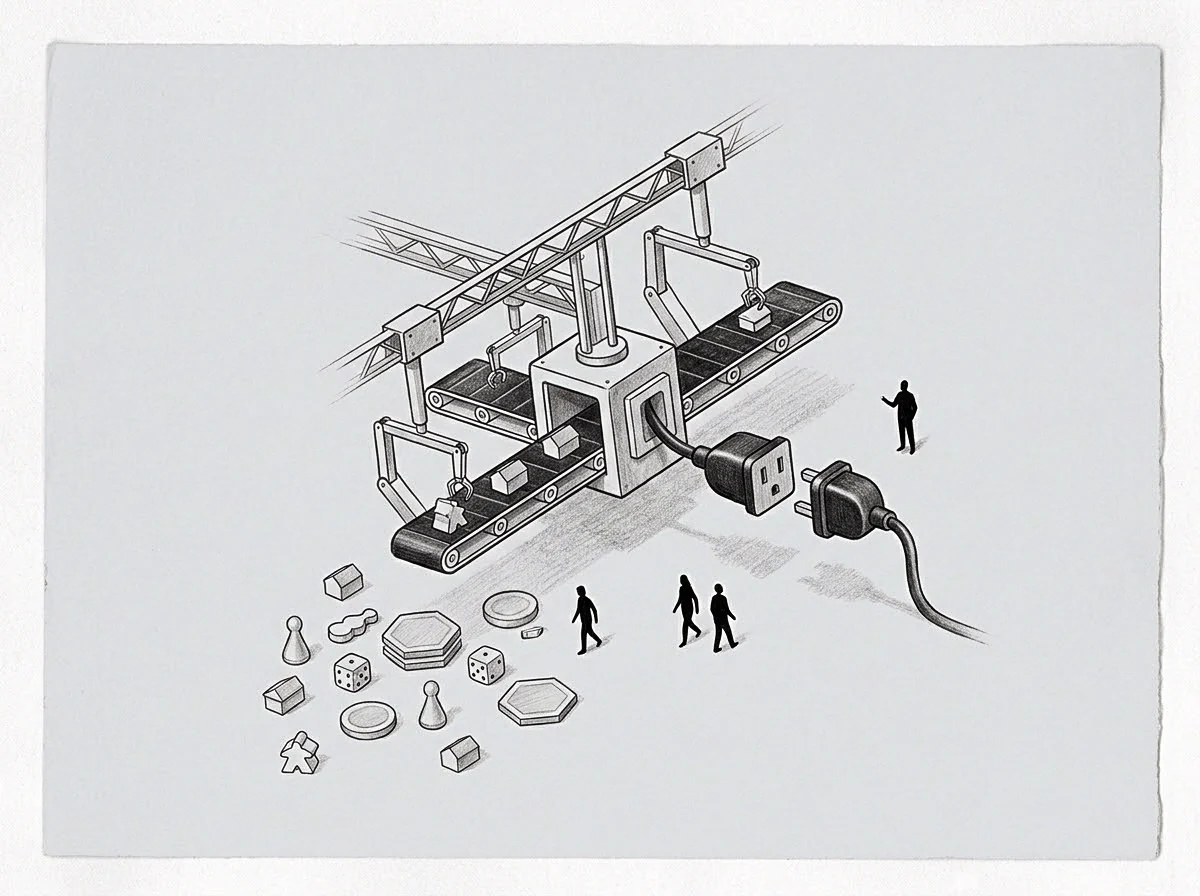
Asymmetrical Latency in Control Loops
Machine execution runs in milliseconds. Human motor cognition operates in hundreds of milliseconds. When software hands authority to a human during high-rate instability, this temporal mismatch introduces dangerous phase lag into the control loop.
The operator applies corrective counter-inputs to conditions that existed half a second prior. The delayed human input combines with residual mechanical inertia to induce destructive pilot-induced oscillations.
Feedback dials must display rate-of-change vectors rather than lagging point-in-time values. When telemetry units present only static numerical values, the operator must mentally differentiate rates of change under severe time stress. Differentiating rates mentally consumes substantial cognitive headroom.
A human forced to calculate acceleration trends while diagnosing system failure will consistently miss secondary warnings.
Physical controllers give tactile cues that software screens lack. The complete replacement of physical switches with smooth glass touchscreens removes peripheral proprioceptive awareness. An engineer managing an escalation through flat screens must dedicate visual focus to locate control surfaces, pulling visual attention away from primary diagnostic dials.
Manual authority handovers that rely on software menus during crisis events generate fatal operational delays.
Operational headroom drops to zero whenever visual attention must confirm switch location.
Control inputs must match the physiological state of the human supervisor. In moments of extreme systemic load, fine motor control deteriorates into gross motor slapping. Complex keystrokes, multi-step confirmation dialogs, and precise pointer adjustments fail completely.
The physical dials and levers must absorb blunt force without registering erroneous secondary commands.
Designing handovers without structural damping yields unrecoverable operational runaway within seconds of algorithmic disengagement.

Fault
Authority handovers encounter systemic faults when the mental model of the software engineer contradicts the operational conditions of the control floor. System designers routinely assume that a human operator maintains constant, unbroken tracking of background automated states. This assumption represents an egregious analytical flaw.
Humans cannot maintain vigilance over non-interactive systems beyond twenty consecutive minutes without steep drops in detection accuracy.
System designers create failure cascades when they introduce silent automated authority handovers. The operator remains unaware that the machine has reached internal calculation limits until a mechanical trip occurs. The machine stays silent, masking minor trim deviations until actuator authority saturates completely.
The human receives an unannounced crisis rather than a managed transition.
- Actuator saturation threshold marks the physical stop where automated software exhausts travel limits and yields control without mechanical margin.
- Cognitive latency margin measures the delay interval separating raw auditory alarms from accurate operational situational comprehension.
- Telemetry reconciliation lag indicates the operational duration spent identifying faulty sensors amidst genuine structural damage.
A stated operating limit acts as a rigid wall inside control software. When supervisory software meets an explicit boundary condition, it must trigger deterministic degradation routines rather than unannounced operational abdication. Stating the limit in functional code preserves the boundary between human judgment and computational capacity.
A formal clause specifying mandatory rate-limited control shedding changes an abrupt systemic failure into an orderly, bounded operational transition.
Hold
Holding operational authority requires unambiguous system boundaries. When an extreme surge occurs, software must maintain basic containment physics while the human determines systemic intent. An automated loop manages microsecond stabilization routines with absolute repeatability.
The human assesses strategic context, determines whether sensor data remains trustworthy, and authorizes structural shutdowns. Confusing these two functional positions destroys systemic stability.
Human operational capacity remains state-gated by biology. No administrative policy, training syllabus, or professional exhortation alters the physiological breakdown of human reasoning under sleep deprivation combined with acute shock. If an automated system requires an operator to execute flawless multi-variable triage within three seconds of a cold handover, the architecture itself is broken.
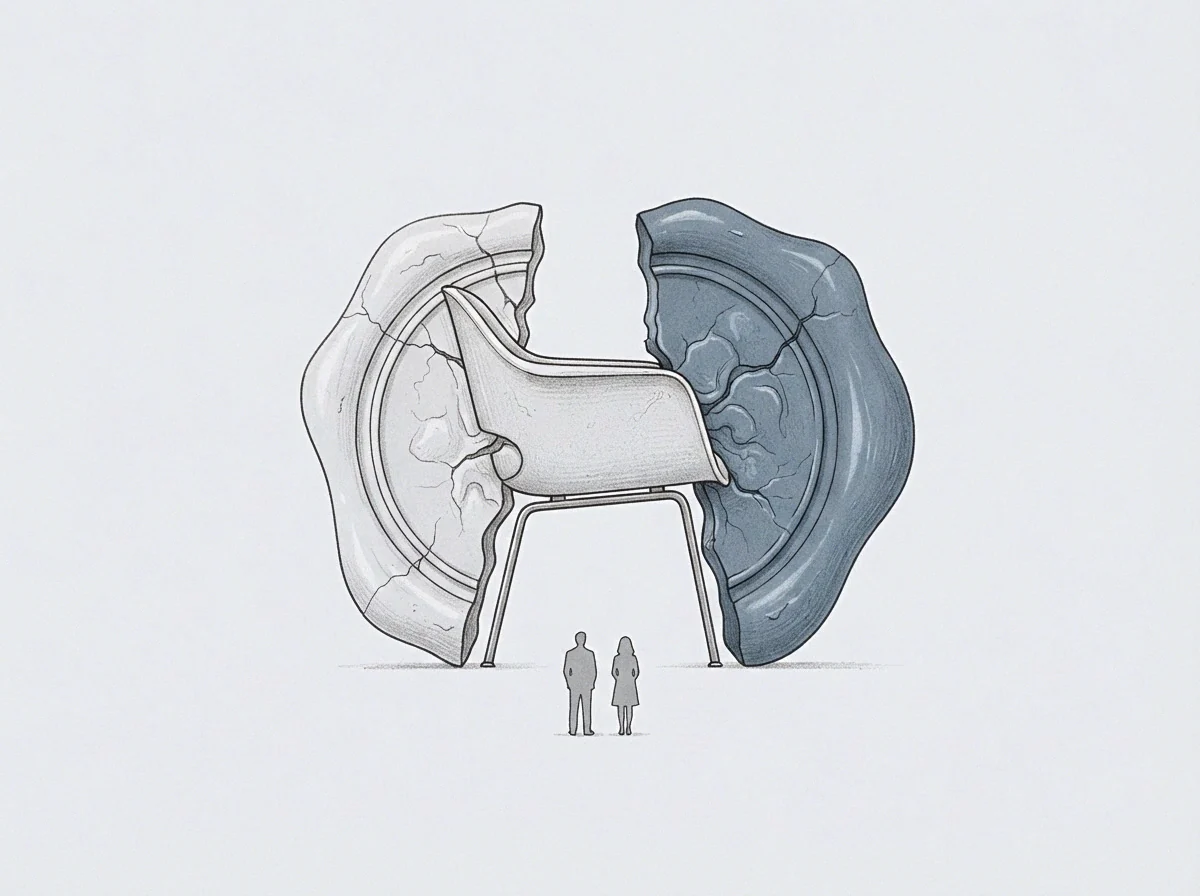
A true operational term stands firm against systemic pressure. When an organization defines an operational term, that term serves as a hard structural limit. Software must not shed authority beyond that line.
If parameters exceed that term, the automated system executes pre-planned, deterministic fail-safe shutdowns rather than transferring chaotic operational debt to an overloaded human mind.
The critical unanswered question remains whether automated control systems can ever reliably compute human operator readiness before shedding operational authority under extreme kinetic pressure.