
Founding Team Load Mechanics and Executive Capacity Limits
Executive capacity limits function as physical setpoints where incoming operational load forces unstated cognitive throttling unless explicit terms govern availability.

Load
When operational threads hit an executive layer simultaneously on late Sunday evenings, pulling attention across financial models, product outages, and partner disputes, the setpoint drops. When multiple critical tasks compete for processing memory, executive function degrades along predictable physiological lines. Cognitive capacity sets an absolute ceiling, yet organizations routinely act as if effort alone scales output infinitely.
The physiological system absorbs incoming demands until setpoint decay forces operational failure.
Allostatic load accumulates when chronic environmental stressors demand continuous physiological adaptation without adequate recovery intervals. In founding teams, this load transfers between partners through implicit co-regulation mechanisms. One co-founder’s elevated stress alters daily interactions, increasing cognitive friction for the entire leadership team.
Working alongside a peer under severe strain elevates baseline heart rate variability strain, draining regulatory capacity before strategic execution even begins.

Concurrent Thread Accumulation
Executive performance deteriorates exponentially as open operational loops multiply. Working memory holds approximately four distinct conceptual chunks at a given moment. When a co-founder manages regulatory compliance, key hires, fundraising negotiations, and customer retention simultaneously, context switching burns available glucose at accelerated rates.
That switching overhead creates decision latency across all open vectors.
Systemic strain manifests through specific operational markers before complete executive collapse occurs. Attention shifts rapidly; early indicators include missed commitments, fragmented written communication, and an inability to process complex risk models during strategic reviews. Leadership teams attempt to compensate by working longer hours, which degrades neural recovery pathways and compounds the initial cognitive deficit.
The transfer of unresolved operational debt to a founding partner accelerates setpoint decay across the executive layer.

Co-Regulation Failure in Founding Pairs
Founding pairs rely heavily on mutual emotional and cognitive regulation to maintain focus under high uncertainty. Social baseline theory demonstrates that physical and psychological proximity to a trusted partner lowers the baseline metabolic cost of threat monitoring. When both partners exhaust their individual capacity ceilings simultaneously, co-regulation transforms into shared panic amplification.
Neither partner retains the metabolic headroom to anchor the other, leaving the business without a stabilizing operational center.
Unspoken assumptions regarding partner endurance create severe covert contracts. One founder expects the other to absorb sudden operational surges, assuming infinite internal reserves. As operational debt accumulates and reserves reach zero without clear signaling, mutual trust fractures under the sudden weight of unhandled work.
Explicit load metrics prevent this collapse by transforming subjective strain into stated structural limits.
When incoming demands exceed processing headroom for consecutive quarters, executive decision quality drops to baseline survivorship reactions while organizational latency doubles.

Band
Capacity boundaries govern how much complexity an executive processes before system performance falls off a cliff. State functions as a physiological transfer mechanism determining output quality based on incoming input. Mood operates merely as a non-informative diagnostic output.
Conflating state with mood causes founders to treat deep capacity collapse as a temporary bad attitude, attempting to solve metabolic exhaustion through sheer willpower.
Executive tasks split into distinct execution categories based on their physiological tax. Some operational acts respond directly to conscious commitment. Other strategic functions remain strictly gated by neural state, refusing to initiate when metabolic reserves fall below established thresholds.
Understanding this structural division prevents executive burnout by aligning workload expectations with physiological capacity.

State Against Mood in Executive Function
State reflects the real-time operational capacity of the neural architecture, dictating working memory bandwidth, emotional regulation bandwidth, and analytical processing speed. Mood reflects surface-level emotional variance without providing actionable data about cognitive reserves. A founder might exhibit a calm mood while operating in a severely depleted physiological state, leading partners to overestimate available bandwidth.
Evaluating executive capacity requires monitoring objective state metrics rather than surface behavioral expressions. Sleep architecture, heart rate variability, and cognitive processing speed provide accurate measures of real-time capacity. As headroom contracts, operating continuously in depleted states alters risk tolerance, turning bold strategic moves into reckless gambles or passive avoidance tactics.
- State Gated Execution defines acts that halt when physiological setpoints cross critical bounds, regardless of executive resolve.
- Decision Gated Execution covers operational tasks that complete upon clear allocation of authority and temporal focus.
- Cognitive Throttling occurs when the system automatically rejects secondary inputs to preserve core survival functions.

Decision Gated Actions Versus State Gated Constraints
Decision-gated tasks demand linear processing power and clear authority. Signing commercial contracts, approving hiring budgets, and attending scheduled investor meetings depend primarily on executive choice. These acts proceed even under moderate metabolic fatigue, provided the procedural steps remain clearly defined.
A stated capacity limit functions as a structural wall rather than a personal refusal.
State-gated actions demand high-order synthesis, deep empathy, and complex pattern recognition. Strategic positioning, conflict resolution, and architectural pivot decisions halt completely when internal state collapses. No amount of self-discipline forces high-quality state-gated output from a depleted neural system.
Attempting to force state-gated work under heavy cognitive load guarantees structural errors in business architecture.
The executive layer stopped returning operational calls after seven in the evening without offering an alternative line of escalation.

Seat
Role assignments inside founding teams often reflect early survival needs rather than structural alignment. The seat defines the operational mandates, communication channels, and decision rights assigned to a specific role. As organizations scale, the seat demands specific cognitive allocations that may exceed the physical capacity limits of the individual sitting in it.
Aligning role requirements with real-time capacity prevents organizational bottlenecks.
Load transfer mechanics describe how operational pressure moves through an organizational hierarchy. When an executive seat lacks the capacity to process incoming demands, unhandled tasks spill into adjacent leadership seats. This structural spillover distorts role clarity and forces peer executives to absorb secondary tasks outside their core domain, destabilizing the entire operational matrix.

Structural Load Transfer Mechanics
Unclear seat boundaries create operational friction. When a chief technology officer routinely handles customer support escalation due to missing support infrastructure, technical architecture decisions stall while daily costs accrue. The execution load of customer support consumes the cognitive bandwidth required for structural technology regulation, destroying long-term enterprise value.
Transferring load effectively requires clear delegation protocols and explicit operational terms. Establishing formal handoff criteria ensures tasks move to seats equipped with appropriate processing capacity. Without explicit handoff terms, load transfers chaotically to the most responsive executive, regardless of their role description or current capacity limits.
| Executive Capacity Parameter | Execution Load State | Regulation Load State |
|---|---|---|
| Primary Cognitive Focus | Task completion, tactical throughput, immediate crisis resolution | System design, structural alignment, strategic resource allocation |
| Metabolic Burn Rate | High short-term spike, rapid exhaustion of glucose reserves | Sustained baseline drain, long-term cognitive load accumulation |
| Failure Signature | Missed deadlines, operational errors, transactional backlog | Strategic misalignment, setpoint drift, organizational burnout |
| Recovery Requirement | Short-term physical rest, acute task offloading | Extended cognitive space, structural role reconfiguration |

Capacity Matching for Role Assignment
Role assignment must reflect current executive capacity limits rather than historic titles. Early-stage founders frequently hold seats demanding vast operational breadth. As specialization increases, retaining broad seat mandates causes severe executive strain.
Matching seat scope to individual capacity bandwidth preserves leadership performance.
Reallocating seat responsibilities requires continuous monitoring of operational throughput and executive well-being. Regular capacity audits identify overloaded seats before performance failure impacts organizational growth. Shifting responsibilities away from an overloaded founder preserves their specialized contributions while protecting enterprise stability.
An explicit seventy-two hour cooling clause on non-emergency structural decisions converts reactive executive impulse into calculated resource re-allocation.

Loop
Communication networks generate continuous signal inputs that demand executive processing energy. The ping arithmetic of modern communication platforms creates an environment of perpetual micro-interruptions. Every incoming message triggers an evaluation process, consuming working memory even when left unanswered.
Managing communication loops is essential to protecting executive capacity limits.
Availability is derived from the silence of a position and its associated cost. When an executive responds instantly to every communication vector, external stakeholders derive infinite availability, driving up incoming message volume. Establishing explicit terms around channel access throttles incoming load, preserving focus for high-value strategic execution.
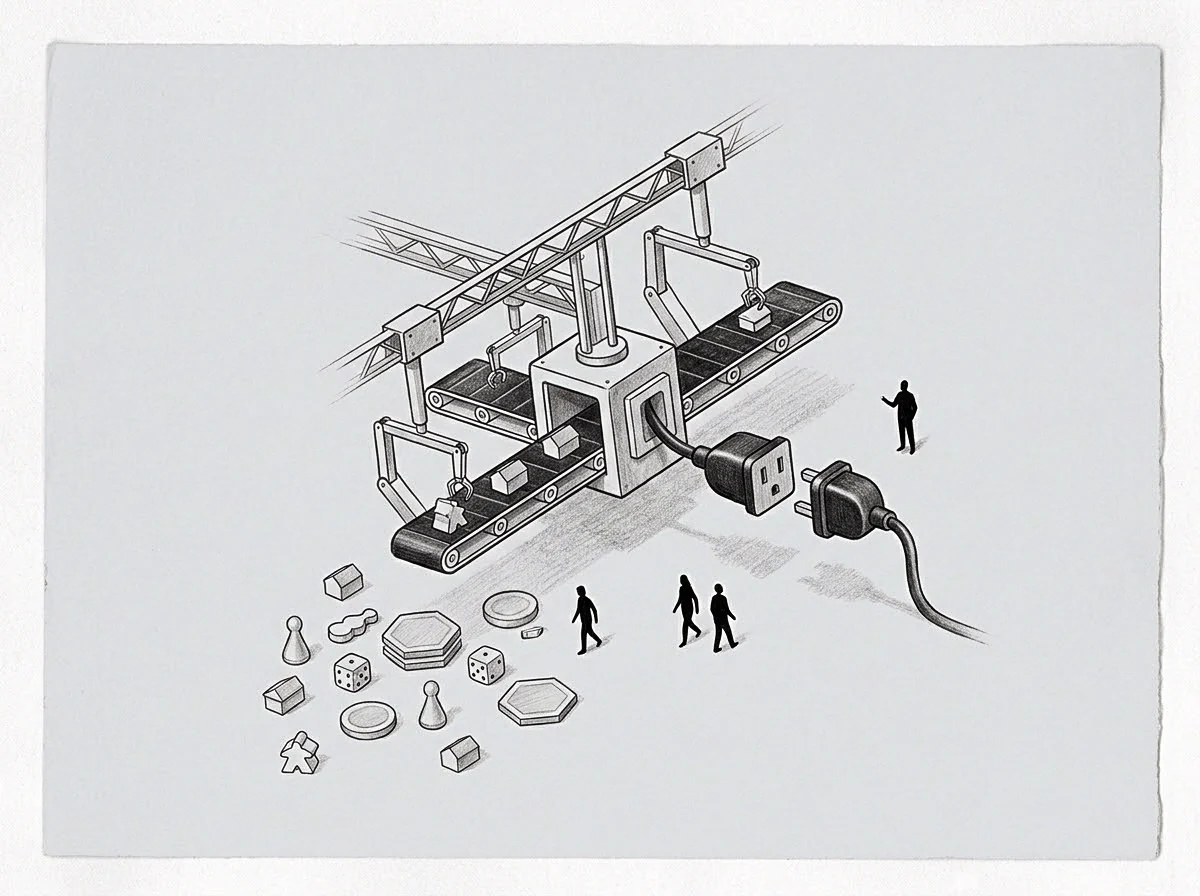
How Does Priority Shift Under Executive Capacity Debt?
Executive capacity debt alters how leadership teams evaluate incoming operational priorities. Under heavy cognitive strain, the brain defaults to processing immediate, low-complexity inputs while deferring complex, high-impact decisions. Urgency replaces importance as the primary sorting metric for executive focus.
Priority shifts under load distort organizational resource allocation. Immediate operational pings consume attention, while long-term strategic initiatives remain untouched. Recognizing this cognitive bias allows founding teams to implement external filtering mechanisms that protect strategic priorities from tactical displacement.
Availability is derived from the silence of a position and its associated cost.
- Operational inputs enter the executive queue through unmonitored communication vectors.
- High cognitive switching costs reduce attention spent on secondary strategy threads.
- Silent channels signal low priority to external stakeholders before formal announcements occur.
- Explicit terms reset counterparty expectations without personal friction.
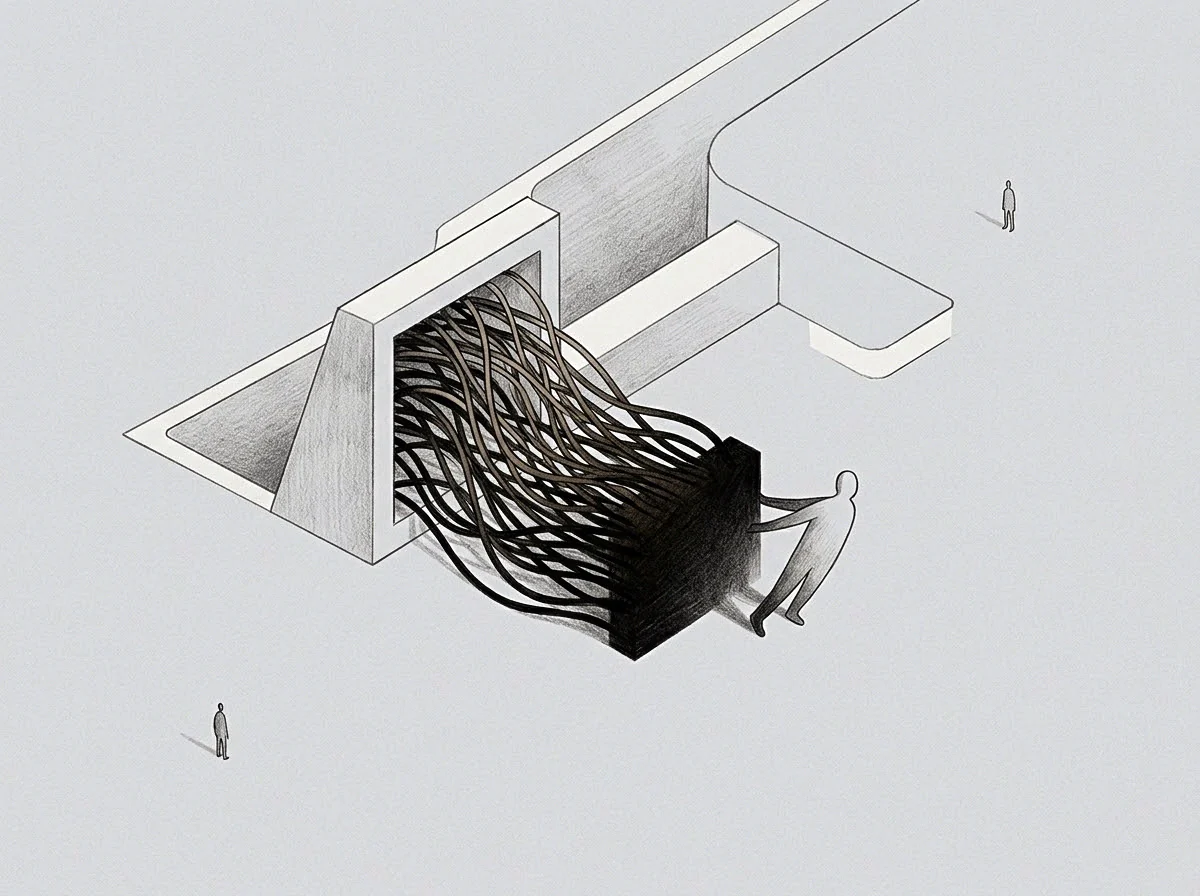
Availability Derivation Through Signal Filtering
External counterparties infer executive availability through response patterns rather than formal policy statements. Rapid response times signal low cognitive load and high accessibility, inviting further low-priority inquiries. Deliberate response delays signal high load and limited availability, forcing counterparties to filter their communications.
Implementing structured communication windows protects executive attention reserves. Restricting asynchronous message processing to specific daily intervals creates uninterrupted blocks for deep strategic work. Counterparties quickly adapt to established availability terms, elevating the quality and concise nature of their incoming requests.
The question remains whether founding teams can construct external throttling mechanisms before internal physiological limits force complete operational shutdown.

Limit
Setting explicit capacity boundaries requires shifting perspective from personal endurance to structural design. A limit stated once functions as an immovable wall within the operational architecture. When load-transferring systems meet a hard structural limit, operational pressure redirects elsewhere in the organization, forcing structural adaptation.
Unstated limits lead to continuous boundary erosion. When executives rely on personal endurance to absorb infinite workload increases, the organization fails to develop necessary delegation mechanisms. Stating limits explicitly forces the system to build sustainable operational pathways rather than over-relying on individual sacrifice.

Stated Ceilings Over Personal Endurance
Personal endurance is a finite biological resource that decays under constant pressure. Structural ceilings are defined rules within the operating model that govern workload distribution. Relying on endurance invites continuous overload, while structural ceilings preserve long-term operational performance.
Establishing structural ceilings demands clear communication regarding operational trade-offs. When an executive reaches capacity limits, adding new initiatives mandates dropping existing operational commitments. This strict trade-off protocol prevents load accumulation and maintains organizational focus.

The System Meets the Wall
When an operational push encounters a stated limit, the system experiences brief friction that represents necessary structural adjustment. The organization must learn to route tasks through defined channels rather than relying on direct executive intervention.
Long-term leadership performance depends on establishing and maintaining clear operational boundaries. By treating capacity limits as physical constraints, founding teams protect their neural health, sustain strategic execution, and build resilient enterprise structures.
A term stated once at the boundary of capacity protects executive integrity far longer than unstated personal sacrifice.