
Distinguishing Executive Throttling From Clinical Depressive States
Executive throttling is a protective prefrontal brownout caused by concurrency overload, distinct from the global affective collapse of clinical depression.

Relay
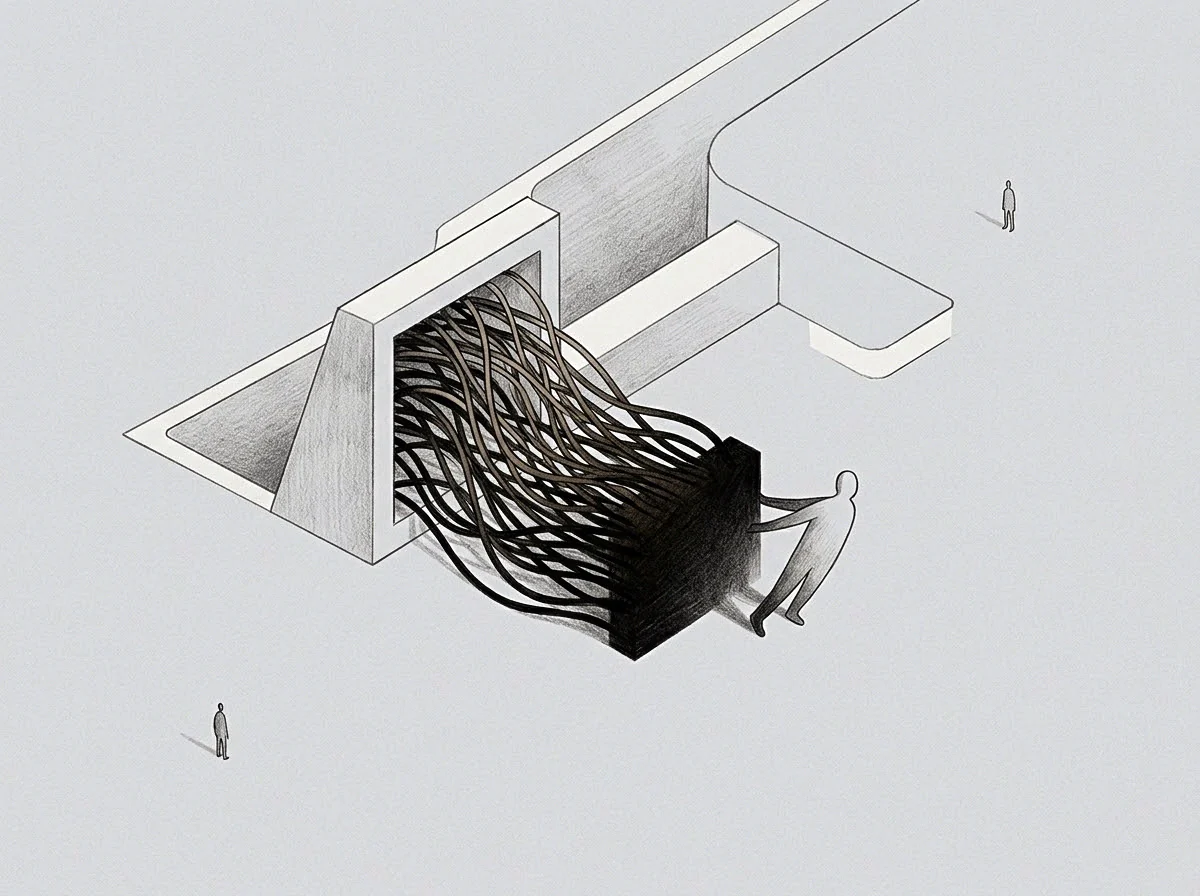
The Cold Stall Under Full Concurrency
Four messages arrive in five minutes while two operational emergencies sit open on screen. The founder stares at a three-sentence reply to a vendor, unable to start the first word. Resting pulse is normal, physical indicators are calm, and routine incoming requests get routed instantly to other operators.
Yet when an open-ended brief requires synthesis, cognitive output stops. The screen remains open for forty minutes without progress.
This condition manifests as a sudden executive stall while routine operational function stays intact. Clinical interpretations often label the stoppage as anhedonia or depressive psychomotor retardation, misidentifying the underlying biological mechanism. The stalled state is actually executive throttling, a physiological defense deployed by the central nervous system when total regulatory load saturates available processing capacity.
A throttled nervous system arrests self-directed synthesis while keeping passive routing lines fully open.
The regulatory apparatus operates under strict allostatic constraints. When cumulative demands exceed metabolic reserves, the prefrontal cortex reduces allocation to exploratory cognition, initiative, and high-order integration. The system enters a protective brownout.
The operator remains capable of completing structured tasks, attending meetings, and answering operational inquiries with mechanical precision. The stoppage occurs solely at the boundary where unconstrained, self-initiated planning begins.
The distinction between this condition and a primary affective disturbance turns on systemic responsiveness. In a clinical depressive state, affective blunting, psychomotor slowing, and anhedonia persist across both high-demand and zero-demand environments. In executive throttling, the stalling dissolves as soon as incoming operational demands drop below baseline limits.
A brief cancellation of pending inputs restores immediate processing speed.
Does the stalled operator exhibit true affective flattening when isolated from immediate operational demands?

Chamber

Differential Architecture of Functional Stoppage
Evaluating an incapacitated executive demands an explicit separation between energy exhaustion and active defensive down-regulation. While the clinical paradigm views reduced executive output as an affective failure characterized by neurotransmitter dysregulation, pervasive negative bias, and global motivational collapse, stress physiology identifies a different architecture. The nervous system measures the rate of open regulatory obligations against real-time recovery rates, shutting down speculative computation to protect vital systemic stability.
The operational observables diverge across five distinct functional dimensions:
- Initiative gating suspends open-ended strategy formulation while preserving automated execution of structured tasks.
- Affective reactivity remains intact when external pressures lift, differing from the persistent emotional dampening of major mood disorders.
- Diurnal variation shows compounding exhaustion toward the evening as inputs accumulate, contrasting with the severe morning worsening typical of melancholic depression.
- Cognitive appraisal attributes the stoppage directly to excessive concurrent inputs rather than generating themes of pervasive personal guilt.
- Intervention response produces rapid cognitive restoration after absolute input removal without requiring weeks of pharmacological stabilization.
Consider an operator managing three active product rollouts while negotiating an equity restructuring. The operator reports a complete inability to draft a vision statement for the upcoming fiscal year, yet continues to review balance sheets and answer employee queries on schedule. A depressive disorder would impair all operational domains uniformly through psychomotor slowing.
The selective loss of high-synthesis output demonstrates targeted protective throttling.
Input reduction restores immediate operational capacity only when the underlying condition is throttling rather than affective disease.
Mislabeling this state carries severe costs in energy and attention. When a throttled executive receives a primary depressive diagnosis, clinical recommendations often mandate psychological introspection, emotional processing, and psychiatric stabilization. These interventions impose new cognitive obligations on an overloaded processor.
The executive attempts to analyze emotional functioning while managing an unresolved operational backlog, a dynamic that compounds allostatic load and deepens the regulatory brownout.
The person in the seat concludes that normal work has become impossible because their capability has fractured.

Wall

Structural Comparison of Regulatory States
Differentiating systemic throttling from clinical pathology requires systematic assessment across behavioral, biological, and operational domains. The table below delineates the diagnostic criteria separating the two conditions under matched operational conditions.
| Evaluation Domain | Executive Throttling | Clinical Depressive State |
|---|---|---|
| Primary Biological Driver | Allostatic overload and prefrontal resource rationing | Affective network dysregulation and systemic neuroinflammation |
| Response to Task Structure | High execution on closed routines; zero synthesis on open loops | Uniform impairment across structured and unstructured tasks |
| Recovery Velocity | Rapid functional rebound within forty-eight hours of total silence | Gradual recovery requiring prolonged clinical or environmental shifts |
| Self-Attribution Pattern | Frustration directed at input volume and operational friction | Pervasive worthlessness, unearned guilt, and internalized failure |
| Somatic Presentation | Sympathetic hyperarousal followed by focal cognitive freeze | Global lethargy, altered vegetative signs, and chronic motor slowing |
A central confusion arises from identical self-reports of fatigue. Both states generate profound cognitive weariness and reluctance to begin new initiatives. In executive throttling, this weariness is a direct function of active input concurrency.
The human brain maintains a limited count of ungated operational obligations before attention splintering forces processing shutdown.
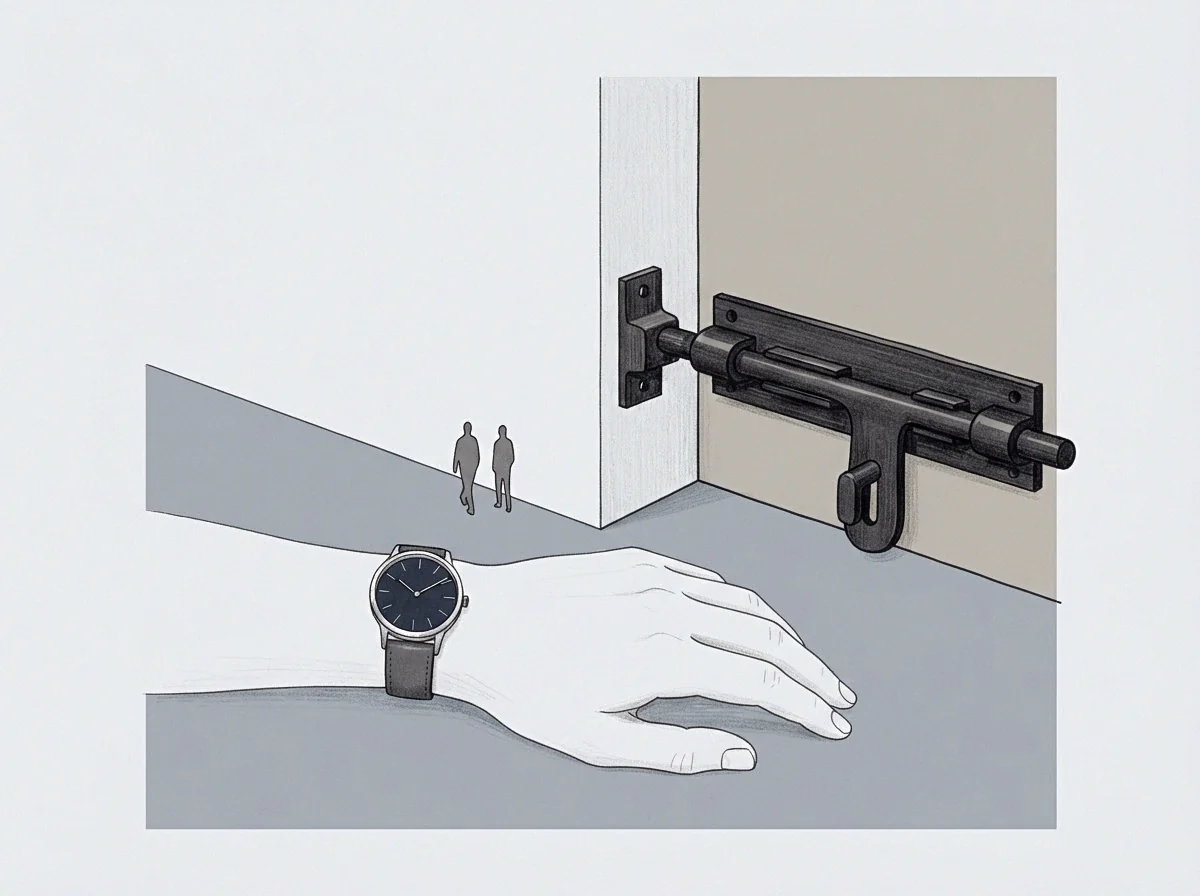
In manufacturing assembly lines, conveyor belts shut down automatically when downstream buffers overflow; the machinery is not defective, but rather sensors deliberately halt input flow to avoid mechanical destruction. Human executive function uses the exact same control principle. The sudden refusal to synthesize plans represents the sensor tripping before structural burnout causes permanent neuroendocrine collapse.
When the operational buffer empties, synthesis restarts.
Split

The Mechanics of Concurrency Saturation
The primary generator of executive throttling is the uncontrolled proliferation of active operational loops. Each unfinalized initiative occupies a discrete slot in working memory and autonomic monitoring. A founder holding fifteen simultaneous unstructured negotiations exhausts their baseline metabolic budget purely through context maintenance.
No processing headroom remains for creative decision-making.
The human nervous system relies on environmental stability to regulate internal energy expenditure. In social baseline theory, proximity to reliable partners distributes regulatory effort across multiple individuals. When an operator occupies a solitary leadership seat, every incoming shock requires direct, unshared biological regulation.
Chronic solitary regulation forces the brain into an emergency conservation posture.
Unclosed operational loops consume neural processing slots continuously even when no active labor is directed toward them.
Consider a typical escalation sequence inside a growing firm:
- Loop proliferation begins when six strategic initiatives open without fixed closure dates or explicit delegation boundaries.
- Context switching latency consumes forty percent of daily working memory capacity as attention shifts between unresolved channels.
- Autonomic vigilance elevates baseline cortisol and catecholamine levels to maintain active readiness across all open operational fronts.
- Selective down-regulation occurs when prefrontal networks selectively suspend working memory allocation for future planning to preserve basic motor and verbal outputs.
The operator interprets this sequence as personal intellectual decline. They observe peers executing strategy with apparent ease, unaware that the peer group maintains lower active loop concurrency. The subjective experience feels like an irreversible loss of competence.
The actual variable is uncontrolled systemic concurrency.
A closed loop with an explicit future execution date consumes zero active working memory slots during the intervening period.
Reset

Operational Gating and Regulatory Restoration
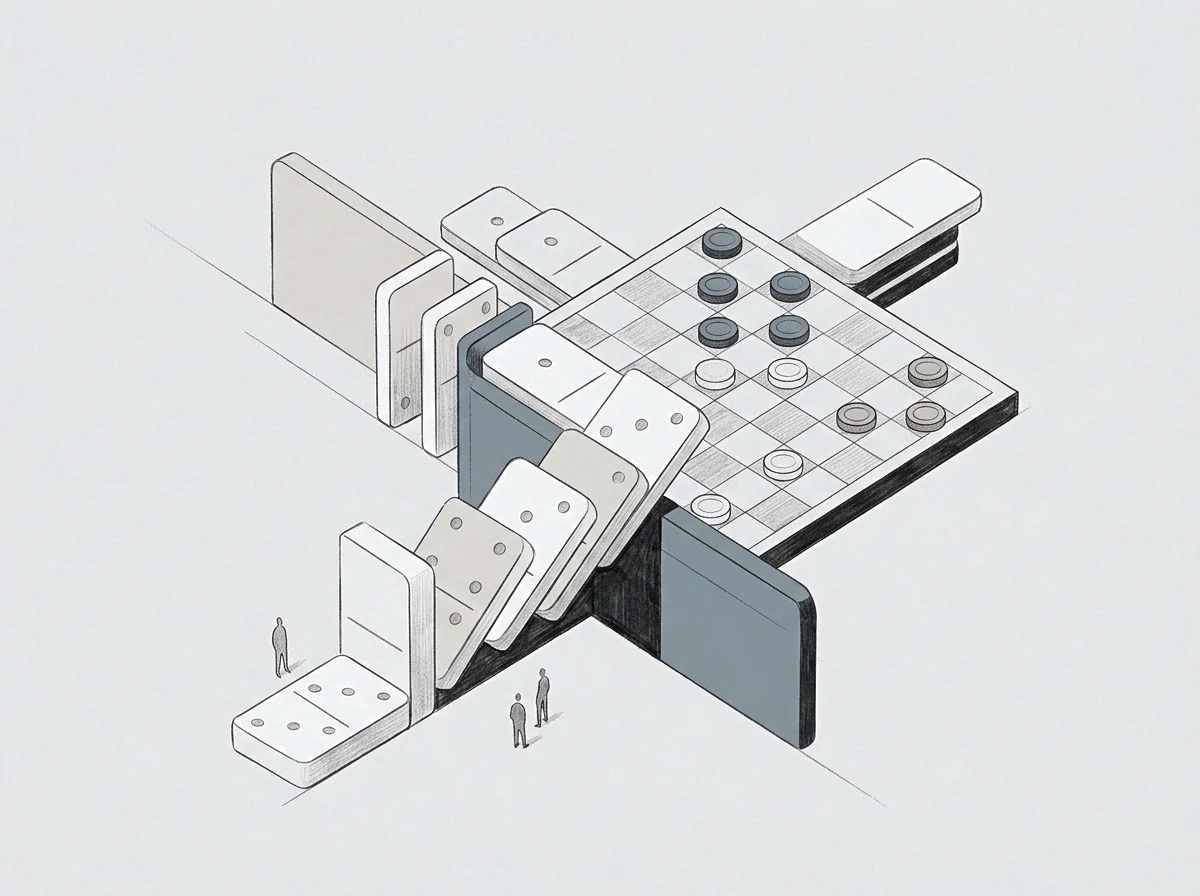
Resolving executive throttling does not occur through cognitive restructuring or emotional catharsis. The intervention is structural. The nervous system resumes normal prefrontal synthesis only when the objective count of active operational loops drops below the neurological ceiling.
Restoring executive capacity requires immediate, non-negotiable gating of incoming demands.
The operator implements three immediate operational shifts:
- Hard concurrency limits restrict active projects to two items while parking all other initiatives in static storage.
- Asynchronous batching eliminates real-time monitoring channels, restricting input evaluation to two designated windows daily.
- Explicit termination terms attach binary success criteria and hard stop dates to every active negotiation.
Take an executive who reduces active open channels from twenty-two to four over a single weekend. On Monday morning, the physiological paralysis that blocked strategic writing dissolves. The prefrontal cortex reallocates freed metabolic energy toward complex planning.
No therapeutic processing occurred. The operational load fell below the throttling threshold, and the brain released the protective brake.
The long-term prevention of executive throttling depends entirely on maintaining rigorous structural buffers around leadership seats. When organizations treat executive processing capacity as an infinite resource, the biological system eventually defends itself through involuntary shutdown. Clear contractual boundaries, explicit delegation, and strict loop termination protect both operational continuity and executive health.