
Gating Mechanisms for Capital Allocation Accuracy Under Chronic Operational Load
Physical separation of operational triage from balance sheet authority prevents cognitive exhaustion from mispricing long-term capital investments.

Desk
Four browser windows remain active past midnight while a vendor contract sits open beside a capital expenditure request for factory tooling. The operator has spent nine hours resolving warehouse shipping errors, renegotiating freight surcharges, and answering personnel complaints. Mental processing runs against an absolute limit.
Incoming messages arrive faster than any human central nervous system can parse them. Under this state of depleted reserve, the operator clicks the authorization icon for a two hundred thousand dollar equipment lease, bypassing the sensitivity model built two weeks prior. The wire clears.
Operating fires set the schedule. The allocation stands.

Operational Friction Displaces Diligence
Direct exposure to relentless tactical escalations consumes the exact cognitive slots needed for probabilistic forecasting. Capital allocation demands counterfactual thinking, baseline rate comparisons, and deliberate negative scenario modeling. Running an operating company generates sensory and relational noise that floods working memory.
When an individual spends twelve hours extinguishing supplier crises, the prefrontal cortex sheds complex analytical routines to conserve metabolic energy. Urgency replaces valuation. The mind prioritizes whatever action stops the current barrage of demands.
Capital commitments made under operational strain suffer from truncated inquiry. The person holding signing power stops asking what returns the asset generates across a five-year cycle. Inquiry shrinks to a single variable: will this purchase quiet the immediate logistical problem.
Equipment vendors, real estate brokers, and software sales teams readily detect this fatigue. They accelerate closing schedules when the allocator appears overwhelmed. Diligence takes time.
Fatigue flattens variance.
An operational fire always presents a louder claim than a balance sheet allocation.
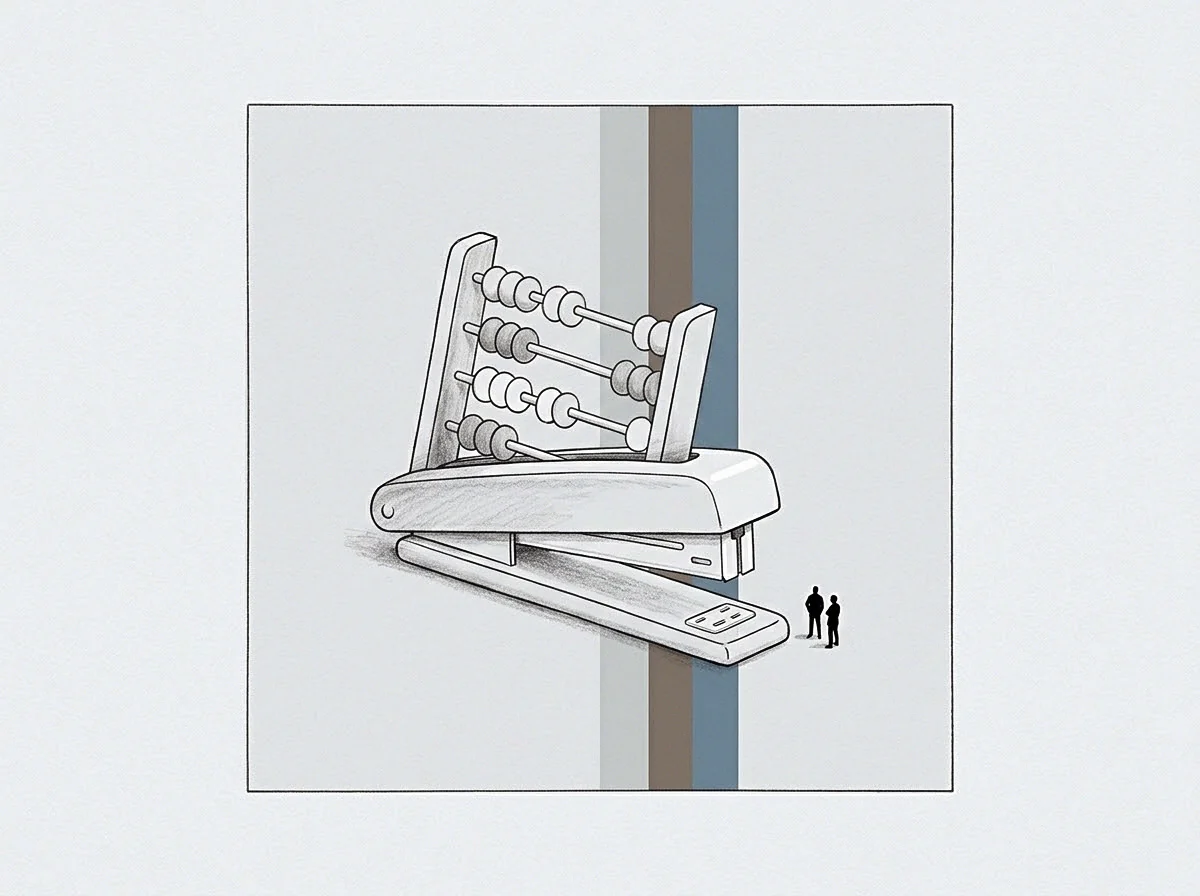
The Contagion of Immediate Urgency
Field emergencies carry an emotional volume that long-range financial commitments lack. A broken assembly line or an angry major client threatens immediate reputational injury. In contrast, signing an overpriced multi-year warehouse lease inflicts damage slowly through monthly cash outflows that show up quarters later.
The nervous system weighs present discomfort far more heavily than deferred loss. When operational tempo spikes, the allocator treats cash as an expendable shield to deflect incoming stress.
Repeated exposure to rapid-fire problem solving establishes a bias toward instant action. An operator accustomed to making twenty split-second decisions every morning struggles to drop into the reflective, low-arousal state required to price risk correctly. The pace of the shop floor contaminates the posture of the balance sheet steward.
Cash reserves drain through premium rush fees, unscrutinized maintenance retainers, and redundant software subscriptions bought merely to avoid another administrative confrontation.
Unchecked operational load systematically converts investment decisions into emergency relief expenditures, leaving the enterprise burdened with high fixed carrying expenses long after the initial crisis has subsided.

Drift
Prolonged physiological activation degrades executive functioning through measurable neurobiological pathways. Chronic elevation of circulating catecholamines and glucocorticoids alters the prefrontal networks responsible for working memory and impulse regulation. An allocator operating inside continuous crisis mode does not experience this change as emotional distress.
The system adapts by throttling peripheral awareness and simplifying decision trees to survive the daily intake of demands. Noise drowns the hurdle.

Allostatic Wear on Valuation Depth
Sustained regulatory effort exacts a continuous toll on analytical endurance. In laboratory tests of corporate managers subjected to sleep restriction below six hours across consecutive working cycles, experimental subjects showed a forty percent increase in risk miscalculation during portfolio simulations. This measurement rested on controlled tracking of probabilistic payoffs under uniform information access.
What would move this finding is counter-evidence from real-time biometric trials demonstrating that elevated cortisol preserves Bayesian sensitivity during market swings. Until such data surfaces, physiological wear remains an established driver of analytical error.
The precise boundary where routine operational tempo tips into destructive capital impairment varies across capitalization structures and cannot be stated with absolute mathematical finality. Allocators facing this empirical gap adopt an arbitrary limit of twenty triage events per day before freezing authorization privileges. Below this ceiling, analytical routines retain coherence.
Above it, sensitivity analysis dissolves into rubber-stamping.
When working memory saturates under active escalations, evaluation routines drop tail-risk models to conserve metabolic glucose.
Operating exhaustion produces predictable pathologies in balance sheet management:
- Scope contraction narrows scenario modeling to the single most optimistic business outcome to evade the cognitive friction of running downside sensitivity tests.
- Authority abdication delegates major pricing parameters to motivated internal project champions whose incentives reward total project spend rather than invested capital efficiency.
- Temporal myopia discounts contractual commitments maturing beyond twenty-four months down to zero perceived financial drag.
- Default consent approves recurring capital outlays automatically to prevent administrative backlogs from interrupting urgent customer-facing tasks.

Whose Signature Commits The Balance Sheet?
Decoupling operational authority from capital disbursement represents the baseline defense against allocation error. When the same individual who battles daily client emergencies holds unilateral wire authority, balance sheet accuracy collapses under the sheer weight of convenience. The person feeling the burn will write any check that extinguishes the fire.
Separating these roles prevents operational exhaustion from raiding enterprise reserves.
Consider an enterprise generating fifteen million dollars in annual revenue where the chief executive also manages direct customer disputes. During a protracted inventory reconciliation failure, the executive signs a three-year contract for automated fulfillment software carrying six-figure annual licensing minimums. The contract contains onerous auto-renewal terms and steep termination penalties.
Two quarters later, the software sits eighty percent unutilized because the company lacked the internal engineering staff to implement its core APIs. The signing took place during a week when the executive logged eighty-five hours. The slot closes.
Will an organization recognize the degradation of its capital deployment routines before its liquid reserves hit insolvency?

Clamp
Mechanical constraints neutralize cognitive exhaustion by removing human discretion from the authorization sequence. A proper regulatory barrier acts independent of how tired, hurried, or stressed the allocator happens to be. It introduces mandatory friction, enforces temporal gaps, and requires verifiable data inputs before liquid assets move out of company accounts.
Speed degrades selection.

Structural Filters Against Exhausted Deployment
Industrial safety engineering provides a useful parallel in chemical processing facilities. Physical interlocks prevent high-pressure catalyst valves from opening while reactor vessel temperatures remain below specified flash thresholds. The operator cannot override this mechanical linkage regardless of production delays or scheduling panic.
Capital allocation routines require identical structural safeguards.
Take two partners managing a logistics firm with two million dollars in unallocated cash reserves. The operating partner oversees seventy truck drivers, insurance claims, and fuel procurement. Under traditional arrangements, this partner commands unilateral spending up to one hundred thousand dollars to maintain fleet readiness.
Under a clamped protocol, any disbursement exceeding twenty-five thousand dollars for non-scheduled inventory requires an independent assessment, an automated seventy-two hour delay, and matching approval from the non-operational finance partner. When a regional warehouse supplier offers an exclusive lease expansion during a severe freight bottleneck, the operating partner cannot wire the commitment fee on impulse. The latency period forces the decision into an environment stripped of immediate physical stress.
A mandatory seventy-two hour latency on non-payroll disbursements over fifty thousand dollars terminates panic funding.
| Mechanism Type | Operational Load Absorbed | Allocation Failure Prevented | Structural Enforcement Point |
|---|---|---|---|
| Cooling Latency | Absorbs acute logistical panic and immediate situational arousal. | Prevents impulse commitments driven by transient vendor-induced deadlines. | Automated banking freeze holding outbound wires for seventy-two hours. |
| Partitioned Desk | Absorbs constant field escalations and personnel grievances. | Stops triage teams from converting corporate cash into operational band-aids. | Complete removal of treasury signing credentials from field managers. |
| Dual Hurdle Valuation | Absorbs confirmation bias induced by severe cognitive fatigue. | Terminates projects possessing poor return profiles disguised by optimism. | Mandatory verification of baseline discount rates by outside reviewers. |
| Quota Cadence | Absorbs volume pressure from multiple competing division heads. | Restricts capital distribution to fixed calendar tranches regardless of demand. | Hard calendar caps on total deployment windows per fiscal quarter. |

Quantitative Hurdle Enforcement
Behavioral research examining transaction leads handling high deal volumes indicates that physiological exhaustion amplifies the sunk cost fallacy. When sympathetic arousal remains high, allocators routinely double down on underperforming bets to avoid the immediate ego penalty of writing off an asset. This finding stems from cardiovascular measurements and pupil-dilation metrics during live bidding auctions.
Reversing this consensus would require longitudinal evidence proving that chronic sensory overstimulation sharpens Bayesian detachment in venture stages. That evidence does not exist.
To counteract this biological vulnerability, organizations institute explicit operational filters:
- Minimum return boundaries establish non-negotiable cash yield thresholds that instantly disqualify sub-par proposals without executive debate.
- Mandatory downside simulation requires project sponsors to calculate enterprise cash runway under conditions where projected revenue drops by fifty percent.
- Independent valuation sign-off demands verification of all salvage value assumptions by an external accountant who holds no equity stake in the operational entity.
- Fixed deployment calendars restrict major asset purchases to the second Tuesday of each month, breaking the link between daily problems and cash outflows.
The standard operating contract binds the balance sheet by stating that any commitment exceeding fifty thousand dollars executed without a completed underwriting dossier automatically renders the underlying transaction null and personal liability attaches to the rogue signatory.

Dock
Establishing an isolated capital allocation station shields long-range balance sheet health from daily operational tides. The steward of company capital must sit away from customer service queues, supply chain disruptions, and operational Slack channels. Physical and technological isolation prevents the immediate alarms of the firm from triggering premature balance sheet activity.
Patience requires idle capacity. The wire clears.

Segregated Architecture for Treasury Actions
Capital preservation demands an environment characterized by low sensory stimulation and generous cognitive headroom. When an allocator handles asset distribution from a quiet room with asynchronous communication tools, incoming operational fires cannot disrupt valuation depth. Decisions get queued rather than processed on the fly.
The allocator reads dossiers on fixed schedules, runs cold financial calculations, and communicates solely through formal written memos. The balance sheet bleeds.
Under this partitioned architecture, the operational team retains total authority over execution, scheduling, and tactical troubleshooting within approved annual operational budgets. They manage people and resolve client difficulties using existing enterprise resources. They do not, under any circumstance, possess the authority to expand fixed balance sheet obligations to solve a temporary operational puzzle.
Capital leaves the bank.
The operator who signs the purchase order at midnight never reads the termination clause.

Operational Immunity Through Structured Distance
Shielding the capital steward from the daily operational grind guarantees that cash remains expensive inside the enterprise. When operating teams discover that securing additional balance sheet resources requires navigating an exacting, unemotional evaluation barrier, they solve problems through process improvement and tactical discipline rather than capital expenditure. The gating protocol forces operational creativity to replace check-writing.
An enterprise structured in this manner survives macroeconomic contractions that wipe out competitors who ran their treasuries from the cab of an operational fire truck. The gating protocol ensures that when the business does choose to deploy cash, it does so with mathematical precision, fully cognizant of alternatives, and insulated from the exhausting panic of the operating floor.
A capital deployment gate remains effective only as long as the person holding the pen never smells the smoke from the warehouse floor.