
Identifying Physiological Stress Indicators in Early Stage Leadership Roles
Physiological stress indicators track cumulative autonomic wear from unclosed operational loops through heart rate, cortisol output, and motor tone.

Pulse
The screen remains bright at three in the morning while four conversations wait for decisions that determine payroll, equity distribution, and product survival. The physical body registers this exposure long before the mind admits exhaustion. In early stage operational roles, the primary indicators of physiological strain manifest inside the autonomic nervous system, specifically through the sustained suppression of parasympathetic activity and the continuous activation of the sympathetic branch.
Resting heart rate serves as the baseline register for this demand. When nocturnal heart rate remains elevated by eight to twelve beats per minute above an individual baseline, the cardiovascular apparatus is maintaining vigilance rather than initiating cellular repair. The heart rate variability, specifically the root mean square of successive differences between normal heartbeats, demonstrates a parallel drop.
Low high-frequency power in heart rate variability reflects the withdrawal of the vagal brake, meaning the body has lost its primary brake against metabolic expenditure.
Suppressed nocturnal vagal tone reveals continuous regulatory compensation long before cognitive awareness reports fatigue.
A second clear register appears in the morning cortisol profile. The normal diurnal pattern features an acute surge known as the cortisol awakening response, rising approximately fifty percent within thirty minutes of waking, followed by a steady downward slope toward dusk. Under prolonged operational demands, this dynamic flattens.
The morning surge either spikes excessively as an anticipatory reaction to incoming obligations, or dampens into a low, horizontal line that leaves the individual depleted upon waking.
Peripheral somatic signals track this hormonal shift with high fidelity. Sustained elevation of circulating catecholamines manifests in discrete physical patterns across muscle groups and vascular beds:
- Microvascular constriction produces cold extremities during routine decision sequences, reflecting sympathetic diversion of blood flow away from the skin surface toward central organ structures.
- Suboccipital motor tension stabilizes the head during extended screen vigil, creating tension headaches that resist conventional hydration and analgesics.
- Disrupted gastric motility alters gut transit time, generating chronic abdominal discomfort because digestion stalls during persistent adrenergic signaling.
- Phasic sleep fragmentation manifests as abrupt awakenings between two and four in the morning, precisely when the nocturnal surge of systemic epinephrine collides with waning adenosine pressure.
Autonomic strain remains invisible to casual observation. The individual appears functional, articulate, and decisive during scheduled meetings. Inside the cardiovascular system, the baroreflex mechanism loses sensitivity, impairing the natural blood pressure adjustments required during postural changes and acute cognitive demands.
Tissue repair slows. Metabolic clearance during deep sleep decreases, leaving systemic inflammatory markers subtly elevated.
The cost of ignoring these early cardiovascular signals arrives as an involuntary systemic shutdown, wherein the body enforces rest by extinguishing adrenergic responsiveness.
Loop
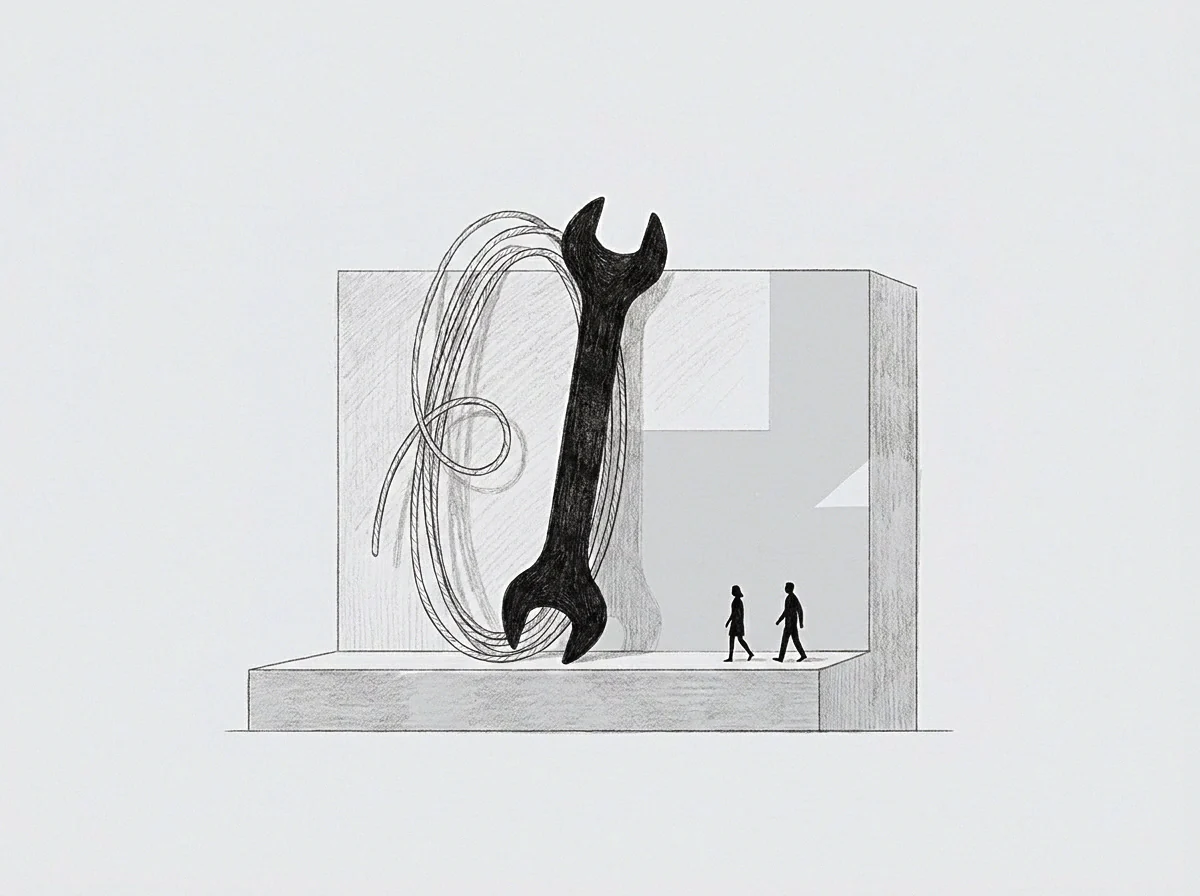
Every operational concern left unresolved acts as an active drain on physiological reserves. When an operator manages vendor terms, investor relations, infrastructure stability, and hiring pipelines simultaneously, the nervous system does not categorize these activities as abstract obligations. The brain processes unclosed operational commitments as persistent environmental monitoring demands.
The concurrency limit represents the finite number of unclosed loops a human nervous system can track before regulatory control degrades. Cognitive science defines working memory constraints with precision, yet the physiological load of open commitments extends beyond conscious working memory into the background allocation of sympathetic tone. An open loop maintains low-grade autonomic arousal because the brain treats an indeterminate state as an unneutralized threat.
Unclosed operational commitments maintain sympathetic arousal by functioning as ongoing threats to organizational survival.
Consider two leadership arrangements operating under equivalent operational milestones. The first maintains five discrete projects, each bounded by explicit delivery dates, unambiguous ownership, and predefined termination criteria. The second carries identical technical goals across five informal working channels, where scope remains fluid, delivery dates float, and accountability rests entirely on real-time messaging updates.
The second arrangement demands quadruple the regulatory energy of the first. The operator in the second arrangement experiences uninterrupted autonomic stimulation, as the nervous system must continuously scan inbound channels to prevent catastrophic oversights.
When the count of active threads surpasses systemic capacity, the nervous system implements throttling. Throttling constitutes an adaptive down-regulation of responsiveness, designed to protect essential physiological functions from total depletion. In this state, an individual retains the capacity to execute scripted, reactive tasks such as answering immediate pings or approving urgent requests.
The capacity to initiate long-range planning, deliberate synthesis, and deep analytical thought disappears entirely.
The human cost accumulates silently across the physical vessel. Hair follicles enter premature telogen phase under sustained glucocorticoid exposure. Salivary immunoglobulin A levels drop, opening the mucosal barrier to recurrent respiratory infections.
The individual misinterprets these physical manifestations as bad luck with seasonal viruses, overlooking the underlying erosion of the immune defense caused by holding sixty distinct operational threads in perpetual suspension.
One unclosed contract thread consumed the third cognitive slot for nine consecutive weeks.
The system eventually reaches saturation where incoming messages trigger visceral nausea.

Desk
The physical workstation operates as the contact surface where organizational pressure translates directly into musculoskeletal bracing. An individual absorbing unbuffered operational anxiety adopts predictable postural defenses. The shoulders elevate toward the ears, the sternum compresses inward, and the diaphragm ceases full downward excursion.
This respiratory restriction locks the thoracic cage into shallow apical breathing, reinforcing sympathetic predominance through pure biomechanical feedback.
Breathing patterns and emotional regulation share immediate physiological connections through the phrenic nerve and the vagus. Shallow, rapid breathing lowers arterial carbon dioxide tension, inducing mild systemic vasoconstriction and cerebral hypoperfusion. The operator experiences this physical state as a subtle mental fog, often reaching for supplemental caffeine, which further elevates baseline heart rate and exacerbates peripheral tremor.
The physical furniture holds evidence of this motor guarding. Wrist rests show asymmetrical compression. Desk edges display indentations from clamped forearms.
The constant isometric contraction of the trapezius and levator scapulae muscles consumes significant metabolic energy, generating physical exhaustion by midafternoon even in the total absence of physical locomotion. The body works as hard as a manual laborer while remaining motionless on an ergonomic chair.
Take an operator who spends eleven hours daily in this posture, tracking real-time server alerts while negotiating founder vesting terms. The nervous system registers the persistent isometric load as evidence of a sustained physical struggle. Blood glucose regulation shifts; hepatic gluconeogenesis increases to supply fuel for muscular action that never occurs, leaving circulating glucose elevated and predisposing the individual to metabolic dysregulation.
The following table contrasts the measurable physiological indicators across two operational profiles, demonstrating how working conditions dictate biological markers.
| Measurement Metric | Buffered Operational Structure | Unbuffered Reactive Structure |
|---|---|---|
| Nocturnal Heart Rate Nadir | Reached within three hours of sleep onset | Delayed until the final hour before waking |
| High-Frequency Heart Rate Variability | Maintains baseline range above fifty milliseconds | Drops below twenty-five milliseconds consistently |
| Morning Cortisol Awakening Response | Sharp fifty percent rise with rapid clearance | Flattened curve or erratic secondary spikes |
| Diaphragmatic Excursion Depth | Full downward expansion during desk work | Restricted apical chest movement with breath-holding |
| Pupillary Oscillation Latency | Rapid accommodation between focal distances | Prolonged tonic dilation indicating chronic arousal |
The physical posture assumed at the workstation feeds directly into the neural centers governing fear and vigilance. The amygdala receives afferent signals from tense somatic musculature, interpreting that motor tone as an explicit instruction to maintain heightened alertness. The loop between mind and tissue becomes self-reinforcing, locking the individual into an ongoing physiological state that persists long after leaving the office.
The customer would simply describe the operator as slightly distracted, unaware that the physical body was sustaining the somatic equivalent of a marathon sprint.
Gauge
A critical operational error involves confusing autonomic throttling with clinical depression. When an operator presents with diminished enthusiasm, blunted affect, flat vocal tone, and reluctance to initiate new projects, observers frequently assign a psychiatric label. The underlying mechanism, in many instances, represents a homeostatic throttle rather than an affective pathology.
Throttling represents a preserved regulatory system operating under an impossible load. The organism reduces voltage to secondary systems to preserve essential cardiac, metabolic, and cognitive cores. If the incoming demand ceases, or if ungated threads receive explicit boundaries, the throttled system regains generative capacity rapidly.
Clinical depression, by contrast, involves persistent mood disturbance, anhedonia across both work and personal contexts, and cognitive distortions that persist regardless of external workload adjustments.

Autonomic Throttling Versus Primary Depressive States
Physiological measurement reliably separates these two states. In autonomic throttling, sleep architecture shows preserved slow-wave sleep proportions during early cycles, provided adrenergic arousal does not interrupt the initial descent. The individual demonstrates robust cognitive focus when shielded from incoming interruptions, executing complex technical analyses with intact logical accuracy.
The exhaustion belongs entirely to the cost of continuous regulation and switching friction.
In clinical depression, sleep architecture demonstrates marked suppression of slow-wave stages along with premature rapid eye movement onset. Cognitive latency impairs basic processing speed regardless of environmental protection. Furthermore, systemic inflammatory profiles diverge; throttled individuals demonstrate elevated acute-phase reactants linked directly to sleep fragmentation and sympathetic overdrive, whereas primary affective disorders show distinct, centralized neuroinflammatory and neuroendocrine patterns.
Throttling preserves core analytical competence while deliberately extinguishing discretionary motivation to protect somatic reserves.
Misreading a throttled executive as clinically depressed carries severe consequences. Prescribing interventions that demand internal emotional processing adds another complex cognitive obligation to an already overloaded slate. The individual does not lack psychological resilience or personal insight.
The nervous system lacks metabolic headroom and parasympathetic recovery time.
The individual requires the aggressive termination of open operational loops, the delegation of decision authority, and physical removal from incoming stimuli. Treating a structural capacity deficit with self-reflection exercises simply accelerates cardiovascular exhaustion.
A clear rule of thumb dictates that when systemic exhaustion vanishes within forty-eight hours of absolute communications isolation, the underlying condition stems from regulatory throttling rather than primary affective collapse.

Term
Stabilizing physiological indicators requires structural boundaries rather than psychological adaptations. The body does not alter its autonomic response based on cognitive reframing; it alters its response when incoming signals actually diminish. To halt the progression of allostatic overload, the operator must implement explicit terms that govern operational scope, communication availability, and authority transfer.
A stated limit functions as a mechanical circuit breaker for the autonomic nervous system. When an operator establishes that zero communication channels will be monitored between eight in the evening and seven in the morning, the brain finally receives the permission required to initiate parasympathetic recovery. The knowledge that an emergency escalation path exists, with clearly defined conditions, allows the amygdala to stand down its surveillance protocols.
Gating incoming work requires dividing operational demands into rigid structural tiers:
- Explicit operational scopes define the exact boundaries of individual responsibility, ensuring the leader rejects extraneous tasks that drain core cognitive bandwidth.
- Time-delimited communication windows restrict reactive message processing to designated blocks, ending the continuous autonomic micro-arousals caused by persistent incoming notifications.
- Autonomous decision thresholds authorize team members to commit company capital up to specific currency limits without seeking executive sign-off, closing loops instantly.
- Mandated recovery intervals enforce physical separation from all digital infrastructure, providing the unbroken sleep cycles required to normalize heart rate variability.
The execution of these boundaries shifts the physiological baseline. Nocturnal heart rate descends to baseline values within two weeks of enforcing rigorous communication limits. The morning cortisol slope regains its natural downward trajectory, ending the midday fatigue crashes that characterize adrenal strain.
Muscle tension around the neck and diaphragm diminishes as the body realizes it is no longer under continuous ambush.
The central question that remains unresolved is how an early stage enterprise can maintain institutional momentum when its key leaders must radically restrict their autonomic availability to survive.