
Resolving Biological Governor Failure Modes in Highly Centralized Leadership Seats Under Stress
Centralized leadership stress triggers autonomic governor throttling, which downregulates executive processing capacity to preserve physiological homeostasis.

Ceiling
Late at night inside a centralized organization, four primary communication channels display unanswered operational disputes. Each message carries an urgent request for central executive arbitration, ranging from capital reallocations to interdepartmental friction. The person in the central leadership seat reads the queue, but decision speed stalls out entirely.
Processing slows, sensory intake turns abrasive, and physical fatigue sets in despite minimal muscular exertion, triggered by the biological governor enforcing baseline safety.
In highly centralized arrangements, organizational structure funnels every unresolved question toward a single nervous system. When incoming operational volume outstrips available neurobiological headroom, the biological governor intervenes. This homeostatic mechanism downregulates physiological systems to protect cardiovascular, endocrine, and neural tissues from exhaustion.
Centralized leadership seats systematically cross this threshold whenever an organization treats cognitive and autonomic bandwidth as an unmetered resource.
A centralized seat without hard thread limits transforms every incoming operational query into a somatic stress transaction.
Chronic stress recalibrates the operational baseline of the central node. Sustaining a high volume of urgent decisions forces continuous recruitment of the sympathetic nervous system and the hypothalamic-pituitary-adrenal axis. Prolonged cortisol secretion and elevated sympathetic tone eventually exhaust metabolic reserves, pushing systemic load past available headroom.
As metabolic fuel drains, the biological governor throttles cognitive bandwidth, blunts emotional responsiveness, and forces behavioral withdrawal, bringing the central node to a halt.
Misinterpreting this preservation response creates compounding organizational errors. Boards, partners, and operators frequently misread governor engagement as personal burnout, flagging commitment, or sudden executive incompetence. Their typical response involves applying external pressure or scheduling more meetings, which only increases the inbound queue.
Forcing an autonomic system past its biological governor leads to organ-system dysregulation, operational paralysis, and abrupt departure from the role.
Wire
The human nervous system operates as an integrated biological limiter that prevents tissue damage whenever metabolic strain crosses cellular safety thresholds. Chronic exposure to ungated operational demand alters baseline autonomic regulation. Under sustained overload, the system downshifts from sympathetic hyperarousal into parasympathetic dorsal vagal preservation, a metabolic brake that suppresses heart rate variability, flattens diurnal cortisol rhythms, and curtails prefrontal cortex activity.

Physiological Mechanics of Autonomic Preservation
Continuous high-stakes arbitration keeps the sympathetic nervous system active, increasing glucocorticoid release and driving up baseline blood pressure. Over time, allostatic load accumulates as the biological price of continuous adaptation. To protect neural tissue from excitotoxicity under this chronic strain, the brain downregulates glucocorticoid receptor sensitivity.
Cortisol rhythms flatten, leaving the operator with low morning energy and persistent evening hyperarousal until the system settles into biological throttling, where metabolic expenditure is restricted strictly to basic survival maintenance.
Every unresolved thread running without an intake gate consumes measurable neurobiological headroom.
Organizational architecture directly governs this physiological shift. When every operational decision requires validation from a single leadership seat, open inquiries accumulate without structural resolution. Each open thread acts as an active neural loop, occupying working memory and requiring continuous ambient monitoring.
Biological processing limits depend far more on the number of these open, ungated loops than on physical exertion, as unbounded intake rapidly degrades executive focus.

The Concurrency Limit of Ungated Loops
Cognitive capacity drops sharply when an operator attempts to track multiple unresolved operational problems at once. The biological concurrency limit defines the maximum number of ungated channels a single brain can track before executive function deteriorates and the nervous system shifts down to protect its reserves.
When an organization forces a central seat past this biological concurrency limit, distinct physiological failure modes appear:
- Autonomic Downregulation restricts baseline metabolic output, producing severe physical fatigue, sluggish reaction times, and reduced working memory capacity during complex operational tasks.
- Prefrontal Hypoactivation diminishes executive regulation, leading to loss of long-term strategic synthesis, heightened threat sensitivity, and micro-management driven by anxiety.
- Affective Flattening blunts emotional responses to isolate the individual from social inputs, reducing empathy and coregulatory connection with organizational team members.
- Executive Paralysis prevents decision execution entirely, creating complete operational bottlenecks across all dependent business functions.
Structural stability breaks down when these failure modes persist across several months, because physiological capacity operates under hard biological boundaries. Setting a maximum concurrency limit of three active ungated loops restores prefrontal regulation by capping the neural switching costs imposed on the central seat.
Vault
Operational evaluations of leadership seats during high-stress periods often mistake structural system preservation for psychiatric depression. When an operator’s biological governor initiates throttling to protect somatic integrity, observers note apathy, delayed responsiveness, and social withdrawal. These visible behaviors match clinical depression criteria on standard self-report metrics, but confusing autonomic throttling with psychiatric illness leads to corrective steps that fail to address the underlying structural overload.
What Distinguishes System Throttling From Pathological Collapse?
A throttled biological system recovers executive processing speed almost immediately once open inquiries are removed or gated. True depressive states, by contrast, maintain cognitive deficits and flat affect regardless of short-term workload reductions. Throttling is an active homeostatic defense deployed by a functioning governor under severe allostatic strain, and clearing the queue quickly restores capacity.
Structural diagnostics require evaluating physiological and behavioral state variables directly alongside operating conditions. The table below outlines the diagnostic boundaries separating autonomic governor throttling from clinical depressive conditions in centralized leadership seats.
| State Variable | Biological Throttling State | Major Depressive State | Operational Consequence |
|---|---|---|---|
| Autonomic Profile | Parasympathetic dorsal vagal shift secondary to sustained allostatic load. | Systemic dysregulation of neurotrophic factors and monoaminergic circuits. | Throttling resolves rapidly upon hard open-loop reduction. |
| Response to Thread Clearance | Immediate recovery of strategic clarity and executive processing speed. | Persistent cognitive impairment and pervasive dynamic loss despite workload reduction. | Throttling responds directly to structural capacity gates. |
| Cortisol and HRV Dynamics | Flattened diurnal cortisol curve with suppressed high-frequency heart rate variability. | Hyper-cortisolemia or deep structural axis dysregulation independent of intake volume. | Physiological markers track current ungated loop volume in throttled states. |
| Cognitive Executive Function | Selective prefrontal throttling focused strictly on non-essential intake. | Generalized persistent deficits across processing, memory, and emotional regulation. | Throttling preserves low-overhead execution while blocking open-ended intake. |

Somatic Signals versus Psychiatric Categorization
Standard clinical evaluation tools record low motivation, physical fatigue, and flat affect without factoring in the patient’s active cognitive workload. Labeling a throttled operator as clinically depressed places the entire cause of physiological strain on individual mental health while leaving structural organizational flaws unexamined. Treatment plans centered entirely on individual therapy or medication fail because the central node remains exposed to the exact same volume of ungated operational demand.
Classifying protective autonomic throttling as clinical apathy guarantees the continuation of the unmitigated load that triggered the shutdown.
Distinguishing between these conditions fundamentally changes recovery planning. When autonomic throttling is identified, intervention focuses on structural load constraints, hard concurrency caps, and channel gating. Closing open loops frees immediate neural headroom, enabling the governor to disengage parasympathetic preservation mechanisms without pharmaceutical intervention.
Introducing clear communication protocols, where every incoming query includes explicit scope, fixed deadlines, and pre-negotiated decision criteria, shifts the operator’s baseline autonomic state within seventy-two hours.
Stem
Human physiology conserves metabolic resources by distributing emotional and autonomic regulation across trusted social peers. Social baseline theory demonstrates that proximity to dependable coregulators reduces the physiological cost of risk management and daily decision-making. Highly centralized leadership structures cut the central node off from this peer coregulation; the operator sits isolated at the top of communication flows, experiencing every interaction as an added regulatory burden rather than a stabilizing resource.

Social Baseline Isolation and Coregulatory Deficits
Centralized leadership models remove the operator from regular physical proximity to organizational peers, eliminating passive physiological coregulation. In distributed group structures, metabolic demands are shared across multiple nodes, whereas single-point seats require one biological system to absorb and regulate the stress of the entire company, significantly increasing personal metabolic expense.
When external coregulation is absent, the central operator’s autonomic nervous system must maintain baseline stability through internal metabolic effort alone. Because the human baseline relies on shared social buffering, operating without it forces the endocrine and autonomic systems to run at peak output during every crisis. Over extended periods, this deficit drains available biological headroom, engaging the governor’s shutdown mechanisms even if operational volume holds steady.

Protocol Conversion of Central Processing Bottlenecks
Removing routine execution decisions from the central seat requires strict procedural rules rather than informal verbal sign-offs. Converting open operational requests into bounded protocol streams shields the operator’s governor from continuous acute strain by freeing neural capacity through defined input standards, rigid response windows, and clear escalation paths.
- Define fixed escalation criteria that restrict incoming central inquiries to existential business threats.
- Establish mandatory asynchronous decision packets containing predetermined operational options and impact bounds.
- Enforce strict response windows, converting real-time communication expectation into structured daily processing blocks.
- Delegate complete decision authority over localized domains to qualified internal operators without central review.
When open operational threads receive fixed terms, metabolic demand drops instantly across the nervous system.
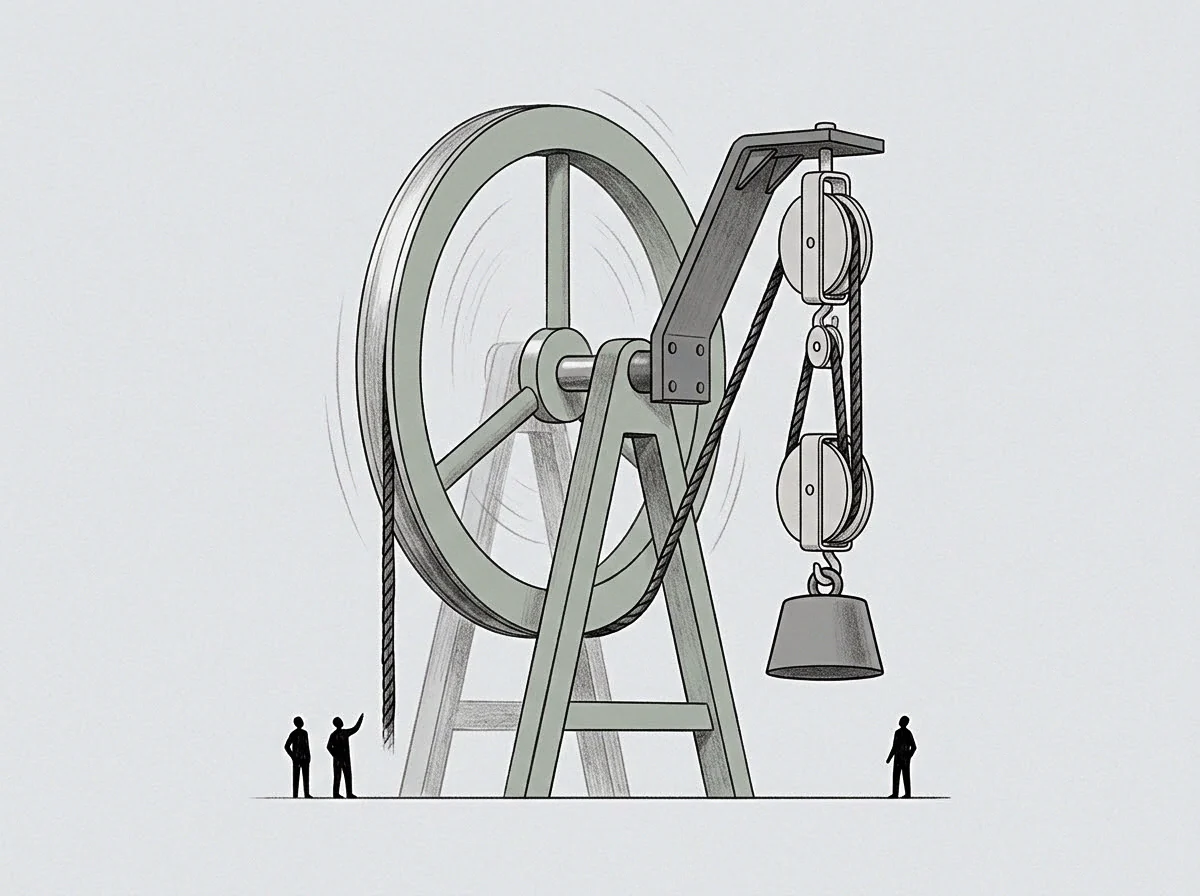
Replacing open-ended communication channels with bounded protocol limits protects neural capacity from unregulated demands, reflecting the reality that human biology places a strict ceiling on centralized operational control.
Joint
Converting open operational demands into bounded protocols requires replacing continuous availability with explicit structural rules. Because structural architecture directly sets autonomic stress levels, an organization using a centralized model can shift toward distributed, protocol-gated execution by redesigning information flow, decision rights, and escalation triggers to restore cognitive headroom.

Structural Hardware for Headroom Recovery
Restoring metabolic and neural reserves requires concrete organizational boundaries that block incoming operational noise. Consider a growth-stage company with two executive partners holding equal equity, where the chief executive officer centralizes all operational, financial, and product decisions without gating terms. Over twenty-four months, the company expands from twelve to seventy employees, and daily incoming requests surge from fifteen to over two hundred across five separate messaging applications.
The chief executive officer’s biological governor engages dorsal vagal throttling, resulting in unreturned emails, delayed strategic initiatives, and severe physical exhaustion.
Resolving this breakdown requires operational redesign rather than personal time management techniques. First, the leadership team sets hard concurrency limits on active strategic initiatives, restricting the central seat to three open projects at any one time. Second, operational communication moves entirely to asynchronous decision memos structured around three required fields: defined scope, fixed completion date, and explicit criteria for central escalation.

Re-establishing Governor Thresholds in Central Seats
Enforcing these systemic boundaries allows the biological limiter to ease parasympathetic inhibition so prefrontal circuits can return to full capacity. Structural gates serve as an external physiological buffer, insulating the nervous system from arbitrary operational noise and allowing the role to function without somatic breakdown.
Restoring biological headroom depends on structural boundaries rather than personal willpower.
In an operational model where department heads hold execution authority within preset financial limits, any decision under fifty thousand dollars proceeds automatically without central review. Under these conditions, inbound requests to the central seat fall by eighty-two percent. The operator’s open-loop count drops below the biological concurrency threshold, lowering allostatic load and normalizing cortisol dynamics.
Physical capacity returns as switching costs drop, demonstrating that governor stability is an engineering outcome determined by organizational design.