
The Physiological Limits of Founder Coregulation in High Friction Executive Systems
Founder coregulation fails when executive systems exceed baseline biological capacity, shifting operational stabilization from personal presence to explicit terms.

Desk
Late-night messaging channels in high-growth enterprises often reflect systemic executive anxiety. Four executive communications open simultaneously on a display screen at midnight during an operational pivot. Executive systems under capital pressure or strategic reorientation default to using the founder as a central stabilizing node.
When operational volatility rises, peer executives pull on the founder’s physiological presence to settle their own uncertainty. This pattern converts one person’s nervous system into the primary shock absorber for an entire enterprise leadership layer.

Executive Volatility and Coregulatory Strain
Operating environments characterized by capital stress, rapid headcount expansion, or shifting product parameters generate continuous threat signals across leadership teams. Social baseline theory establishes that human nervous systems operate on an energy-economy principle. Proximity to a familiar, low-stress individual reduces the metabolic cost of environmental threat processing.
In an executive structure, peer leaders offload threat management and affective stabilization onto the founder. The central leader’s calm acts as a shared biological resource.
This biological offloading operates silently across routine executive interactions. Unscheduled video calls, rapid escalation of operational friction, and frequent validation requests represent attempts to access upper-tier regulation. System stability increases in the short term as executive anxiety drops.
Cortisol levels remain elevated under stress. The founder absorbs systemic friction, keeping the executive layer functional during crises. The arrangement persists because it yields immediate operational stabilization without formal process adjustments.
The leadership team relies on immediate founder access during operational friction because direct contact restores team composure faster than internal protocol.

Reservoir
Continuous biological regulation of an executive team imposes measurable metabolic costs on the central regulator. Polyvagal research demonstrates that maintaining an outward presentation of calm under threat demands active ventral vagal complex engagement. Vagal tone measures autonomic headroom.
This vagal brake slows heart rate, suppresses sympathetic fight-or-flight cascades, and preserves prefrontal cortex activity responsible for high-level decision-making. Coregulation consumes finite glucose resources.
When an executive system continuously uses the founder for coregulation, the founder’s vagal complex operates without rest. Autonomic nervous system monitoring reveals the physiological signature of this state: persistent heart rate variability suppression, elevated systemic inflammation, and degraded sleep architecture. Prefrontal cortex capacity drops rapidly.
Over time, the physiological baseline deteriorates. The physiological capacity for coregulation hits a strict ceiling long before executive demands decrease.

Which Physiological Signatures Indicate Coregulation Exhaustion?
Sustained sympathetic activation combined with suppressed vagal tone marks the boundary where biological cushioning ceases to function. The body signals allostatic overload through specific cognitive and physiological changes. Executive working memory declines.
Attention narrows onto immediate threat cues. Inhibitory control weakens, leading to erratic emotional expressions or sudden operational withdrawal.
Consider an executive team comprising four vice presidents navigating a critical ninety-day enterprise launch. Assume incoming unplanned escalations average fourteen instances per day across direct messaging channels. Assume the founder’s baseline heart rate variability drops thirty-eight percent over six weeks of continuous availability.
Under these baseline conditions, the metabolic cost of regulating four secondary nervous systems while managing strategic risk depletes central nervous system reserves. By week eight, the founder exhibits delayed decision speed and executive fatigue. Biological reserves have strict physiological ceilings.
Executive teams adapt to clear parameters. The capacity to process complex multi-variable trade-offs degrades across the entire leadership layer.
Vagal tone suppression accelerates when an executive system offloads operational friction onto a single baseline regulator without structural throttling.
Unchecked biological coregulation exhausts the baseline regulator’s metabolic reserve, resulting in systemic decision degradation across the entire leadership layer.

Throttle
Transitioning an executive architecture away from biological reliance demands explicit operational constraints. A stated limit acts as a structural wall within an enterprise system. When availability converts from an unconstrained biological resource into a gated system property, the executive layer must absorb its own operational friction.

Coregulation Capacity Across Executive Operating Structures
System stability depends heavily on how operational friction moves between leadership tiers. The operational framework dictates whether stress transfers to individuals or process structures.
| Operating Model | Vagal Reserve Depletion Rate | Executive Autonomy Index | System Stability Impact |
|---|---|---|---|
| Unconstrained Direct Access | High (35-50% drop over 60 days) | Low (Dependencies persist) | High Immediate Calm / Long-term Systemic Fragility |
| Windowed Synchronous Access | Moderate (15-20% drop over 60 days) | Moderate (Partial resolution) | Balanced Short-term Headroom |
| Term-Gated Asynchronous Access | Low (Baseline preserved) | High (Autonomous execution) | High Structural Resilience |

Transitioning from Biological Cushion to Stated Term
Replacing real-time presence with explicit rules protects executive baseline capacity. The distinction between state-gated and decision-gated acts becomes vital for enterprise health. Decision-gated acts respond directly to conscious intent, such as approving a budget or writing a policy.
State-gated acts depend entirely on underlying physiological headroom. Maintaining parasympathetic tone during a hostile board meeting or evaluating ambiguous market signals requires high vagal reserve. No amount of cognitive decision-making produces state-gated outputs when the physiological system remains in sympathetic overdrive.
Operational friction demands explicit routing rules. Enterprise structures must prevent continuous biological depletion by enforcing explicit access limits.
- Vagal Complex Exhaustion occurs when continuous emotional cushioning drains parasympathetic reserves, disabling state-gated executive capacities.
- Escalation Feedback Loop develops when executive peers experience immediate relief through direct access, reinforcing dependency on upper-tier presence.
- Compulsory Availability Trap emerges as implicit expectations convert founder physiological presence into a permanent operational dependency.
A stated communication window shifts threat processing back to the originating executive tier.
A policy limiting unscheduled executive syncs to two designated thirty-minute windows daily forces peer executives to resolve operational friction independently.

Stance
Establishing structural boundaries alters how executive systems process operational ambiguity. A limit stated once as an objective condition removes personal friction from executive interactions. The executive team stops reading availability as an indicator of personal affection or rejection.
Availability becomes a derived systemic variable with clear costs attached.

Differentiating Personal Trait from System Boundary
Operational limits defined as physical properties of the enterprise system prevent interpersonal friction. When a founder states terms governing availability, the executive system meets an immutable boundary rather than an elastic individual. The push for immediate coregulation encounters a structural term.
- Executive teams log operational blockers in asynchronous channels prior to requesting direct verbal syncs.
- The central regulator evaluates incoming items against stated priority criteria during designated review windows.
- Issues failing to meet escalation criteria return to the operational tier with explicit authority parameters attached.
- Direct verbal coregulation occurs only during established emergency thresholds defined by quantified revenue or system downtime metrics.
Unscheduled interruptions disrupt strategic focus. Asynchronous channels reduce immediate strain. Systemic clarity replaces baseline emotional support.
As these operational parameters take hold, peer executives build internal tolerance for operational ambiguity.
Systemic autonomy increases as executive teams lose direct real-time access to upper-tier biological regulation.
The degree to which early-stage executive alignment relies on implicit emotional coregulation before formal governance can replace it remains subject to debate.
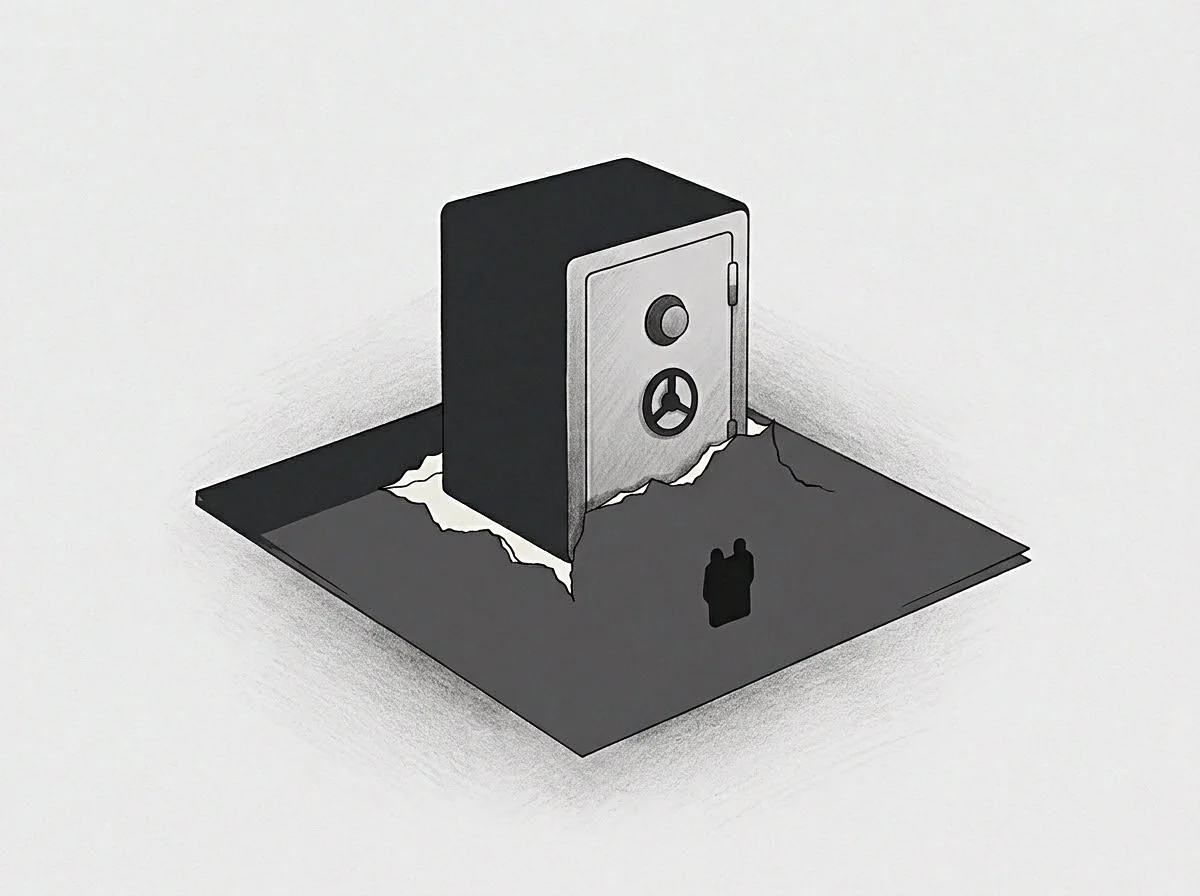
Filter
Long-term executive velocity requires moving from continuous availability to systematic load distribution. Ping arithmetic provides a metric for analyzing enterprise channel health. Every incoming ping represents an upward transfer of cognitive or emotional load.
A channel that pings constantly signifies an executive layer that has externalized threat processing. Tracking ping frequency maps systemic dependency across the leadership structure.

Sustained Executive Velocity Through Structural Separation
When an enterprise relies on systemic rules, executive performance shifts from personal endurance to repeatable architecture. Silence in an escalation channel yields valuable operational data. Silence signifies that peer executives possess sufficient headroom and structural authority to process volatility locally.
Silence signals operational maturity across tiers.
Physiological capacity dictates executive endurance. The baseline regulator who establishes clear structural filters protects strategic headroom while fostering peer autonomy.
Silence in an escalation channel indicates that executive peers are carrying their own operational load.
Preserving founder physiological headroom ensures long-term strategic clarity across high-friction operational environments. Executive systems that anchor stability in explicit terms rather than continuous personal availability build durable capacity while protecting the metabolic integrity of their leadership layer.