
Long Term Structural Costs of Unfunded Co Regulation Demands on Executive Teams
Unfunded co-regulation demands drain executive working memory, forcing physiological throttling that degrades strategic capital allocation.
Siphon
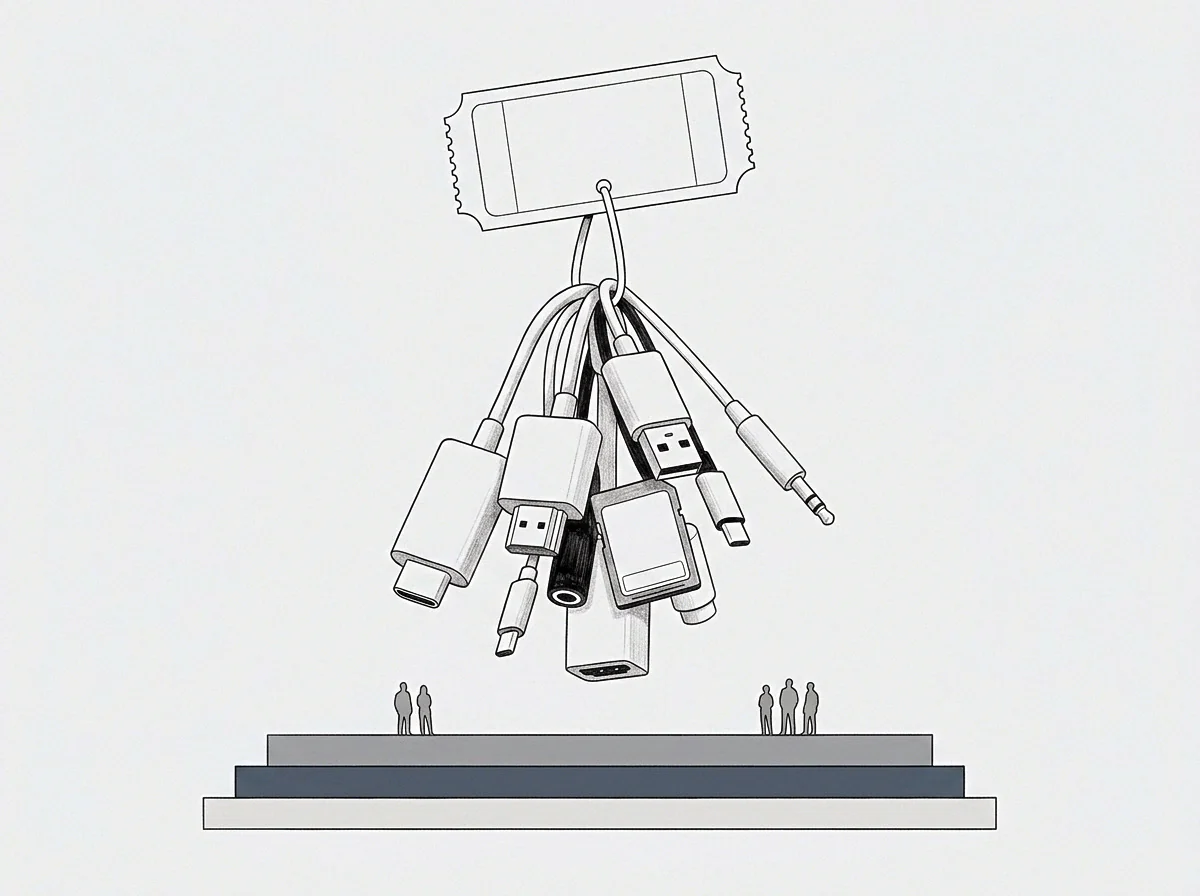
Executive teams routinely conduct an unpriced transaction during periods of organizational stress. When market conditions shift or product milestones slip, executive officers absorb the emotional volatility of middle management and external stakeholders through direct personal contact. This draws on the biological capacity for interpersonal nervous system stabilization, where a person with higher physiological control dampens autonomic distress in those around them.
Organizational design treats this stabilizing work as free executive throughput. In practice, maintaining emotional equilibrium for three direct reports during structural uncertainty consumes measurably higher baseline glucose and elevates cortisol levels over sustained periods.
The immediate consequence is an invisible transfer of operational capacity. An executive spends hours in unscheduled one-on-one sessions, smoothing anxieties and re-establishing psychological safety, before attending to strategic capital allocation. The regulatory effort directly reduces working memory headroom.
When an officer spends four hours absorbing team panic, their ability to process complex multi-variable financial models degrades significantly by late afternoon. Executive capacity vanishes into unseen relational maintenance.
Biological stabilization provided to subordinates reduces executive working memory before strategic decision making begins.
Unfunded regulatory labor creates an imbalance in executive compensation structures. Compensation packages reflect visible metrics such as revenue growth, product shipping cadence, and capital efficiency. They omit the volume of interpersonal debt an executive liquidates to prevent team attrition.
When an executive absorbs organizational friction without formal resource allocation, the executive team functions as an emotional shock absorber for the enterprise balance sheet. This dynamic remains unmeasured until the executive reaches a threshold of physiological depletion.
The informal expectations around leadership presence reinforce this quiet transfer. Board members and chief executive officers praise leaders who maintain team morale during severe downturns, framing the effort as natural leadership capability. This framing conceals the concrete metabolic cost of the interaction.
Over two fiscal quarters, an executive acting as a primary regulatory anchor for thirty engineers burns personal reserves that cannot be restored through brief operational pauses.
The team will perform without disruption so long as the executive remains continuously present to calm them.

Wear
Chronic interpersonal regulation alters executive baseline physiology. Stress physiology defines allostatic load as the cumulative neuroendocrine wear resulting from repeated adaptation to acute stressors. When an executive team routinely dampens organizational anxiety without structural remediation, their allostatic load markers ascend predictably.
Cortisol secretion curves flatten, nocturnal heart rate variability drops, and inflammatory markers rise. These physiological changes manifest not as personal unhappiness, but as systematic operational throttling.
Throttling occurs when an overworked physiological system deliberately restricts output to prevent systemic collapse. Practitioners often mistake this state for psychiatric depression, though the observable markers differ in measurable ways. Depression involves widespread cognitive distortion and global loss of interest.
Throttling presents as targeted energy conservation where the executive executes routine operational tasks flawlessly while losing the capacity to initiate novel, high-complexity work. The mind protects its physical substrate by muting executive function.
The table below details how executive states diverge across distinct physiological and operational indicators during ongoing regulatory demands.
| Operational Indicator | Baseline Function | Systemic Throttling | Clinical Burnout |
|---|---|---|---|
| Strategic Capacity | High prospective planning; processes complex multi-variable trade-offs easily. | Restricted to immediate horizon; defers multi-year structural decisions. | Complete loss of forward projections; reactive processing only. |
| Interpersonal Reserve | Absorbs external volatility without changing personal behavioral baselines. | Strictly limits interaction duration; enforces formal communication channels. | Total withdrawal; active avoidance of team interactions. |
| Task Initiation | Spontaneously launches novel initiatives and structural reallocations. | Executes pre-existing operational scripts; halts unscheduled project starts. | Inability to launch even routine administrative workflows. |
| Physiological Recovery | Heart rate variability recovers during standard rest intervals. | Nocturnal heart rate variability remains suppressed across weekends. | Persistent neuroendocrine dysregulation requiring clinical intervention. |
The concurrency limit governs how many ungated relational loops an executive can hold open simultaneously. Every open loop demands continuous background processing. An executive holding four open interpersonal disputes on the senior leadership team consumes three execution slots simply maintaining composure.
When incoming organizational demands exceed this concurrency ceiling, the executive system drops non-essential operational threads to protect core governance duties.
Systemic throttling preserves basic operational execution by halting high-complexity strategic initiation.
Take an executive team of three founders operating a high-growth technology enterprise for three consecutive years without explicit boundaries on availability. Assume the chief technology officer holds forty percent of technical operations while managing three unstable team leads who require daily emotional reassurance. By month thirty, the officer’s average weekly sleep duration drops below six hours, and heart rate variability metrics reflect chronic sympathetic drive dominance.
Unscheduled product feature architecture halts entirely. The team attributes the delay to technical complexity, masking the physical exhaustion of the executive.
Leaving physiological wear uncalculated leads directly to sudden executive departure at critical execution junctures.

Board
Governance structures frequently compound unfunded co-regulation burdens. Board directors seek operational predictability, pushing executive teams for higher output during market contractions. They measure quarterly financial key performance indicators while remaining blind to the relational friction inside the executive suite.
When a chief executive officer spends twenty hours a week mediating co-founder disputes, board reporting schedules remain unchanged. Governance mechanisms fail to account for the internal stabilization labor required to keep the executive team intact.

How Does Relational Friction Deplete Executive Headroom?
Relational friction consumes cognitive resources that belong to enterprise governance. When executive partners lack clear emotional boundaries, every strategic disagreement turns into a negotiation over personal validation. The social baseline theory demonstrates that proximity to reliable, low-friction partners lowers the metabolic cost of individual action.
Conversely, working beside an unpredictable executive partner elevates baseline stress responses, forcing the brain to expend extra metabolic energy merely staying in the room.
The executive suite then experiences structural capacity erosion through specific operational mechanisms:
- Unspoken covert contracts create unstated expectations of mutual emotional support that conflict directly with tough business decisions.
- Continuous threat tracking forces executives to evaluate partner reactions before stating necessary operational truths.
- Relational debt accumulation occurs when leaders suppress immediate operational conflicts to keep peace, leading to sudden team fractures later.
- Asymmetric regulatory burdens arise when one executive consistently dampens the volatility of another without institutional compensation.
The internal working model of each executive dictates how much external reassurance they demand from their peers. A leader with insecure attachment tendencies requires continuous, high-touch validation during enterprise shifts. When two senior leaders display incompatible relational patterns, the administrative load of keeping them aligned falls on the remaining executive team.
This dynamic turns routine strategic alignment sessions into lengthy personal coaching meetings.
Unspoken emotional maintenance contracts inside executive teams convert strategic hours into interpersonal arbitration.
A formal clause specifying exact operational responsibilities and communication protocols eliminates covert relational expectations.
Tax
The long-term operational tax of unfunded co-regulation accumulates in enterprise decision quality. When executive teams operate at continuous ceiling capacity, strategic decisions suffer from systemic short-term bias. The executive brain, burdened by ongoing neuroendocrine stress, prioritizes immediate conflict avoidance over long-term value creation.
Capital allocation decisions shift toward projects with low interpersonal friction rather than high economic yield.
Task switching exacerbates this structural loss. Moving from a high-intensity interpersonal crisis to a complex financial review incurs a severe switching cost. Studies in cognitive ergonomics confirm that switching between emotionally charged interactions and analytical tasks reduces functional intelligence temporarily.
An executive who conducts five consecutive high-empathy performance intervention meetings makes worse analytical risk assessments immediately afterward.
The system creates a continuous drain on leadership capacity through distinct operational channels:
- Escalation loop amplification occurs when middle managers offload all emotional volatility directly to executive desks, bypassing standard leadership tiers.
- Strategic delay compounding manifests as executives defer difficult structural layoffs to avoid the intense co-regulatory effort required during team offboarding.
- Executive turnover acceleration forces the enterprise to incur massive search, hiring, and onboarding expenses when depleted leaders resign suddenly.
Frequent transitions between emotional arbitration and quantitative analysis measurably degrade analytical decision precision.
The financial impact remains hidden in administrative overhead line items. Companies spend substantial sums replacing executives who burned out under unacknowledged regulatory burdens. They retain expensive external management consultants to solve operational stagnation that actually stems from executive neuroendocrine exhaustion.
The true cost of unfunded emotional stabilization appears not as a single line item, but as systemic enterprise drag.
How much capital does an enterprise lose when its executive team operates at thirty percent cognitive headroom for a full fiscal year?

Fence
Protecting executive structural capacity demands explicit operational boundaries. Executive teams must move from informal, unfunded emotional availability to gated, structured interactions. Gating requires establishing clear parameters around access, scope, and time allocation.
The goal is setting firm operational bounds that keep relational labor within budgeted limits.
The primary move involves creating explicit communication gates across executive channels. An ungated channel lets any internal issue ping an executive directly, triggering immediate autonomic arousal. Gated systems route operational issues through structured intake mechanisms, preserving executive working memory for dedicated analytical blocks.
The table of availability must be rewritten to match actual physiological capacity.
A structured approach to managing regulatory demand relies on specific boundary rules:
- Structured intake windows restrict non-emergency operational escalations to designated periods during the business day.
- Explicit operational scopes delineate exactly which team dynamics require executive intervention and which belong to human resources.
- Time-bounded mediation slots cap internal executive dispute resolution sessions to sixty strict minutes per week.
- Async issue logging forces leaders to state operational grievances in writing before requesting synchronous mediation meetings.
Parking an open relational thread is a crucial skill for senior leaders. A parked thread is a deferred decision or dispute that has been explicitly assigned a future review date, removing its active load from working memory. When an executive team agrees to park an unresolved equity or role dispute until a specified quarterly board meeting, the immediate cognitive load drops to zero.
The thread stops consuming active slots in the concurrency count.
Executive performance scales directly with the rigor of structural boundary enforcement.