
Resolving Relational Friction During Asynchronous Transition In Distributed Leadership Systems
Relational friction during asynchronous leadership transitions stems from un-gated open threads and physiological throttling misread as interpersonal hostility.

Seat
Four messages sit unread in an inbox at two in the morning, sent by a co-leader three time zones away. The sender logged off hours ago after documenting a decision regarding product allocation. The receiver reads the text without the baseline physiological signals that co-located leaders rely on: tone of voice, posture, facial micro-expressions, and immediate verbal feedback.
In a shared physical room, a quick glance verifies mutual understanding in seconds. Across an asynchronous channel, that same interaction fragments into four un-gated threads that remain open until the next daylight overlap.
Distributed co-leadership systems frequently mistake the friction of asynchronous transition for interpersonal misalignment. When leaders shift from synchronous co-presence to asynchronous operational logs, the neurological cost of regulation rises. Physical co-presence functions as an external regulatory mechanism, allowing individuals to borrow stability from one another during high-stakes decisions.
When that physical buffer disappears, each leader must independently absorb the allostatic load generated by ambiguous or delayed communications.

Physical Co-Presence as Borrowed Regulation
In co-located executive teams, real-time interaction limits the lifespan of uncertainty. A co-leader states an idea, observes immediate feedback, and adjusts the proposition in real time. The brain processes these rapid reciprocal signals with low metabolic expenditure.
Proximity reduces the perceived threat of unresolved ambiguity, maintaining cognitive load within baseline limits.
Transitioning to asynchronous operations removes this continuous feedback loop. A written proposal posted to an internal document sits for twelve hours before receiving commentary. During this latency window, the receiver holds an open loop.
The nervous system registers unresolved open loops as background demands on attention, consuming working memory even during periods of non-work.
Four unresolved notifications from a partner across three time zones consume the same mental processing capacity as a live direct dispute.

The Dissolution of Shared Context
Synchronous work continuously updates shared context without explicit effort. Leaders moving through the same space absorb background information through informal conversations, ambient ambient updates, and shared observations. Asynchronous systems demand that all context be deliberately articulated in writing.
This transfer shifts the burden of context creation entirely onto individual initiative.
When co-leaders experience cognitive overload, the thoroughness of their written context drops. A terse three-line update replaces a comprehensive handoff document. The receiving partner, lacking background knowledge, reads the brevity as resistance, disinterest, or strategic divergence.
The relational friction that emerges is not driven by differing visions. It is the direct consequence of context decay across asynchronous boundaries.
The partner assumes the delay in writing reflects a delay in commitment.

Wear
Allostatic load represents the cumulative physiological wear on the body resulting from chronic exposure to stress responses. In distributed leadership, this load increases when communication transitions from high-bandwidth synchronous meetings to low-bandwidth asynchronous feeds. Each open notification, unresolved decision line, and ambiguous message acts as an ungated input requiring continuous cognitive monitoring.
The system remains in a state of hyper-vigilance, scanning for potential operational misalignments across time zones.
When regulatory capacity reaches its limit, the system initiates throttling. Throttling is a protective biological mechanism designed to prevent systemic breakdown by selectively shutting down non-essential functions, including non-urgent communication, emotional expression, and proactive collaboration. In co-leadership structures, throttling is routinely misdiagnosed as executive failure or relational withdrawal.
This misreading introduces secondary friction, as one partner interprets another partner’s protective energy conservation as apathy or hostility.

Allostatic Demand in Ungated Channels
Ungated asynchronous communication channels create an infinite queue of incoming load. Without structural boundaries on when and how messages are delivered, co-leaders receive updates continuously throughout their local rest windows. The expectation of constant availability prevents the nervous system from returning to baseline rest states.
- Vigilance Drift context occurs when a leader maintains constant passive monitoring of messaging platforms during off-hours, draining metabolic capacity without advancing operational outputs.
- Context Fragmentation context emerges when complex strategic decisions are broken into dozens of rapid, unscheduled text posts across multiple channels, overwhelming working memory.
- Interpretive Hyper-Vigilance context develops when a co-leader repeatedly re-reads delayed messages to detect hidden tone, intent, or unspoken criticism.
- Asynchronous Escalation context manifests when partners send increasingly urgent written messages to force immediate answers during the other party’s local night.

Throttling Misread as Relational Withdrawal
A throttled co-leader exhibits distinct operational patterns. Response times stretch from hours to days. Written messages become brief and strictly transactional.
The capacity for empathetic engagement drops. These behavioral changes are physiological adaptations to exhausted regulatory reserves rather than conscious interpersonal choices.
When the non-throttled co-leader encounters this withdrawal, the natural reaction is to increase communication frequency to demand clarity. This push adds incoming load to an already saturated system, forcing the throttled leader deeper into defensive silence. The cycle accelerates until the partnership breaks under the weight of unmanaged cognitive wear.
Unmanaged cognitive wear across open channels eventually forces the complete collapse of executive co-regulation.

Channel
Resolving relational friction requires transforming ungated channels into structured asynchronous interfaces. Gating is the practice of imposing explicit constraints on communication scope, delivery timing, and required response formats. By establishing strict parameters for interaction, co-leaders protect individual regulatory headroom while maintaining operational momentum across time zones.
The core objective of gating is to reduce the number of active open loops. An ungated thread requires constant mental tracking. A gated thread carries an explicit scope, a definitive decision date, and stated terms for resolution, allowing both partners to park the item until the designated review window arrives.

Architectural Gating of Open Loops
Gating operates through clear structural rules applied to every asynchronous exchange. Messages must state their urgency level, required action, and deadline explicitly in the opening line. If an update requires no immediate decision, it is marked as informational, freeing the recipient from the obligation to formulate a quick response.
Batching updates into structured daily or weekly handoffs further isolates incoming load. Instead of sending twenty isolated thoughts throughout the day, a leader consolidates observations into a single end-of-day summary document. This shift reduces context switching and preserves concentrated blocks of uninterrupted focus for both partners.
When an asynchronous message carries no explicit deadline or response format, the receiving system assigns it maximum priority by default to mitigate uncertainty.
| Dimension | Ungated Continuous Transmission | Gated Structured Handover |
|---|---|---|
| Cognitive Load per Loop | High. Requires active monitoring and perpetual context retention. | Low. Parked until designated evaluation window. |
| Latency Interpretation Risk | Severe. Delays are read as relational resistance or neglect. | Minimal. Delays conform to pre-agreed response windows. |
| Allostatic Wear Rate | Accelerated. Continuous physiological arousal during off-hours. | Bounded. Complete disengagement during local rest windows. |
| Thread Concurrency Limit | Unbounded. Dozens of unresolved lines remain open simultaneously. | Strictly limited to active, high-priority operational topics. |
Thread Concurrency Limits in Asynchronous Governance
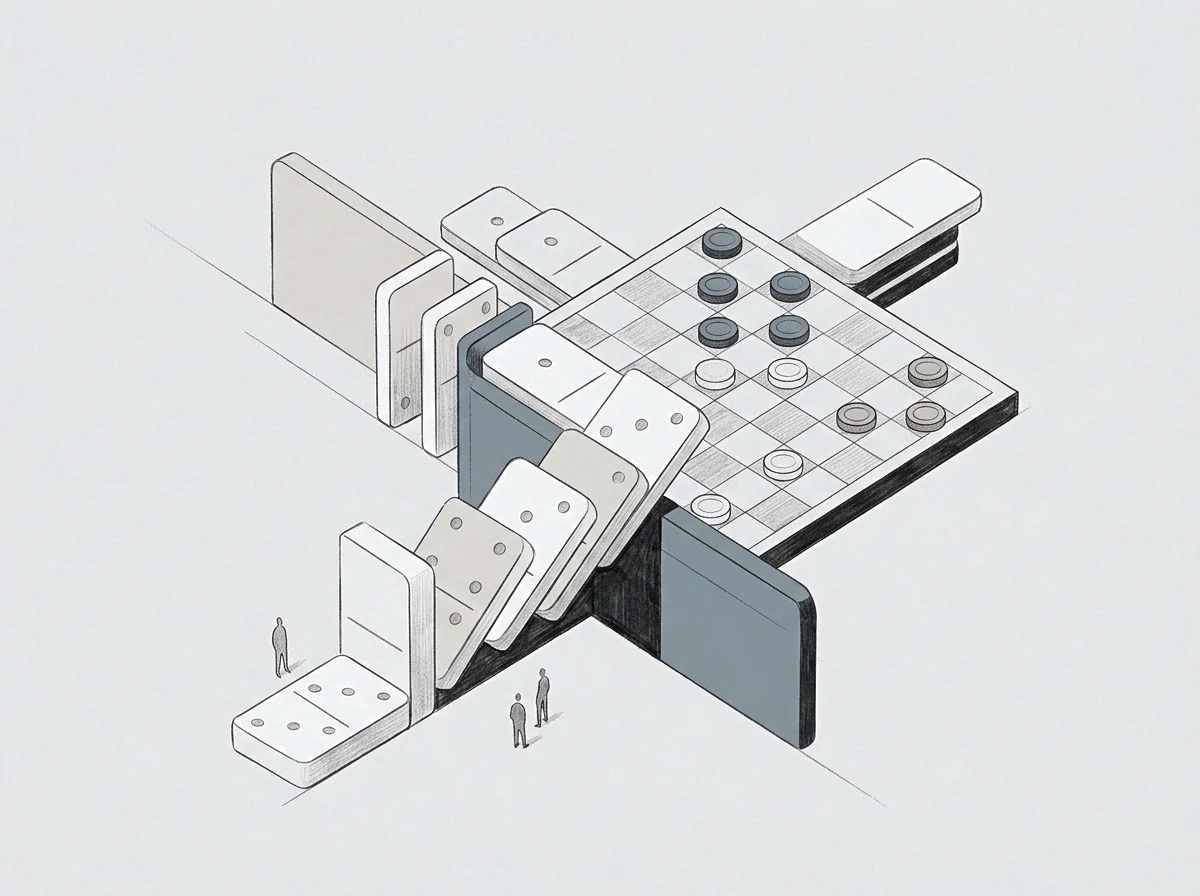
Every individual possesses a finite concurrency limit for unresolved strategic threads. Holding more than three or four high-stakes open decisions simultaneously exhausts cognitive capacity, regardless of operational competence. When asynchronous systems allow unlimited thread proliferation, performance degrades rapidly.
Establishing explicit concurrency caps ensures that new strategic discussions cannot open until existing threads are formally closed or parked. If a co-leader introduces a new strategic topic while the system is at its thread limit, the receiving partner has the explicit authority to defer the topic until an active thread resolves. This structural rule prevents the accumulation of unmanageable cognitive debt.
The addition of a mandatory response window clause transforms an ambiguous ping into a costless parked item.
Contract
The implicit psychological contracts that govern synchronous leadership teams fail during asynchronous transitions. In a co-located environment, expectations regarding availability, responsiveness, and decision-making authority are largely unspoken, regulated by physical presence and real-time observation. Asynchronous distributed systems require these covert expectations to be rewritten into explicit operational terms.
Relational friction emerges when one partner operates under an unstated covert contract while the other acts according to written guidelines. For instance, a founder may assume that asynchronous transition means work can happen at any hour, while their co-leader assumes it means total disconnect outside local core hours. Without explicit terms, these mismatched baseline assumptions generate perpetual conflict over responsiveness.

When Does Latency Convert Into Relational Friction?
Latency converts into relational friction at the precise moment delay exceeds unstated expectation. When a leader posts a critical question and expects an answer within two hours, a twelve-hour delay is experienced as personal disrespect or operational negligence. If the same leader operates with a pre-agreed twenty-four-hour SLA, the twelve-hour delay is processed as normal operational execution.
The relational breach is produced by the variance between expectation and reality, not by the delay itself. Eliminating friction requires mapping and aligning these expectation thresholds across the leadership node.
- Response Windows explicitly establish maximum allowable latency times for different communication channels, separating urgent operational blocks from routine updates.
- Decision Boundaries clearly delineate which strategic choices require dual-signoff and which can be executed unilaterally by a single co-leader.
- Handoff Formats define the exact structure, background context, and metadata required before a complex file or project is passed asynchronously to a partner.
- Dispute Pathways lay out specific steps for escalating and resolving asynchronous misunderstandings before they cause relational damage.
An explicit seventy-two hour response window eliminates forty-eight hours of unstated vigilance for both leaders.
One slot freed up in working memory opens immediate headroom for high-level strategy.
What specific unstated expectations currently operate between the co-leaders that have not yet been translated into written operational terms?

Toll
Unmanaged relational friction in asynchronous distributed systems exacts a heavy toll on leadership stability and corporate performance. Chronic physiological arousal, perpetual misattribution of intent, and continuous context switching deplete executive headroom. Over extended periods, this wear degrades decision quality, increases operational errors, and eventually leads to co-leader burnout or team fracture.
Protecting distributed leadership systems requires viewing capacity through the lens of structural engineering rather than personal effort. High-performing asynchronous execution is not achieved by demanding greater emotional resilience or longer working hours from leaders. It is achieved by building communication architectures that respect human cognitive limits and physiological constraints.
Structural Restructuring of Asynchronous Co-Leadership
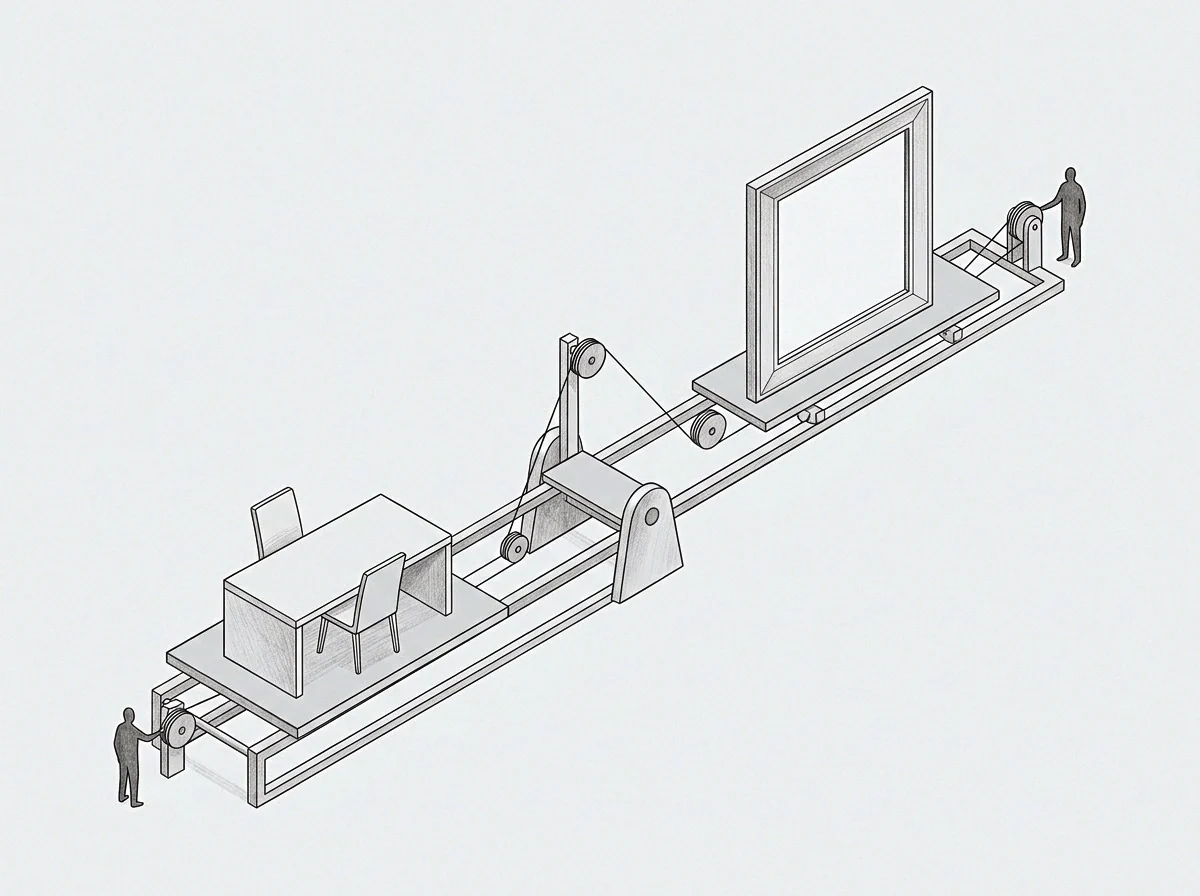
When relational friction reaches critical thresholds, leadership teams must execute an immediate structural reset. This process begins by auditing all active asynchronous communication channels, closing non-essential threads, and re-establishing strict thread concurrency limits. Synchronous time should be temporarily reintroduced, not as a permanent operational crutch, but as a deliberate intervention to clear accumulated context debt and recalibrate psychological alignment.
Once baseline stability is restored, the co-leaders rebuild their asynchronous interface using gated channels, explicit operational contracts, and clear availability boundaries. By shifting the regulatory burden from individual willpower to structural design, distributed leadership systems can achieve high operational velocity without sacrificing relational trust or physiological health.
Leadership capacity scales with the clarity of closed threads rather than the volume of shared messages.
System capacity increases when open communication loops are systematically gated and parked.