
Structural Delegation Gates Limiting Post Stress Autonomic Recovery Latency in High Strain Executive Seats
Structural delegation gates eliminate ambient executive vigilance by establishing explicit variance boundaries, enabling rapid parasympathetic reactivation after acute operational stress.

Wake
Autonomic recovery latency measures the time between the end of an acute operational stressor and the return of parasympathetic tone. In high-strain executive roles, that latency often stretches from twenty minutes into eighteen hours. Heart rate variability, indexed through the root mean square of successive differences between normal heartbeats, remains suppressed long after a meeting or a transaction wraps up.
Sustained sympathetic arousal persists because the central nervous system cannot register that a task has ended while the executive retains ambient accountability for what happens next. The seat stays metabolically active while the body sits in an empty room.
The sympathetic nervous system treats pending liabilities much like immediate physical hazards. Cortisol secretion, mediated by the hypothalamic-pituitary-adrenal axis, continues unabated when a founder or executive steps away from a terminal without clear delegation architecture. Salivary alpha-amylase readings stay elevated, and blood pressure fails to dip during evening rest periods.
This prolonged activation stems from cognitive appraisal in the prefrontal cortex, where incomplete operational loops register as ongoing environmental instability.
Vagal reactivation commences only when cortical threat appraisal drops below the threshold of ongoing vigilance.
Physiological wear accumulates through steady allostatic strain on vascular beds and metabolic pathways. Chronic systemic suppression of the vagal brake leaves the cardiovascular system exposed to sustained catecholamine bathing. Endocrine output does not shut off simply because an executive walks away from the desk.
Autonomic equilibrium depends on cognitive certainty about downstream execution.
Three physiological markers track this prolonged recovery latency under sustained vigilance:
- Suppressed parasympathetic reactivation delays night-time cardiac deceleration when unresolved escalation risks occupy executive working memory.
- Elevated nocturnal glucocorticoid output prevents vascular relaxation during slow-wave sleep cycles, flattening the cortisol curve.
- Diminished baroreflex sensitivity blunts rapid blood pressure adjustments during daytime operational transitions, keeping the vascular tree locked in defensive vasoconstriction.
That prolonged latency degrades cognitive performance across later decision cycles. Working memory buffers narrow under sustained adrenergic stimulation, while threat-detection circuitry in the amygdala broadens its aperture, treating routine operational updates as existential alarms. Sleep architecture suffers through diminished delta-wave generation, which impairs glymphatic waste clearance in the brain.
Over months of this unmitigated delay, endothelial function degrades, vascular elasticity declines, and the physiological cost of ordinary self-regulation climbs until routine choices exhaust what little headroom remains.

Desk
An executive desk accumulates unclosed loops through incomplete handovers. A founder hands off a critical capital restructuring project or an enterprise sales contract to an officer, yet quietly keeps monitoring it. Notification channels stay open.
The phone buzzes at midnight with status updates that require no immediate action but demand ongoing situational awareness. That standby state ties up a cognitive processor, burning metabolic fuel without producing any operational headway.
The gap between delegated authority and retained surveillance determines autonomic recovery. When an executive hands over execution but keeps the liability gate, the central nervous system stays vigilant. The executive keeps scanning incoming messages for catastrophic mistakes.
Each notification produces a small surge in sympathetic tone that resets the recovery clock to zero, prolonging the physiological recovery delay indefinitely.
A silent terminal still demands vigilance if the routing terms assign failure back to the sender.
Controlled delegation protocols establish the exact conditions under which operational sovereignty transfers to a deputy. In an ungated handover, the deputy behaves like an extension of the executive, escalating every ambiguity. In structural delegation, the deputy owns the bounded domain within fixed variance thresholds, and the executive desk receives word only when predefined parameters break down.
| Structural Variable | Ungated Operational Monitoring | Gated Structural Delegation |
|---|---|---|
| Escalation Protocol | Ad hoc notification based on subordinate anxiety | Deterministic routing triggered by quantitative variances |
| Information Flow | Continuous low-latency streaming across chat feeds | Batched asynchronous summaries at defined intervals |
| Vagal Brake Reactivation | Suppressed across twelve to eighteen hours | Restored within ninety minutes of operational closure |
| Executive Slot Allocation | Three concurrent monitoring threads active | Zero active slots during execution periods |
| Cortisol Diurnal Curve | Flattened profile with elevated nadir | Preserved morning spike with sharp evening drop |
Take an executive managing an operational restructuring who assigns supply chain realignment to a chief operating officer. In an ungated handover, the executive checks warehouse throughput metrics twice daily on a personal dashboard and reads logistics exceptions through dinner. Sleep latency stretches past ninety minutes while the brain sorts through unresolved freight allocations.
The body stays locked in a high-strain posture, leaving the executive with persistent autonomic exhaustion despite having formally transferred the assignment.
Set that same situation under a structural delegation gate. The executive and the chief operating officer agree on clear operating boundaries: supply chain variance below eight percent stays entirely autonomous, and freight rerouting authority up to half a million dollars belongs strictly to the operating officer. Updates happen only during a scheduled Tuesday briefing.
Without a confirmed breach of variance, the notification channel stays quiet. The executive brain drops the operational model from working memory as parasympathetic tone rebounds and the heart rate settles into its baseline rhythm.
The deputy reads a steady stream of check-ins as evidence of institutional distrust and operational micromanagement.
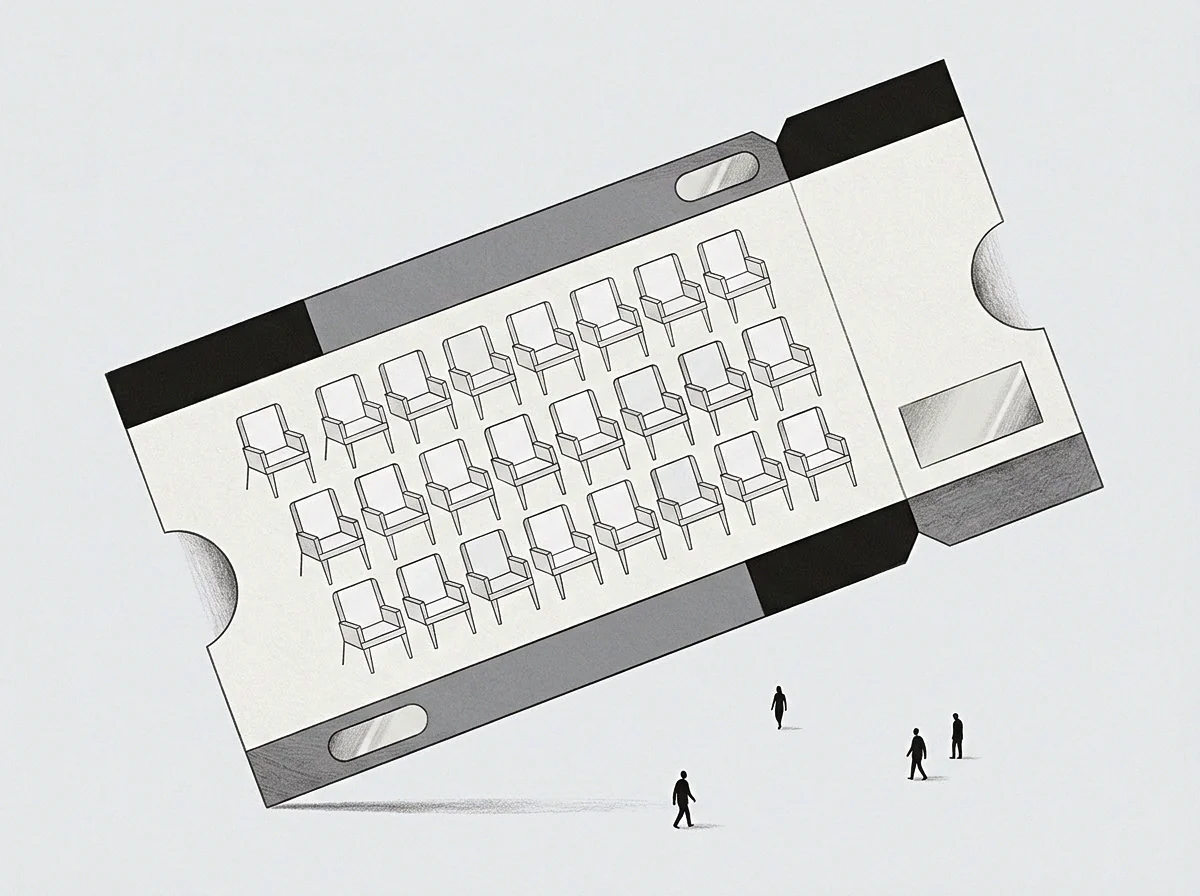
Shunt
A structural delegation gate acts as an operational shunt, diverting incoming enterprise decisions away from the central executive processor into structured institutional channels. That redirection prevents cognitive saturation. By decoupling operational accountability from immediate executive intervention, the gate creates the headroom required for biological restoration.

How Structural Handover Boundaries Restore Vagal Tone?
Restoring vagal tone depends on cognitive closure. The executive mind needs certainty that an operational thread carries three firm boundary conditions: a bounded scope, a clear delivery date, and explicit variance terms. Once those conditions are set, the central nervous system can archive the thread.
Active operational tracking winds down, and vagal efference increases, dampening sinoatrial excitation and letting the cardiac rhythm slow.
Threads close when variance terms define failure without executive supervision.
A functional structural delegation gate relies on specific institutional mechanisms:
- Deterministic exception thresholds specify exact financial, operational, or legal boundaries that trigger an executive alert, silencing all communication below those boundaries.
- Time-locked synchronization cadences replace ambient real-time messaging with structured weekly reconciliation meetings, eliminating intermittent unpredictable interruptions.
- Explicit operational sovereignty grants the designated officer complete legal and functional control over the operational domain, removing the executive monitoring burden.
- Asynchronous record architecture maintains operational truth in searchable shared repositories rather than inside executive cognitive caches.
Operating the gate frees up limited cognitive capacity. An executive runs against a hard concurrency limit of three or four deep operational threads, and every unresolved, ambiently monitored task takes up a full slot. A seat holding four open monitoring lines has zero headroom left for strategic work or physical recovery.
Installing a delegation gate converts that active loop into a dormant record, clearing the slot immediately.
A naval propulsion plant runs on the same thermodynamic principle. When steam pressure climbs past the operating ceiling of a turbine casing, bypass valves divert excess thermal energy straight to the condenser. The turbine avoids mechanical fatigue because the load shifts automatically without orders from the bridge.
Executive stress physiology follows the same circuit: the delegation gate serves as the bypass valve, routing operational pressure away from neural pathways.
The working capacity of an executive seat scales with the strength of its structural gates rather than the physical stamina of the person in it.
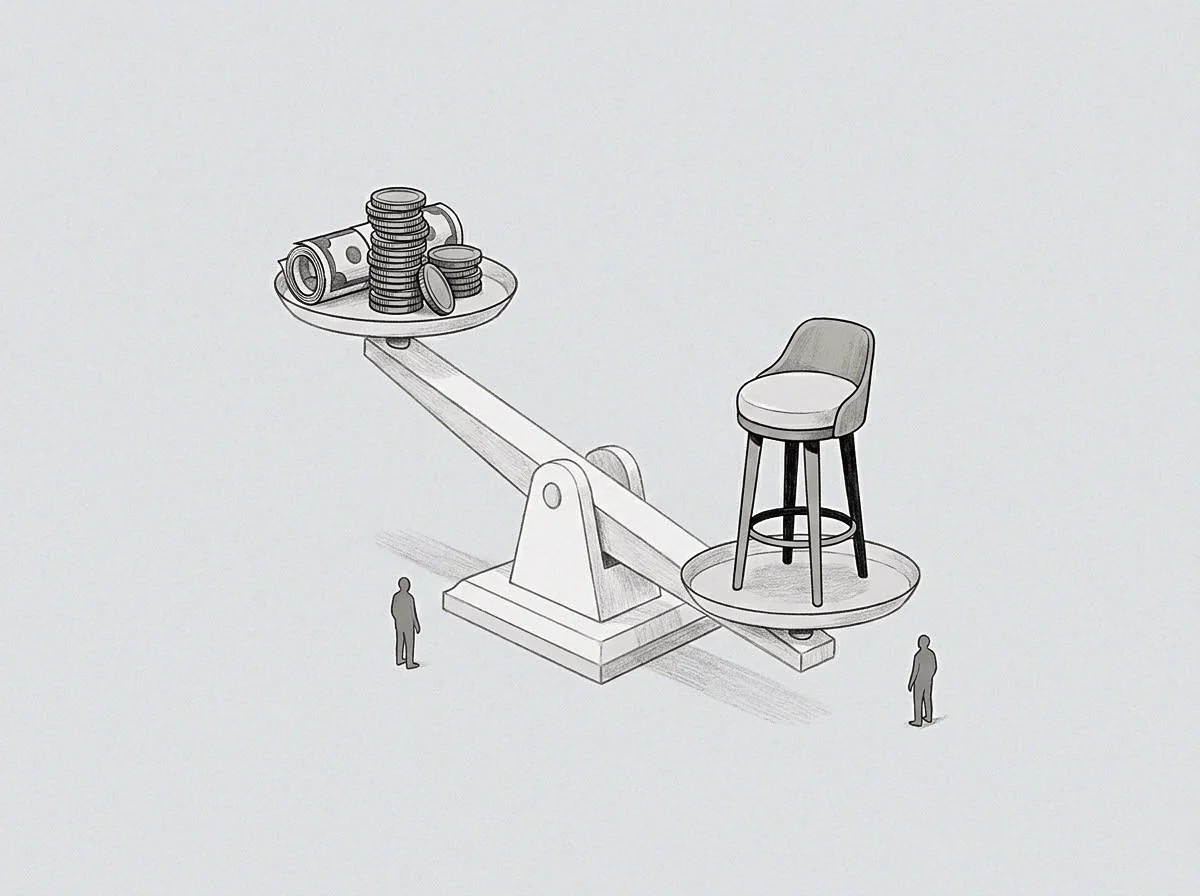
Lock
Closing operational loops requires contractual finality. An executive may draft delegation rules yet fail to enforce the administrative boundary. That enforcement means tolerating localized drift, including tactical mistakes within the bounded domain.
When an executive steps in to fix minor variances, the gate breaks down, autonomic recovery latency returns to its chronic ceiling, and the central nervous system resumes full vigilance.
Maintaining that lock demands physical discipline early on. When variance figures tick upward, the urge to intervene signals active sympathetic arousal. Resisting that reflex gives the deputy space to handle the boundary independently, allowing the operational system to stabilize.
Over successive cycles, the executive prefrontal cortex registers that competence as a reliable baseline, lowering cognitive load.
Vigilance recedes when the executive accepts the bounded cost of subordinate learning cycles.
The operational agreement establishes the exact terms of executive disengagement. It gives the deputy full discretion over tactical choices within fixed spending limits, excludes the executive from routine line-item reviews, and limits intervention to confirmed boundary breaches exceeding ten percent of project capitalization.
Under those terms, the executive phone stays offline between seven in the evening and seven in the morning without introducing systemic enterprise risk, shortening recovery latency from hours of evening agitation into prompt parasympathetic normalization.