Meaning
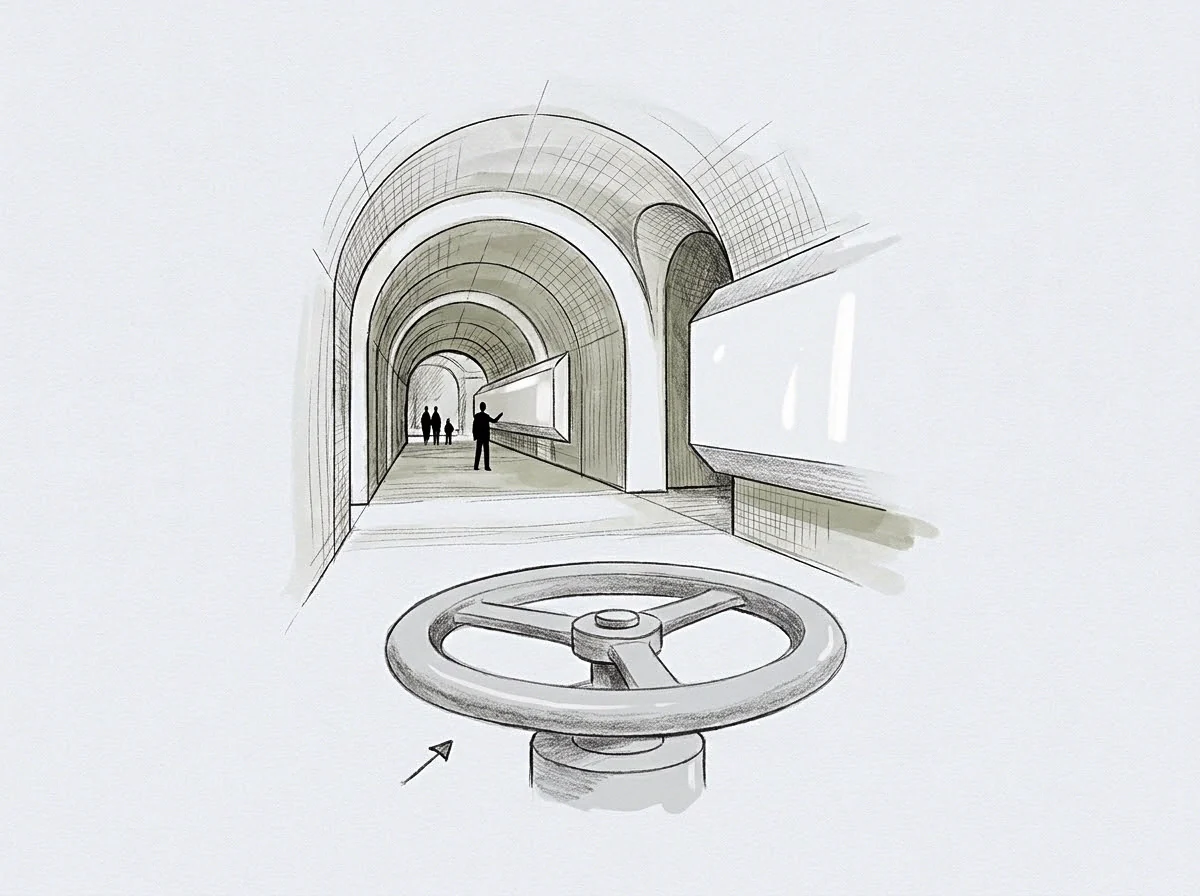
Predetermined procedural pathways for handling deviations from standard governance provide a structured escape from routine when unexpected events threaten the primary operating model. These exception protocols ensure that rare but high impact occurrences do not result in total system failure. A well defined sequence maintains order during periods of high volatility.
The boundary exists at the point where the deviation becomes too frequent, indicating that the exception has become the new rule.
Governance Logic
Decision rules for bypass scenarios require clear ownership and defined triggers. Every use of exception protocols consumes a disproportionate amount of executive attention and cognitive capacity. This overhead is a necessary expense to prevent the collapse of the standard framework during crises.
Leaders find that relying on these mechanisms too often leads to a degradation of the core organizational structure.
Response Mechanism
Activation occurs when specific pre-conditions are met, shifting the burden of regulation from automated systems to manual oversight. The manual nature of exception protocols means that the cost is measured in hours of high intensity focus. When the trigger is pulled, the system enters a state of heightened surveillance to monitor the outcome of the deviation.
Systemic Cost
Habitual reliance on bypasses creates a shadow architecture that competes for resources with the primary stack. High frequency of exception protocols indicates a mismatch between the environment and the current regulatory model. Such a state exhausts the founders because it requires constant ad hoc intervention.
Monitoring remains active and manual. The limit of this approach is reached when the overhead of managing the exceptions exceeds the value of the standard operations.