Meaning
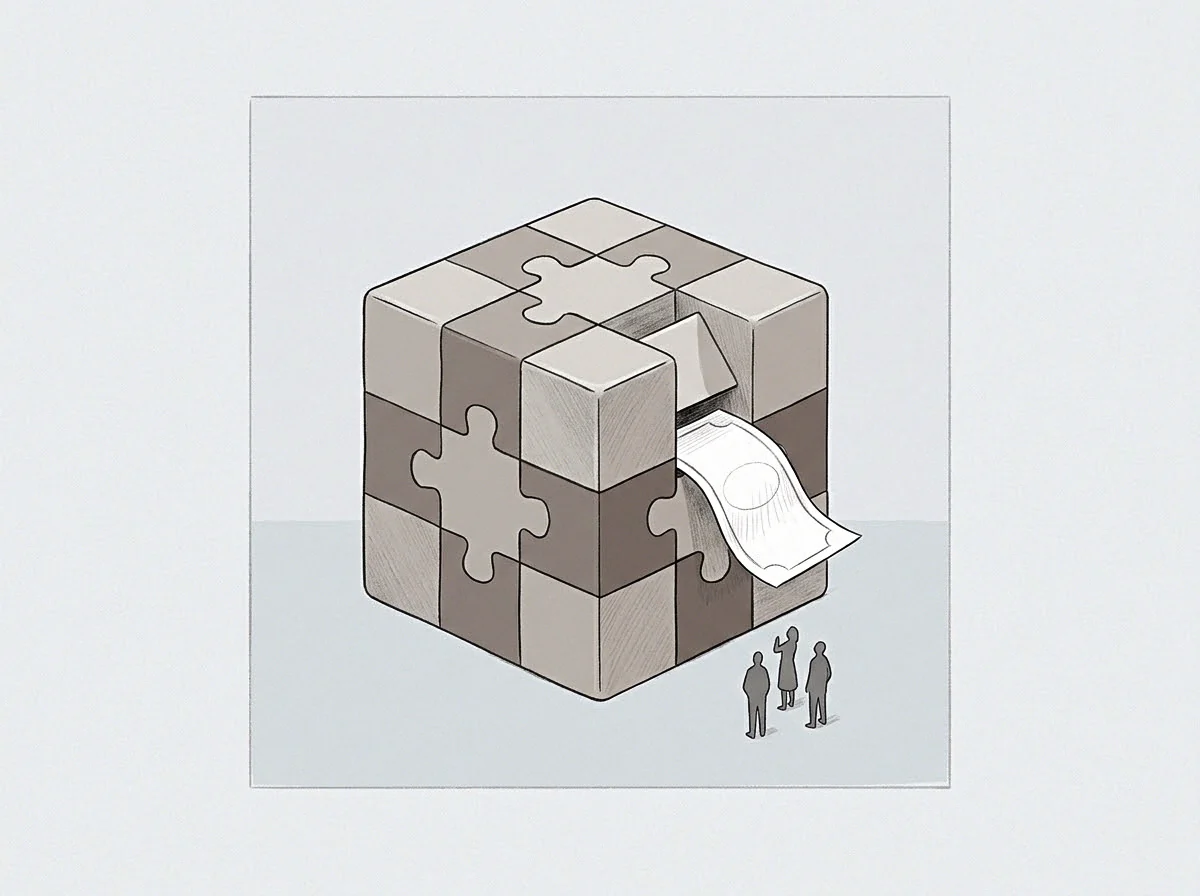
Operational tension represents the sustained internal friction produced when organizational growth objectives collide with the finite physiological or structural limits of the existing management system. Operational tension functions as a gauge for how much force a founder exerts upon the business architecture compared to the natural resistance of the underlying processes. This state governs the capacity of a firm to handle scale without triggering a total breakdown in information flow or administrative coherence.
When the gap between intended throughput and reality widens, the system exhibits wear in the form of duplicated tasks or stalling decision cycles. The measurement ceases to apply once a firm reaches a stable state of automation or enters a period of managed decline where growth ambitions disappear.
Systemic Drag
Excessive load on the founder causes a measurable degradation in response times across the entire administrative layer. Each additional project layer adds to the friction, forcing the person in charge to trade personal hours for procedural compliance. This cost manifests as a reduction in available attention for long-range planning while the day to day activities consume the entire capacity of the office.
Capacity Threshold
Rigid limits define the point where the existing human network stops processing information effectively under the current pressure. If the number of daily interventions exceeds the structural bandwidth, the quality of each decision drops because the underlying data fails to reach the primary decision maker in time. Founders often mistakenly interpret these stalls as a need for more personnel instead of a requirement to simplify the internal feedback loop.
Regulatory Constraint
Constant regulation provides a ceiling on output, ensuring the organization maintains functional integrity during periods of high demand. Borrowed regulation occurs when the firm adopts external standards or software frameworks to manage the force generated by its internal growth. Effective management of this load involves calibrating the intensity of the work to match the actual capability of the team.
Stability depends upon the ability to recognize when the internal friction threatens to dismantle the very infrastructure that sustains the organization.