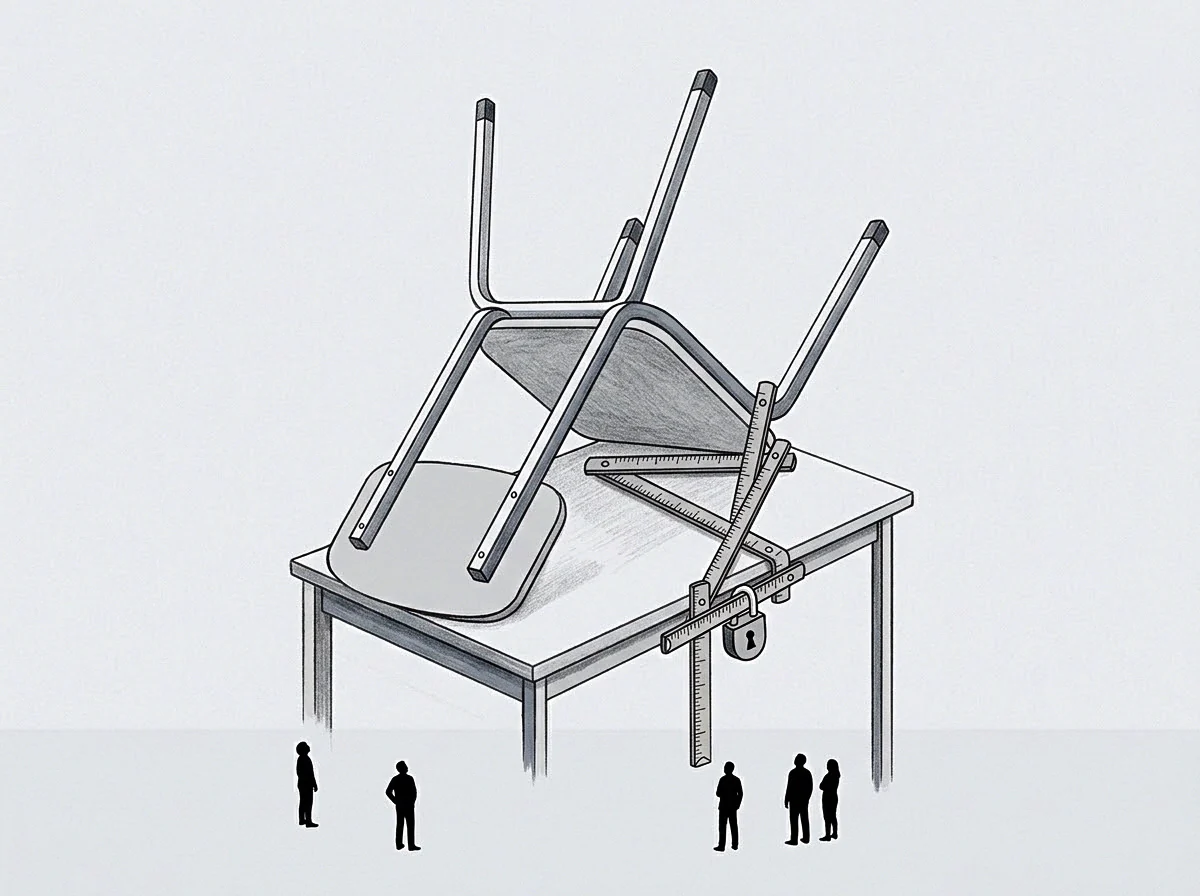
Meaning
Cognitive load represents the physiological limit of a person managing continuous oversight requirements for a business. Regulatory exhaustion occurs when the constant demand for compliance monitoring exceeds the available attention capacity of an individual. This state follows prolonged exposure to repetitive administrative obligations without adequate rest or system relief.
It functions as a finite constraint on decision quality because the brain prioritizes immediate compliance actions over long-term strategic adjustments.
Systemic Strain
Performance declines as the volume of required filings grows beyond the internal processing threshold. Regulatory exhaustion impacts the ability of a founder to identify subtle operational risks while they perform required reporting duties. Individuals reach this point through a sequence of sustained cognitive output aimed at meeting external standards.
Attention suffers as the number of mandatory check-ins increases per week.
Operational Penalty
Consequence arises when the founder sacrifices the time meant for development to satisfy persistent requests from oversight bodies. Regulatory exhaustion reduces the hours available for innovation as the weight of maintenance duties occupies the entire workday. Teams suffer when the person at the helm lacks the mental capacity to process new information due to the saturation of compliance data.
Efficiency falls because the focus shifts from growth to the mitigation of potential infractions.
Recovery Threshold
Capacity acts as a reservoir that empties during periods of high oversight density. Restoration involves the transfer of mandatory documentation tasks to automated systems or specialized personnel who operate outside the direct cognitive path of the founder. Regulatory exhaustion ends when the administrative load drops below the critical level where personal focus remains intact.
Change in the management model provides the only mechanism to reset the baseline of attention.