
Systemic Capital and Priority Allocation Distortion Stemming from Unstated Regulatory Strain Across Executive Networks
Unstated executive regulatory strain forces depleted leaders to deploy capital as an energetic shock absorber to bypass high-friction interpersonal decisions.

Draw
Two operators sit past midnight over a quarterly budget variance report. The figures on the display show an unplanned expenditure of three hundred thousand dollars allocated to an outside systems contractor. Neither person wanted the outside firm.
The contractor was retained because the senior engineering lead threatened to resign if forced to integrate two incompatible database schemas under the existing headcount. Adjudicating that dispute between engineering and product demanded six consecutive hours of high-friction technical reconciliation. The founder in the room had spent the preceding forty-eight hours negotiating a mezzanine loan restructuring while running on broken sleep and irregular meals.
The reserve required to hold the disagreement, parse the architectural trade-offs, and state a binding priority was exhausted. The founder signed the purchase order. The operator approves the invoice.
Capital acts as an energetic shock absorber inside executive groups. When physiological reserves drop below baseline, unresolved executive conflict converts into capital expenditure to avoid interpersonal friction. Stress physiology documents this conversion through allostatic load, the cumulative physiological cost of sustained adaptation to environmental stressors.
In executive cohorts, physiological strain rarely announces itself as a formal constraint. Executives routinely suppress outward expressions of fatigue, believing that projecting stability preserves operational morale and investor confidence. The biological cost continues to accumulate.
When physiological reserves drop below baseline, unresolved executive conflict converts into capital expenditure to avoid interpersonal friction.
The human autonomic nervous system governs cognitive flexibility and threat evaluation through metabolic allocation. When sustained sympathetic arousal occurs without recovery, the prefrontal cortex throttles complex evaluation tasks. High-friction decisions, such as denying a favored project to an influential division head or terminating a stalled product line, produce immediate interpersonal conflict, which registers physiologically as threat.
In an individual with full regulatory reserves, the prefrontal cortex modulates this threat response, permitting the leader to endure the social discomfort of holding a firm boundary. In an individual operating under chronic, unstated regulatory depletion, the metabolic capacity to hold that discomfort collapses. The easiest path to physiological de-escalation is financial appeasement.
The founder writes a check, authorizes a hire, or seeds a speculative initiative to terminate the interpersonal tension in the room.
When regulatory strain remains silent, capital absorbs the shock until liquidity runs out.

Table
Executive allocation occurs across physical desks and shared digital interfaces. In these settings, social baseline theory demonstrates that human beings conserve cognitive and metabolic resources by relying on social proximity. When partners perceive their peers as predictable and capable of co-regulating strain, the baseline cost of navigating threat decreases.
When partners perceive their peers as unpredictable, volatile, or silently depleted, the baseline cost spikes. The individual nervous system prepares to carry the entire load alone.
This dynamic warps the collective appraisal of risk. When an executive team meets to distribute quarterly capital, members evaluate not only the commercial viability of an initiative, but the interpersonal energy expenditure required to challenge it. If challenging a budget request requires confronting a colleague who is visibly brittle, erratic, or unresponsive, other executives retreat.
The group votes to fund projects with poor commercial logic simply because funding them preserves the fragile relational peace of the room.
An unstated limit behaves like an invisible drain on the company treasury.
| Decision Surface | Baseline Regulatory Reserve | Saturated Unstated Strain |
|---|---|---|
| Vendor Engagement | Internal teams resolve integration conflicts directly through cross-functional debates. | Third-party contractors receive retainers to handle internal friction points. |
| Headcount Distribution | Hiring targets align with measured pipeline volume and unit economics. | Redundant staff are hired to insulate tired leaders from interpersonal management. |
| Strategic Divestment | Failing experiments face termination within thirty days of missed performance metrics. | Zombie initiatives retain funding because terminating them requires emotional confrontation. |
| Resource Allocation | Budgets concentrate on primary revenue drivers and core infrastructural stability. | Capital disperses thinly across speculative projects to appease vocal department heads. |
The divergence documented in the comparison alters the balance sheet over successive quarters. The company accumulates structural complexity not because the market demands it, but because the leadership cohort uses investor capital to bypass internal emotional bottlenecks. A team that cannot endure the metabolic strain of an argument will hire an intermediary.
An executive who cannot stomach the distress of firing an ineffective lieutenant will construct a new division around that person. In each case, cash flows directly into the space left vacant by unstated physiological depletion.
The project received fifty thousand dollars because asking for the underlying numbers would take three days of meetings nobody has the patience to sit through.
Throttle
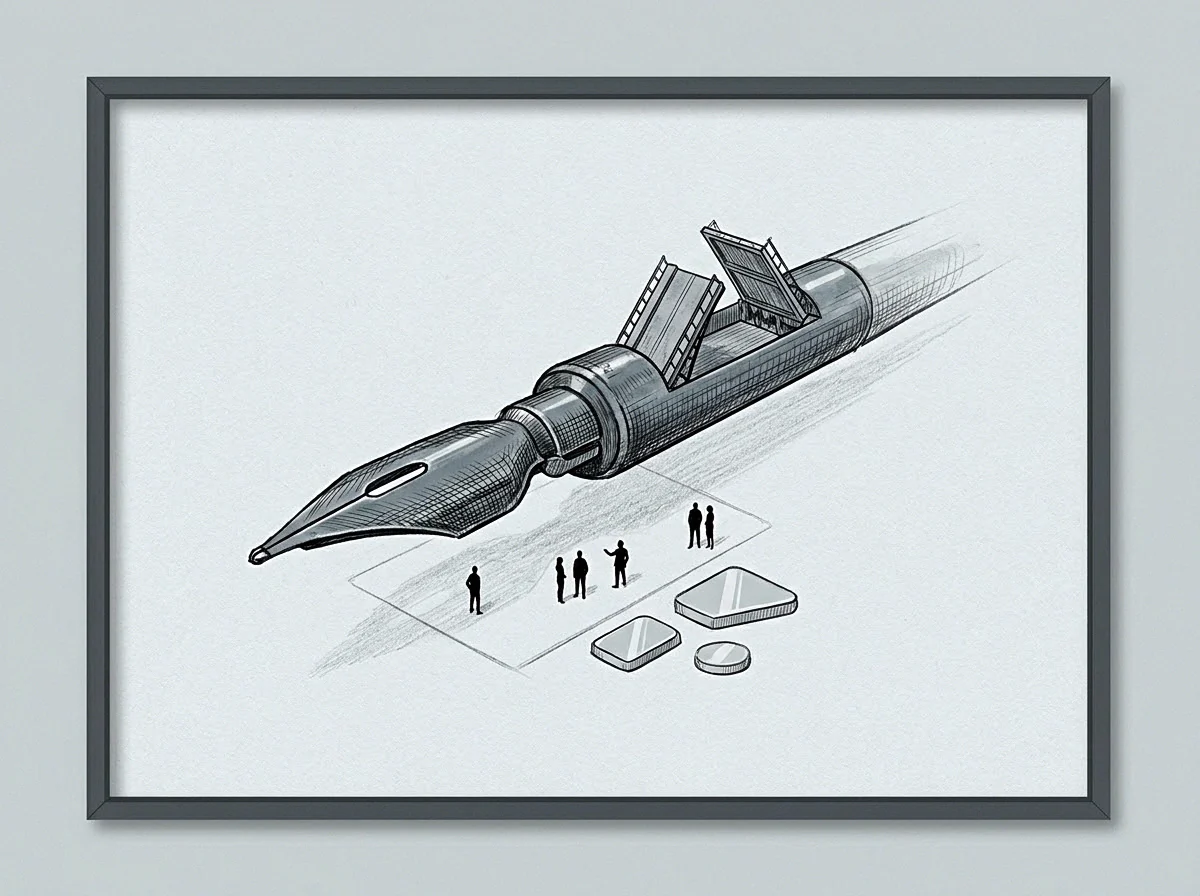
A leadership team under sustained pressure reduces its operational bandwidth without declaring the contraction. This behavior mirrors mechanical throttling in computational systems, where a processor downregulates clock speed to prevent catastrophic thermal breakdown. In human organizations, the downshift happens below conscious awareness.
Decision-makers convince themselves that they are being strategic, measured, or supportive, when in reality their nervous systems are executing emergency load-shedding.
Does Stated Friction Prevent Capital Dilution?
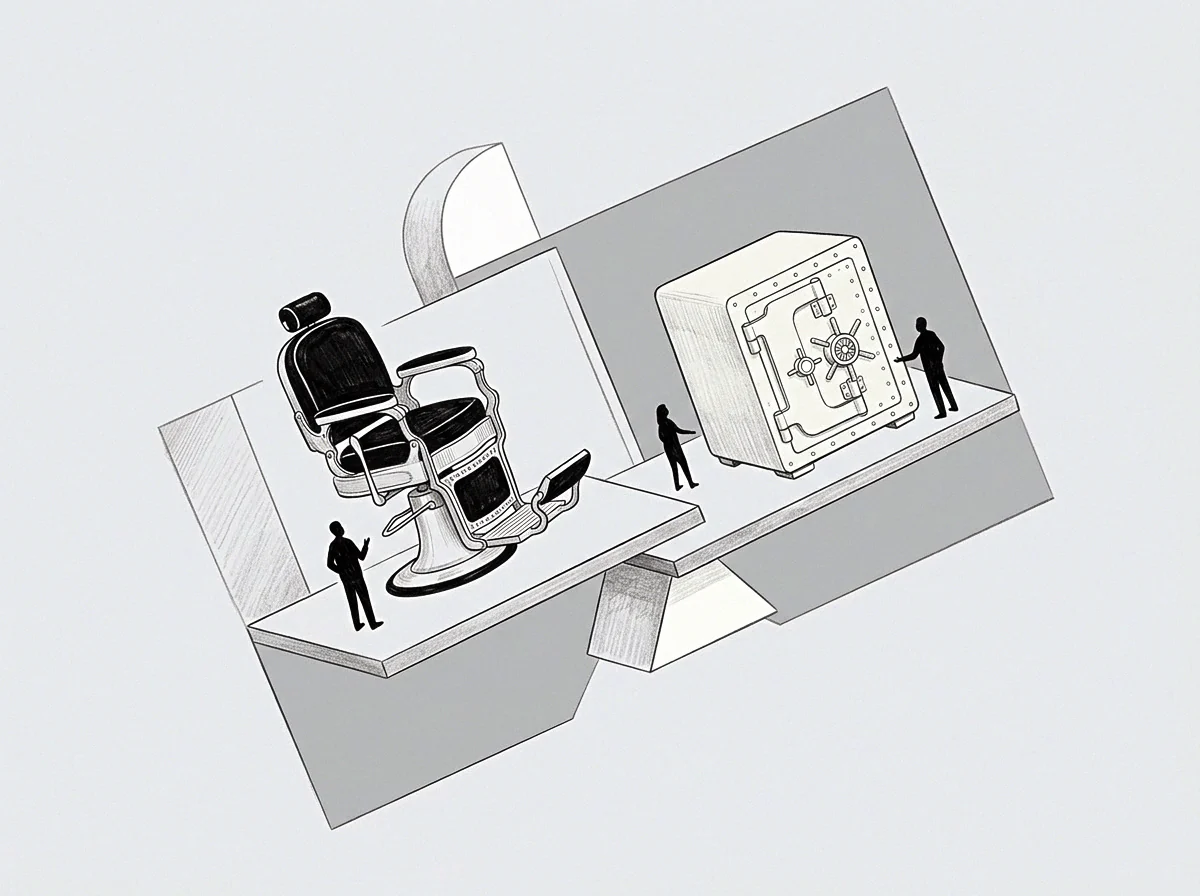
Action in leadership divides into decision-gated acts and state-gated acts. A decision-gated act requires only intellectual assent and linear execution, such as signing an agreement or transferring funds between corporate accounts. A state-gated act requires a specific physiological and regulatory condition.
Saying an unambiguous no to a long-time partner, enduring their visible disappointment, and holding the refusal over several weeks is an act gated by regulatory state. When the underlying state deteriorates, intellectual intent fails to produce the act. The executive intends to challenge the inflated departmental budget, enters the conference room, senses the ambient interpersonal charge, and yields.
The throttling process manifests through distinct priority distortion modes:
- Premature Outsourcing substitutes balance sheet liquidity for leadership presence by paying external agencies to manage internal ambiguities that executives lack the energy to structure.
- Consensus Delay drags straightforward strategic choices through endless exploratory committees to postpone the discomfort of declaring winners and losers among internal factions.
- Speculative Diversion channels attention toward distant, low-probability acquisitions or partnerships because those initiatives carry no immediate operational friction with the existing executive team.
- Compensatory Overstaffing authorizes unnecessary middle-management layers to act as emotional buffers between founders who can no longer communicate without acute physiological distress.
The systemic consequence of these modes is priority dispersion. Instead of focusing eighty percent of available capital on the single operation that drives corporate survival, the executive group fragments the capital across a dozens of secondary activities. Each secondary activity represents an evasion of a difficult interpersonal conversation.
The company roadmap becomes an archaeological map of leadership exhaustion, with every budget line recording a point where an executive reached their limit and chose to pay rather than to hold a boundary.
Whether an executive cohort can distinguish between a team that lacks operational competence and a team whose leadership has quietly depleted its capacity to adjudicate technical friction remains undetermined in early deployments.

Skew
Capital allocation diverges from strategic intent when internal negotiation carries an unbearable personal toll. The distortion follows a predictable trajectory across executive hierarchies. When a founder or key executive enters chronic allostatic overload, their subjective perception of risk undergoes an inversion.
Routine operational friction, such as reviewing code vulnerabilities or auditing sales pipelines, feels unmanageable because it demands granular, sustained attention. Long-range financial risks, such as burning eight months of runway on speculative expansion, feel oddly painless because the financial consequence sits in a distant quarter.
This dynamic leads to misallocated investor funds. Executive teams systematically over-invest in high-dollar, low-friction activities while starving low-cost, high-friction operational improvements. Auditing a failing internal team requires direct observation, uncomfortable performance feedback, and the risk of interpersonal rupture.
Buying a new enterprise software suite requires only approving a vendor contract.
A written capital constraint forces executive friction into the room before the money leaves the bank.
The distortion cascades through specific financial channels:
- Defensive Seed Funding directs corporate development capital toward non-threatening internal initiatives to keep restless division leaders from leaving during crucial funding cycles.
- Redundant Tool Acquisition permits overlapping software subscriptions across departments because enforcing unified systems requires overriding department head preferences.
- Arbitration Retainers routes hundreds of thousands of dollars to corporate coaches, mediators, and consultants whose primary function is to deliver bad news that founders lack the stamina to speak.
When capital leaves the company through these evasive channels, the financial loss is irreversible, yet standard financial accounting fails to identify the origin of the bleed. An auditor examines the invoice for an organizational design consultant and classifies it as general administrative expense. The auditor cannot see that the expenditure occurred because the chief executive and the chief operating officer spent five months avoiding an explicit discussion regarding their overlapping responsibilities.
In manufacturing plants, when a steam pipe reaches critical pressure, mechanical relief valves release hot vapor into the atmosphere to protect the structural integrity of the boiler. In executive suites without explicit operational boundaries, corporate capital serves as the venting steam. Money is expended to depressurize human relationships that have become overheated by unstated, unmanaged regulatory strain.
A mandatory forty-eight-hour pause between capital requests and approvals breaks the exhaustion loop by forcing the expenditure to meet an explicit review term.

Stance
A stated limit functions as a rigid physical obstruction inside an organization. A limit is a wall, not a mood. When an executive relies on personal mood or willpower to regulate resource allocation, the pushing forces inside the organization will lean against that executive until regulatory capacity collapses.
An internal department head seeking additional capital pushes continuously. If that push meets only a tired founder who attempts to explain, negotiate, and pacify, the department head will push harder. The push ceases only when it encounters an objective, immoveable term.
A term is an explicit, stated condition that exists independent of the person who announced it. It takes the form of a clear, non-negotiable threshold: no additional headcount until existing team utilization reaches ninety percent for two consecutive quarters, or no external contractor spend exceeding twenty thousand dollars without board approval. When a term is stated in advance, a pushing subordinate or peer meets an established structural wall rather than the emotional vulnerability of a depleted executive.
A team that cannot hold a difficult conversation will always pay a vendor to hold it instead.
Availability must be derived from silence and cost rather than endless relational reassurance. When an executive attempts to maintain unlimited personal availability, the executive becomes an ambient emotional shock absorber for the entire company. Subordinates bring unrefined problems, unresolved grievances, and half-formed budget proposals into the executive office because the cost of doing so is zero for the subordinate and paid entirely by the executive in physiological depletion.
By imposing a high procedural cost on capital requests, requiring written memos, validated data models, and pre-meeting cross-functional sign-offs, the executive shifts the regulatory burden back to the petitioner. When the limit is stated, the room adjusts.
The recovery of sound capital allocation begins with the recognition that corporate balance sheets cannot substitute for human autonomic limits. If leadership teams refuse to state where their energetic capacity ends, the financial ledger will inevitably trace the shape of their collapse. State the position before the capacity runs out, because capital always flows toward unstated limits.