Meaning
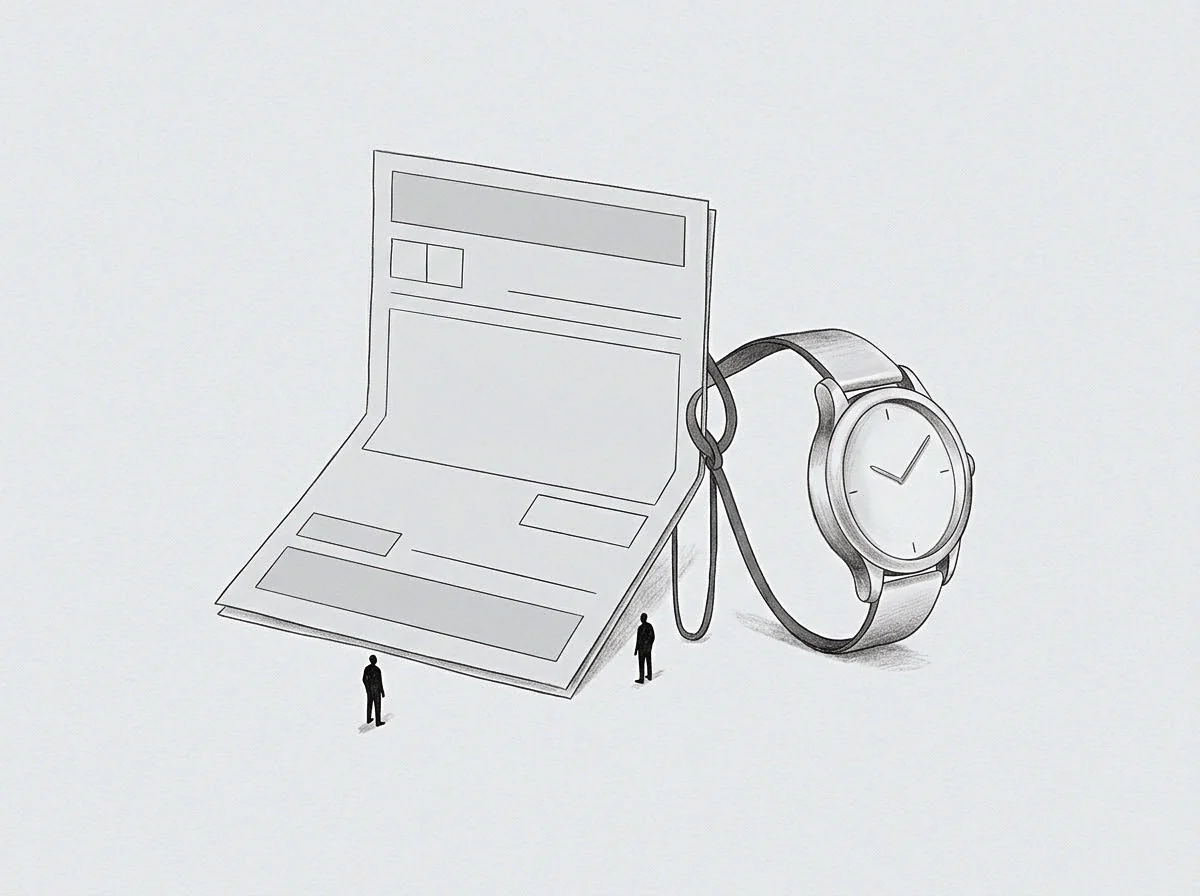
Required real-time interactions create a dependency that slows the pace of individual and collective tasks. The synchronous communication drag of an organization is measured by the time employees spend waiting for others to be available for a meeting or a call. A necessity for alignment in time prevents people from working at their own most productive hours and often results in a fragmented schedule.
In a high drag environment, the throughput of a team is limited by the availability of its most overextended members.
Attention Fragmentation
Constant interruptions from phone calls or instant messages break the focus required for deep work. Synchronous communication drag forces a person to switch contexts frequently, which lowers their overall efficiency. The time lost is not just the duration of the talk but also the time needed to return to a state of high concentration.
Schedule Conflict
Finding a time when all necessary participants are free becomes more difficult as a team grows. Large groups suffer more from synchronous communication drag because the coordination costs rise exponentially with every new member. Projects often stall because a single person is busy, creating a bottleneck for everyone else.
Asynchronous Alternative
Moving to written updates and recorded videos allows for more flexibility in the workday. Reducing synchronous communication drag involves prioritizing modes of contact that do not require everyone to be present at the same moment. This shift enables a more distributed and efficient workforce that can operate across different time zones.