
Autonomic Dysregulation and Co-Regulatory Receptor Failure Under Prolonged Isolation and Domestic Burden
Prolonged isolation combined with domestic load transfer forces autonomic self-budgeting, downregulating co-regulatory receptors and escalating allostatic strain.
Frame
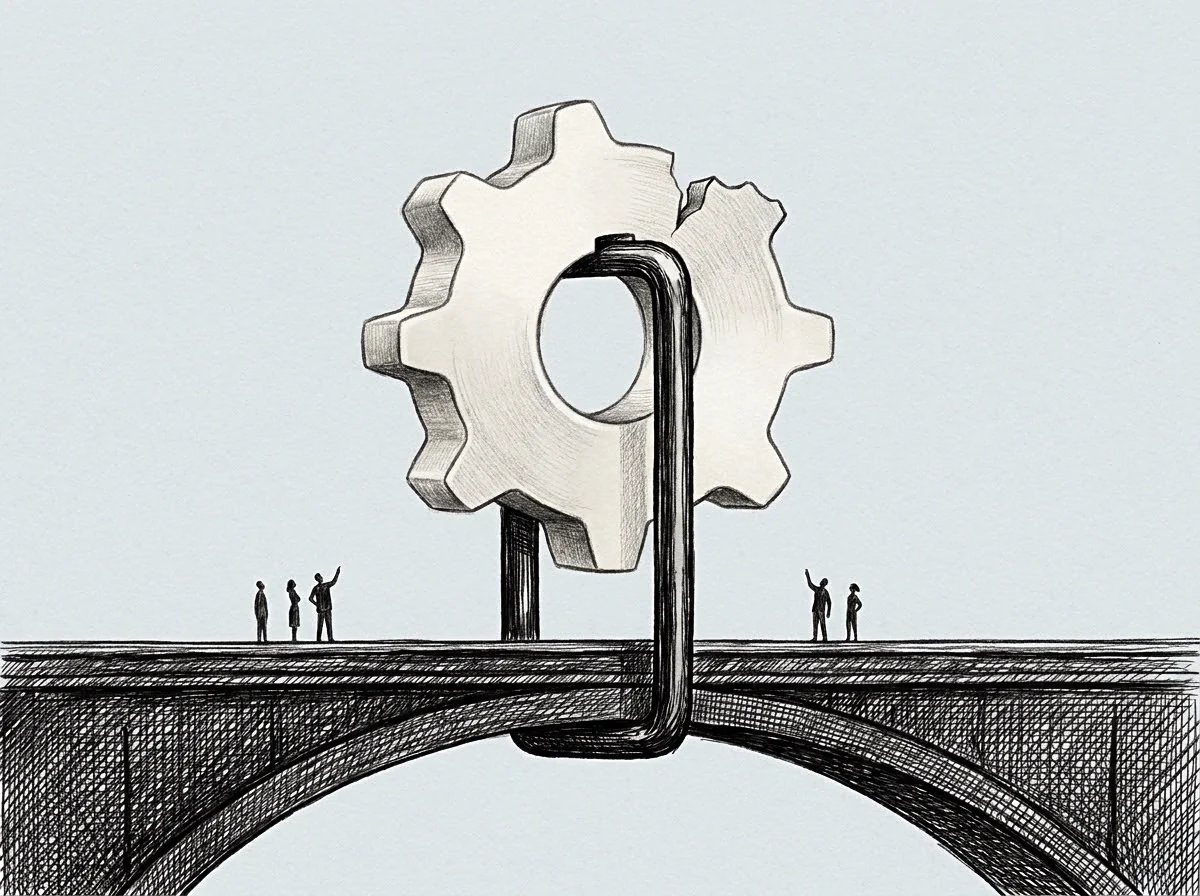
Four messaging windows remain open on a desktop monitor while household appliances run in the adjacent room. Operating in physical isolation while managing ongoing domestic operations forces the central nervous system to reallocate its neural energy. Social baseline theory establishes that the human brain evolved to budget metabolic energy under the default assumption that reliable individuals are physically present to share risk, monitor environmental threats, and absorb physiological strain.
When an operator lives and works without ongoing physical co-presence, this baseline assumptions breaks down. The autonomic nervous system shifts into a high-cost state of perpetual self-budgeting.
The Physics of Social Baseline Economy
Human evolutionary physiology operates on an assumption of shared risk. Under baseline conditions, proximity to a familiar, predictable human presence reduces sympathetic nervous system activation, lowers baseline cardiac output, and suppresses threat-monitoring activity in the amygdala. Borrowed regulation occurs when one individual unconsciously relies on the stable autonomic state of a nearby person to downregulate their own arousal.
In a shared physical environment, neural threat processing is distributed across the group, minimizing individual metabolic expenditure.
Isolation forces solo budgeting. In the absence of physical co-presence, the brain treats the environment as inherently higher risk. Neural resources previously available for executive function, deep technical architecture, or strategic decision-making are redirected toward continuous internal state monitoring.
The autonomic nervous system must maintain baseline stability entirely through internal mechanisms, leading to an elevated baseline of allostatic load.
Physical proximity to a stable co-regulator lowers baseline vagal expenditure during complex problem solving.
Metabolic Allocation in Solitary Environments
Solitary operators manage every environmental variance using internal reserves. When domestic responsibilities are layered onto isolated work, the central nervous system faces an asymmetric load structure. Domestic environments present unpredictable, fragmented interruptions: appliance maintenance, child supervision, elder care logistics, and household maintenance tasks.
Each interruption forces a rapid shift between hyper-focused cognitive work and immediate domestic execution.
Metabolic expenditure elevates. Without a co-present partner to absorb portions of these operational demands, the operator experiences continuous autonomic recalibration. The vagal brake, which modulates cardiac output to match environmental demands, is engaged and disengaged repeatedly throughout the working day.
This rapid cycling depletes cellular glucose, accelerates central nervous system fatigue, and leaves the operator with diminished capacity for both strategic thought and emotional stability.
When an operator treats solitary autonomic budgeting as a permanent operating state, baseline sympathetic arousal elevates until physiological recovery during resting hours drops to zero.
Load
Domestic responsibilities in an isolated workspace create a continuous background operational toll. The operator functions as the sole operational anchor for both professional ventures and household stability. This dual responsibility creates a systemic asymmetry: household members rely on the operator for emotional and logistically grounding, while the operator has no external baseline from which to draw calm.
Unreciprocated Autonomic Transfer
Family members seeking grounding tend to lean on the most stable individual in the dwelling. When household members enter the operator’s workspace carrying anxiety, domestic friction, or administrative demands, an autonomic transfer occurs. The operator stabilizes the incoming emotional state of the household member by maintaining an outwardly calm demeanor and resolving the immediate issue.
This process consumes substantial metabolic reserves.
The household demand continues. Because the operator receives no reciprocal autonomic stabilization from an external source, this transfer operates entirely in one direction. Over extended periods, this unreciprocated buffering drains the operator’s capacity for emotional attunement, leading to specific neurophysiological adaptation states.
- Receptor Saturation occurs when continuous incoming domestic requests prevent the central nervous system from completing a single vagal recovery cycle.
- Vigilance Amplification manifests when household noise registers as operational disruption, triggering immediate cardiac acceleration without physical threat.
- Attitudinal Flattening arises as an adaptive physiological defense against continuous demands, reducing emotional expression to conserve metabolic fuel.
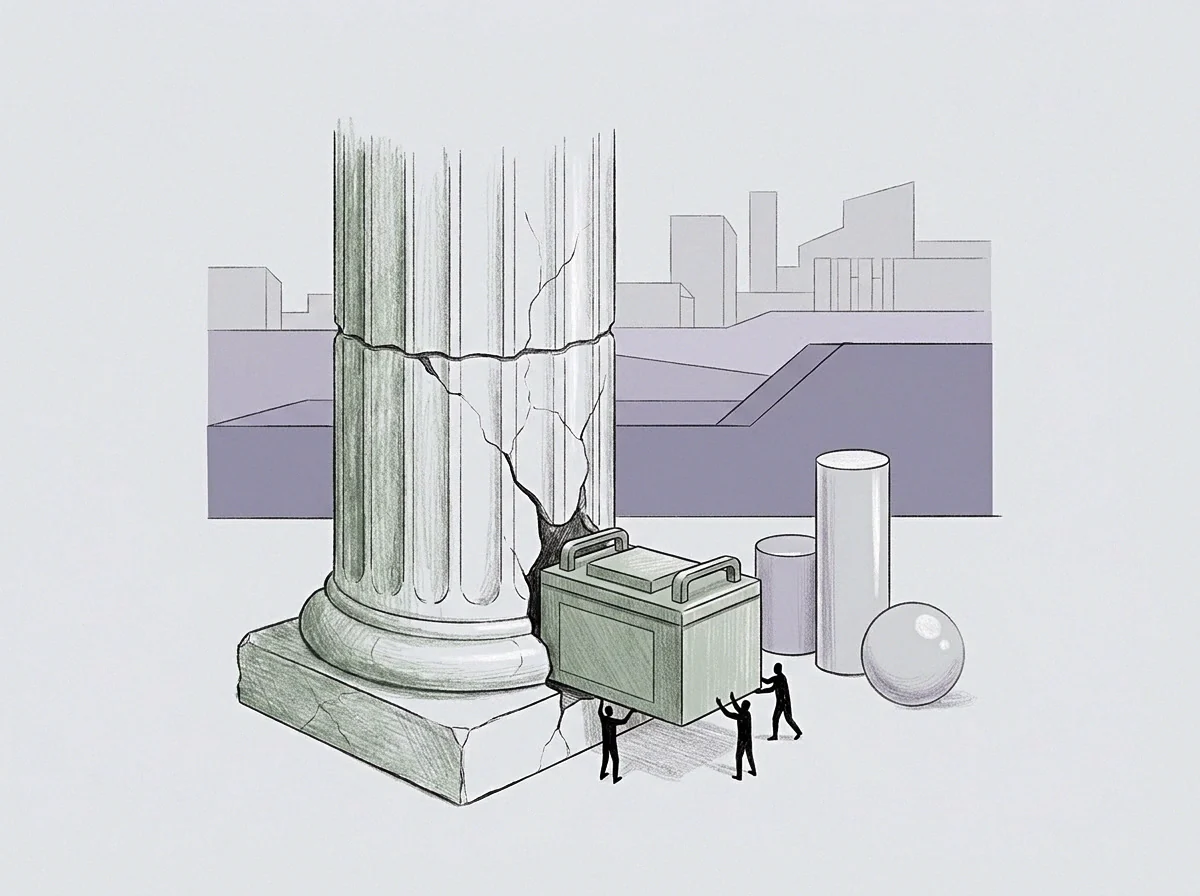
Unreciprocated autonomic buffering converts domestic routine into a continuous sympathetic stimulus.

Domestic Logistics as Unbuffered Stimulus
Unpredictable household tasks interrupt focused cognitive states with immediate visceral weight. Unlike corporate office environments where administrative tasks are buffered by dedicated staff or structured schedules, domestic logistics leak directly into the working environment. A leaky faucet, a package delivery, or a family member’s request for assistance demands immediate task switching.
Help registers as noise. Because the nervous system is already operating at its autonomic ceiling due to isolation and unshared burden, even well-intentioned domestic interactions are processed as threats to task execution. The operator experiences a chronic narrowing of perceptual field, where any external input is evaluated exclusively by the metabolic cost required to process it.
The house feels steady because one person bears every disruption without showing the strain.
Signal
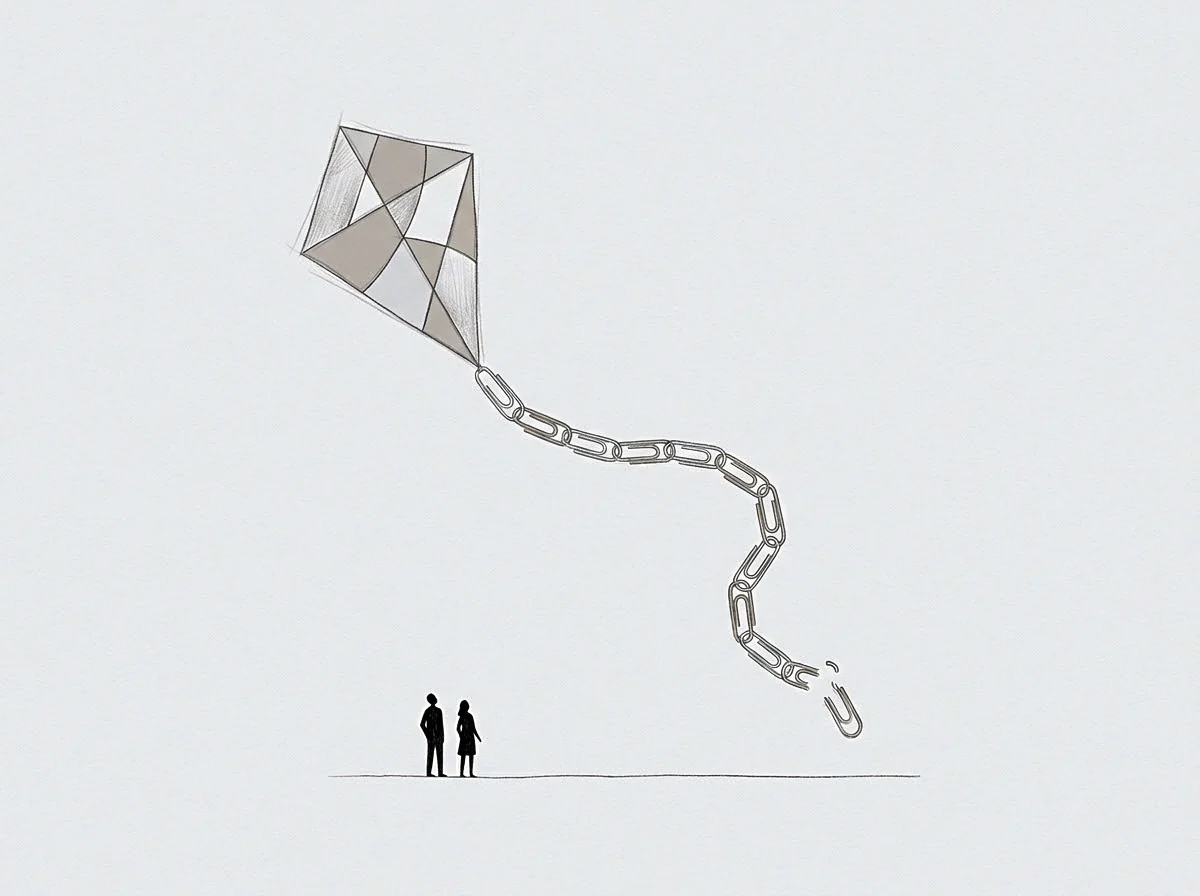
Extended solitary performance degrades the neural circuits responsible for receiving interpersonal safety. Neural plasticity operates on a use-it-or-lose-it architecture. When an operator spends months or years relying exclusively on self-regulation, the specialized receptors that process co-regulatory signals downregulate, resulting in co-regulatory receptor failure.
When Does Prolonged Solitude Suppress Vagal Flexibility?
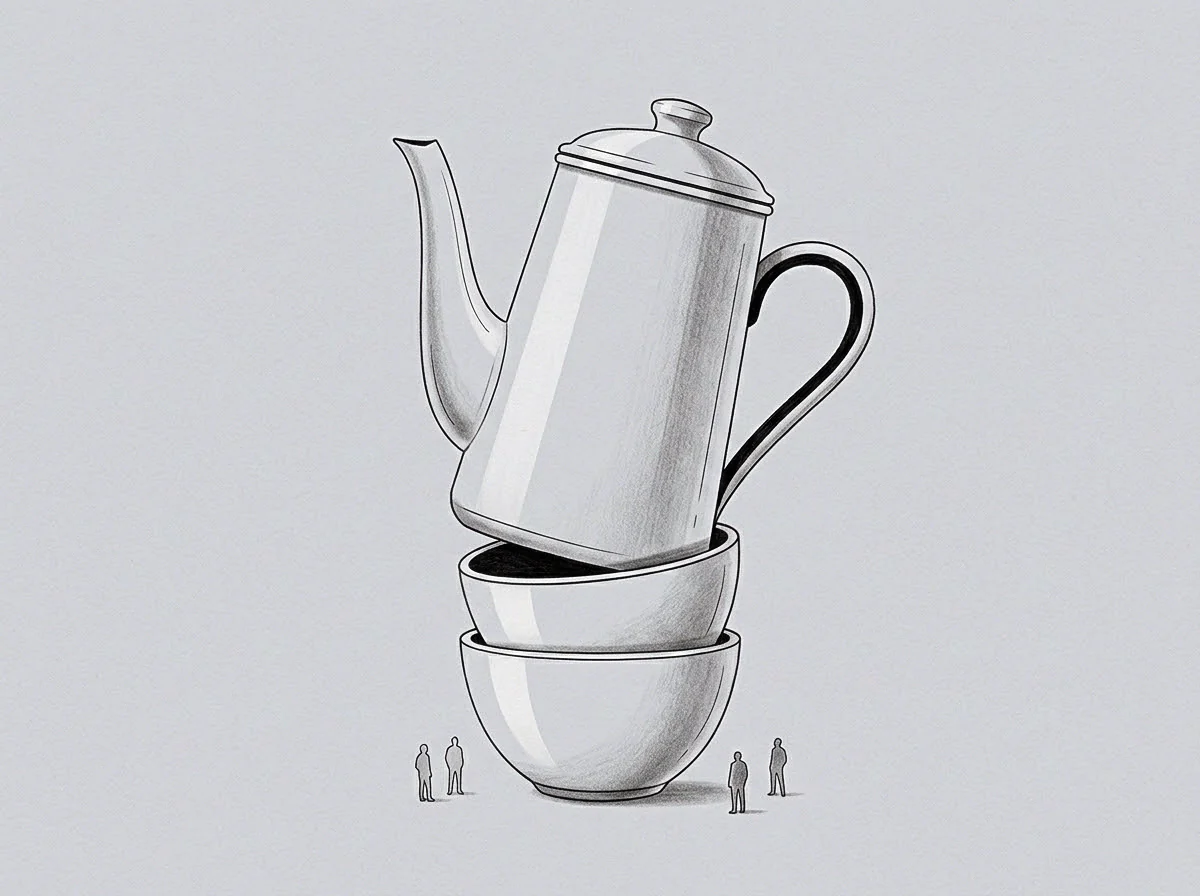
Continuous autonomic self-reliance forces the vagal nerve into an ongoing suppression state. The ventral vagal complex, responsible for social engagement, vocal modulation, and facial attunement, requires active interpersonal interaction to maintain functional tone. In prolonged isolation, the ventral vagal pathway experiences functional atrophy.
Vagal tone declines rapidly.
The operator becomes physiologically habituated to sympathetic arousal or dorsal vagal immobilization. When an external partner, colleague, or friend attempts to offer support, presence, or shared regulation, the operator’s downregulated ventral vagal system cannot process the signal as safe. The incoming offer of calm is misidentified by the subcortical threat detection architecture as operational noise or metabolic demand.
| Operating Parameter | Solitary Self-Budgeting | Co-Regulatory Proximity Baseline |
|---|---|---|
| Metabolic Energy Cost | High metabolic baseline due to unbuffered environmental monitoring | Reduced metabolic draw via distributed neural threat processing |
| Vagal Tone Responsiveness | Suppressed vagal brake with rigid sympathetic dominance | Flexible vagal modulation adapting smoothly to demands |
| Receptor Sensitivity | Downregulated receptors for receiving external co-regulation | Active receptor availability for shared autonomic calm |
| Domestic Interruption Recovery | Prolonged elevation of heart rate and delayed return to baseline | Rapid physiological restoration following household friction |
An offer of assistance from an external party registers as a threat when the nervous system lacks a working template for received calm.
Downregulation of Co-Regulatory Receptors
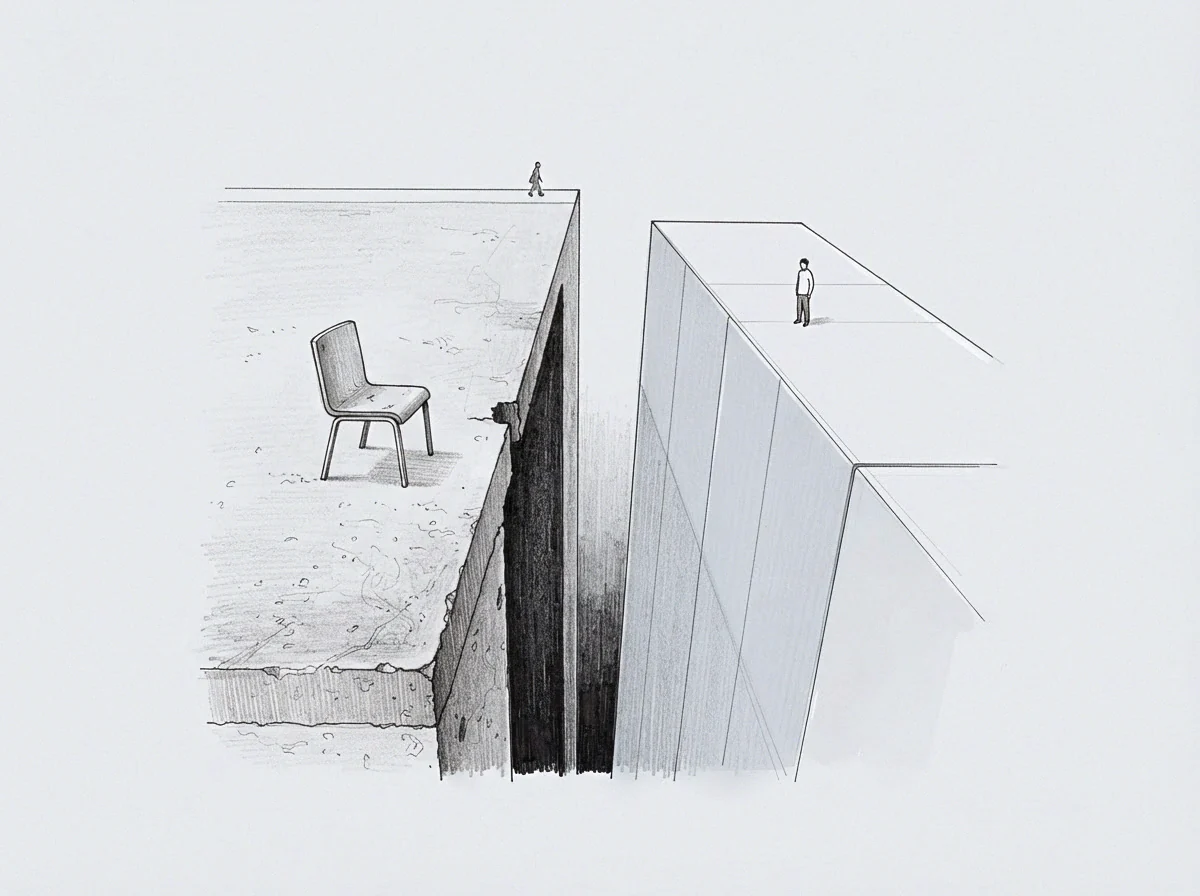
Neural plasticity adapts to chronic isolation by pruning unused social attunement pathways. The neural receptor slot intended to receive external co-regulation closes off. When an individual operates under the assumption that no help is coming, the brain downregulates oxytocin and endogenous opioid receptors in regions governing social bonding and stress mitigation.
The receptor slot closes. The nervous system adapts. As a consequence of this neurochemical recalibration, the operator loses the capacity to experience relief in the presence of others.
Being held, sitting in a quiet room with a partner, or engaging in unstructured conversation fails to bring physiological calm. Instead, the operator feels an urgent impulse to return to solitary work, where environmental variables feel controllable.
Whether vagal receptor sensitivity can recover fully while the operator remains in the identical physical environment remains unclear.
Hearth
A residential workspace operating without structural boundaries converts domestic life into a continuous operational floor. Consider a worked situation with declared assumptions: take an operator running a software venture from a dedicated home office for fourteen consecutive months while managing elder care and domestic logistics for two family members. Assume the operator completes ten hours of focused technical work daily while absorbing eight unpredictable domestic interruptions per shift.
The domestic burden accumulates. Under these conditions, the operator’s internal working model undergoes a systemic structural shift. The internal working model is the neural script that predicts how others will respond to one’s needs.
Under the dual strain of isolation and domestic transfer, the script updates to a rigid axiom: stability is entirely self-generated, and external inputs represent incoming demands rather than potential support.
- The operator absorbs initial household tasks while attempting to maintain maximum professional output.
- Sustained autonomic strain degrades vagal flexibility, causing routine domestic questions to trigger sudden cardiac spikes.
- Continuous isolation reinforces the internal model that external support is unavailable during operational stress.
- External gestures of care are actively deflected because receiving presence requires unexpected metabolic expenditure.
In this worked environment, when a family member enters the home office to offer a cup of coffee or inquire about dinner, the operator experiences an immediate sympathetic spike. The physical gesture is not processed as care. The operator’s brain registers the open door, the vocal inflection, and the physical proximity as additional variables requiring active monitoring and response management.
The metabolic cost of engaging in a social exchange exceeds the operator’s available glucose reserves.
Solitary operators absorb domestic friction by narrowing their autonomic perceptual field until help looks like additional work.
Energy expenditure remains high. The operator responds with brief, clipped sentences, driving the family member away. The family member interprets this reaction as emotional coldness or personal rejection, unware that the operator’s nervous system is engaging an emergency defense mechanism to protect remaining executive capacity.
The interaction ends with increased interpersonal distance, further reinforcing the operator’s physical and physiological isolation.
The activation of an explicit zero-interruption window changes domestic demand from an unpredictable threat into a scheduled metabolic expense.
Anchor
Restoring autonomic balance demands repeated physical encounters with low-demand environments. Rebuilding co-regulatory capacity is not an intellectual exercise. Cognitive understanding of social baseline theory or attachment mechanics cannot reopen downregulated vagal receptors.
Insight names the old operational pattern; physical experience replaces it.
Rebuilding Receptor Capacity Through Micro-Proximity
Gradual exposure to non-evaluative physical presence allows downregulated neural pathways to reactivate. The update path toward earned security requires structured, low-stakes micro-interactions where the operator is physically close to a calm, reliable human being without any expectation of performance, conversation, or emotional processing.
The physical presence matters. Shared space alters baseline. A second template is formed through repeated exposure to quiet co-presence.
Sitting in the same room with a stable partner while both individuals work on separate tasks without speaking provides the nervous system with low-demand proof of shared safety. Over time, the subcortical threat detection network updates its assumptions, recognizing that another body in space can reduce metabolic expenditure rather than increase it.
Structural Shift From Insight to Repeated Experience
Cognitive understanding of attachment patterns fails to alter physiological reactivity without real-world repetition. The operator cannot talk themselves into feeling safe. The vagal nerve responds exclusively to sensory inputs: low-frequency vocal tones, stable heart rate variability in a partner, predictable physical boundaries, and unhurried movement.
Silence lowers autonomic threat. Repetition forms the template. Re-establishing the co-regulatory receptor slot requires deliberate, incremental exposure to shared rest.
As these experiences accumulate over months, the central nervous system slowly upregulates oxytocin and opioid receptor densities, restoring the individual’s capacity to absorb calm from their environment and breaking the cycle of solitary autonomic exhaustion.
A nervous system updates its reliance on another person through repeated shared silence rather than through spoken agreement.