
Early Indicators Of Asymmetric Regulatory Burden In Operating Partnerships
Asymmetric regulatory burden appears when one partner absorbs operational volatility while the other unconsciously borrows stability to maintain personal focus.

Room
A desk sits between two partners during cash runway compressions, surrounded by unresolved vendor invoices and half-drafted investor updates. Tension fills the workspace as payroll deadlines approach. One partner tracks four overlapping operational threads with steady hands, keeping a flat tone during supplier negotiations.
The other paces across the room, venting frustration before retreating to software development. The calmer partner absorbs each surge of panic, filtering incoming alerts so technical work continues undisturbed.
Proximity changes energy expenditure. Social baseline theory establishes that the human brain budgets energy under the assumption of closeness to a dependable counterpart. Physical presence reduces the neurological effort needed to process environmental threats.
When that presence stays reliable, the partner focused on technical tasks draws on surrounding composure as an ambient resource. The steady partner acts as an external stabilizer, burning glucose to suppress alarm signals and keep work moving forward.
The partner who exhibits composure under stress draws ambient volatility into their own working memory.
Silence carries an operational price. The partner absorbing turbulence rarely catalogs the friction involved in steadying the shared atmosphere. Over six months, this asymmetrical buffer becomes the default operating state.
The technical builder perceives the enterprise as tranquil, creative, and insulated from existential risk, while the absorbing partner accumulates unallocated cognitive strain. The venture moves forward, but the human machinery maintaining its baseline stability tilts toward acute exhaustion.

Silent Absorption In Early Stage Decisions
Conversations about capital allocation show the earliest cracks in operational equilibrium. When monthly recurring revenue drops five percent, the absorbing partner evaluates runway adjustments, vendor concessions, and contract renegotiations in isolation. The second partner reviews the revised figures briefly, treats the fix as routine maintenance, and returns to product design.
The cognitive labor of facing commercial failure sits entirely on one desk.
This dynamic mirrors the backwards attachment model documented in developmental psychology, where an individual internalizes a pattern of providing support rather than receiving it. Within an executive partnership, that template manifests as reflexive self-reliance paired with constant vigilance for the peer. The stabilizing partner holds no cognitive space to receive support, while the other partner notices nothing amiss.
Everything felt completely steady until the sudden decision to pause operations arrived on an ordinary Tuesday morning.

Signal
Physiological monitoring shows a distinct divergence between two executives sharing nominal equity. When operational shocks strike, heart rate variability metrics reflect the underlying resource expenditure. The partner operating as the buffer shows prolonged sympathetic nervous system activation, with baseline vagal tone failing to recover hours after work sessions end.
The partner who exports volatility returns to an autonomic baseline within twenty minutes of venting.
Physical presence alters threat appraisal. In laboratory trials measuring prefrontal cortex activation under threat, proximity to an attuned partner reduces neural threat response by measurable margins, provided the subject perceives the partner as capable. That finding rests on functional neuroimaging of adult pairs facing physical threats, an effect that degrades if perceived partner competence drops.
In commercial enterprises, this mechanism explains why one executive experiences severe depletion while executing identical strategic objectives.
When an operating partner exports volatile reactions, the receiver pays the metabolic surcharge required to maintain equilibrium.
The asymmetric baseline load shows up in behavioral markers long before financial statements register operational distress. These behaviors appear repeatedly across mismatched executive teams:
- Asymmetric vigilance latency appears when one partner tracks all external deadlines while the other assumes operational safety exists by default.
- Unilateral triage pacing develops as one executive resolves incoming team conflicts instantly while the other treats internal disputes as trivial distractions.
- Filter exhaustion occurs when the buffer partner stops filtering raw customer complaints, allowing unvarnished market feedback to reach the building partner directly.
- Autonomic recovery divergence shows in differing sleep duration, where the absorptive partner experiences chronic insomnia while the shielded partner sleeps soundly.

Observable Markers Of Asymmetric Burden
Sleep disruption follows uneven pacing. The executive absorbing external stress displays elevated salivary cortisol upon waking, marking an anticipatory stress response to the work environment. The shielded counterpart shows healthy diurnal cortisol slopes, widening the physiological gap every quarter as steady execution invites heavier volume.
Operators debate whether executive steadiness ought to be deliberately withheld. One perspective holds that full transparency about operational hazards prevents the shielded partner from relying entirely on the buffer. The counter-argument asserts that exposing a specialized partner to unfiltered business hazards degrades their output, creating technical stagnation that sinks the venture faster.
Under this uncertainty, prudent operators use structured disclosures of distress rather than sudden emotional outbursts.
Ambiguity flows toward stability. The partner who shows composure under fire attracts administrative overflow from suppliers, employees, and investors alike. Every party seeks the easiest route to certainty.
The stabilizing partner provides that certainty, paying with personal capacity while enterprise equity remains split straight down the middle. Operational friction eventually compounds into permanent executive fatigue, ending the enterprise before commercial distribution reaches sustainability.
Gate
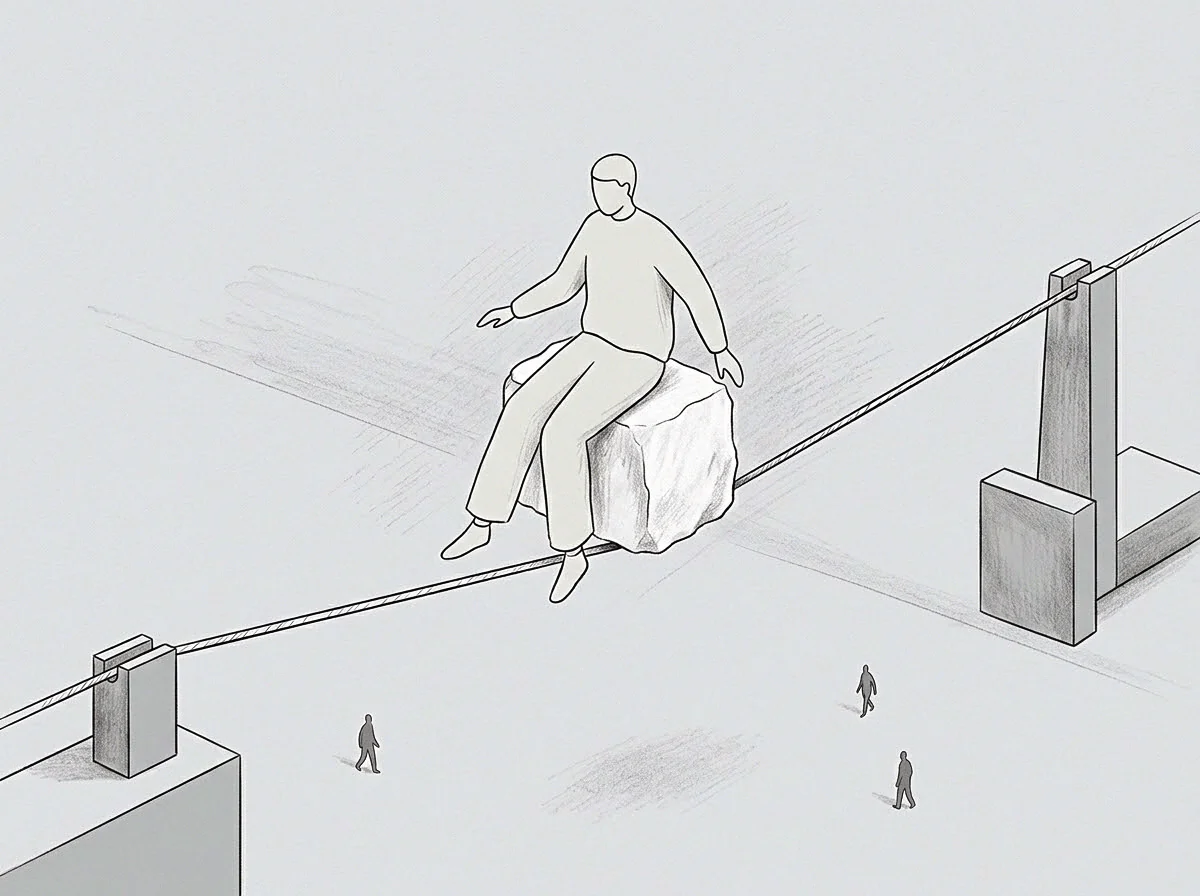
An incoming message arrives at midnight requesting urgent revisions to the cap table. The stabilizing partner replies within ninety seconds, outlining exact scenarios for option pool expansion. The technical partner remains offline, undisturbed, operating behind a boundary the stabilizing partner never established for themselves.
The availability ping serves as a continuous test of containment.
Every unanswered ping exacts energy. In naval watch-standing arrangements, deck officers rotate command every four hours because attentional vigilance degrades rapidly beyond that threshold. Executive partnerships often ignore this maritime pattern, assigning one partner perpetual watch over commercial survival while the other enjoys extended periods of focus, until that watcher eventually breaks.
A partner who maintains unbroken availability subsidizes the uninterrupted focus of their peer at direct personal expense.
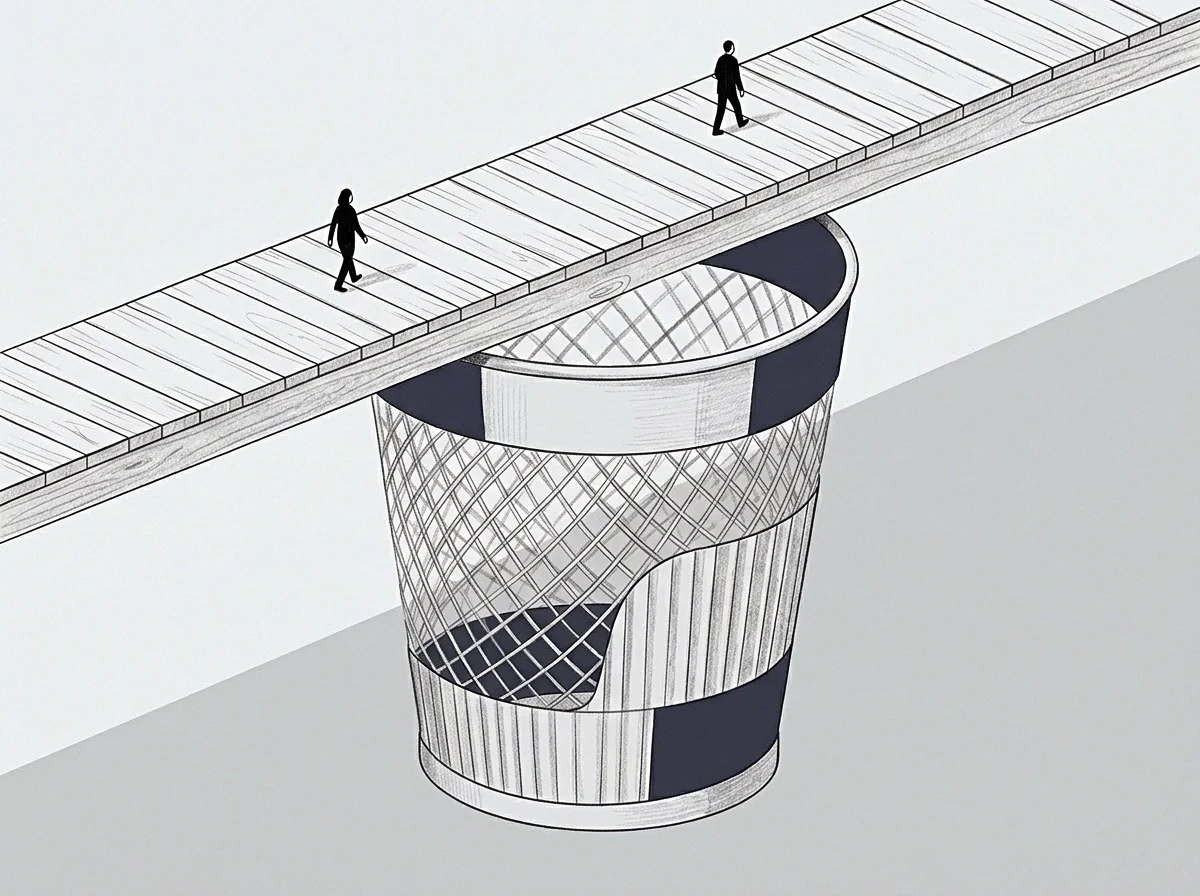
Cognitive load theory establishes strict limits on human working memory when processing simultaneous chaotic inputs. When an operating partner manages cash flow, personnel grievances, and legal compliance at once, their remaining bandwidth for strategic innovation drops to zero. The shielded partner continues to produce patents, code, and designs, appearing far more productive to outside board members while the internal distribution of labor tells a different story.
Concurrency Limits And The Latency Tax
Latency metrics expose operational asymmetry with mathematical precision. Measuring the hours elapsed between an external crisis and an executive response shows who absorbs volatility. The partner functioning as the baseline buffer demonstrates an average response latency of under fifteen minutes across all organizational channels, seven days a week.
The shielded partner maintains average response latencies exceeding six hours.
| Operating Criterion | Distributed Baseline Model | Asymmetric Absorptive Model |
|---|---|---|
| Threat Processing Allocation | Shared immediate appraisal across both partners | Unilateral absorption by stabilizing partner |
| Incident Response Latency | Evenly distributed response windows | Sub-fifteen-minute response on stabilizing desk |
| Sleep Period Autonomy | Reciprocal overnight off-grid rotations | Perpetual standby maintained by one executive |
| Strategic Capacity Preservation | Both partners retain thirty percent exploratory time | Buffer partner retains zero exploratory bandwidth |

When Does Shared Governance Mask Baseline Depletion?
Formal corporate documents assume equal capacity across equal equity shares. The standard partnership agreement defines ownership percentages and voting thresholds, yet says nothing about physiological capacity or regulatory maintenance. Two partners may each own half the company, but one partner provides ninety percent of the emotional stability required to keep staff employed.
The borrowed calm often goes unnamed. The shielded partner may attribute their own serenity to superior discipline rather than recognizing the micro-climate manufactured by their peer. This misattribution can fuel condescension, with the shielded partner wondering why the stabilizing partner appears irritable or tired.
Capacity diminishes without direct notice. A contractual threshold granting absolute forty-eight-hour operational disengagement transfers immediate responsibility to the active partner, resetting baseline expenditure across quarters.

Span
Extending structural equilibrium across multiple quarters demands deliberate containment mechanisms. Relying on goodwill or verbal promises fails under market contraction. A shared operational model forms through repeated experiences of joint exposure rather than intellectual consensus.
For the stabilizing partner to gain structural relief, the partnership must adjust its communication architecture from the ground up.
Stability develops when an individual accustomed to carrying entire institutions experiences consistent operational support from a partner. This transition does not happen during a weekend retreat. It demands months of verified handoffs where threats reach the desk of the shielded partner without interference.
The stabilizing partner must step back from emergencies, tolerating initial friction without intervening immediately.
Permanent stability requires shifting threat exposure onto explicit operating covenants rather than human nervous systems.
Systemic restructuring follows an ordered progression designed to rebalance the enterprise baseline:
- Audit communication channels to quantify the true volume of inbound operational noise handled by each partner during off-hours.
- Establish hard watch schedules that assign exclusive operational triage responsibility to alternating partners for seven-day intervals.
- Implement automated operational gates that prevent urgent external requests from penetrating personal devices outside specified review windows.
- Realign strategic equity vesting to tie partner retention directly to demonstrable management of operational volatility rather than product milestones alone.

Operational Restructuring And Boundary Protocol
Shifting from unstated absorption to explicit boundaries creates temporary operational disruption. When the stabilizing partner stops answering emergency supplier calls at night, suppliers contact the product executive. The product executive experiences irritation, perceiving the sudden operational intrusion as a betrayal of the original unspoken arrangement.
This discomfort marks the return of shared operational reality, forcing the shielded partner to face the full business environment.
Direct exposure forces operational maturity. When managing commercial friction firsthand, the shielded partner develops realistic operational respect. The technical roadmap expands to account for regulatory delays, compliance requirements, and customer turnover.
The enterprise slows slightly, but its structural durability increases ten-fold. Whether two partners with unequal habits can permanently balance operational load without outside intervention remains an open question in enterprise management.